Artwork
Saint Stephen
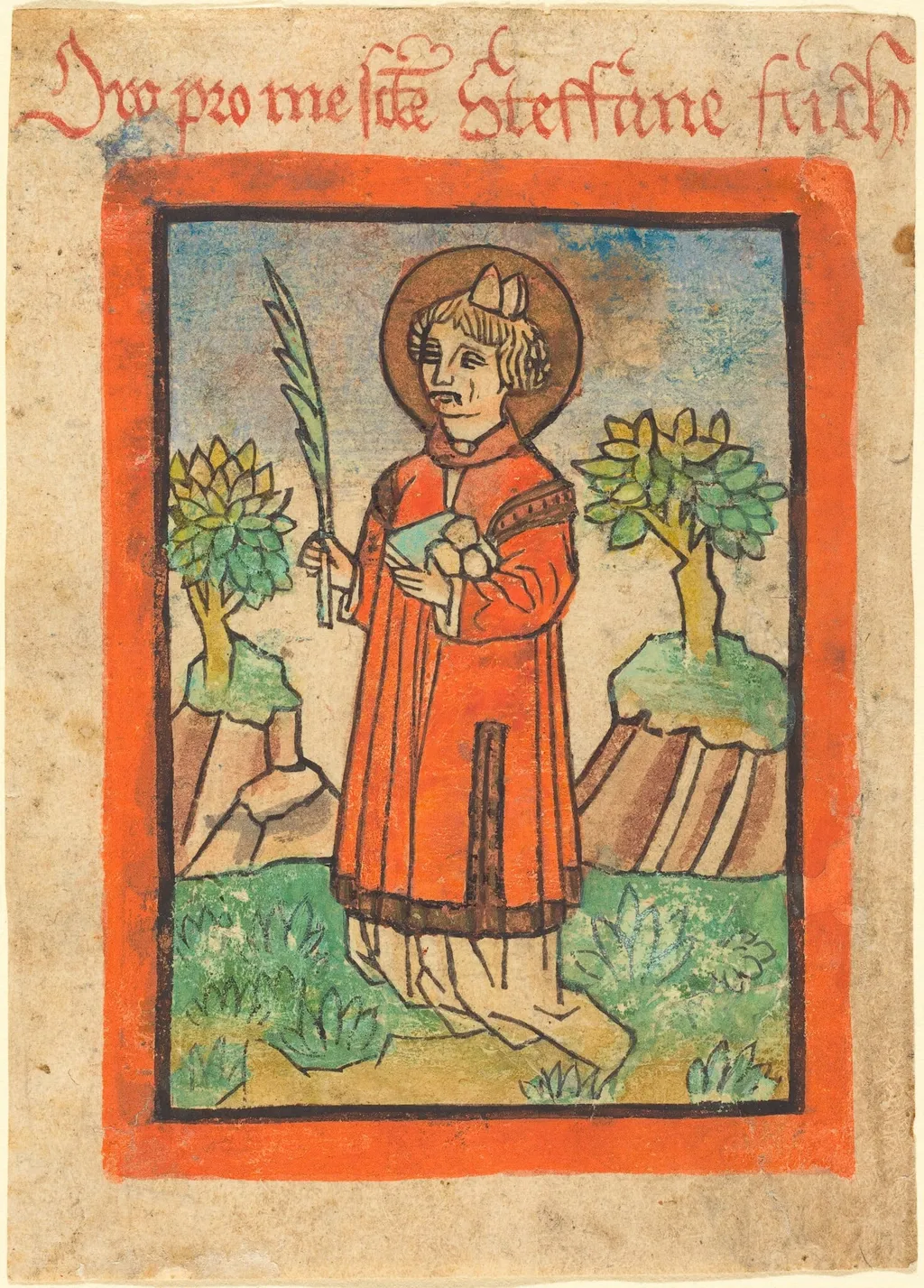
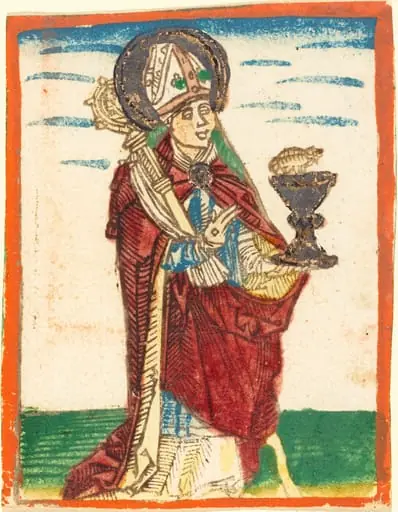
Saint Stephen is an ink print by the Renaissance artist German 15th Century. It dates from 1460 and is held in the collection of the National Gallery of Art.
About this work
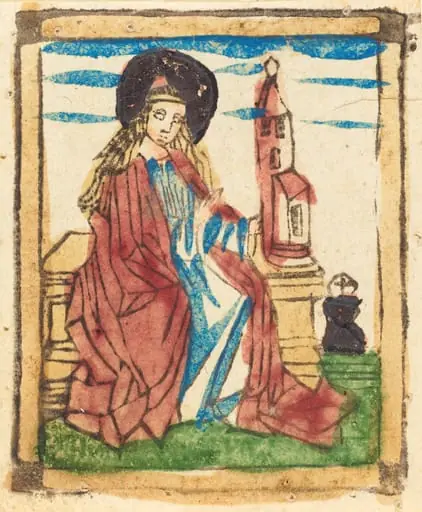
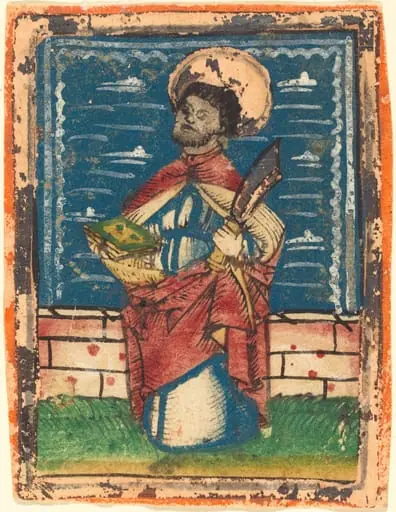
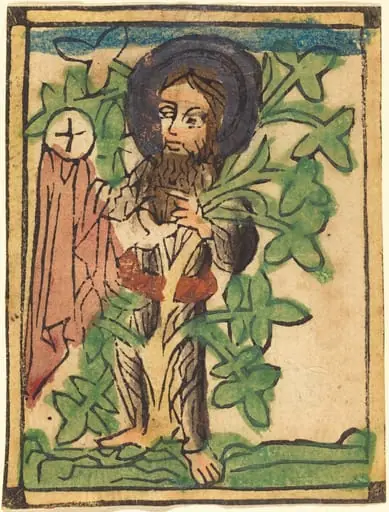
This painting depicts a saint standing in a landscape, wearing a long red robe with a brown border and a halo around his head.
This painting depicts a saint standing in a landscape, wearing a long red robe with a brown border and a halo around his head. He holds a palm branch in his right hand and a book in his left. The background features two trees, one on each side of the saint, and a blue sky.
The saint's attire and the style of the painting suggest a religious theme. The use of bright colors, such as orange and green, adds a sense of vibrancy to the scene.
The artist's use of woodcut techniques is evident in the bold lines and flat colors. To learn more about the artist's style and techniques, you can explore the work of German 15th Century artists.
Overview
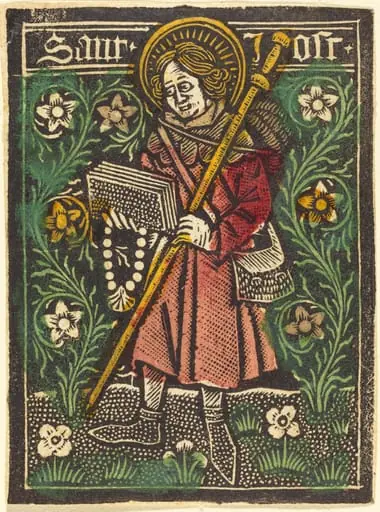
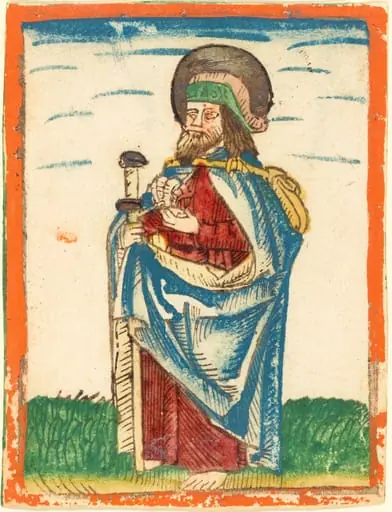
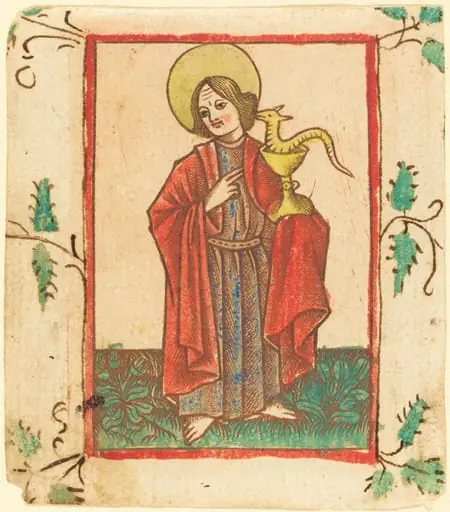
This woodcut print depicts Saint Stephen, the first Christian martyr, rendered in hand-colored ink on paper. The image uses bold, linear cuts typical of 15th-century German printmaking, with areas filled in by hand using orange, green, blue, and brown pigments. The composition centers the figure against a simplified landscape, emphasizing symbolic elements over naturalistic detail.
Subject & Meaning
Saint Stephen is shown holding a palm branch, a traditional symbol of martyrdom, and a book, likely representing the Gospels or his role as a deacon. His red robe signifies his sacrifice, while the halo denotes sanctity. The placement of two trees flanking him may reference the Garden of Eden or the cross, reinforcing themes of divine judgment and redemption within early Christian iconography.
Technique & Style
The image was produced using a woodcut technique, where lines were carved into a wooden block and inked to transfer the design. The flat, unmodulated colors and strong outlines reflect the limitations and aesthetic choices of early printmaking. Hand-coloring added vibrancy, a common practice to enhance devotional impact before the widespread use of multicolor printing.
History & Provenance
Though the artist remains unidentified, the style aligns with German woodcut traditions of the late 1400s, possibly from workshops in southern Germany or the Rhineland. Such prints were often produced for private devotion or liturgical use. Surviving examples are rare, and this piece likely circulated among religious communities before entering a private or institutional collection.
Context
In the 15th century, woodcuts were a primary medium for disseminating religious imagery, especially as literacy rose and demand for personal devotional objects grew. Saint Stephen, venerated as a protector and martyr, was a frequent subject in Northern European art. This print reflects the intersection of emerging print technology and enduring medieval iconographic conventions.
Legacy
This work exemplifies the transition from manuscript illumination to printed religious imagery in late medieval Europe. While overshadowed by later artists like Dürer, such prints laid the groundwork for mass-produced visual theology. Their simplicity and portability helped standardize saintly iconography across regions, influencing both popular piety and subsequent print traditions.
Artist & collection

Artist
This 15th-century German artist carved vivid religious scenes into metal and wood, then hand-painted them in bright, symbolic colors.

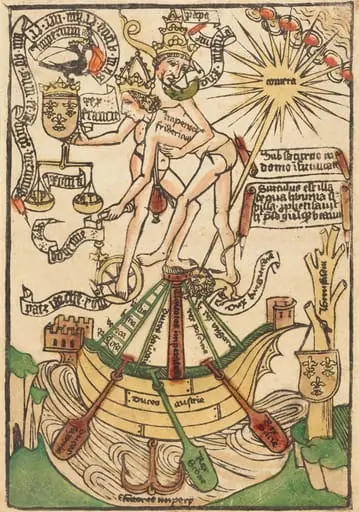 Allegory of the Meeting of Pope Paul II and Emperor Frederick III
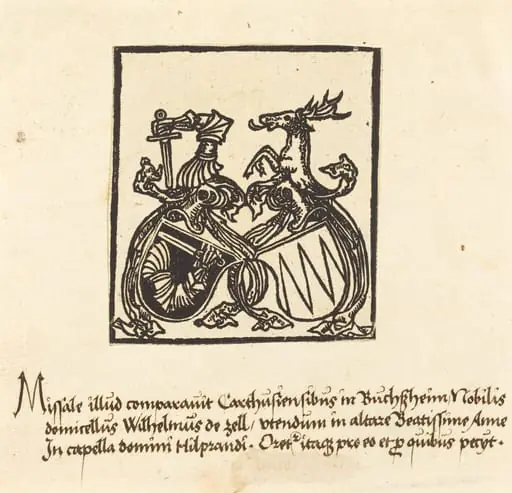 Bookplate of Wilhelm von Zell
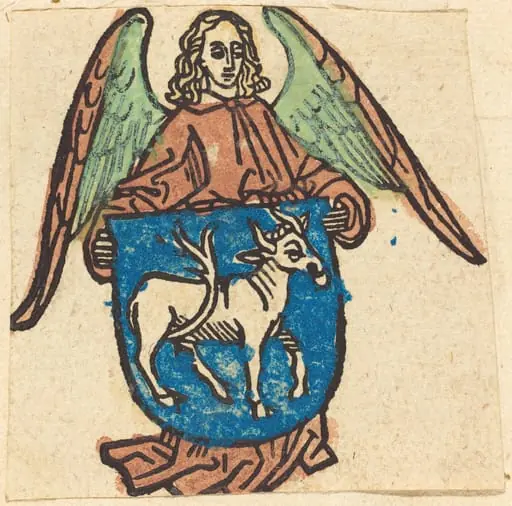 Bookplate of Hilprand Brandenburg of Bibrach
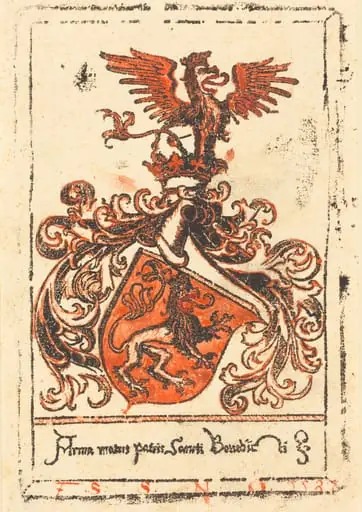 Bookplate of the Abbey of Ottobeuren
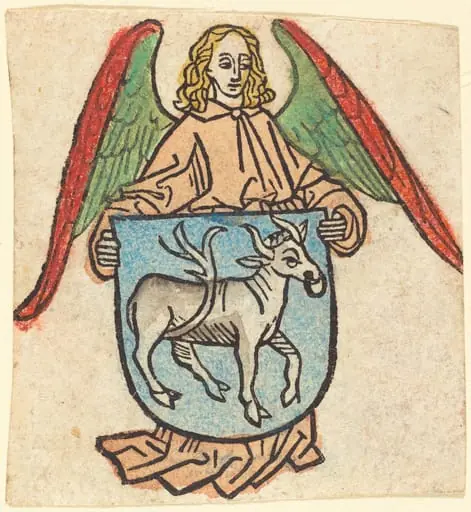 Bookplate of Hilprand Brandenburg of Bibrach
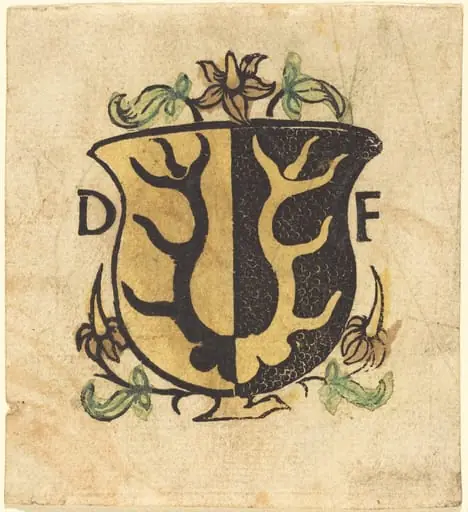 Bookplate of Dominicus Frauenfelder
![Studies for Six Figures (sheet from a model book) [recto], by German 15th Century](https://artifactworldgallery.com/img/german-15th-century--studies-for-six-figures-sheet-from-a-model-book-recto--4837429e0755bc3f-w320.webp) Studies for Six Figures (sheet from a model book) [recto]
Studies for Six Figures (sheet from a model book) [recto]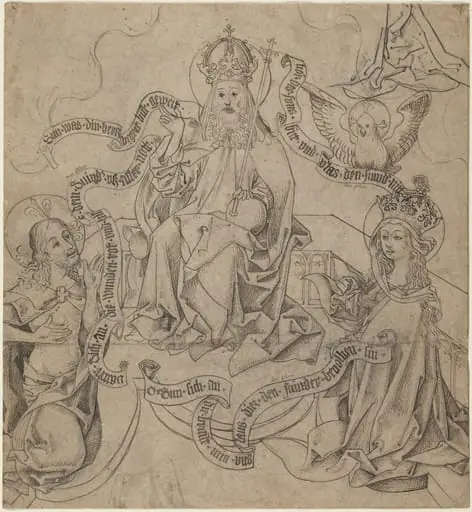 Christ and Mary Interceding with God the Father