Artwork
The Lamentation
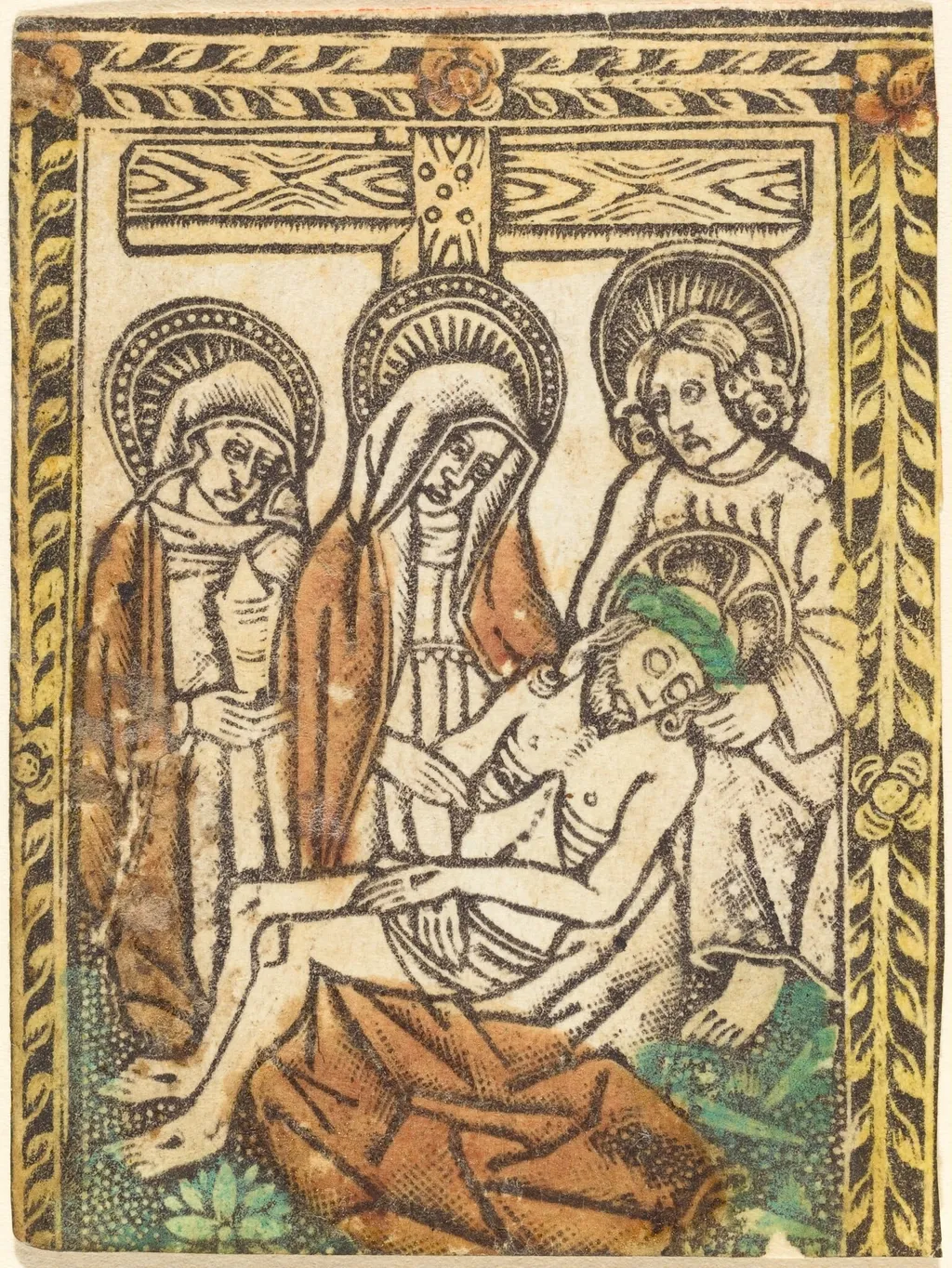
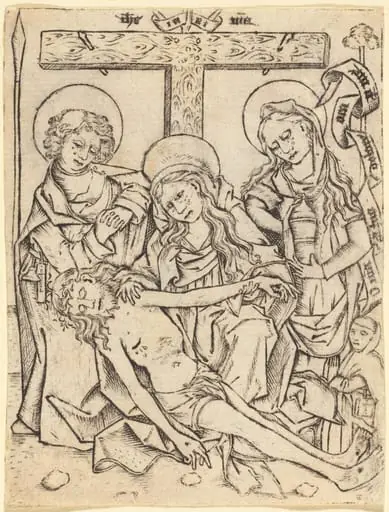
The Lamentation is a paint print by the Renaissance artist German 15th Century. It dates from 1470 and is held in the collection of the National Gallery of Art.
About this work
Artists carved the image into a soft metal plate, then rubbed in red, green, and yellow.
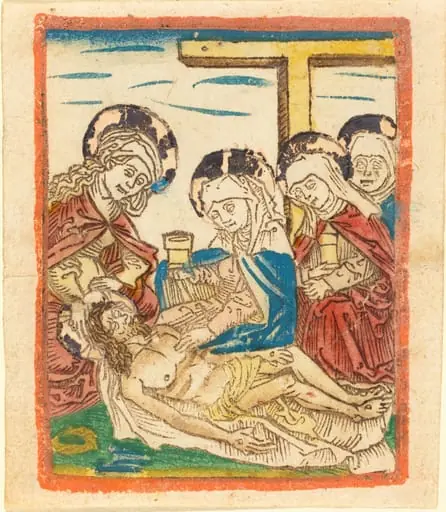
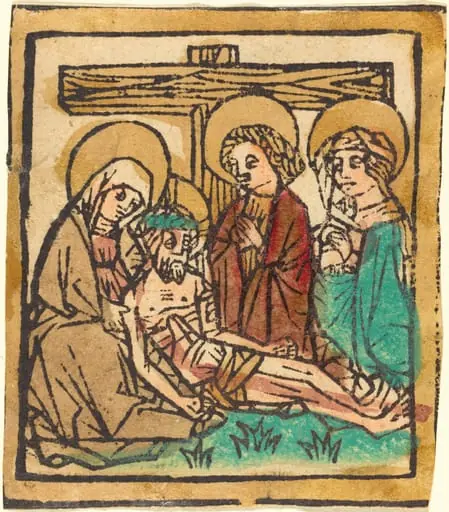
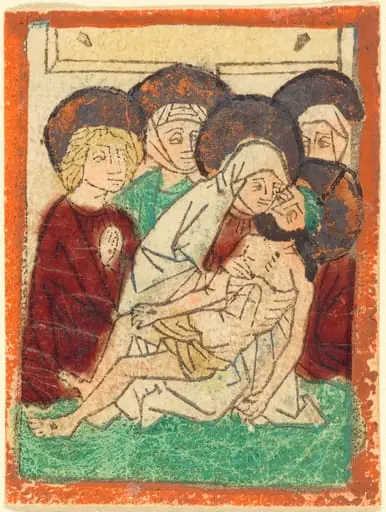
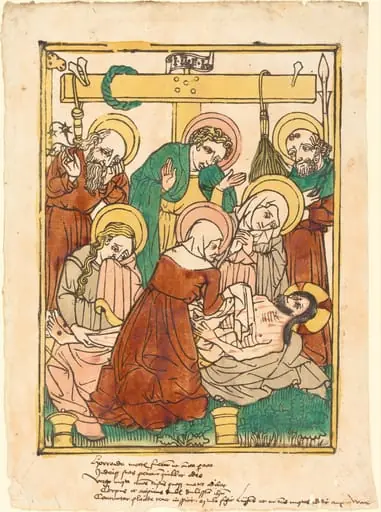
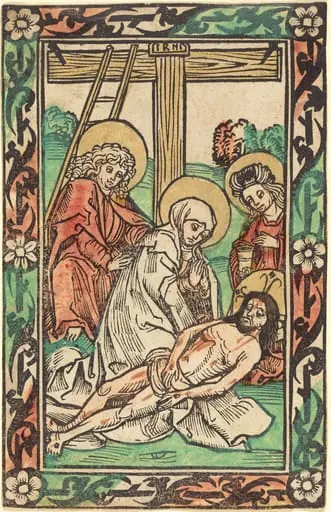
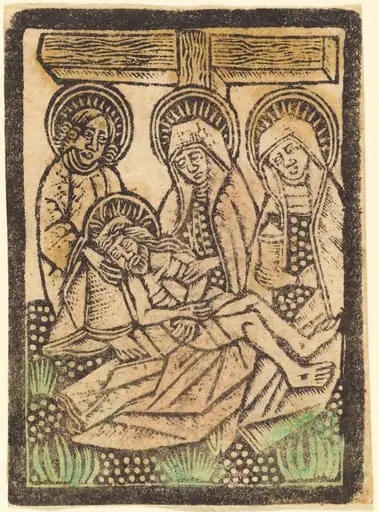
This print shows Christ’s body on the ground. Mary holds his head. John stands behind her. A few others kneel nearby.
The colors aren’t paint—they’re dyes pressed onto metal. Artists carved the image into a soft metal plate, then rubbed in red, green, and yellow. It was early mass printing, before books or playing cards had pictures.
Try looking up “German 15th Century” to see more prints like this one.
Overview
The Lamentation is a hand‑colored metalcut print depicting the dead Christ laid on the ground. Mary cradles his head, while John stands behind her and several other figures kneel nearby, forming a compact, mournful scene rendered in vivid dyes.
Subject & Meaning
The composition illustrates the biblical episode of the Lamentation of Christ, a moment of sorrow and devotion as the Virgin Mary and the disciples mourn the crucified savior. The arrangement of figures emphasizes personal grief and communal reverence, inviting contemplation of sacrifice and loss.
Technique & Style
Created by carving a design into a soft metal plate, the artist applied red, green, and yellow lake pigments directly onto the incised surface. This method of hand‑coloring metalcuts predates the widespread use of illustrated books and playing cards, showcasing an early form of mass‑produced imagery.
History & Provenance
The print originates from the German workshop tradition of the fifteenth century, a period noted for its prolific production of religious prints. While the specific maker remains unidentified, such works were commonly circulated among devotional audiences across the Holy Roman Empire.
Context
During the late medieval era, metalcut prints served both as objects of personal piety and as visual aids for the largely illiterate faithful. Their vivid coloration and portable size made them accessible for private contemplation, complementing the era’s growing demand for religious imagery.
Artist & collection

Artist
This 15th-century German artist carved vivid religious scenes into metal and wood, then hand-painted them in bright, symbolic colors.

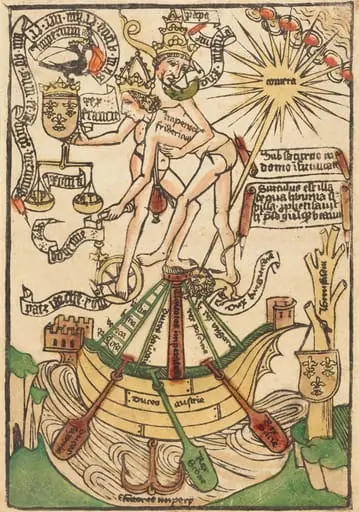 Allegory of the Meeting of Pope Paul II and Emperor Frederick III
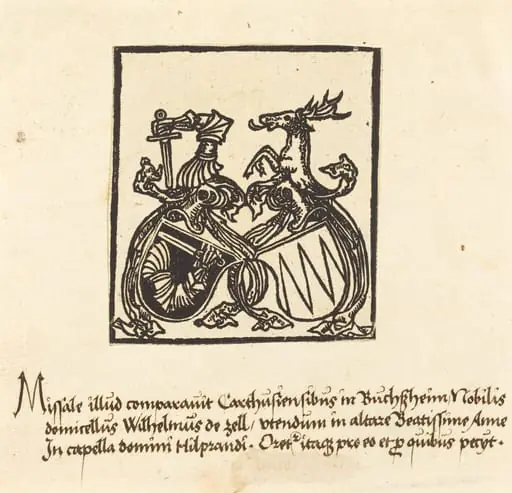 Bookplate of Wilhelm von Zell
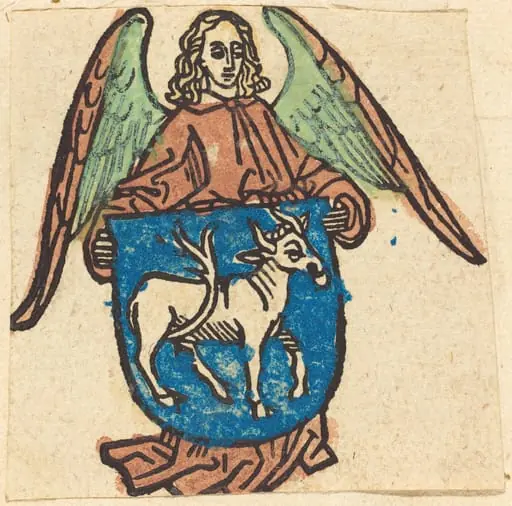 Bookplate of Hilprand Brandenburg of Bibrach
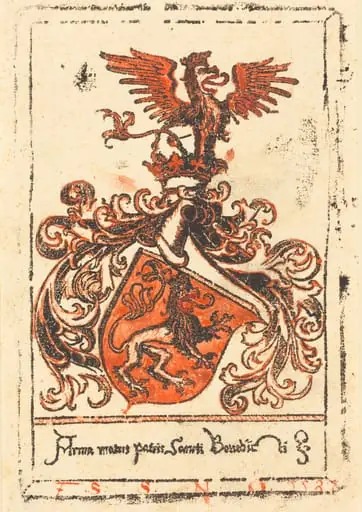 Bookplate of the Abbey of Ottobeuren
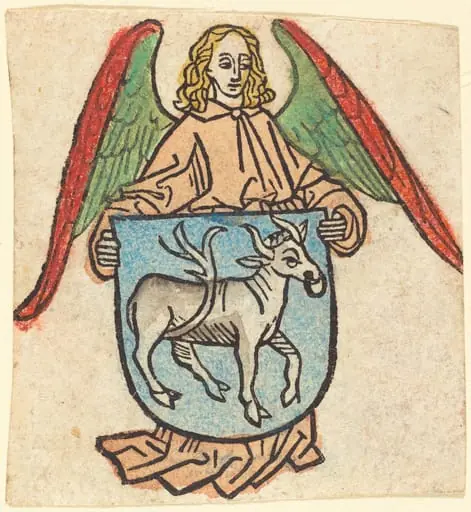 Bookplate of Hilprand Brandenburg of Bibrach
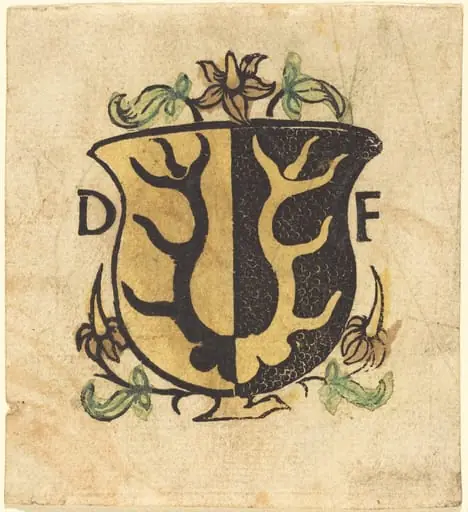 Bookplate of Dominicus Frauenfelder
![Studies for Six Figures (sheet from a model book) [recto], by German 15th Century](https://artifactworldgallery.com/img/german-15th-century--studies-for-six-figures-sheet-from-a-model-book-recto--4837429e0755bc3f-w320.webp) Studies for Six Figures (sheet from a model book) [recto]
Studies for Six Figures (sheet from a model book) [recto]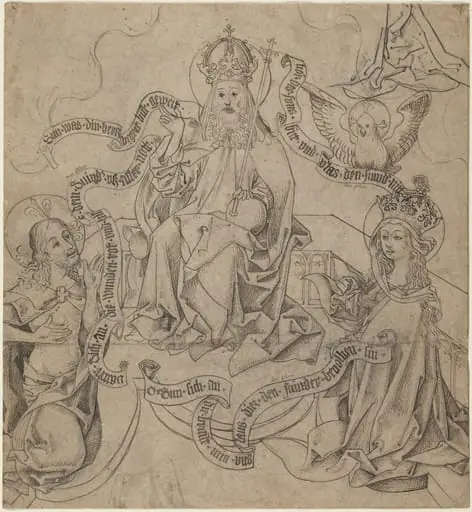 Christ and Mary Interceding with God the Father