Artwork
The Lamentation
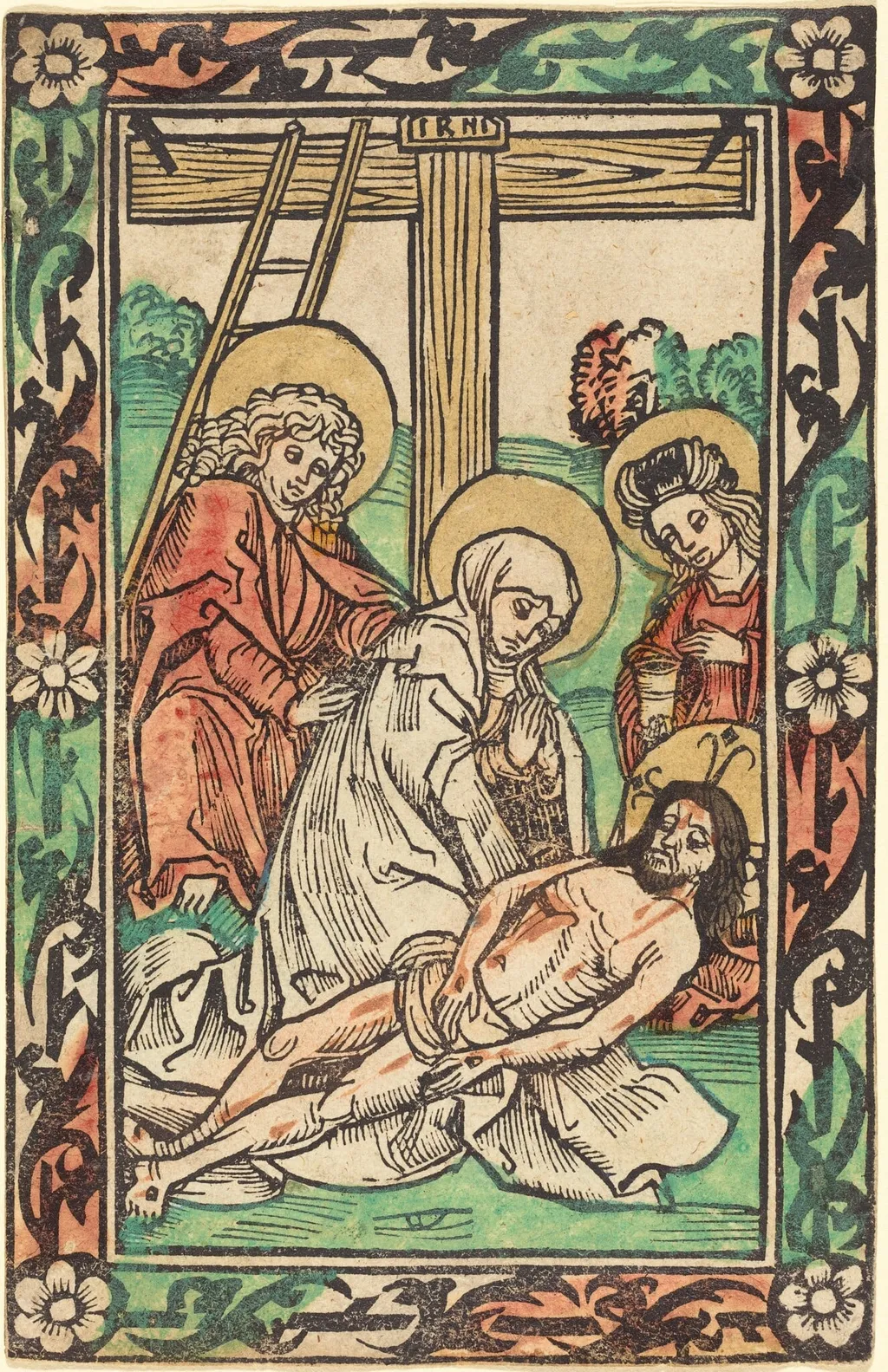
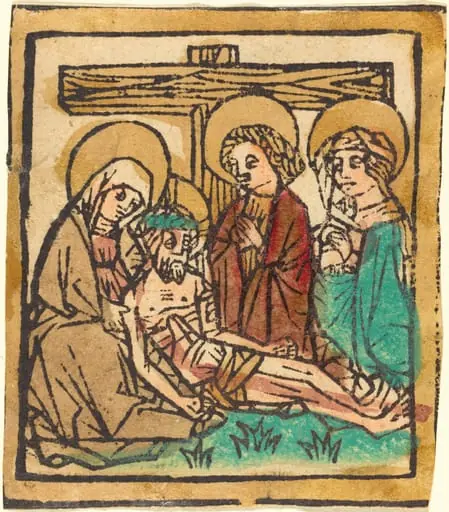
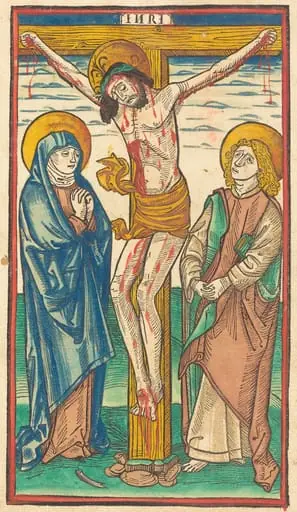
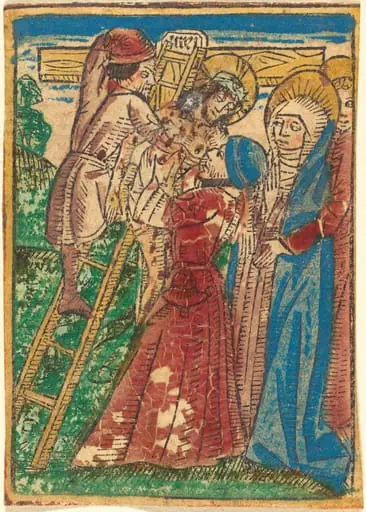
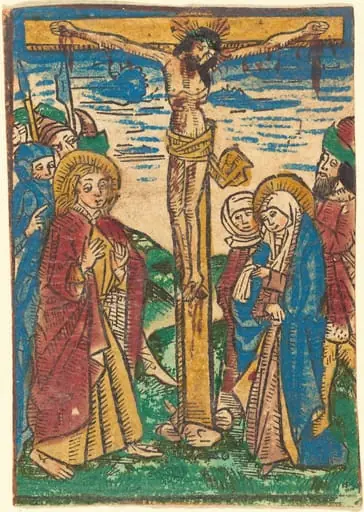
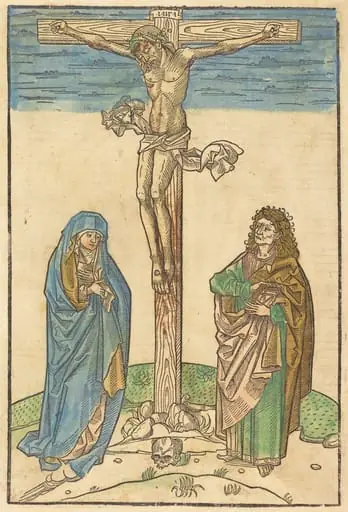
The Lamentation is an ink print by the Renaissance artist German 15th Century. It dates from 1490 and is held in the collection of the National Gallery of Art. This woodcut, hand-colored in red, green, and yellow, depicts a scene of mourning centered on a recumbent figure beside a cross.
About this work
The cross in the background suggests that the person who died was important.
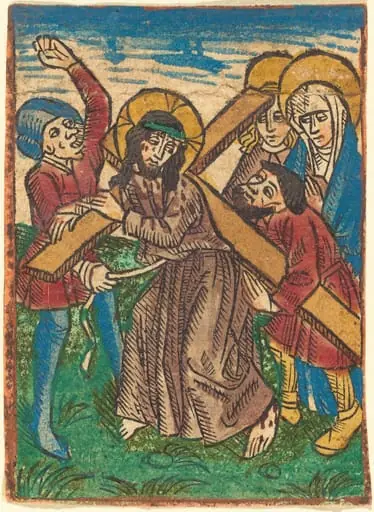
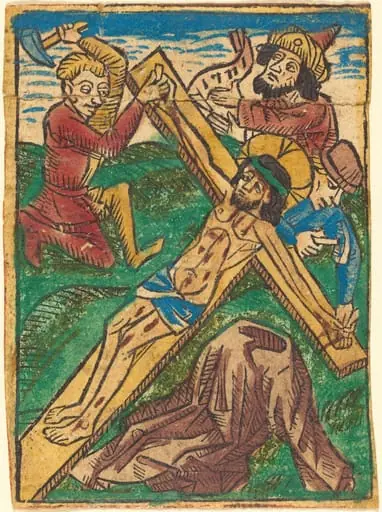
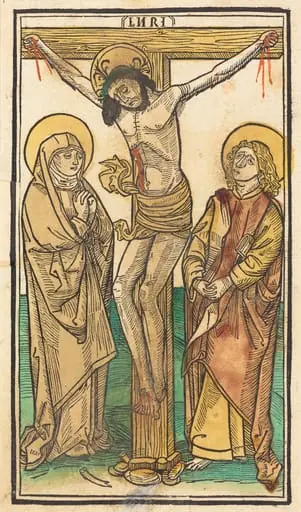
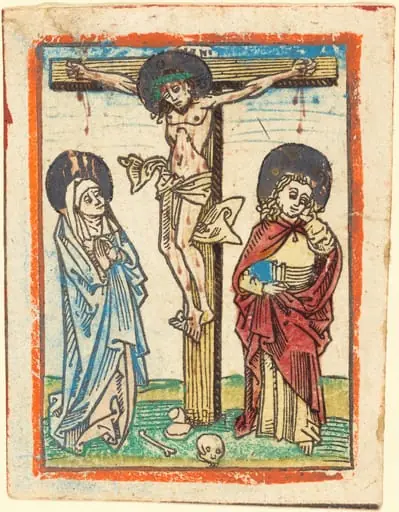
This painting shows a group of people around a cross. They are dressed in robes and are looking sad. There is a man on the ground, and a woman is kneeling next to him. The background is a simple landscape with hills and trees. The colors are muted, with shades of red, green, and yellow.
The scene is a lamentation, which means it's a sad moment. The people are mourning someone who has died. The cross in the background suggests that the person who died was important.
The artist who made this painting is German 15th Century.
Overview
This woodcut, hand-colored in red, green, and yellow, depicts a scene of mourning centered on a recumbent figure beside a cross. Executed in the 15th century by a German artist, it belongs to the tradition of devotional prints meant for private contemplation. The subdued palette and simple landscape frame the emotional weight of the moment, emphasizing quiet grief over dramatic spectacle.
Subject & Meaning
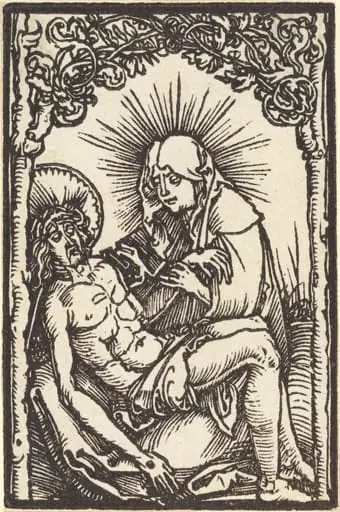
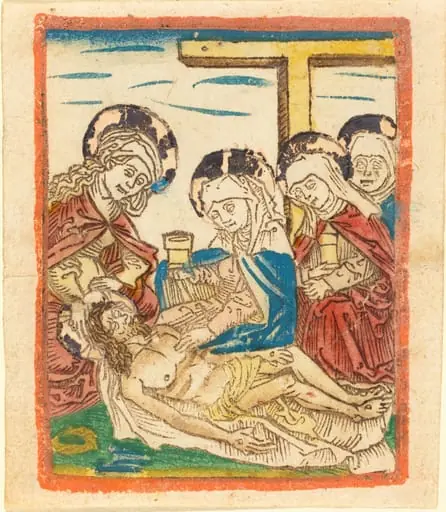
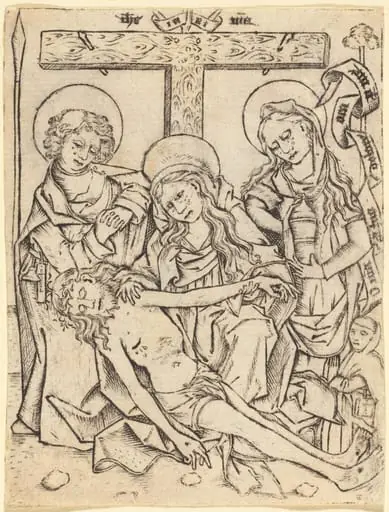
The figures surround the body of a man laid upon the ground, his posture suggesting death after crucifixion. A woman kneels in sorrow, while others stand or bow nearby, their gestures conveying communal mourning. The cross in the distance confirms the identity of the deceased as Christ, transforming the scene into a Lamentation — a devotional image meant to evoke empathy and spiritual reflection.
Technique & Style
The image is carved in wood and printed on laid paper, then colored by hand with limited pigments: red, green, and yellow. Lines are crisp and economical, defining forms with clarity rather than detail. The flatness of the landscape and stylized drapery reflect the Northern European print tradition, where symbolic clarity outweighed naturalistic depth.
History & Provenance
Created in Germany during the late 1400s, this print likely circulated among religious communities or private patrons seeking affordable devotional imagery. Its survival in good condition suggests careful handling and use in personal or domestic worship. No specific collector or institution is documented in early records, but similar works were commonly owned by laypeople in the Rhineland.
Context
In 15th-century Germany, woodcuts were a primary medium for spreading religious imagery, especially as literacy rose and the Church encouraged personal piety. The Lamentation was a popular subject, often paired with scenes of the Crucifixion or Entombment. This print reflects the growing demand for images that invited intimate emotional engagement with sacred narratives.
Legacy
Though unsigned and unattributed to a known master, this print exemplifies the widespread influence of German woodcut production before the Reformation. Its simplicity and emotional restraint influenced later devotional imagery, and surviving examples help scholars trace the dissemination of religious iconography among non-elite audiences in early modern Europe.
Artist & collection

Artist
This 15th-century German artist carved vivid religious scenes into metal and wood, then hand-painted them in bright, symbolic colors.

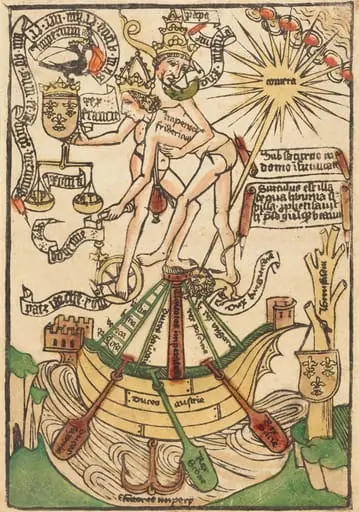 Allegory of the Meeting of Pope Paul II and Emperor Frederick III
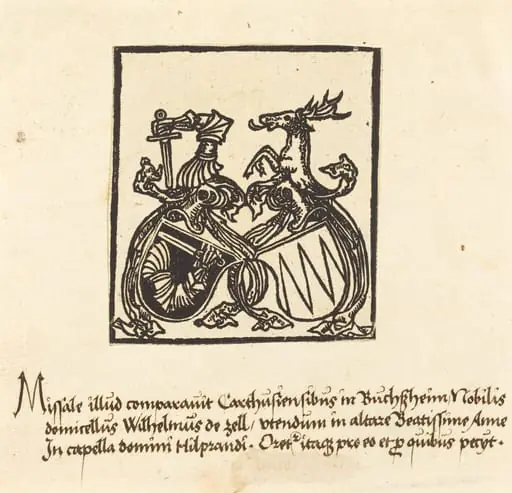 Bookplate of Wilhelm von Zell
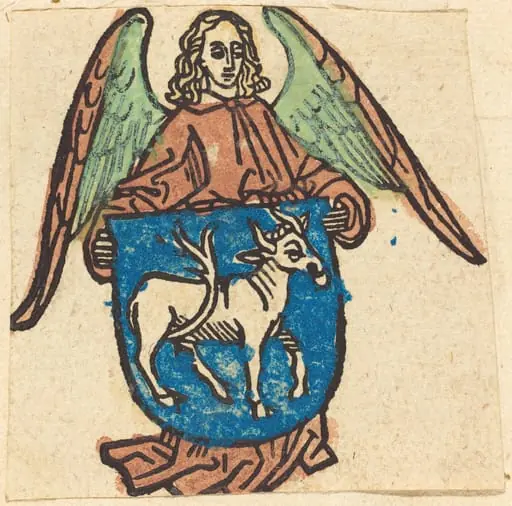 Bookplate of Hilprand Brandenburg of Bibrach
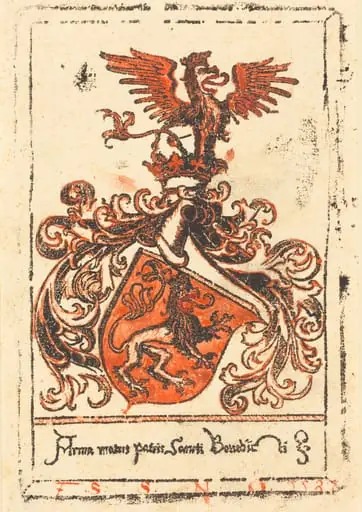 Bookplate of the Abbey of Ottobeuren
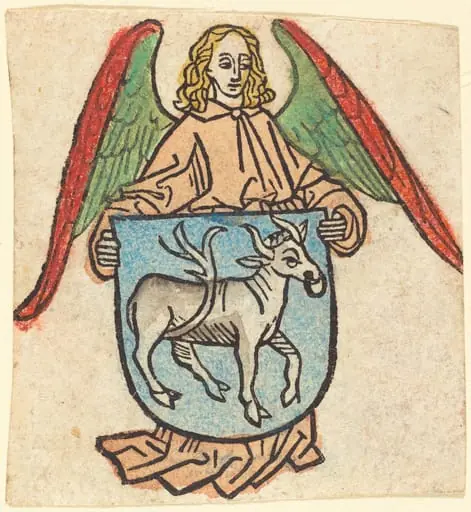 Bookplate of Hilprand Brandenburg of Bibrach
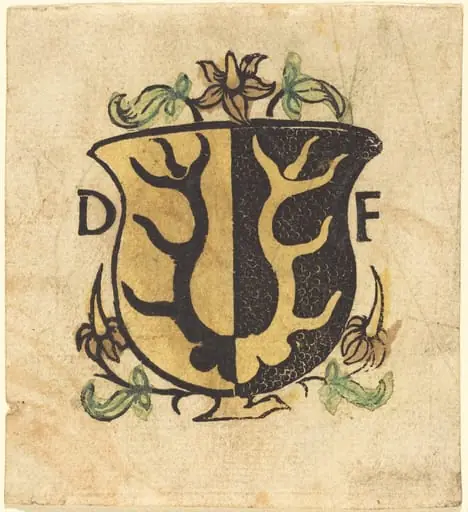 Bookplate of Dominicus Frauenfelder
![Studies for Six Figures (sheet from a model book) [recto], by German 15th Century](https://artifactworldgallery.com/img/german-15th-century--studies-for-six-figures-sheet-from-a-model-book-recto--4837429e0755bc3f-w320.webp) Studies for Six Figures (sheet from a model book) [recto]
Studies for Six Figures (sheet from a model book) [recto]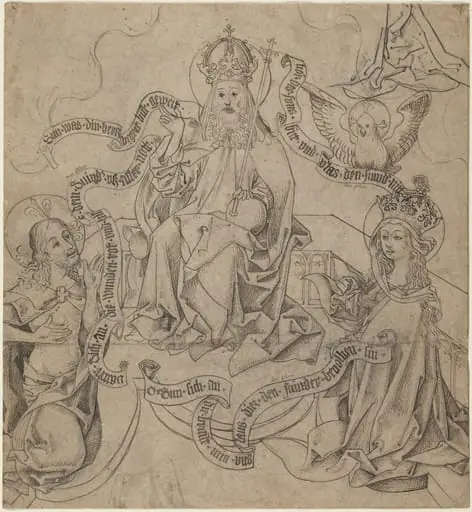 Christ and Mary Interceding with God the Father