Artwork
The Last Supper
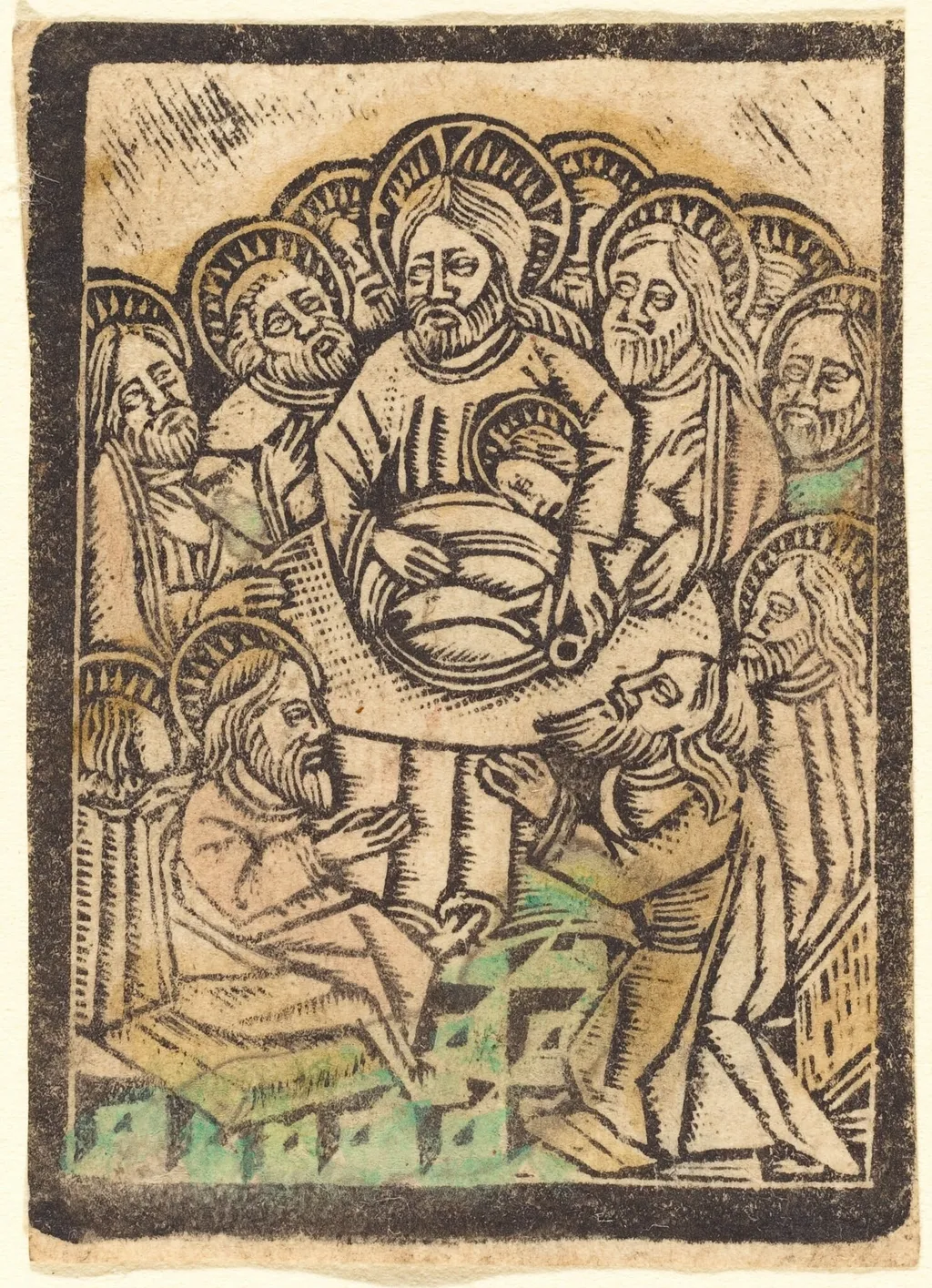
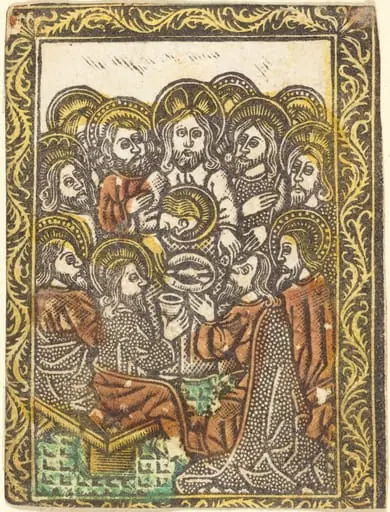
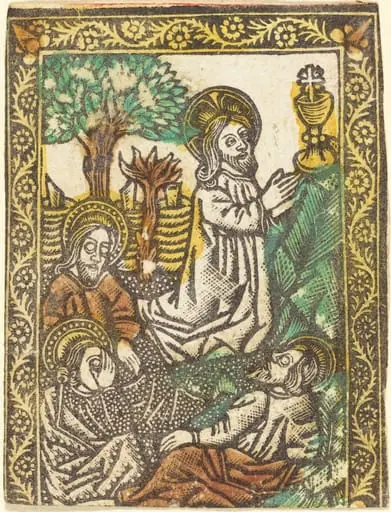
The Last Supper is a paint print by the Renaissance artist German 15th Century. It dates from 1475 and is held in the collection of the National Gallery of Art.
About this work
Overview
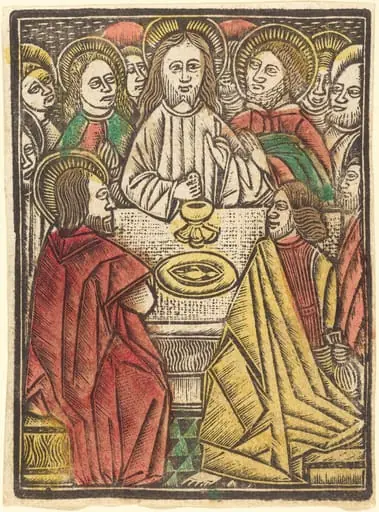
The Last Supper is a metalcut print, enhanced with hand-coloring in a muted palette of green, light rose, and yellow. The composition depicts a group of haloed men seated around a table, with a central figure holding a circular object, set against a minimalist background of suggested hills or buildings.
Subject & Meaning
The scene is identifiable as a representation of a biblical narrative, with the halos indicating the religious significance of the figures. The central figure holding a round object (likely symbolic, such as a plate of bread) suggests a pivotal moment, potentially the Last Supper, a final meal before a betrayal.
Technique & Style
Created using the metalcut technique, the print features sharp, clear lines, characteristic of early printed art. The addition of hand-colored elements in green, light rose, and yellow was a common practice in the period to enhance the visual appeal of prints.
Context
This work aligns with early Renaissance printmaking practices, where metalcut techniques and hand-coloring were used to produce religious and narrative subjects for a broader audience. The style and technique place it within the transitional period of printing technologies and artistic expressions of the time.
Artist & collection

Artist
This 15th-century German artist carved vivid religious scenes into metal and wood, then hand-painted them in bright, symbolic colors.

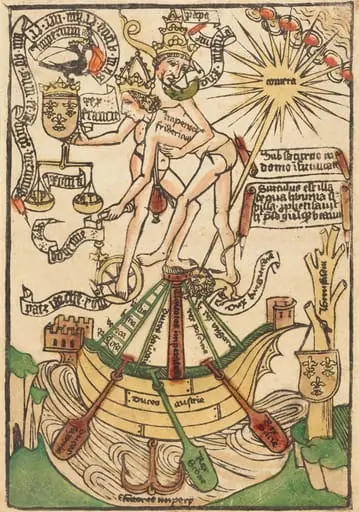 Allegory of the Meeting of Pope Paul II and Emperor Frederick III
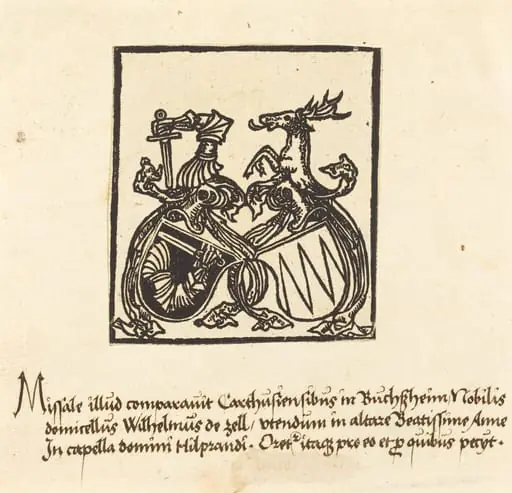 Bookplate of Wilhelm von Zell
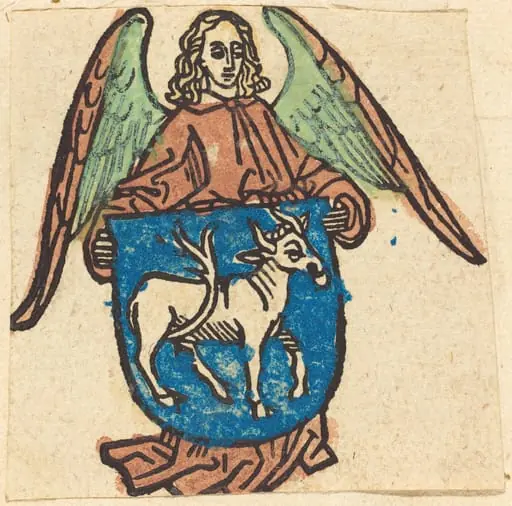 Bookplate of Hilprand Brandenburg of Bibrach
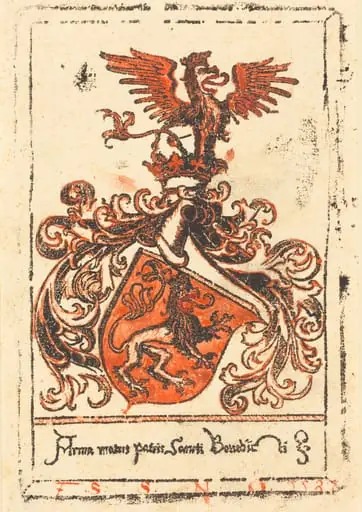 Bookplate of the Abbey of Ottobeuren
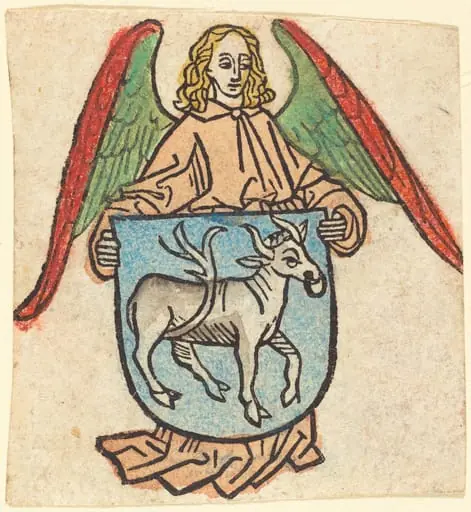 Bookplate of Hilprand Brandenburg of Bibrach
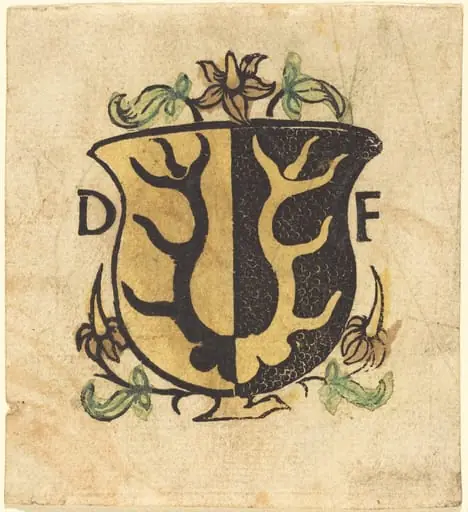 Bookplate of Dominicus Frauenfelder
![Studies for Six Figures (sheet from a model book) [recto], by German 15th Century](https://artifactworldgallery.com/img/german-15th-century--studies-for-six-figures-sheet-from-a-model-book-recto--4837429e0755bc3f-w320.webp) Studies for Six Figures (sheet from a model book) [recto]
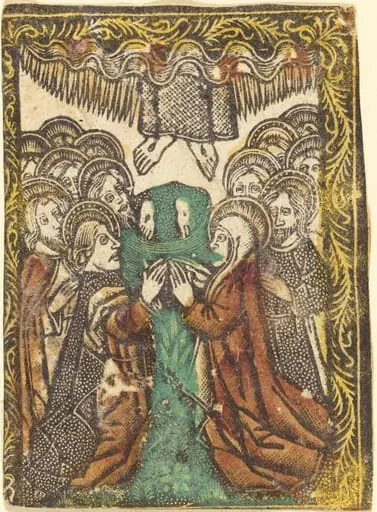
Studies for Six Figures (sheet from a model book) [recto] Christ and Mary Interceding with God the Father