Artwork
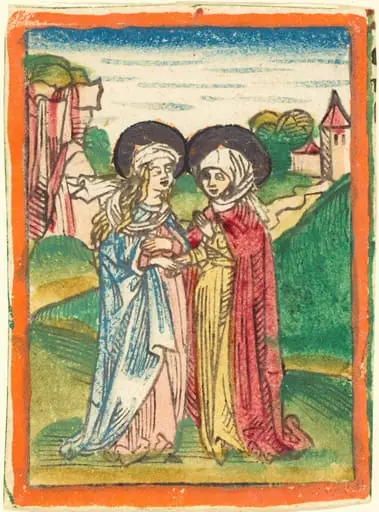
The Marriage of the Virgin
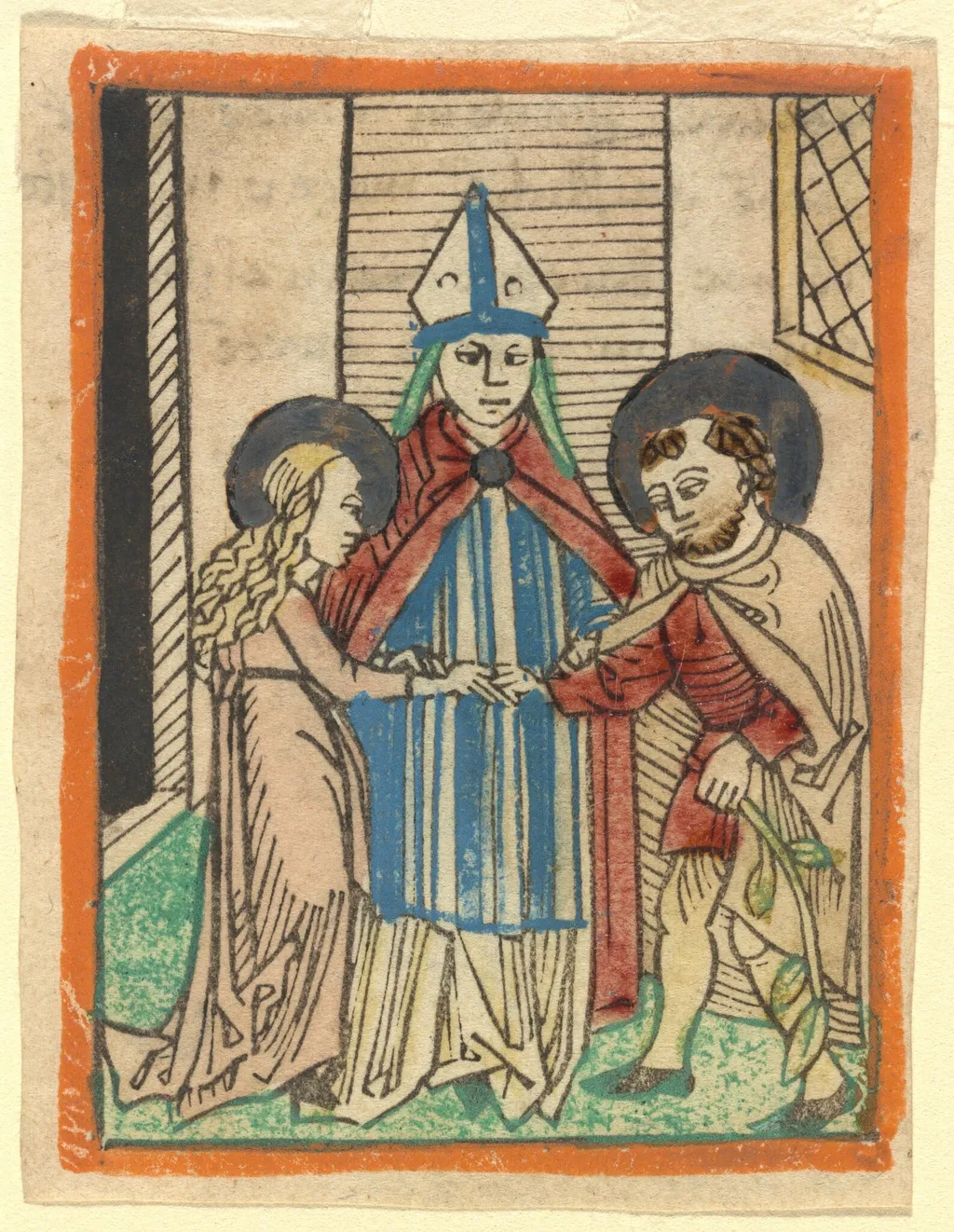
The Marriage of the Virgin is an ink print by the Renaissance artist German 15th Century. It dates from 1485 and is held in the collection of the National Gallery of Art.
About this work
Overview
Executed in the late 15th or early 16th century, it combines carved wooden blocks with delicate pigments including red lake, gold, and various hues.
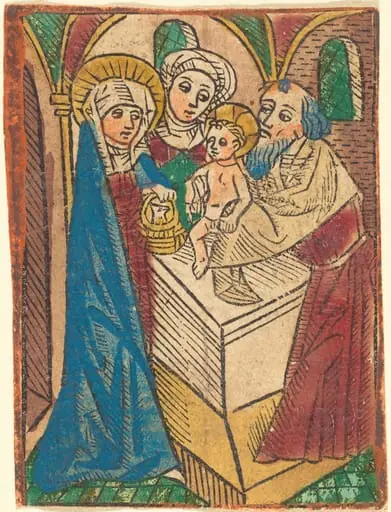
This hand-colored woodcut depicts a religious ceremony, likely the marriage of the Virgin Mary and Saint Joseph. Executed in the late 15th or early 16th century, it combines carved wooden blocks with delicate pigments including red lake, gold, and various hues. The flat, linear style and limited spatial depth reflect early printmaking conventions, where clarity and symbolic emphasis outweigh naturalism.
Subject & Meaning
The scene centers on a union between the Virgin Mary, identified by her pale dress and long hair, and Saint Joseph, distinguished by his halo and robe. A third figure, possibly a priest or officiant, wears a tall blue hat and mediates the ceremony. The intimate interior setting underscores the sacredness of the event, while the absence of ornate architecture focuses attention on the ritual act itself.
Technique & Style
The image was produced using a woodcut technique, with lines carved into a wooden block to create the outline and key forms. Hand-applied pigments—red lake, blue, green, gold, and others—add color selectively, enhancing symbolic elements like the halo and garments. The sharp contours and flat planes reflect a pre-Renaissance aesthetic, prioritizing clarity and devotional legibility over perspective or volume.
History & Provenance
This print likely originated in a German or Netherlandish workshop active during the late Gothic period, when woodcuts were widely used for religious imagery. Its survival with original coloring is rare, as most early prints were either left uncolored or later repainted. The presence of gold leaf suggests it was commissioned for private devotion or ecclesiastical use.
Context
In the decades before the Reformation, devotional prints like this served as accessible tools for personal piety. The marriage of Mary and Joseph was a popular subject, reinforcing ideals of chastity and divine order. Such images circulated among laypeople and clergy alike, bridging the gap between liturgical tradition and domestic spirituality.
Legacy
This print exemplifies the transition from manuscript illumination to printed imagery in Northern Europe. Its preservation in original color offers insight into how early audiences experienced religious prints—not as monochrome impressions, but as vivid, tactile objects of devotion. It influenced later printmakers who sought to blend craftsmanship with spiritual narrative.
Artist & collection

Artist
This 15th-century German artist carved vivid religious scenes into metal and wood, then hand-painted them in bright, symbolic colors.

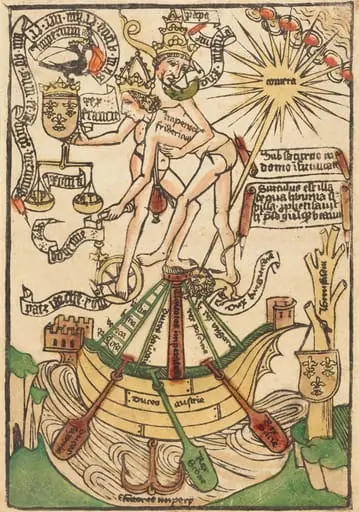 Allegory of the Meeting of Pope Paul II and Emperor Frederick III
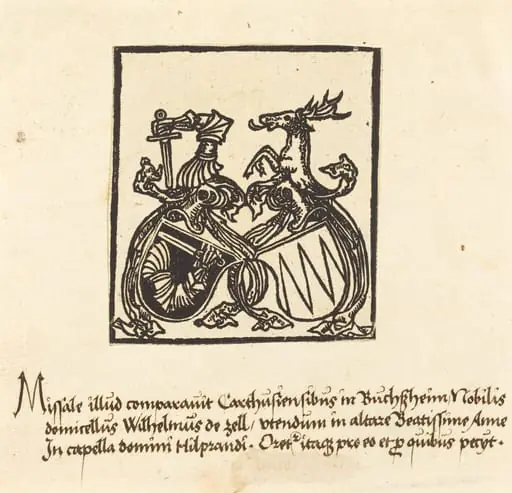 Bookplate of Wilhelm von Zell
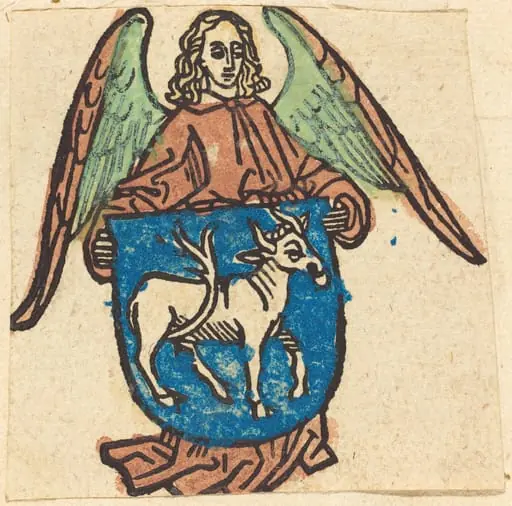 Bookplate of Hilprand Brandenburg of Bibrach
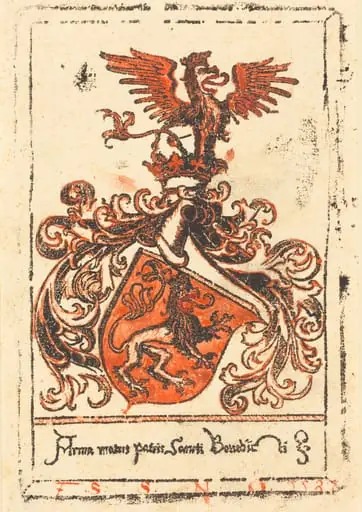 Bookplate of the Abbey of Ottobeuren
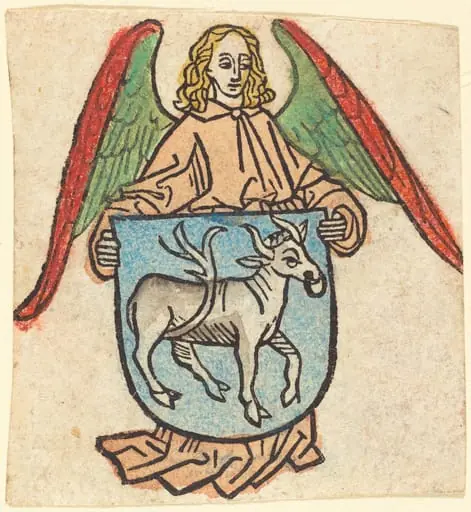 Bookplate of Hilprand Brandenburg of Bibrach
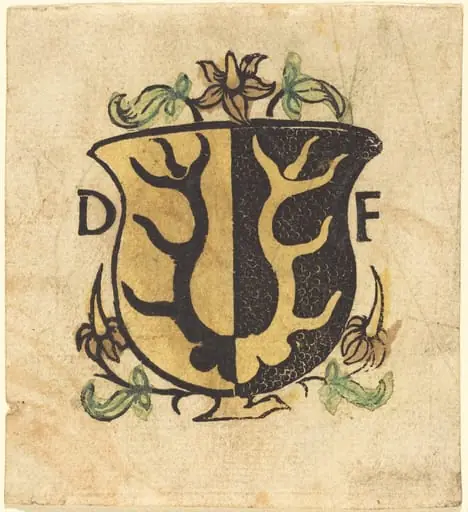 Bookplate of Dominicus Frauenfelder
![Studies for Six Figures (sheet from a model book) [recto], by German 15th Century](https://artifactworldgallery.com/img/german-15th-century--studies-for-six-figures-sheet-from-a-model-book-recto--4837429e0755bc3f-w320.webp) Studies for Six Figures (sheet from a model book) [recto]
Studies for Six Figures (sheet from a model book) [recto]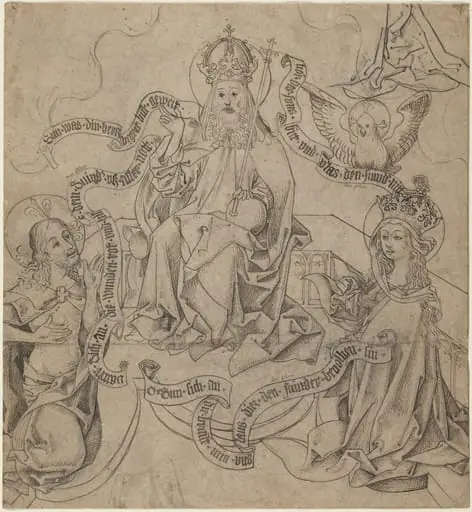 Christ and Mary Interceding with God the Father