Artwork
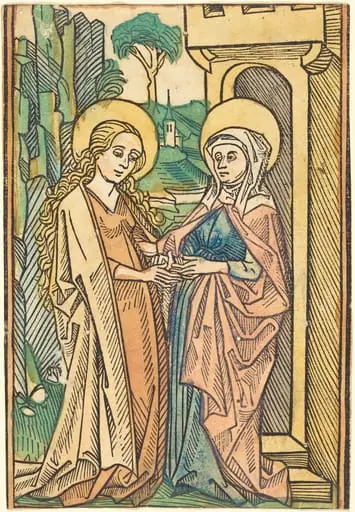
The Visitation
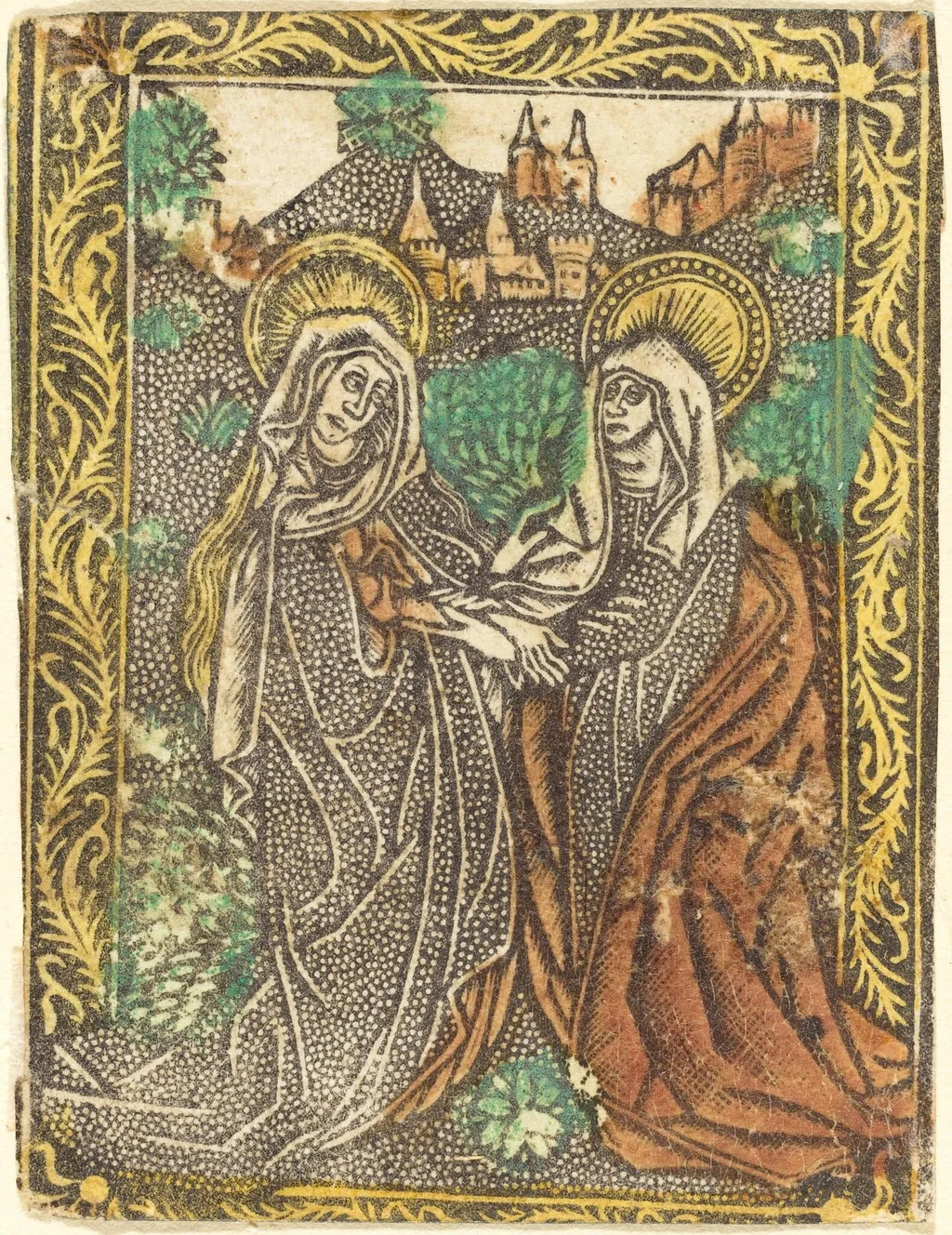
The Visitation is a paint print by the Renaissance artist German 15th Century. It dates from 1470 and is held in the collection of the National Gallery of Art.
About this work
Overview
The Visitation is a metalcut print, hand-colored in a restrained palette, depicting a joyful encounter between two women, one of whom holds a baby.
Subject & Meaning
The scene represents the biblical meeting between Mary, holding the infant Jesus, and her cousin Elizabeth, who is pregnant with John the Baptist. The warm interaction conveys a sense of familial affection and spiritual connection.
Technique & Style
Executed in metalcut, a technique allowing for precise lines, the print is enhanced by hand-coloring in yellow, red-brown lake, and green. These simple, muted tones create a serene atmosphere, potentially influenced by chiaroscuro principles to suggest depth and emotion through contrast.
Context
The use of metalcut, a lesser-known printmaking method compared to woodcuts or etchings, and the application of hand-coloring, reflect the artistic experimentation of its time. The choice of subject matter aligns with religious themes common in early printmaking.
Legacy
While specific impact on later artists is not detailed here, The Visitation contributes to the broader legacy of early printmaking techniques and religious subject matter in art history. Its use of chiaroscuro in a simple color palette may have influenced subsequent interpretations of similar biblical scenes.
Artist & collection

Artist
This 15th-century German artist carved vivid religious scenes into metal and wood, then hand-painted them in bright, symbolic colors.

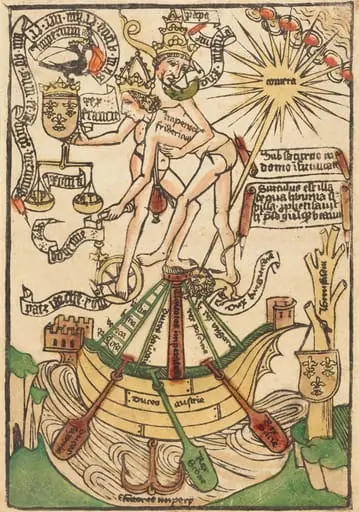 Allegory of the Meeting of Pope Paul II and Emperor Frederick III
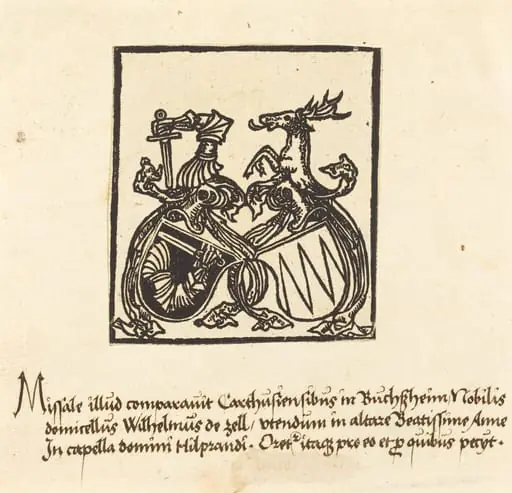 Bookplate of Wilhelm von Zell
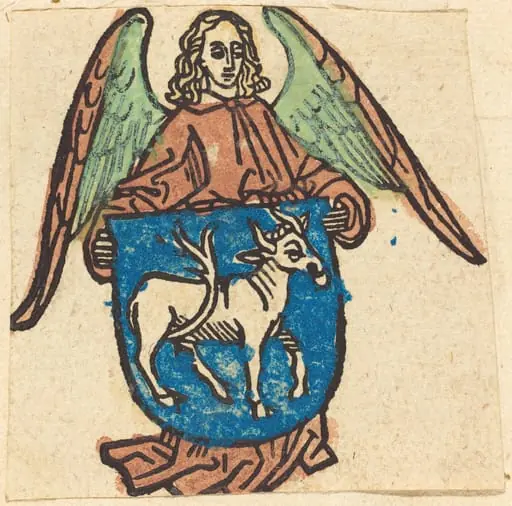 Bookplate of Hilprand Brandenburg of Bibrach
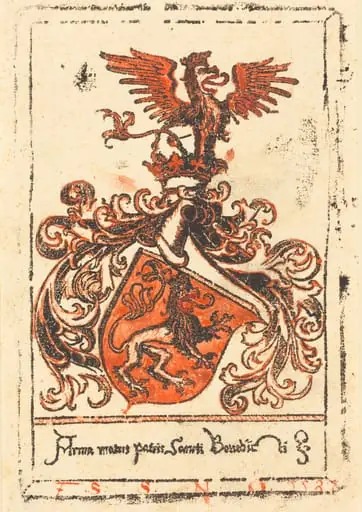 Bookplate of the Abbey of Ottobeuren
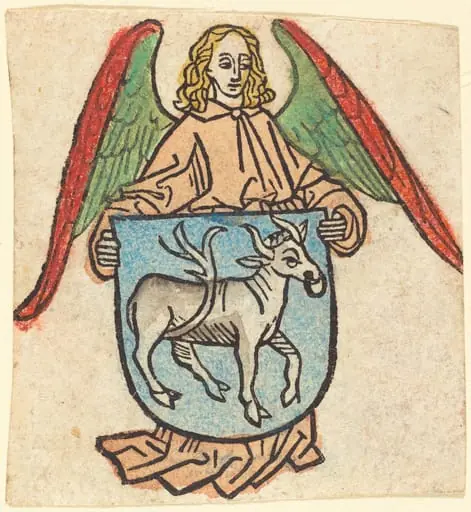 Bookplate of Hilprand Brandenburg of Bibrach
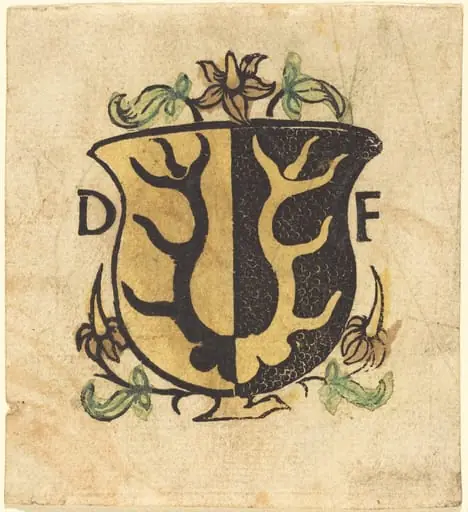 Bookplate of Dominicus Frauenfelder
![Studies for Six Figures (sheet from a model book) [recto], by German 15th Century](https://artifactworldgallery.com/img/german-15th-century--studies-for-six-figures-sheet-from-a-model-book-recto--4837429e0755bc3f-w320.webp) Studies for Six Figures (sheet from a model book) [recto]
Studies for Six Figures (sheet from a model book) [recto] Christ and Mary Interceding with God the Father