Artwork
Visitation
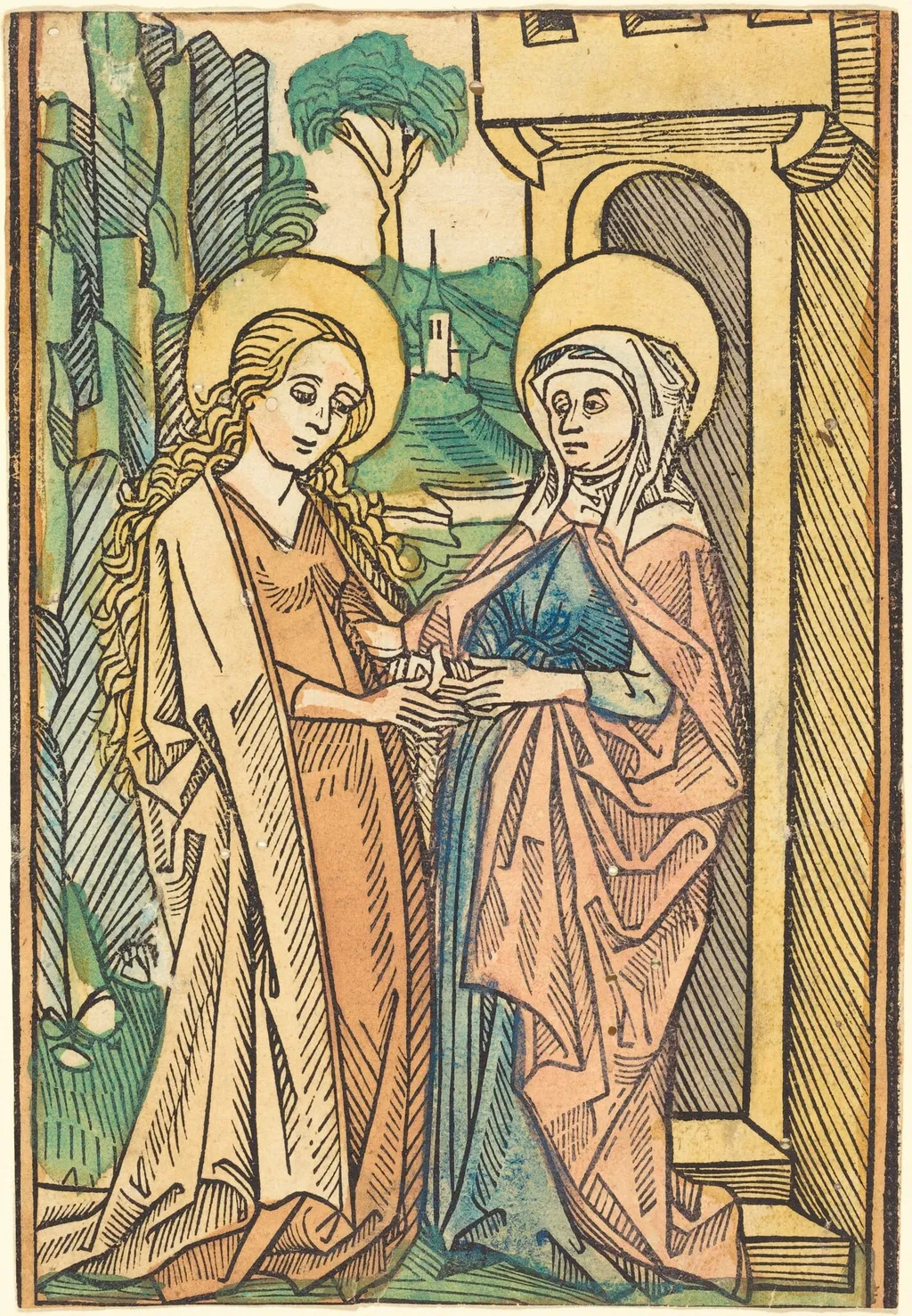
Visitation is an ink print by the Renaissance artist German 15th Century. It dates from 1450 and is held in the collection of the National Gallery of Art.
About this work
Overview
The medium of woodcut, combined with manual coloring, reflects a blend of printmaking tradition and artisanal detail common in early modern Northern Europe.
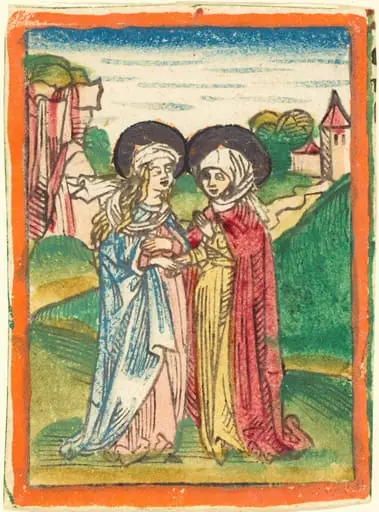
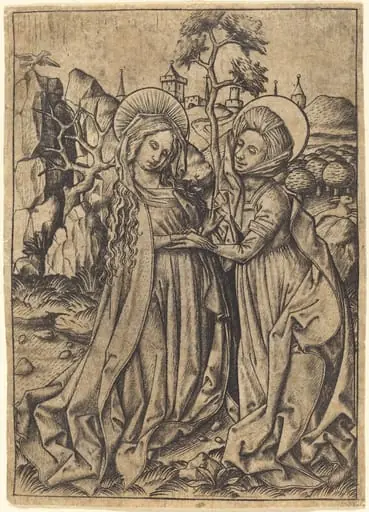
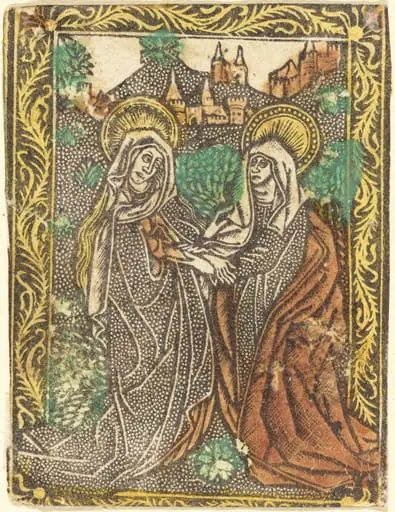
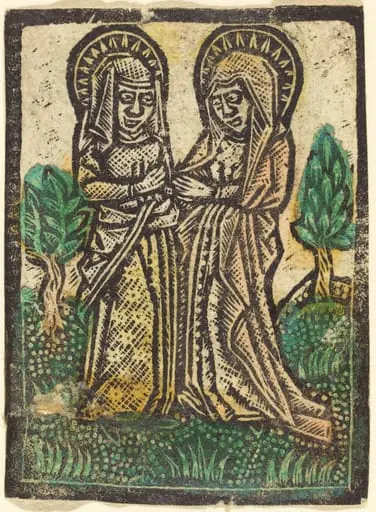
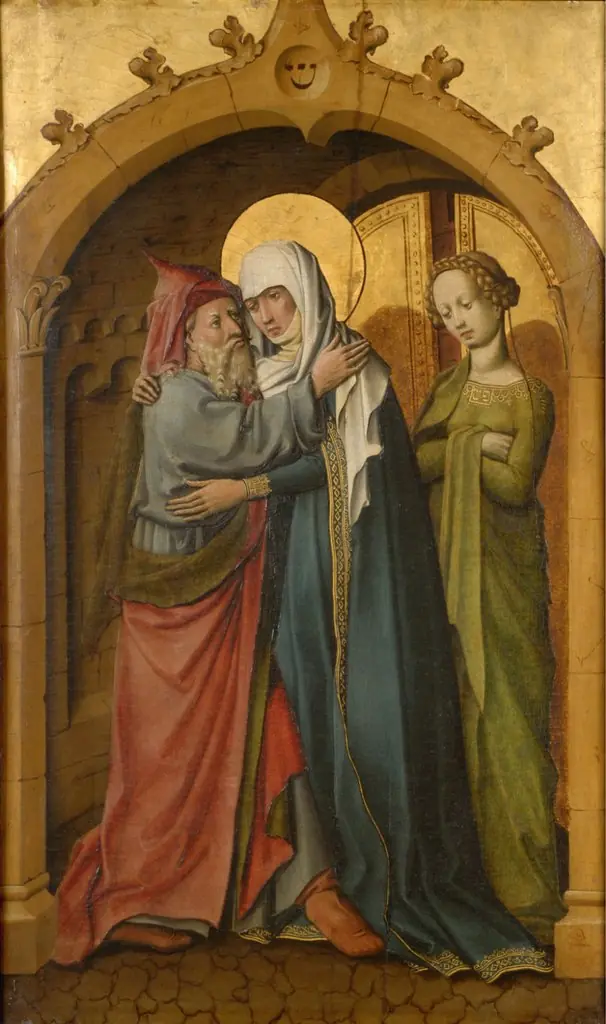
This woodcut, hand-colored on laid paper, depicts the biblical Visitation—the meeting between Mary and Elizabeth, both pregnant. Unlike many religious works of its era, it emphasizes quiet intimacy over grandeur, capturing a domestic moment with subtle realism. The medium of woodcut, combined with manual coloring, reflects a blend of printmaking tradition and artisanal detail common in early modern Northern Europe.
Subject & Meaning
The scene illustrates the moment Mary visits her cousin Elizabeth, as described in the Gospel of Luke. Rather than emphasizing divine spectacle, the composition focuses on human connection: the women embrace gently, their gestures restrained. The pregnancy, central to the narrative, is rendered without symbolism, grounding the sacred in the physical reality of women’s lives.
Technique & Style
Executed as a woodcut, the image was carved from a wooden block and printed, then individually hand-painted with water-based pigments. Lines are crisp and economical, defining forms with clarity rather than shading. The background includes simplified architectural elements and foliage, suggesting a domestic setting without elaborate detail, typical of printed images meant for wider distribution.
History & Provenance
The print likely originated in the early 16th century, possibly from a German or Netherlandish workshop. Its survival in good condition suggests it was carefully preserved, perhaps in a private devotional collection. Similar woodcuts were produced for personal or household use, indicating a growing market for affordable religious imagery outside church contexts.
Context
During the early Reformation, printed images like this one became more accessible to laypeople, replacing costly altarpieces with portable devotional aids. The Visitation, a less common subject than the Annunciation or Nativity, was chosen for its emphasis on female solidarity and quiet faith—themes resonant in emerging Protestant and Catholic devotional practices.
Legacy
This print exemplifies how religious narratives were adapted for intimate, everyday contemplation. Its use of woodcut and hand coloring influenced later devotional prints, bridging medieval iconography and early modern print culture. While not widely known today, it remains a quiet testament to the role of print in shaping personal piety in the Renaissance.
Artist & collection

Artist
This 15th-century German artist carved vivid religious scenes into metal and wood, then hand-painted them in bright, symbolic colors.

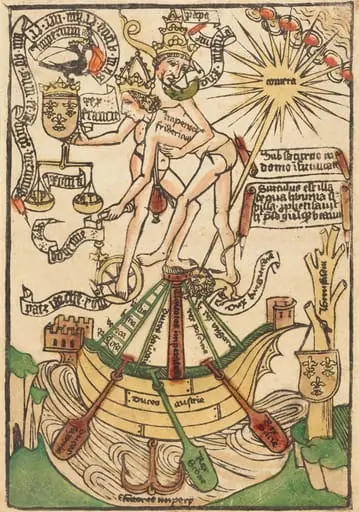 Allegory of the Meeting of Pope Paul II and Emperor Frederick III
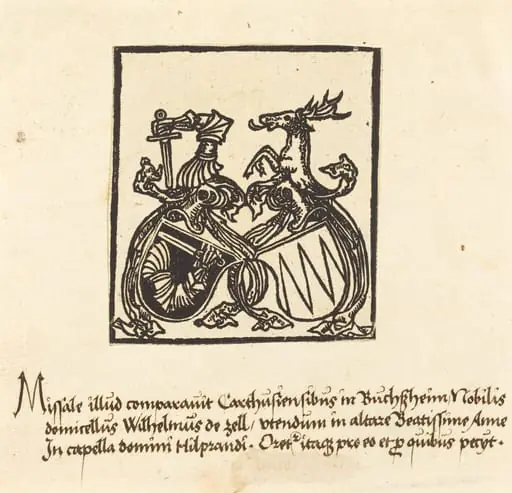 Bookplate of Wilhelm von Zell
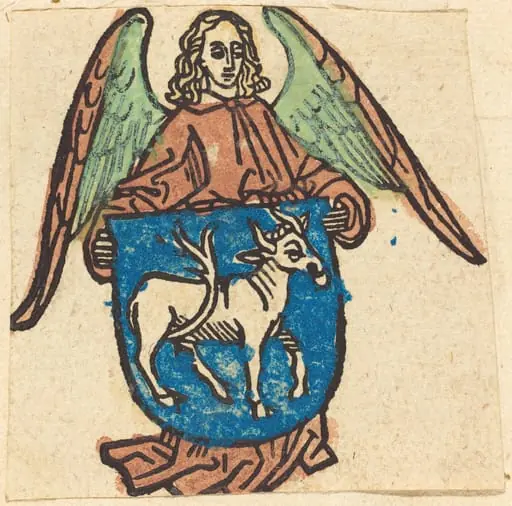 Bookplate of Hilprand Brandenburg of Bibrach
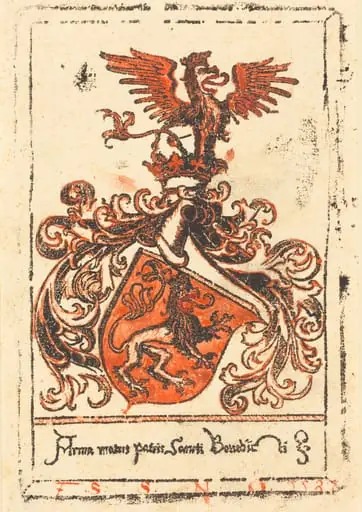 Bookplate of the Abbey of Ottobeuren
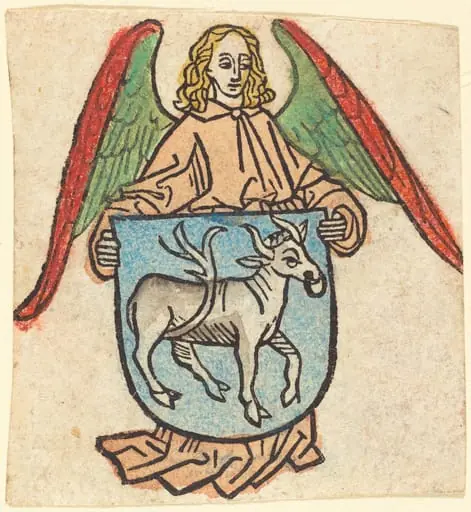 Bookplate of Hilprand Brandenburg of Bibrach
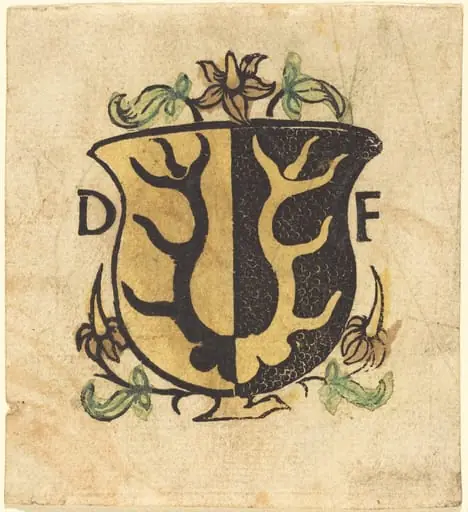 Bookplate of Dominicus Frauenfelder
![Studies for Six Figures (sheet from a model book) [recto], by German 15th Century](https://artifactworldgallery.com/img/german-15th-century--studies-for-six-figures-sheet-from-a-model-book-recto--4837429e0755bc3f-w320.webp) Studies for Six Figures (sheet from a model book) [recto]
Studies for Six Figures (sheet from a model book) [recto]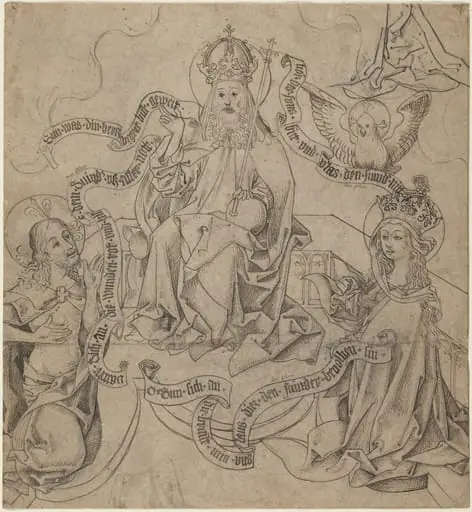 Christ and Mary Interceding with God the Father