Artwork
Madonna Overcome
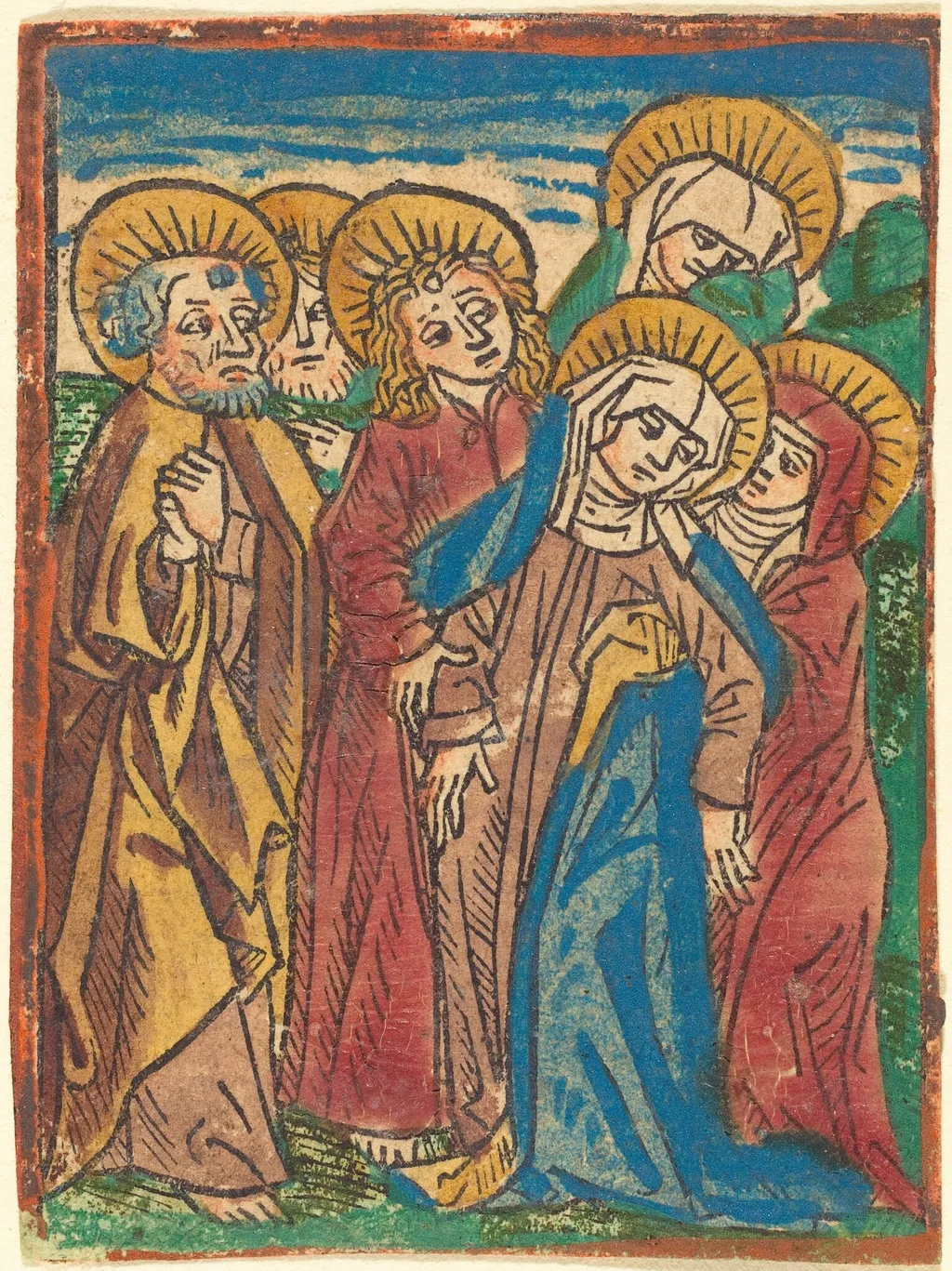
Madonna Overcome is an ink print by the Renaissance artist German 15th Century. It dates from 1490 and is held in the collection of the National Gallery of Art.
About this work
Overview
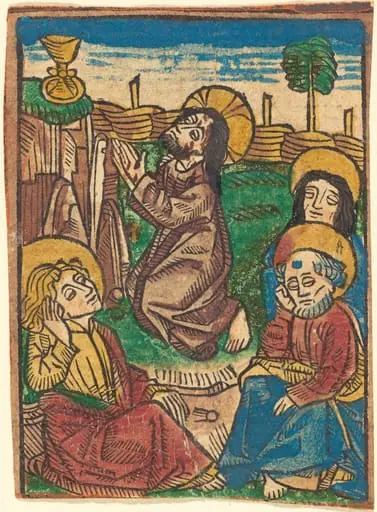
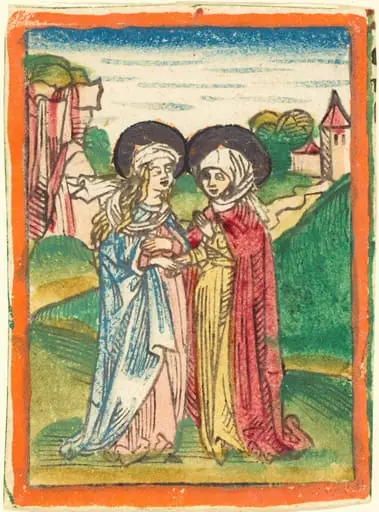
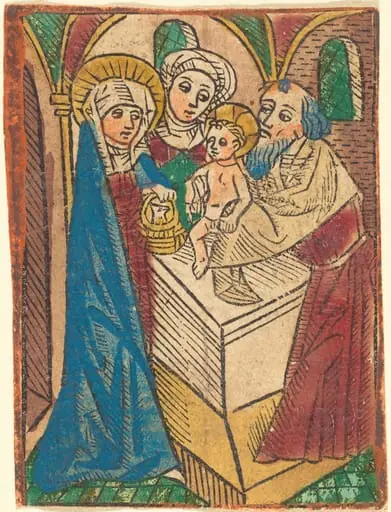
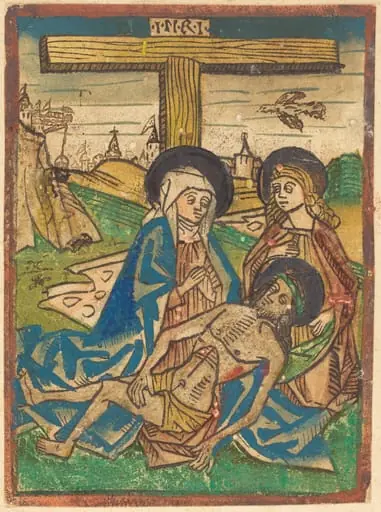
This hand-colored woodcut depicts the Madonna surrounded by two male figures and two female attendants, all rendered with halos to signify sanctity.
This hand-colored woodcut depicts the Madonna surrounded by two male figures and two female attendants, all rendered with halos to signify sanctity. The composition is compact and symmetrical, emphasizing spiritual unity. The figures stand in a row against a minimal landscape of green hills and a plain sky, their forms defined by strong outlines and vivid, flat colors typical of early printed devotional images.
Subject & Meaning
The central figure is the Virgin Mary, flanked by two male saints and two female saints or angels, all engaged in prayer. The grouping suggests a heavenly court or a moment of intercession, common in medieval devotional art. The halos and clasped hands reinforce their sacred roles, while the absence of narrative detail focuses attention on contemplation and divine presence rather than story.
Technique & Style
Executed as a hand-colored woodcut, the image was carved into a wooden block, inked, and pressed onto paper, then colored by hand. The bold contours and limited palette reflect the constraints and strengths of the medium: clarity over nuance, intensity over realism. The flatness and stylized drapery align with Northern European print traditions of the period, prioritizing symbolic clarity for devotional use.
History & Provenance
The work originates from a period when woodcuts were widely used to produce affordable religious imagery for private devotion. Though its exact origin and early owners are undocumented, its style and coloring suggest production in a German or Netherlandish workshop during the late 15th or early 16th century, when such prints circulated among lay believers seeking spiritual connection.
Context
In an era before mass reproduction, hand-colored woodcuts like this served as accessible alternatives to painted altarpieces. They were used in homes and small chapels, aiding personal prayer. The emphasis on halos, stillness, and symbolic color—red for divine love, blue for heavenly grace—follows established iconographic codes meant to guide the viewer’s meditation on sacred figures.
Legacy
This print exemplifies how early print technology democratized access to religious imagery, extending the visual language of medieval painting into domestic spaces. While later artistic movements favored naturalism, such works preserved a devotional aesthetic rooted in symbolism and repetition, influencing the visual culture of Protestant and Catholic piety well into the Reformation.
Artist & collection

Artist
This 15th-century German artist carved vivid religious scenes into metal and wood, then hand-painted them in bright, symbolic colors.

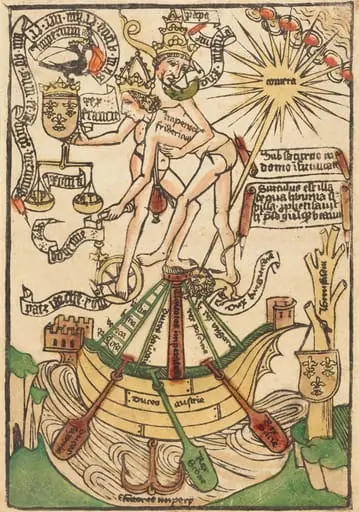 Allegory of the Meeting of Pope Paul II and Emperor Frederick III
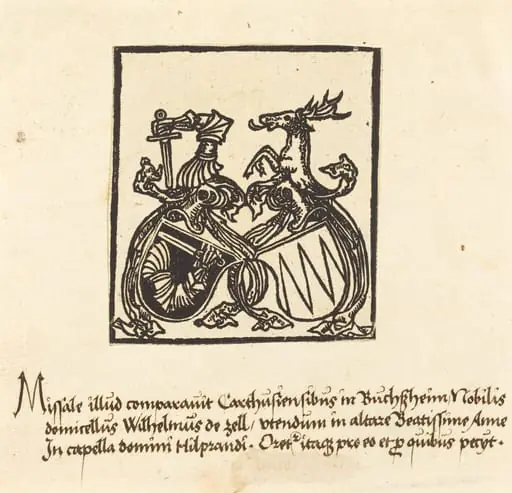 Bookplate of Wilhelm von Zell
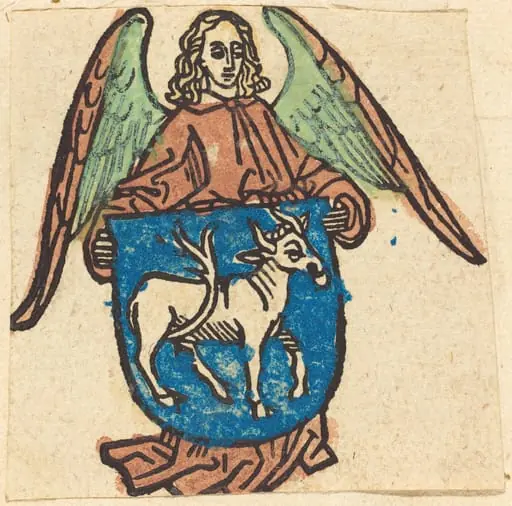 Bookplate of Hilprand Brandenburg of Bibrach
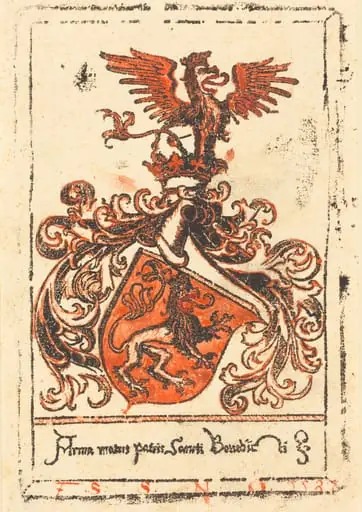 Bookplate of the Abbey of Ottobeuren
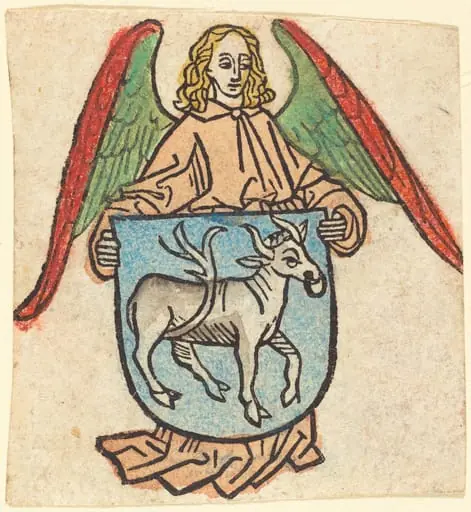 Bookplate of Hilprand Brandenburg of Bibrach
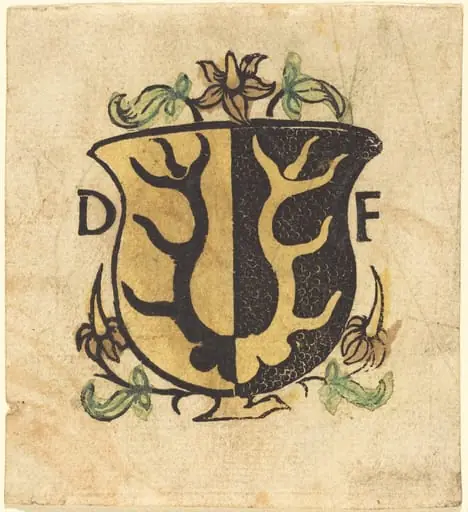 Bookplate of Dominicus Frauenfelder
![Studies for Six Figures (sheet from a model book) [recto], by German 15th Century](https://artifactworldgallery.com/img/german-15th-century--studies-for-six-figures-sheet-from-a-model-book-recto--4837429e0755bc3f-w320.webp) Studies for Six Figures (sheet from a model book) [recto]
Studies for Six Figures (sheet from a model book) [recto]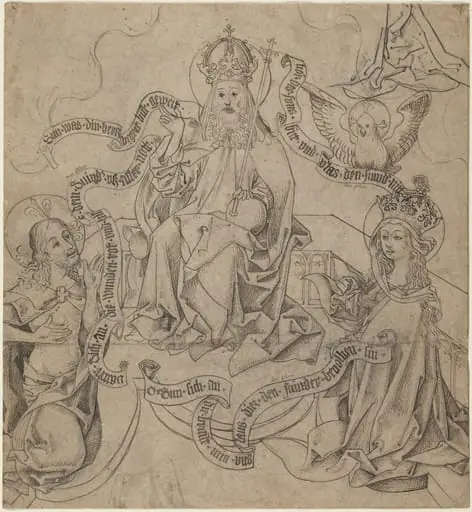 Christ and Mary Interceding with God the Father