Artwork
Treason of Judas
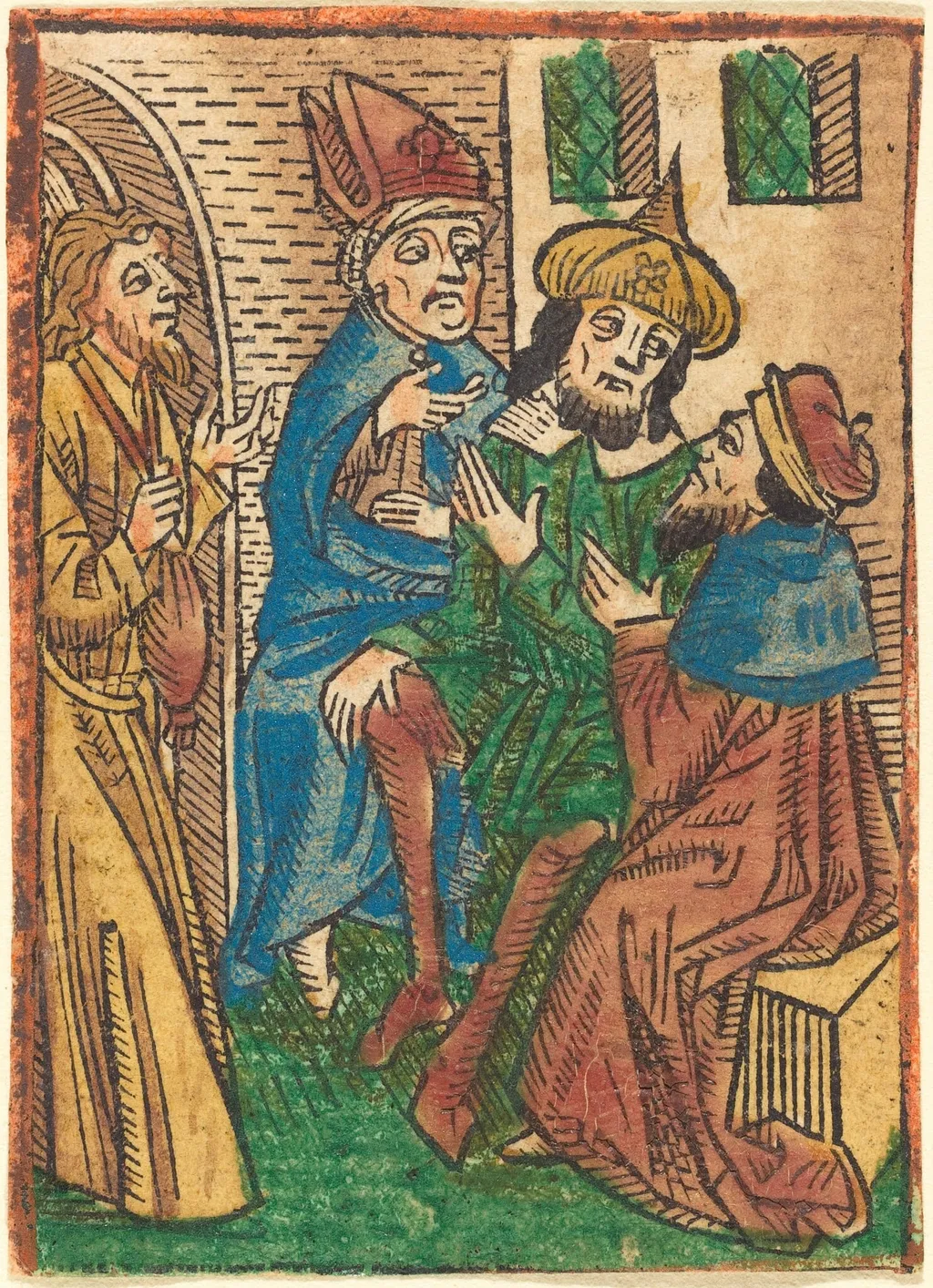
Treason of Judas is an ink print by the Renaissance artist German 15th Century. It dates from 1490 and is held in the collection of the National Gallery of Art.
About this work
Overview
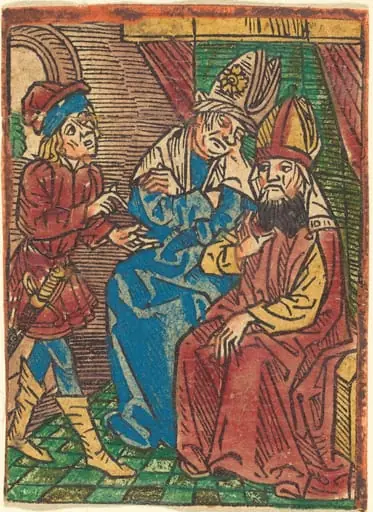
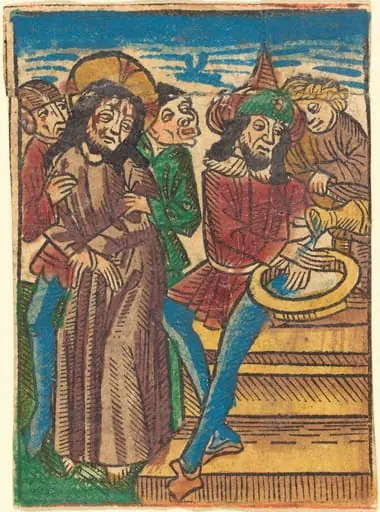
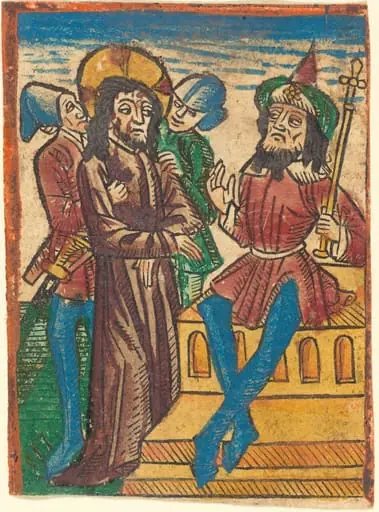
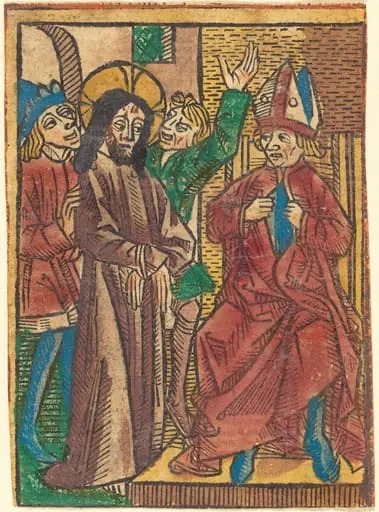
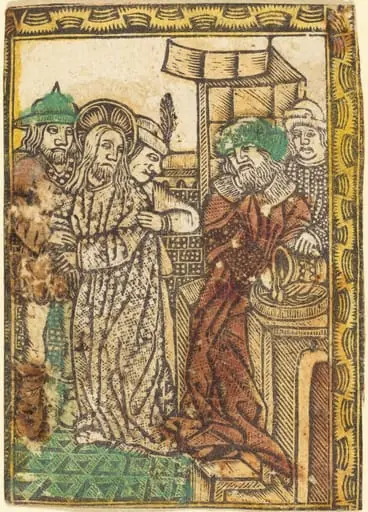
This hand-colored woodcut depicts the moment of Judas’s betrayal of Jesus, rendered in a simplified, graphic style typical of early printed images.
This hand-colored woodcut depicts the moment of Judas’s betrayal of Jesus, rendered in a simplified, graphic style typical of early printed images. The scene is set outdoors near a brick structure, with three figures arranged in a compact group. Bold, flat colors and clear outlines define the forms, emphasizing narrative clarity over naturalistic detail. The medium reflects the widespread use of woodcut printing in religious imagery during the period.
Subject & Meaning
The image captures Judas, dressed in blue and green, handing a pouch of silver coins to a figure identified as one of the temple authorities, while a third man, likely Peter, holds a staff with visible unease. The yellow hat worn by the recipient may signify his role as an outsider or enemy. The moment illustrates the biblical betrayal, underscoring themes of deceit and consequence through direct visual contrast and symbolic color coding.
Technique & Style
Executed as a hand-colored woodcut, the image was carved from a wooden block, inked, and pressed onto paper before being colored by hand. The artist employed strong contours and minimal shading, relying on flat areas of color to distinguish figures and emotion. This approach was practical for mass production and aligned with the visual language of devotional prints, prioritizing legibility and emotional impact over realism.
History & Provenance
The print likely originated in late medieval or early Renaissance Europe, where woodcuts were commonly used to illustrate biblical stories for lay audiences. Though its exact origin and early ownership are undocumented, its style and subject place it within a broader tradition of devotional prints produced for private or communal religious use, often distributed by churches or traveling vendors.
Context
During the 15th and early 16th centuries, woodcuts served as accessible tools for religious instruction, especially among populations with limited literacy. Scenes from the Passion cycle, including Judas’s betrayal, were frequently reproduced to reinforce doctrinal narratives. This print fits within that context, using visual symbolism to communicate moral and theological messages to a broad audience.
Legacy
As an example of early printed religious imagery, this woodcut reflects the transition from manuscript illumination to mechanical reproduction in devotional art. While not attributed to a known artist, its existence demonstrates how standardized visual motifs became embedded in popular piety. It remains a tangible artifact of how biblical stories were visually encoded for everyday viewers before the rise of widespread literacy.
Artist & collection

Artist
This 15th-century German artist carved vivid religious scenes into metal and wood, then hand-painted them in bright, symbolic colors.

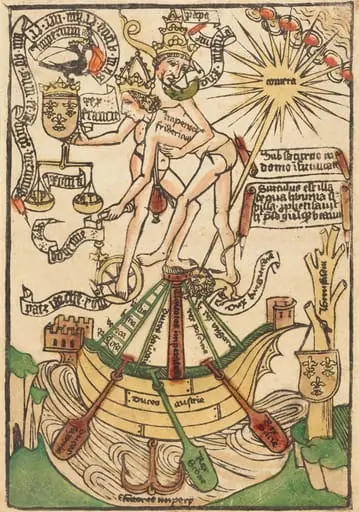 Allegory of the Meeting of Pope Paul II and Emperor Frederick III
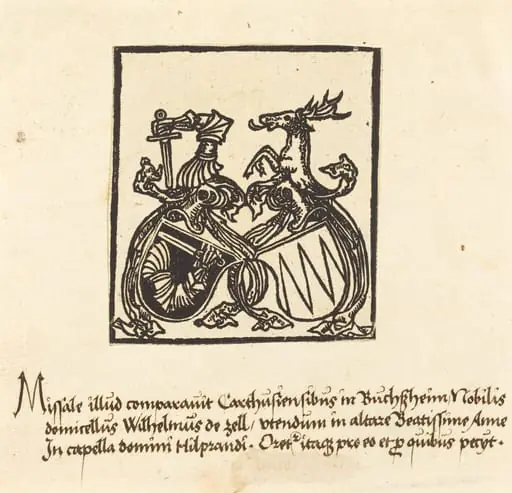 Bookplate of Wilhelm von Zell
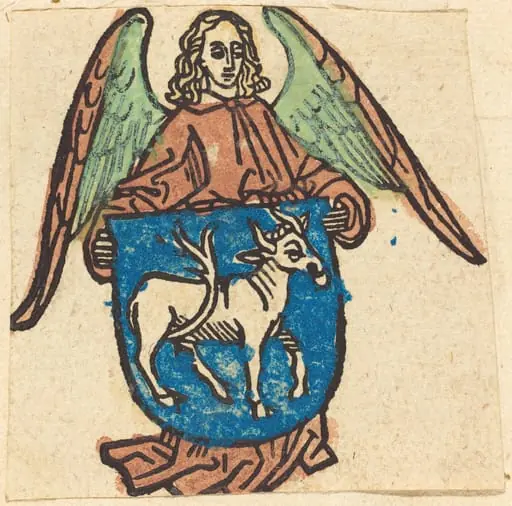 Bookplate of Hilprand Brandenburg of Bibrach
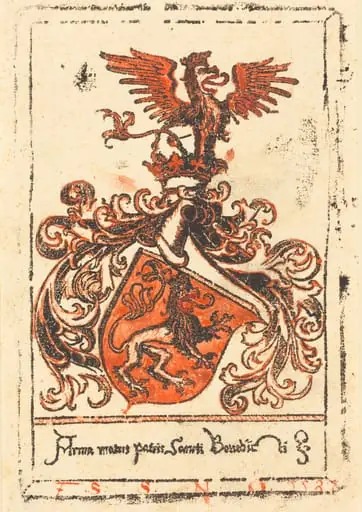 Bookplate of the Abbey of Ottobeuren
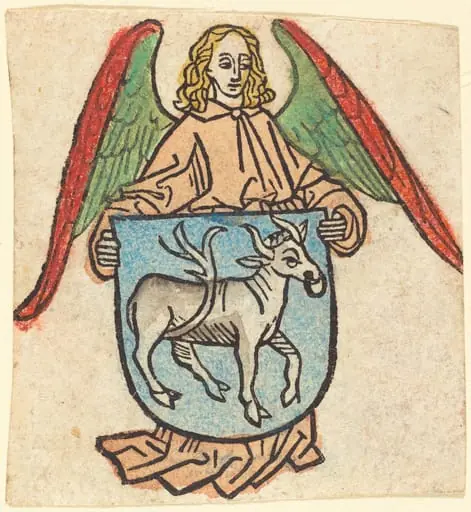 Bookplate of Hilprand Brandenburg of Bibrach
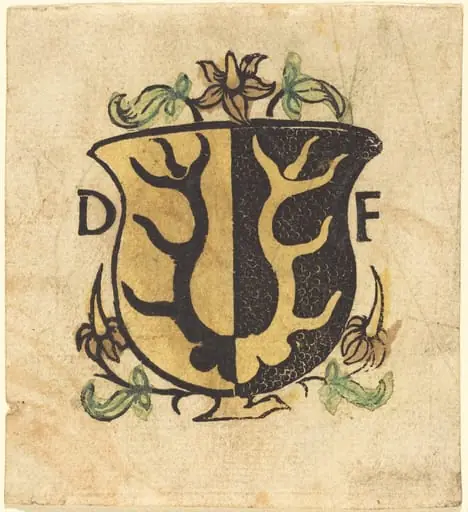 Bookplate of Dominicus Frauenfelder
![Studies for Six Figures (sheet from a model book) [recto], by German 15th Century](https://artifactworldgallery.com/img/german-15th-century--studies-for-six-figures-sheet-from-a-model-book-recto--4837429e0755bc3f-w320.webp) Studies for Six Figures (sheet from a model book) [recto]
Studies for Six Figures (sheet from a model book) [recto]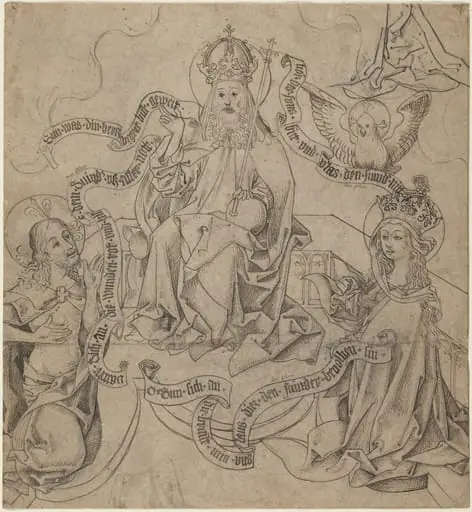 Christ and Mary Interceding with God the Father