Artwork
Calendar with the Nativity and Adoration
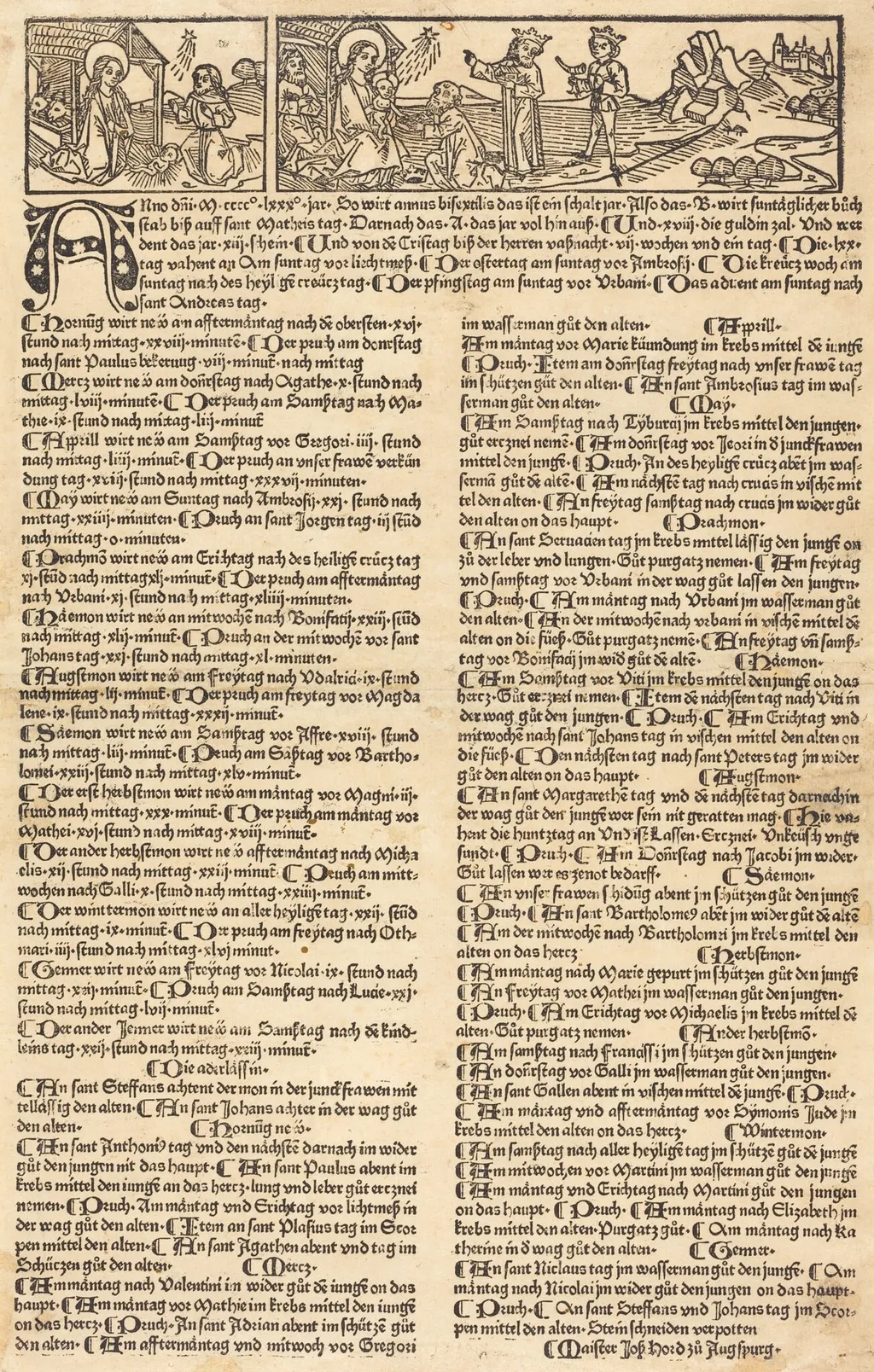
Calendar with the Nativity and Adoration is an ink print by the Renaissance artist German 15th Century. It dates from 1475 and is held in the collection of the National Gallery of Art.
About this work
Overview
The composition is densely packed, the upper register depicting biblical figures in robes, while the lower portion presents rows of names and temporal markers.
The work titled *Calendar with the Nativity and Adoration* is a black‑and‑white woodcut print. It combines a pictorial narrative of the birth of Christ with a tabular list of saints’ feast days and associated times. The composition is densely packed, the upper register depicting biblical figures in robes, while the lower portion presents rows of names and temporal markers. The edges of the sheet retain the characteristic irregularity of a wood‑cut matrix.
Subject & Meaning
The upper scene illustrates the Nativity, showing the infant Jesus surrounded by standing and kneeling figures, a visual cue for worshippers. Beneath the image, a calendar of saints is enumerated, each entry paired with a specific hour—such as “after midnight” or “midday.” This juxtaposition serves both devotional and practical purposes, guiding the faithful in liturgical observance throughout the year.
Technique & Style
Executed by carving a design into a wooden block, the artist incised fine lines to render intricate details within a limited tonal range. Ink was applied to the raised surfaces and transferred to paper, producing crisp black outlines and a stark contrast typical of early printmaking. The jagged perimeter of the sheet reflects the original block’s shape, a hallmark of woodcut production.
History & Provenance
The print’s origin dates to a period when devotional calendars were commonly distributed for personal or parish use, though the specific printer or date is not recorded in the available data. Its survival in a museum collection suggests it was valued as both a religious aid and a work of graphic art, likely passing through private hands before acquisition by the institution.
Context
Calendrical prints that merge sacred imagery with liturgical information were popular in medieval and early modern Europe, serving as portable reference tools for clergy and laypeople alike. By integrating the Nativity scene with a saintly timetable, the piece reflects a pedagogical approach that linked visual meditation on Christ’s birth with the rhythm of the ecclesiastical year.
Artist & collection

Artist
This 15th-century German artist carved vivid religious scenes into metal and wood, then hand-painted them in bright, symbolic colors.

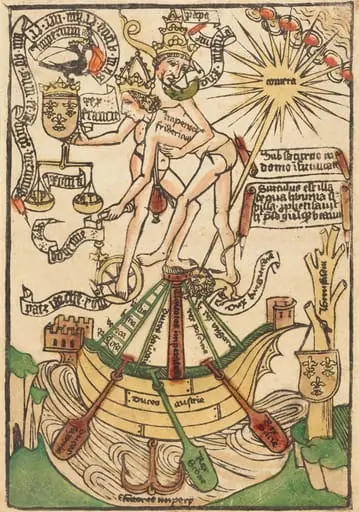 Allegory of the Meeting of Pope Paul II and Emperor Frederick III
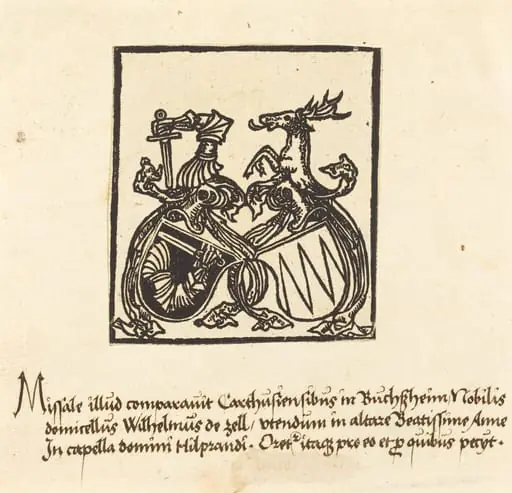 Bookplate of Wilhelm von Zell
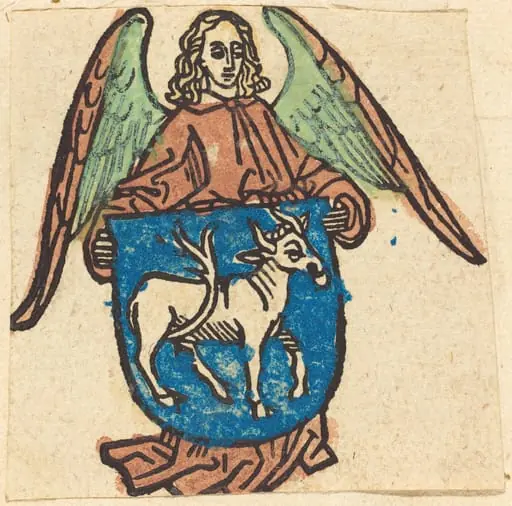 Bookplate of Hilprand Brandenburg of Bibrach
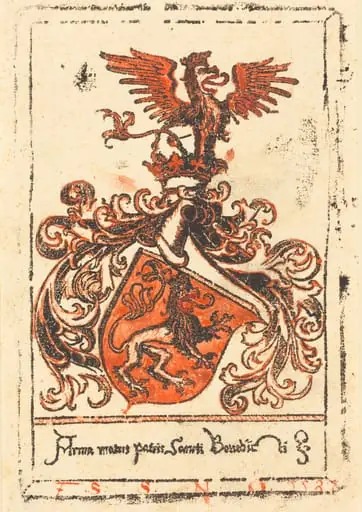 Bookplate of the Abbey of Ottobeuren
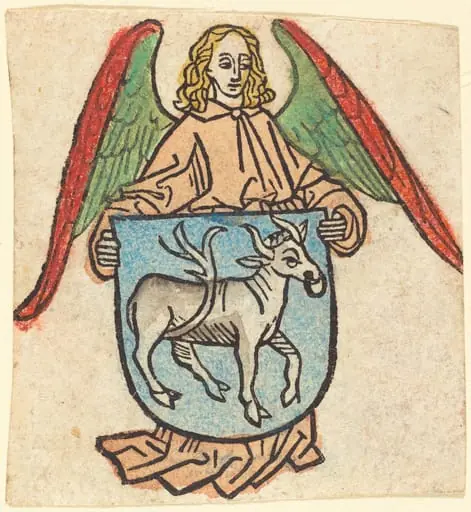 Bookplate of Hilprand Brandenburg of Bibrach
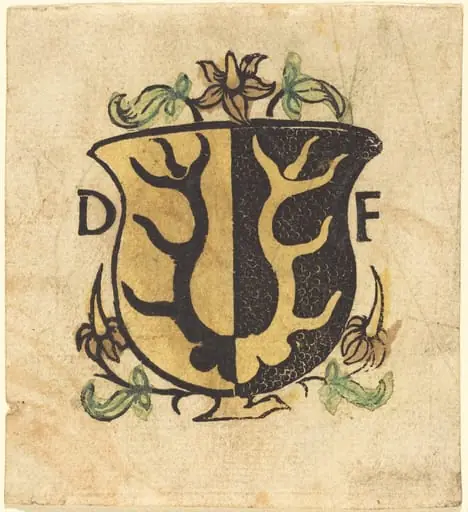 Bookplate of Dominicus Frauenfelder
![Studies for Six Figures (sheet from a model book) [recto], by German 15th Century](https://artifactworldgallery.com/img/german-15th-century--studies-for-six-figures-sheet-from-a-model-book-recto--4837429e0755bc3f-w320.webp) Studies for Six Figures (sheet from a model book) [recto]
Studies for Six Figures (sheet from a model book) [recto]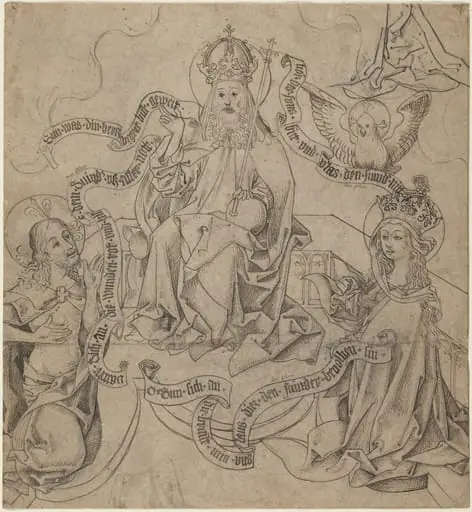 Christ and Mary Interceding with God the Father
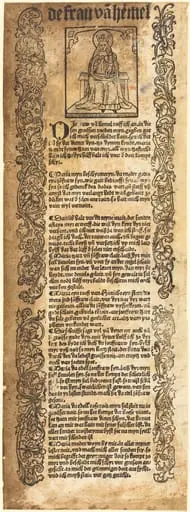 Song to the Madonna
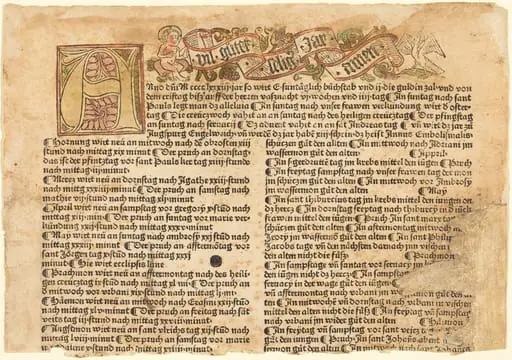 Initial A and a New Year's Wish
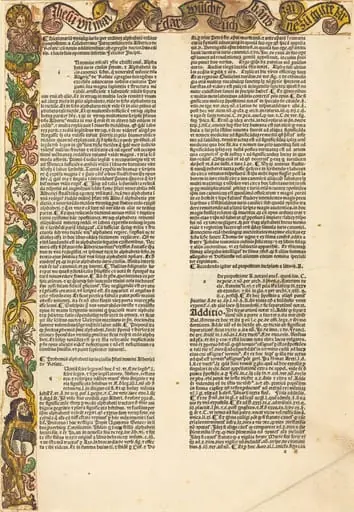 Border from an Almanac
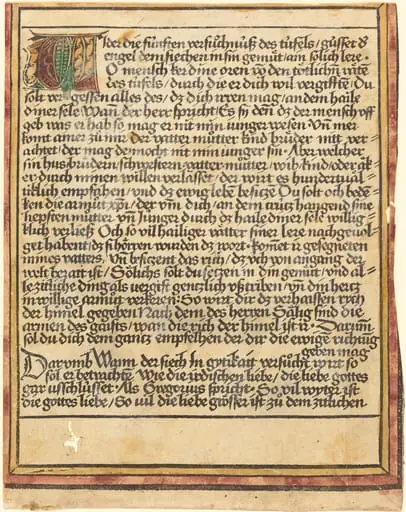 Exhortation Against Avarice
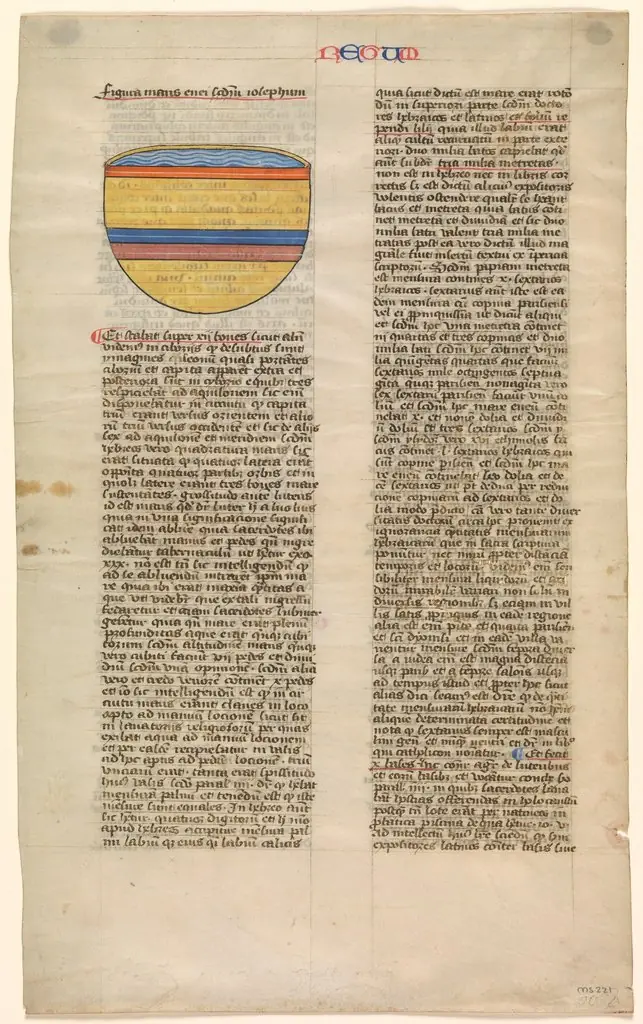 Brazen Sea, one of six illustrated leaves from the Postilla Litteralis (Literal Commentary) of Nicholas of Lyra
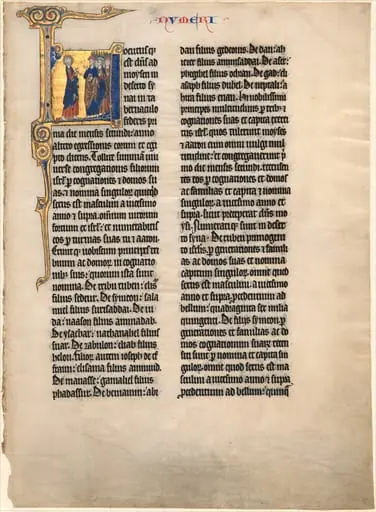 Moses Counting the Children of Israel
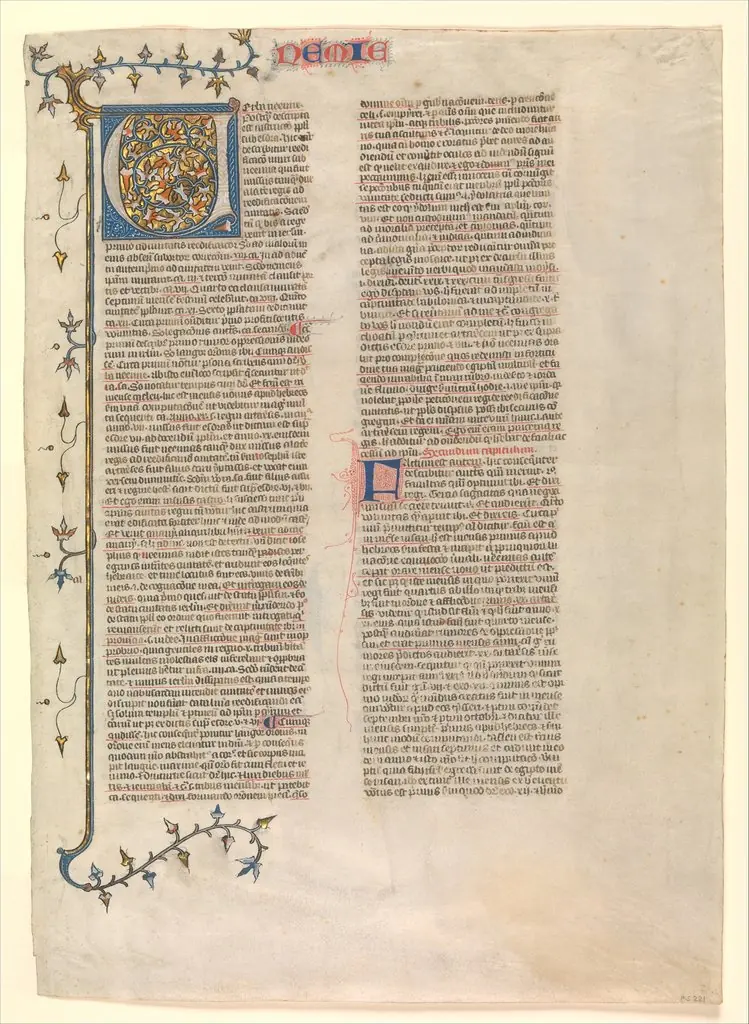 Initial "V" from the commentary of Nehemiah, one of six illustrated leaves from the Postilla Litteralis (Literal Commentary) of Nicholas of Lyra
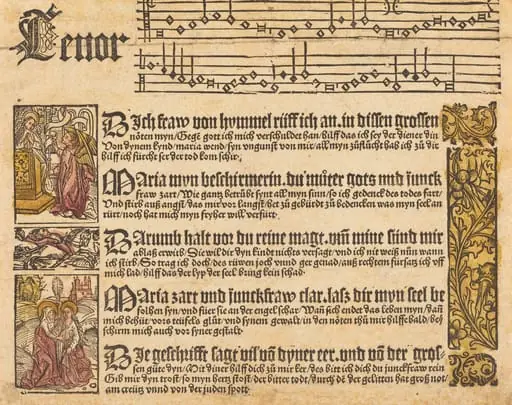 Song to the Virgin
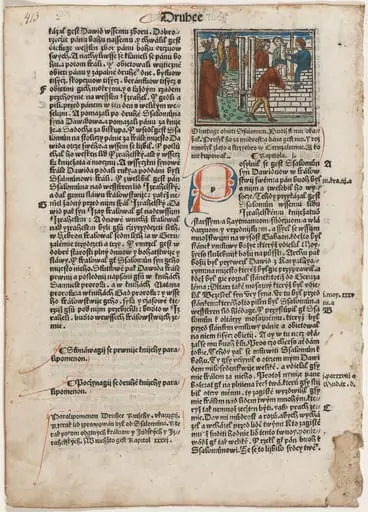 page from the Holy Bible in Bohemian
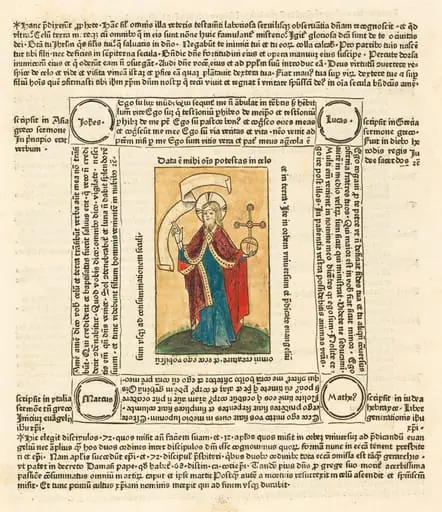 Christ as Salvator Mundi
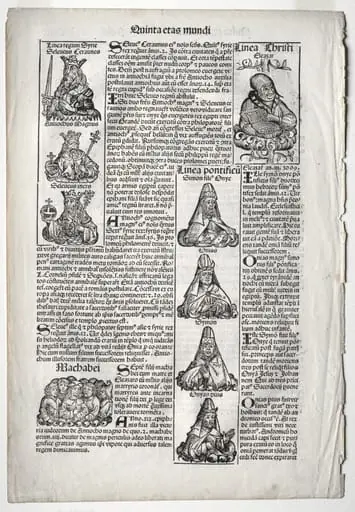 Genealogical Page; published in the Nuremberg Chronicle by Hartmann Schedel
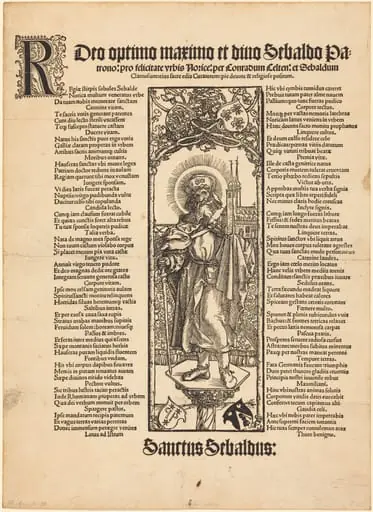 Saint Sebaldus Standing on a Column