Artwork
Nach der Mvsic: Geigen wir drei gantz Kvnstlice vnd artliche dabei
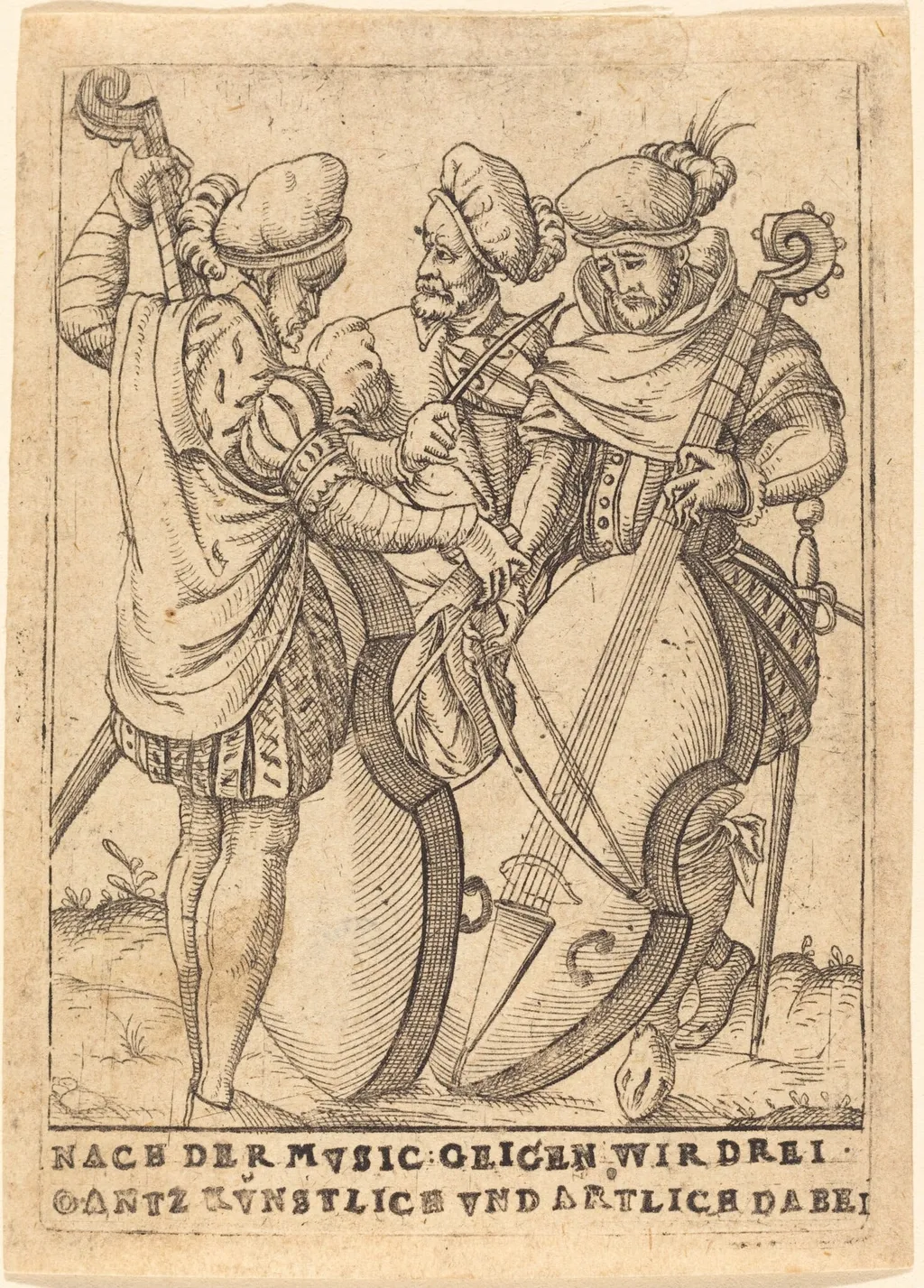
Nach der Mvsic: Geigen wir drei gantz Kvnstlice vnd artliche dabei is an ink print by the Renaissance artist German 16th Century. It dates from 1580 and is held in the collection of the National Gallery of Art. This Renaissance-era engraving depicts three musicians performing outdoors, each engaged with a distinct instrument: drum, violin, and lute.
About this work
Overview
This Renaissance-era engraving depicts three musicians performing outdoors, each engaged with a distinct instrument: drum, violin, and lute.
This Renaissance-era engraving depicts three musicians performing outdoors, each engaged with a distinct instrument: drum, violin, and lute. The scene is rendered in fine linear detail typical of metal engraving, with careful attention to clothing and posture. The title, written in early modern German, playfully frames their performance as an artful act following music, reflecting the period’s fondness for linguistic wit and visual humor.
Subject & Meaning
The three figures represent a casual, yet stylized, musical ensemble, possibly symbolizing harmony through diversity of sound and social roles. Their attire—padded garments and ornate hats—suggests a blend of civilian and theatrical dress, hinting at performance as both entertainment and social ritual. The playful title implies a self-awareness of artifice, aligning with Renaissance ideals that celebrated cleverness and the interplay between art and life.
Technique & Style
Executed in engraving, the image relies on incised lines on a metal plate to create tonal variation and texture. The artist uses fine, controlled strokes to render fabric folds, instrument details, and foliage, demonstrating mastery of the medium. Background elements are minimal, focusing attention on the figures and their instruments, a common compositional choice in prints meant for intimate viewing and reproduction.
History & Provenance
The work originates from the early 16th century, likely produced in a German-speaking region where printmaking flourished. Though the artist’s identity remains unconfirmed, the style aligns with regional engravers active in urban centers like Nuremberg. Its survival in private and institutional collections suggests it was valued as both artistic object and cultural artifact, circulated among educated audiences.
Context
During the Renaissance, music and visual art often intersected in prints meant for domestic or scholarly consumption. This image reflects a broader trend of depicting musicians in informal, humanized settings, contrasting with earlier religious iconography. The use of vernacular language in the title underscores a growing interest in secular themes and everyday life, supported by the expanding print market and rising literacy.
Legacy
As a representative example of Northern Renaissance print culture, this work contributed to the standardization of musical imagery in print. Its blend of technical precision and lighthearted subject matter influenced later genre scenes in etching and drawing. Though not widely known today, it remains a quiet testament to the era’s celebration of music as both art and social practice.
Artist & collection

Artist
A German artist from the late 1500s drew lively scenes of knights clashing in parades and mock battles.

![Abraham Entertaining the Angels [verso], by German 16th Century](https://artifactworldgallery.com/img/german-16th-century--abraham-entertaining-the-angels-verso--69d1b25f4eba0a53-w320.webp)
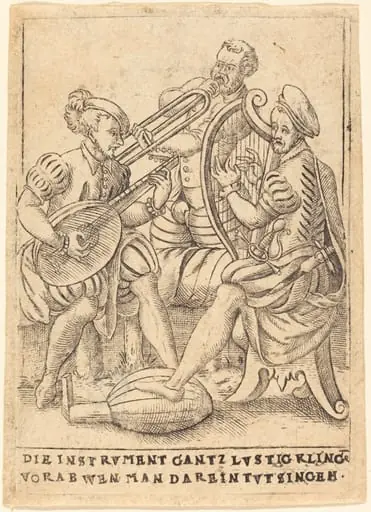 Die Instrvment gantz lvstig Kling vorab wen man darein tvt singen
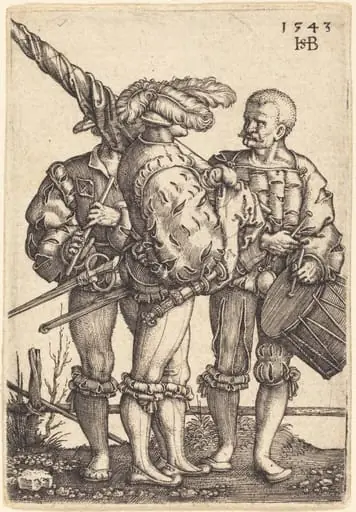 Standard Bearer, Drummer, and Piper
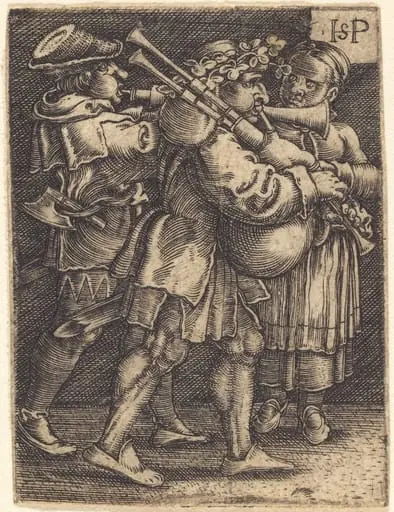 Two Street Players and a Girl
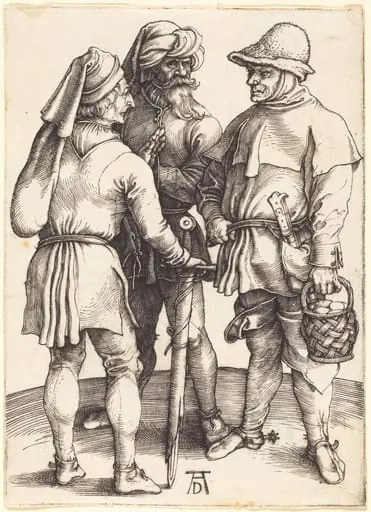 Three Peasants in Conversation
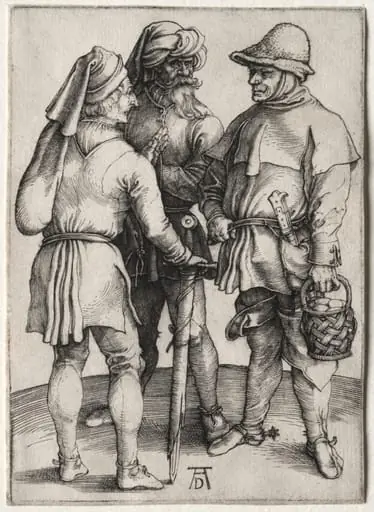 Three Peasants in Conversation
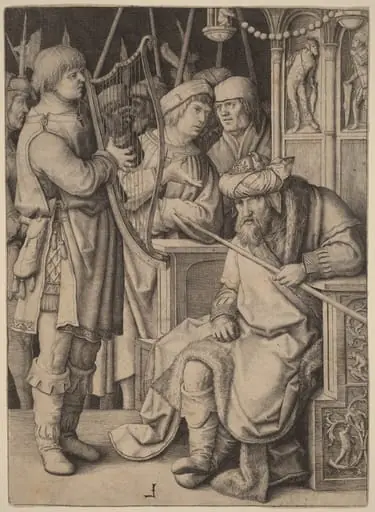 David Playing the Harp before Saul
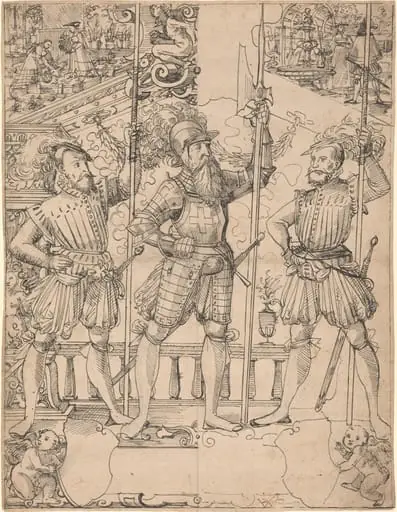 Halberdier and Two Pikemen
 David Playing the Harp before Saul
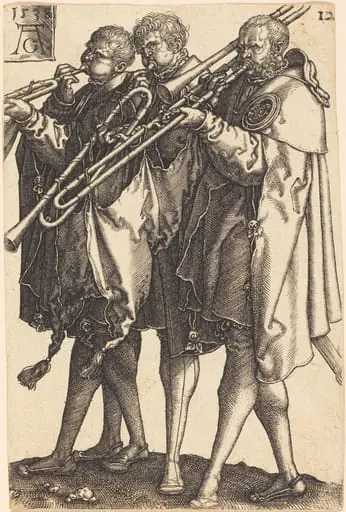 Large Wedding Dancers
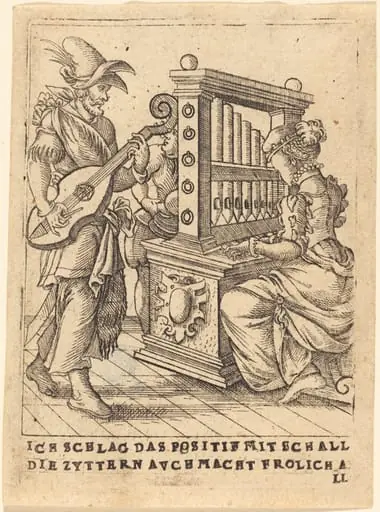 Ich schlag das Positif mit Schall die Zytternavchmacht frolich all