Artwork
The Rich Man in Hell
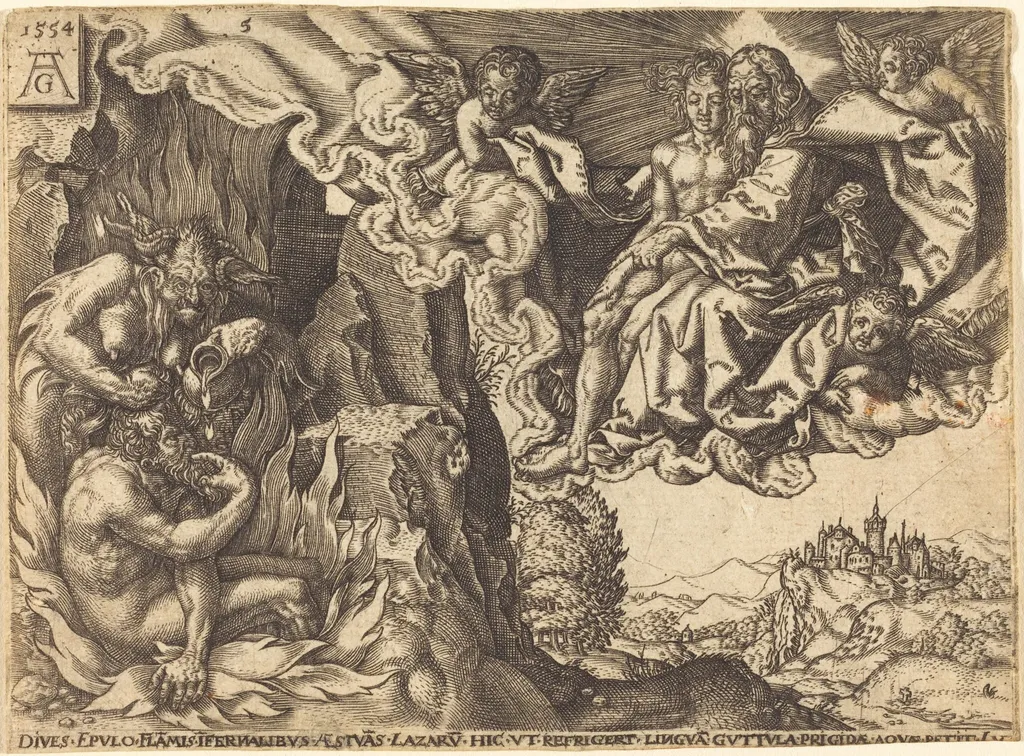
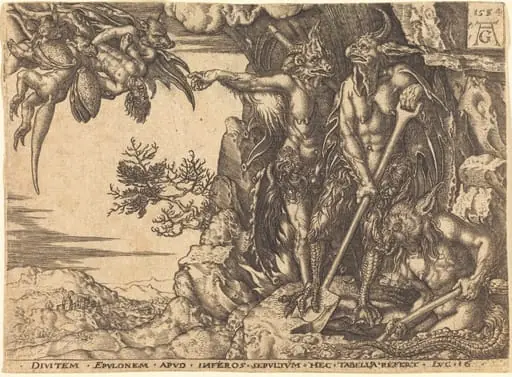
The Rich Man in Hell is an ink print by the Renaissance artist German 16th Century. It dates from 1554 and is held in the collection of the National Gallery of Art.
About this work
Overview
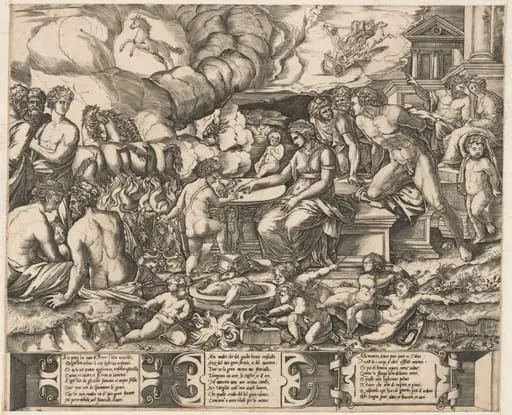
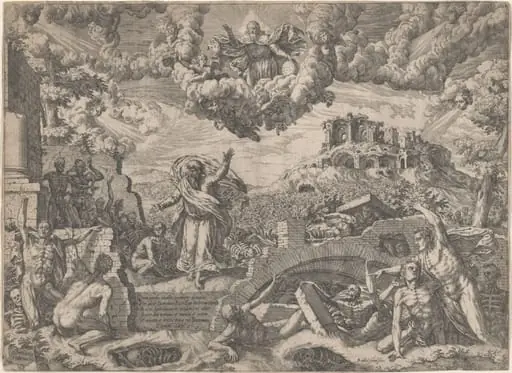
The print, titled The Rich Man in Hell, is an engraving rendered in black and white. It depicts a tormented figure engulfed in flames on the left, reaching toward a distant, contented individual. Above them, two winged angels clasp hands, while a quiet town lies below the scene, creating a compact narrative within the limited space.
Subject & Meaning
The central figure’s suffering is presented as a consequence of past greed, serving as a moral warning against avarice. The juxtaposition of the tormented man with the serene figure he reaches for underscores the contrast between earthly wealth and spiritual peace, while the angels’ gesture suggests divine intervention or hope beyond the turmoil.
Technique & Style
Executed as an engraving, the work relies on line work and tonal contrast to convey drama. The artist employs dense cross‑hatching for the flames and the anguished expression, while smoother strokes define the distant figure and the tranquil town. The composition compresses multiple narrative elements into a single, tightly arranged frame, a hallmark of the medium’s capacity for detail.
Context
The print reflects a tradition of didactic imagery common in early modern religious and moral art, where visual allegory warned viewers of sinful behavior. By placing a sinful individual in hellish torment beside a peaceful counterpart, the work aligns with contemporary sermons that linked material excess to spiritual peril, reinforcing prevailing ethical teachings.
Artist & collection

Artist
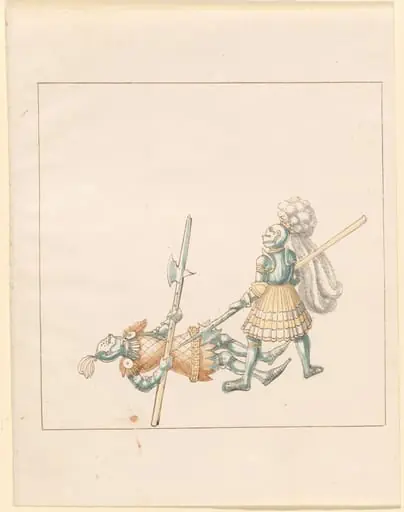
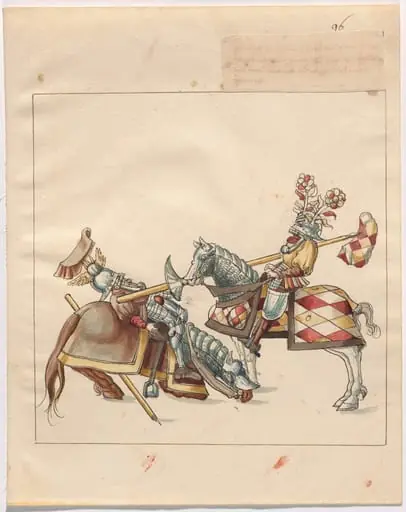
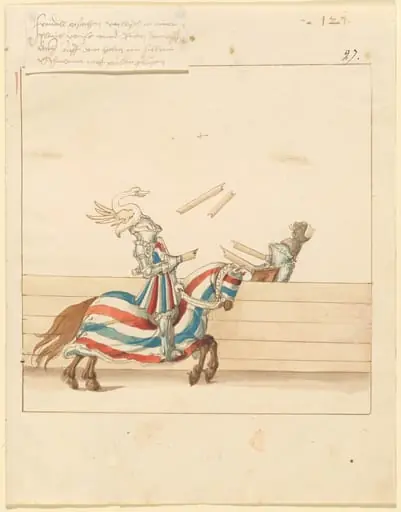
A German artist from the late 1500s drew lively scenes of knights clashing in parades and mock battles.

![Abraham Entertaining the Angels [verso], by German 16th Century](https://artifactworldgallery.com/img/german-16th-century--abraham-entertaining-the-angels-verso--69d1b25f4eba0a53-w320.webp)