Artwork
The Three Women at the Tomb [recto]
![The Three Women at the Tomb [recto], by German 16th Century, ink](https://artifactworldgallery.com/img/german-16th-century--the-three-women-at-the-tomb-recto--535206e2679b2d03-w1024.webp)
The Three Women at the Tomb [recto] is an ink drawing by the Baroque artist German 16th Century. It is held in the collection of the National Gallery of Art.
About this work
Overview
Its medium suggests a study or preparatory sketch, likely intended for a larger composition.
This drawing, titled The Three Women at the Tomb, is executed in pen and brush with black ink, enhanced by gray wash and touches of white pigment on gray-prepared paper. Its medium suggests a study or preparatory sketch, likely intended for a larger composition. The use of tonal washes and selective highlighting indicates a deliberate exploration of light and form, typical of Renaissance draftsmanship aimed at capturing emotional nuance through minimal means.
Subject & Meaning
The scene depicts three women at the tomb of Christ, a moment from the Resurrection narrative. Their postures and gestures convey contemplation, sorrow, and awe, reflecting the biblical account of women who discovered the empty tomb. The focus on their quiet reaction, rather than divine intervention, emphasizes human response to mystery, aligning with devotional traditions that invited viewers to empathize with the witnesses.
Technique & Style
The artist employed fluid pen lines to define figures and drapery, layered with subtle gray washes to model volume and shadow. White heightening adds luminosity to fabric folds and faces, suggesting divine light without literal representation. The gray paper serves as a mid-tone foundation, allowing the ink and white to create contrast with restraint. This technique reveals a mastery of economy, where each mark contributes to emotional and spatial clarity.
History & Provenance
The drawing’s early ownership is undocumented, but its paper type and handling align with Italian workshop practices of the early 16th century. It likely originated in a circle influenced by Leonardo da Vinci or Raphael, given its tonal sensitivity and compositional restraint. No definitive record of its acquisition or exhibition exists prior to the 19th century, though its preservation suggests it was valued as a study rather than a finished work.
Context
Created during a period when artists increasingly turned to direct observation and emotional expression in religious subjects, this drawing reflects broader shifts in devotional art. While altarpieces emphasized grandeur, preparatory sketches like this one prioritized intimate, psychological realism. Such drawings circulated among artists as models for conveying sacred moments with quiet dignity, away from theatricality.
Legacy
Though not widely reproduced, the drawing exemplifies the Renaissance practice of using drawing as a tool for spiritual and visual inquiry. Its preservation offers insight into how artists distilled complex narratives into restrained, emotionally resonant forms. It remains a quiet testament to the role of preparatory work in shaping the visual language of sacred storytelling.
Artist & collection

Artist
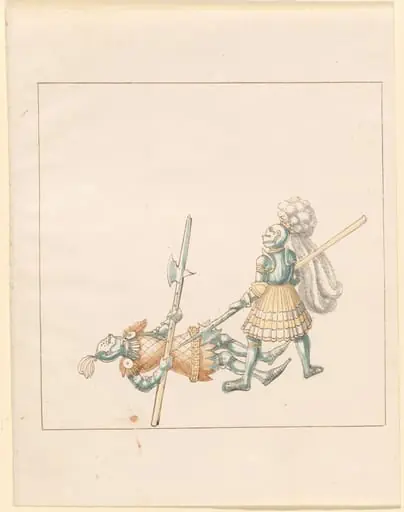
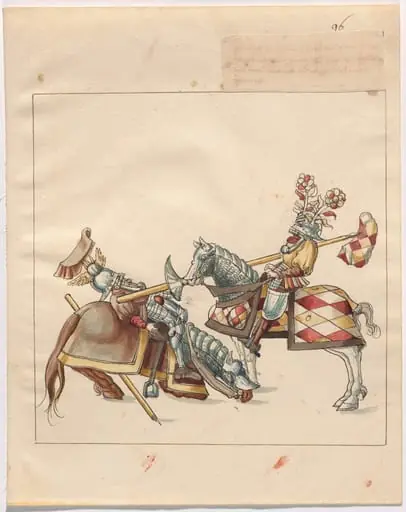
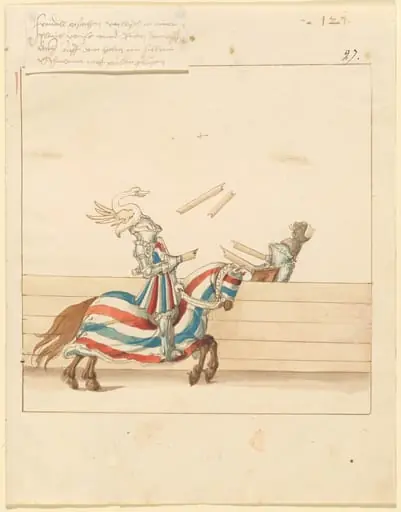
A German artist from the late 1500s drew lively scenes of knights clashing in parades and mock battles.

![Abraham Entertaining the Angels [verso], by German 16th Century](https://artifactworldgallery.com/img/german-16th-century--abraham-entertaining-the-angels-verso--69d1b25f4eba0a53-w320.webp)
![Christ and the Adulteress [recto], by German 16th Century](https://artifactworldgallery.com/img/german-16th-century--christ-and-the-adulteress-recto--5b25374cf53907ed-w320.webp) Christ and the Adulteress [recto]
Christ and the Adulteress [recto]![The Birth of Christ [verso], by German 16th Century](https://artifactworldgallery.com/img/german-16th-century--the-birth-of-christ-verso--76b597791431f5d1-w320.webp) The Birth of Christ [verso]
The Birth of Christ [verso]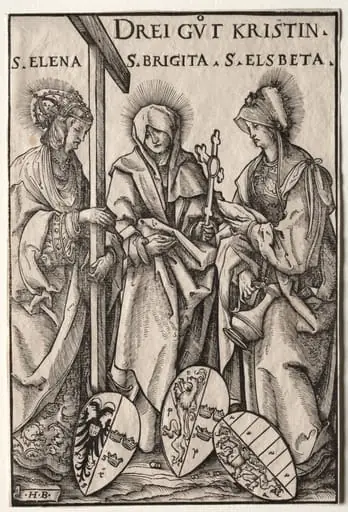 The Three Christian Heroines: Saints Helen, Bridget and Elizabeth
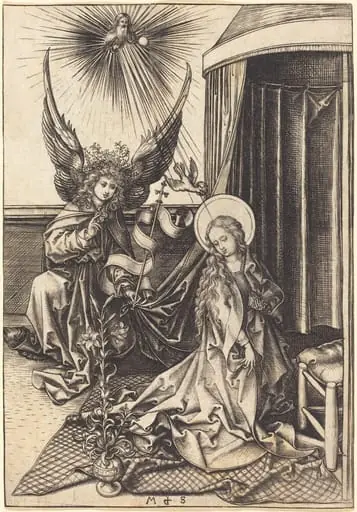 The Annunciation
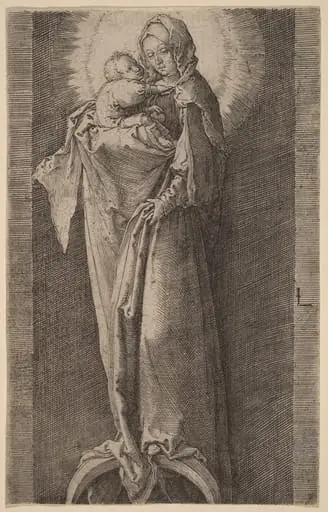 The Virgin in the Niche
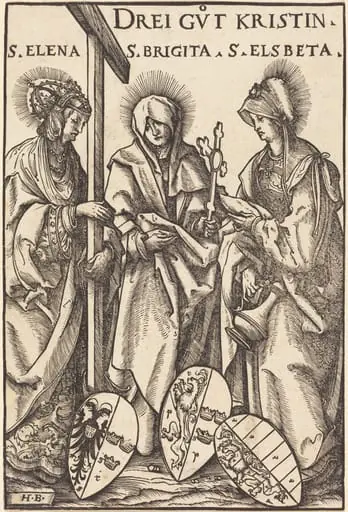 Saint Helena, Saint Brigitta and Saint Elizabeth
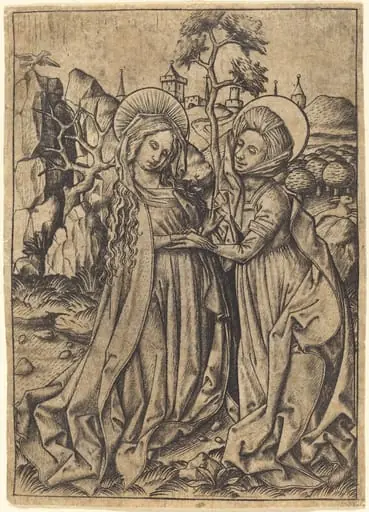 The Visitation
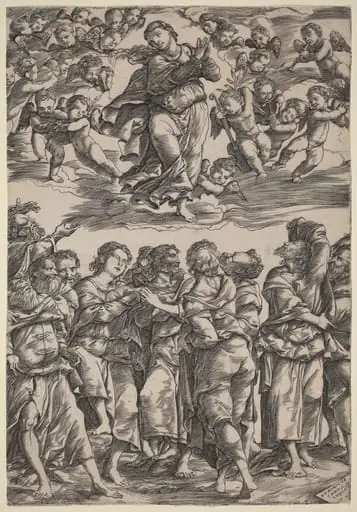 The Assumption of the Virgin
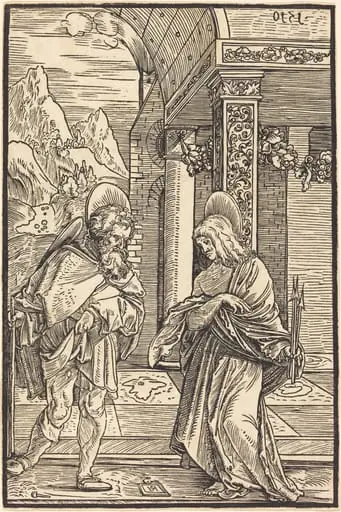 Saint Roch and Saint Sebastian
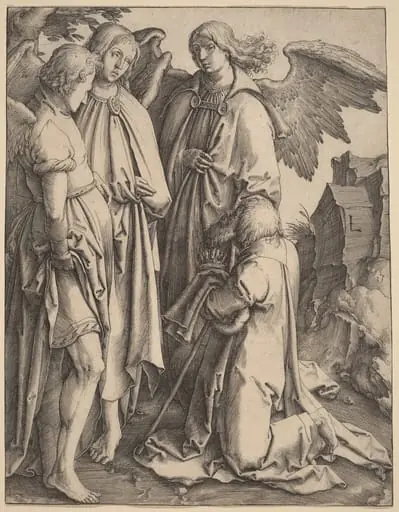 Abraham and the Three Angels
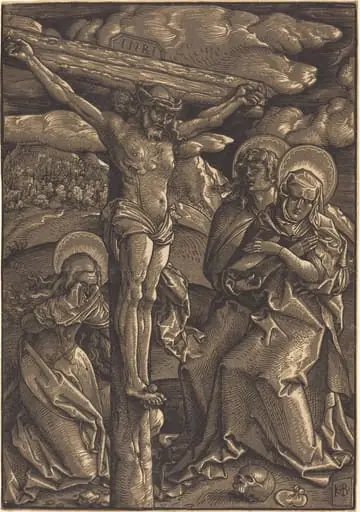 The Crucifixion
![The Adoration of the Kings [recto], by German 16th Century](https://artifactworldgallery.com/img/german-16th-century--the-adoration-of-the-kings-recto--d7f3fbf5ae8063c3-w320.webp) The Adoration of the Kings [recto]
The Adoration of the Kings [recto]