Artwork
The Madonna and Child in a Garden
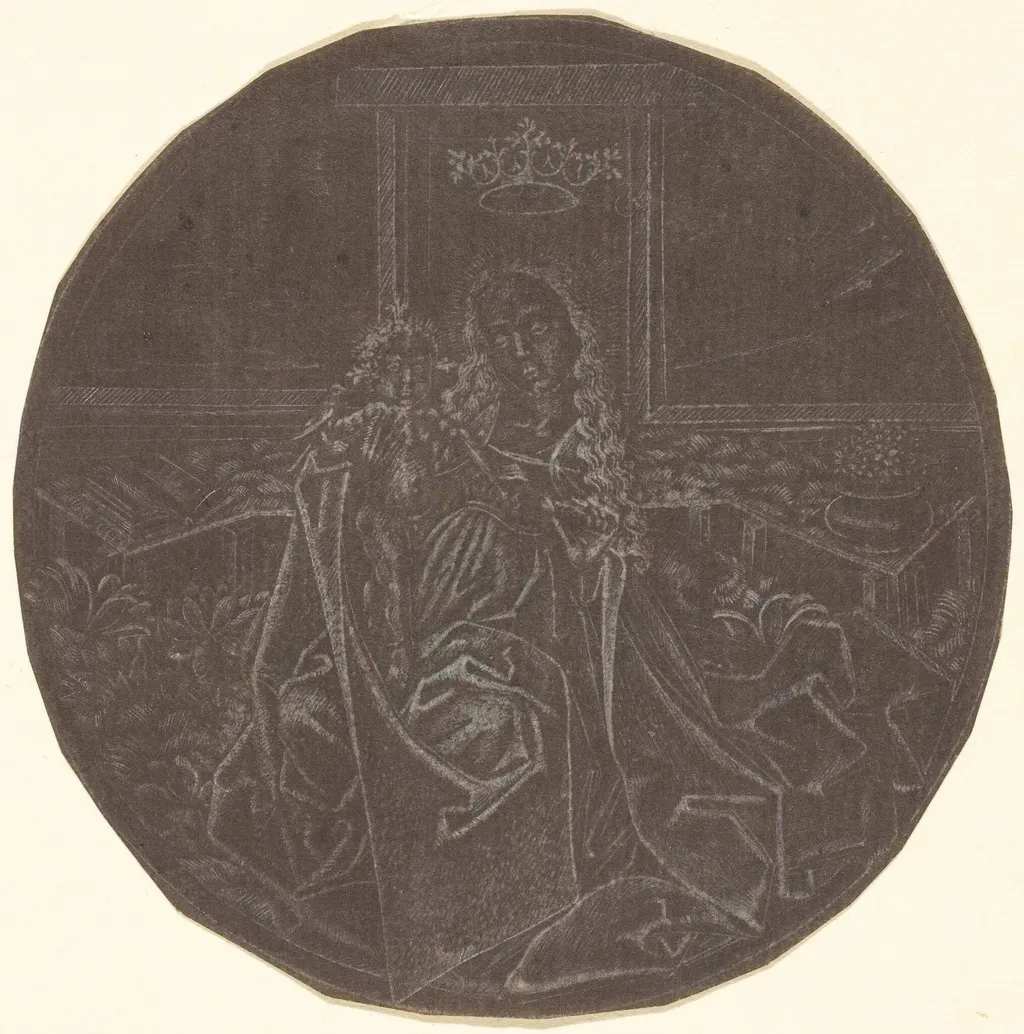
The Madonna and Child in a Garden is a print by the Romanticist artist German 19th Century. It dates from 1850 and is held in the collection of the Rosenwald Collection.
About this work
Check out German 19th Century prints next—they often copied old art in new ways.
This looks like a round print of a woman holding a baby. She sits on a bench, surrounded by plants and flowers. The background has tall trees and a fence. The woman wears a long dress with a head covering. The baby is small and looks at her.
The print is dark with some white lines to make details pop. It’s a copy of an old engraving from the 1400s. The artist who made this later version worked in the 1800s.
Check out German 19th Century prints next—they often copied old art in new ways.
Overview
The work titled *Madonna and Child in a Garden* is a round print produced by collotype, enhanced with white heightening to accentuate details. It presents a seated female figure, veiled and dressed in a long gown, cradling an infant. The scene is set within a lush garden bordered by trees and a fence, rendered in a predominantly dark palette with selective white lines.
Subject & Meaning
The image depicts the Virgin Mary with the infant Jesus, a conventional devotional motif that emphasizes maternal tenderness and divine incarnation. The surrounding flora and enclosed garden allude to the hortus conclusus, a symbolic space of purity and spiritual refuge associated with the Virgin in medieval iconography.
Technique & Style
Executed as a collotype facsimile, the print reproduces the line work of an earlier engraving through a photographic process, while white heightening—applied by hand—highlights contours and creates contrast. The overall aesthetic mirrors the linear precision and devotional calm of 15th‑century engraving, yet the 19th‑century production introduces a softer tonal range characteristic of the period’s print technologies.
History & Provenance
The image is a 19th‑century reproduction of a 15th‑century engraving, reflecting a broader German practice of re‑issuing medieval artworks for contemporary audiences. The original engraving’s creator remains unidentified, while the collotype version was produced by an unnamed workshop in the 1800s, intended for collectors interested in historic religious imagery.
Context
During the 1800s, German printers frequently revived medieval prints, employing newer techniques like collotype to make them more accessible. This work exemplifies that trend, bridging Renaissance devotional art with the industrial age’s capacity for mass reproduction, and illustrates the period’s fascination with antiquarian subjects.
Legacy
The print stands as a testament to 19th‑century efforts to preserve and disseminate medieval visual culture. By translating an early engraving into a modern medium, it contributed to the continued visibility of the Madonna and Child motif in European art collections and scholarly study.
Artist & collection

Artist
This artist left only tiny, perfect fragments—endpapers and saints, no bigger than a postcard.

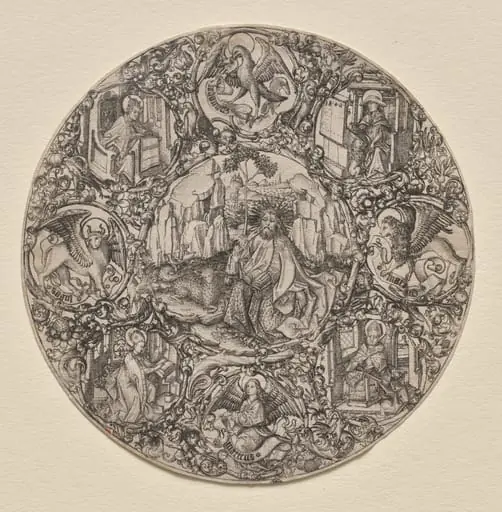 St. John the Baptist Surrounded by the Evangelists and Four Fathers of the Latin Church
 General
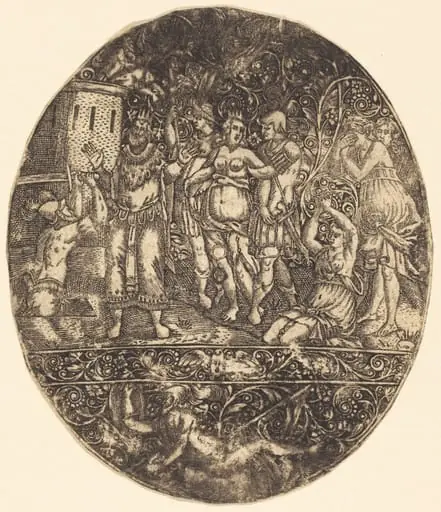 The Capture of Troy
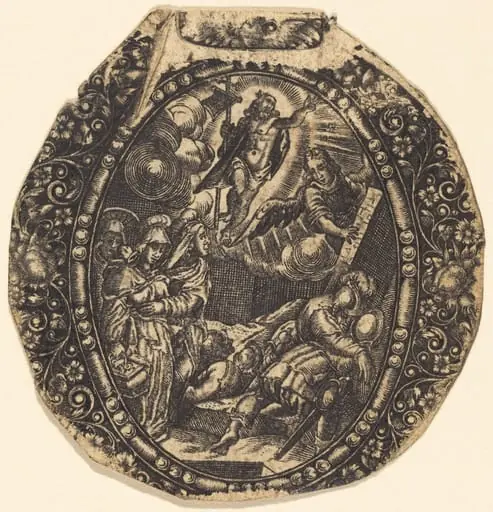 The Resurrection
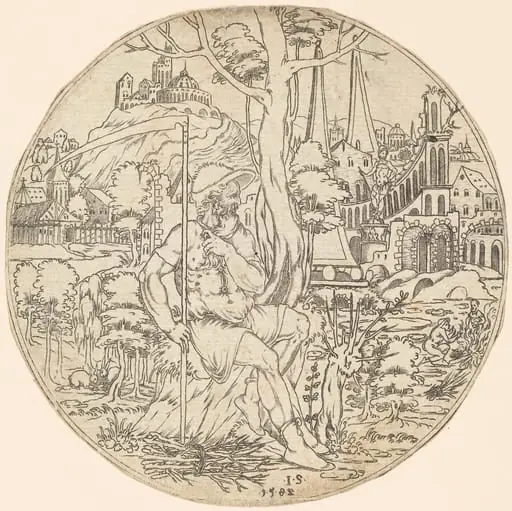 Saturn
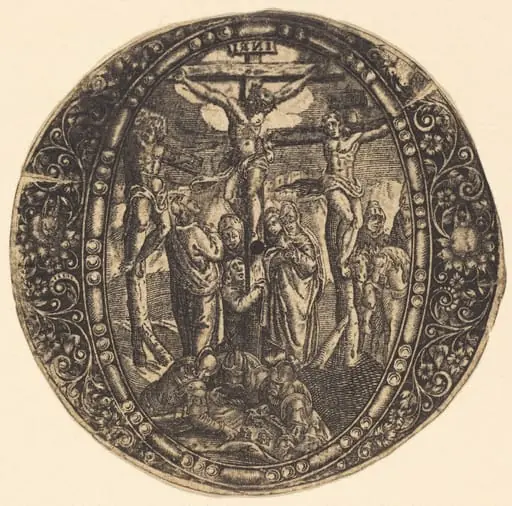 The Crucifixion
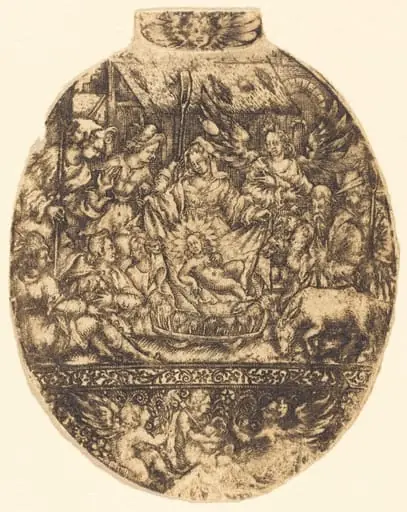 The Adoration of the Shepherds
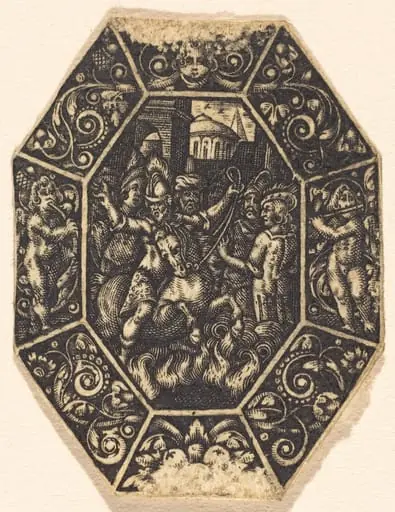 Man on Horseback
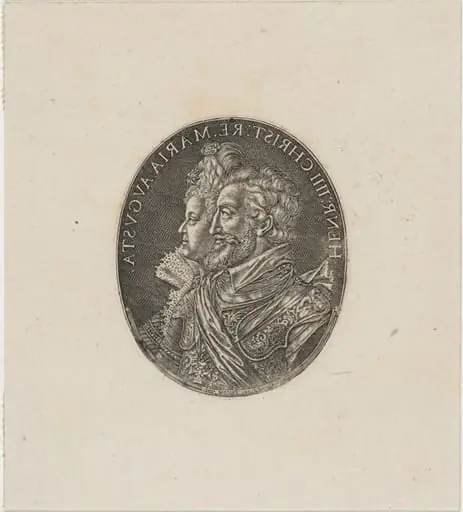 Henry IV and Maria de Medici
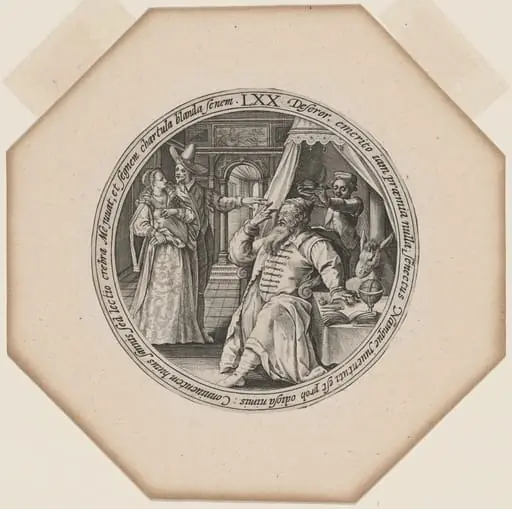 LXX: Seventy Years
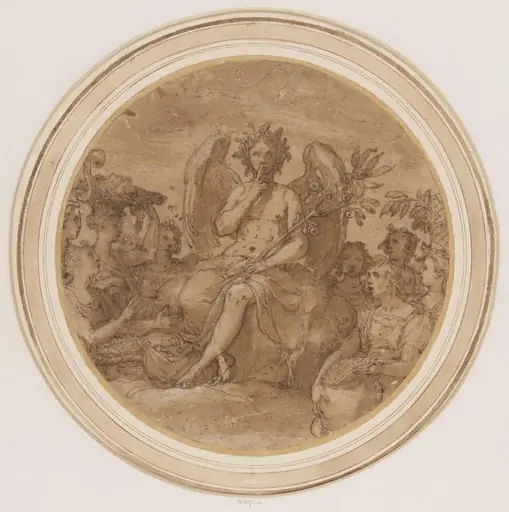 Harpocrates (or Horus), God of Silence
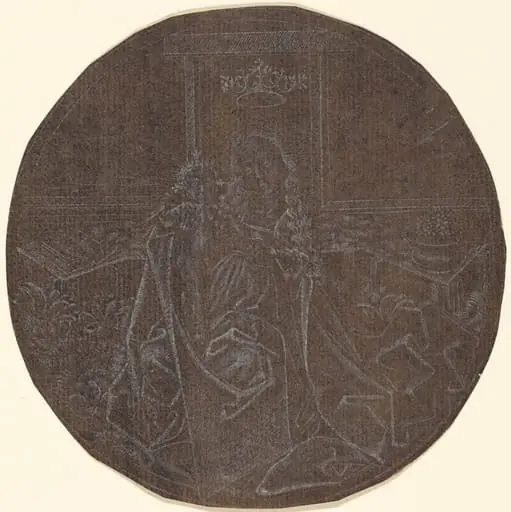 The Madonna and Child in a Garden