Artwork
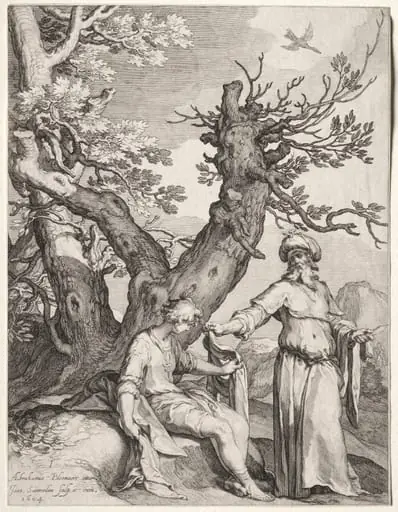
An Angel Foretells the Birth of Abraham's Son
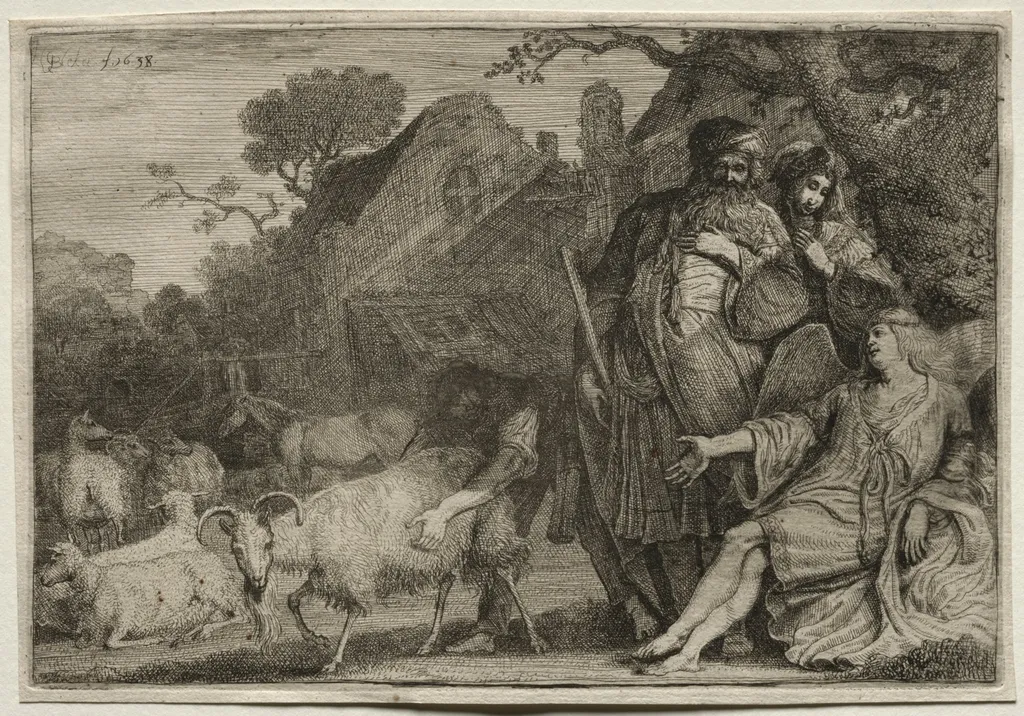
An Angel Foretells the Birth of Abraham's Son is a print by the Baroque artist Gerrit Claesz Bleker. It dates from 1638 and is held in the collection of the Cleveland Museum of Art. Created in 1638 by Gerrit Claesz.
About this work
Overview
Bleker, this etching illustrates a moment from the Book of Genesis in which an angel announces to Abraham and Sarah that they will have a son.
Created in 1638 by Gerrit Claesz. Bleker, this etching illustrates a moment from the Book of Genesis in which an angel announces to Abraham and Sarah that they will have a son. Bleker, active in Haarlem during the Dutch Golden Age, was known for landscapes and allegorical scenes, and this print reflects his engagement with biblical narratives. The work is rendered in fine linear detail, characteristic of etching techniques of the period.
Subject & Meaning
The scene captures the divine promise of Isaac’s birth, a pivotal moment in Abrahamic tradition. Abraham, aged and bearded, stands beside Sarah, who sits in quiet contemplation, while a young child clings to his leg—perhaps symbolizing the future child or a present reminder of their childlessness. The kneeling angel, wings folded, delivers the message with solemnity, emphasizing divine intervention in human affairs.
Technique & Style
Bleker employed etching to achieve delicate tonal gradations, using fine lines to model the figures’ drapery and facial features. The background is rendered with sparse, atmospheric tree lines and grazing sheep, creating depth without clutter. The figures are arranged in a compact, intimate group, their gestures subdued yet expressive, aligning with the restrained emotional tone common in Northern Baroque religious prints.
History & Provenance
Bleker joined the Haarlem Guild of St. Luke before 1643, indicating his recognized status among local artists. This print likely circulated among collectors and religious households in the Netherlands, where biblical imagery was widely appreciated. No definitive early ownership records survive, but its survival in museum collections suggests it was preserved as an example of Haarlem’s printmaking tradition.
Context
In 17th-century Holland, religious subjects remained popular despite Calvinist reservations about imagery. Artists like Bleker adapted biblical stories into quiet, domestic scenes that invited personal reflection. Etchings such as this one served both devotional and educational purposes, offering accessible visual narratives to a literate, middle-class audience.
Legacy
Though Bleker is less known today than his contemporaries, this print exemplifies the quiet intensity of Dutch religious etching. It contributes to the broader understanding of how biblical themes were rendered in intimate, human terms during the Dutch Golden Age. The work remains a reference for studies of provincial printmaking and the persistence of religious iconography in a largely Protestant society.
Artist & collection
Artist
Gerrit Claesz Bleker (1592, in Haarlem – February 8, 1656, in Haarlem), was a Dutch Golden Age painter.

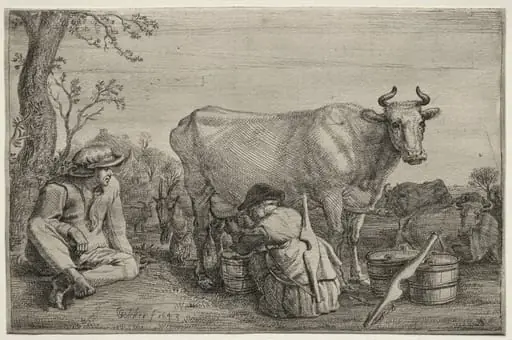
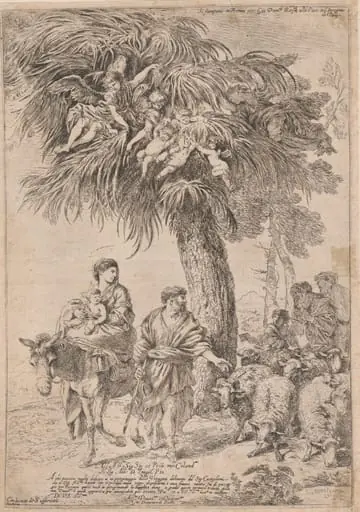 The Flight into Egypt
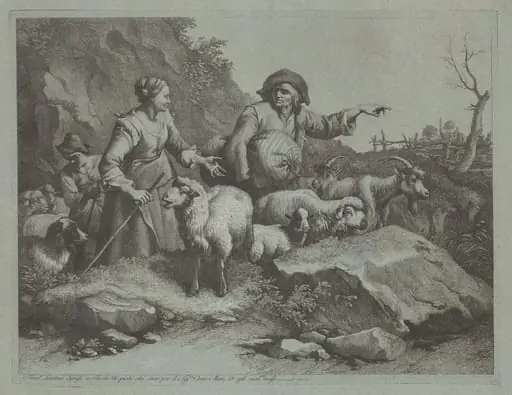 Peasant Man with a Sack and Two Shepherdesses
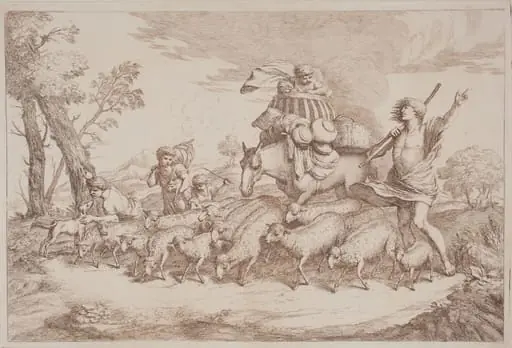 A Pastoral Journey with a Child in a Basket on Horseback
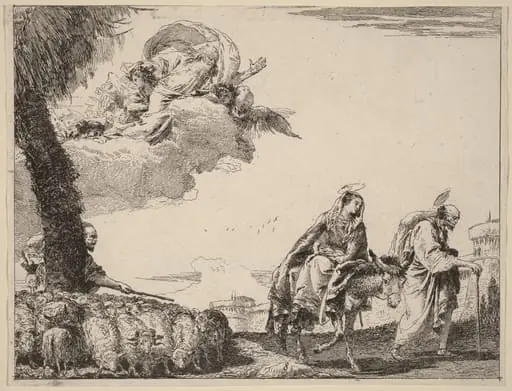 The Flight with the Holy Family at the Right
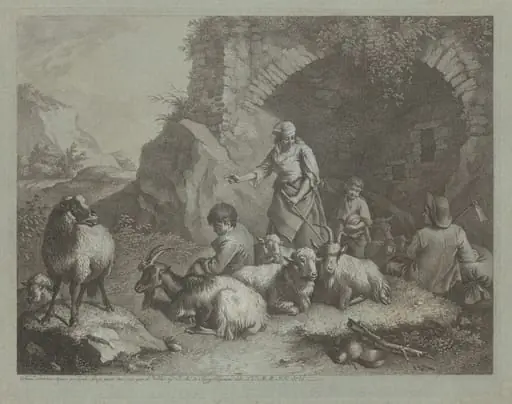 Woman, Shepherd Boys, and Sheep near an Arch
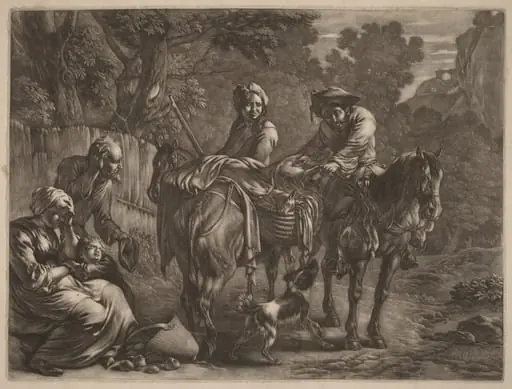 Robbers on Horseback
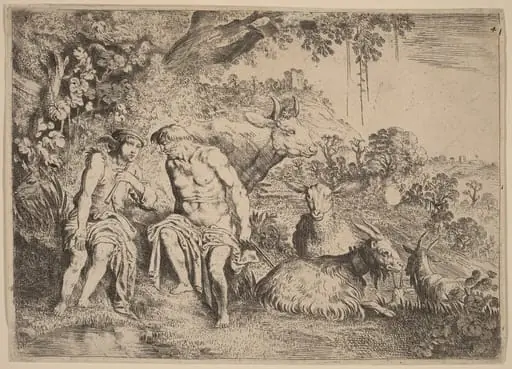 Mercury Lulling Argus to Sleep
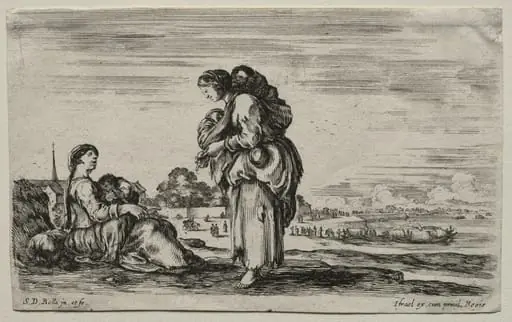 Various Figures and Landscapes: Two Mothers Chatting Together
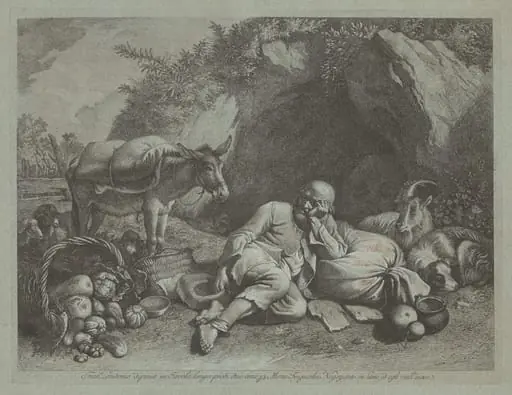 Old Man Leaning against a Sack
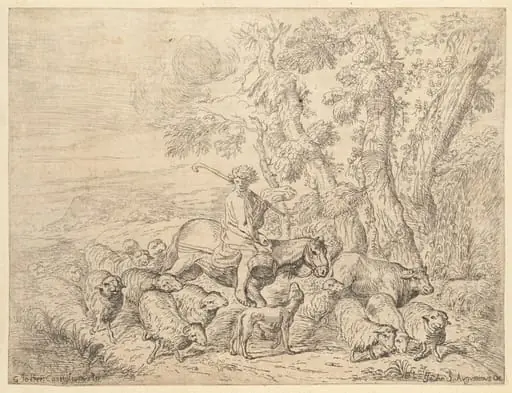 Shepherd on Horseback
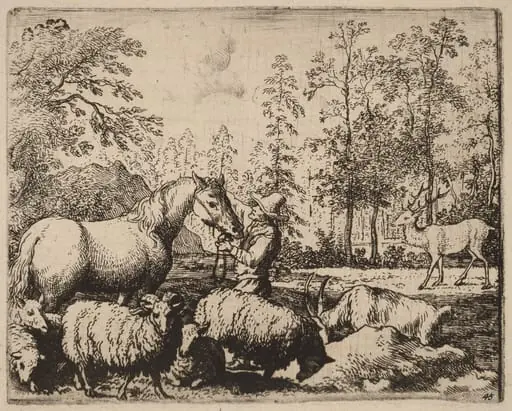 The Horse and the Stag
 Ahijah and Jeroboam