Artwork
Head of the Virgin
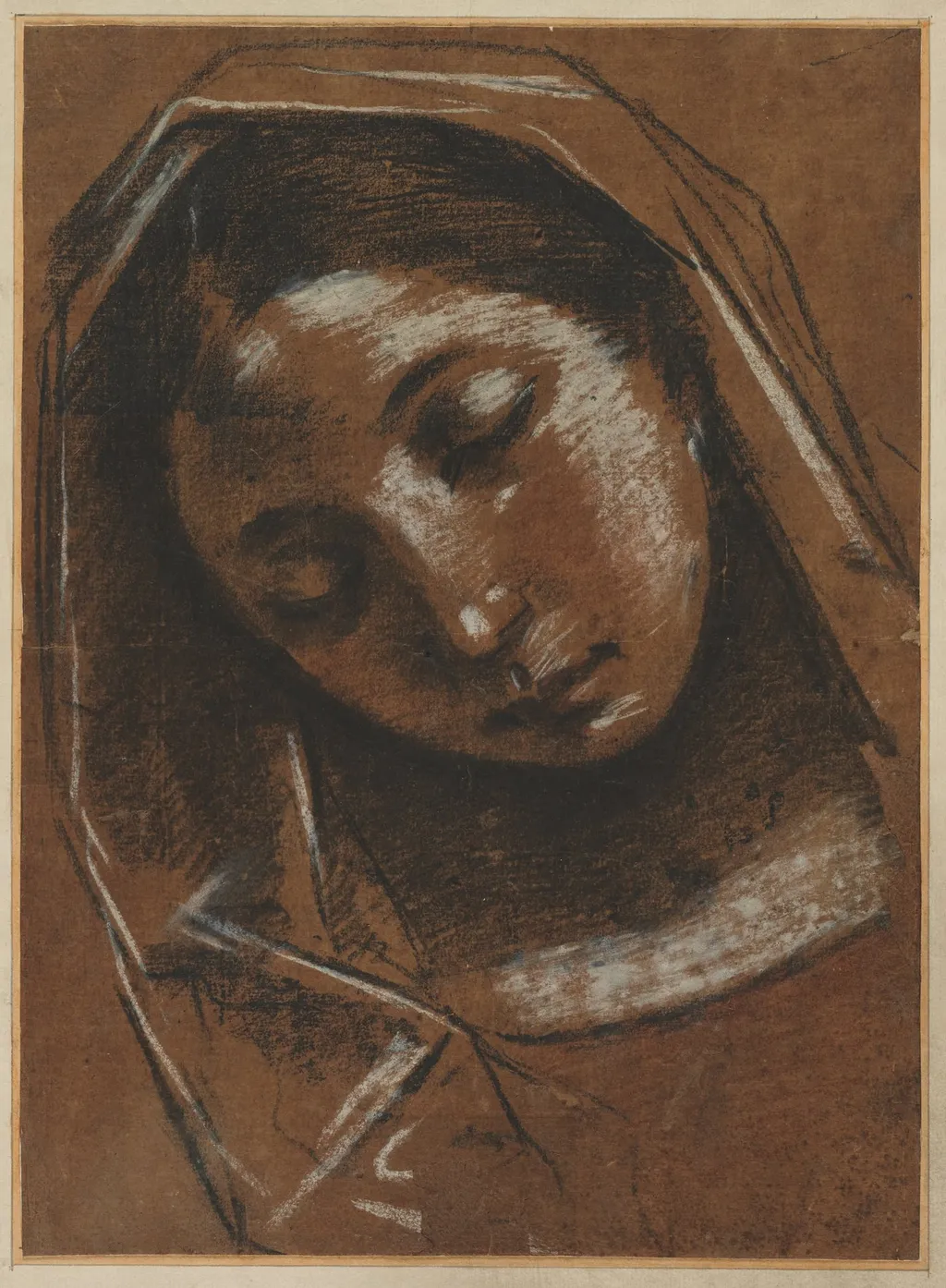
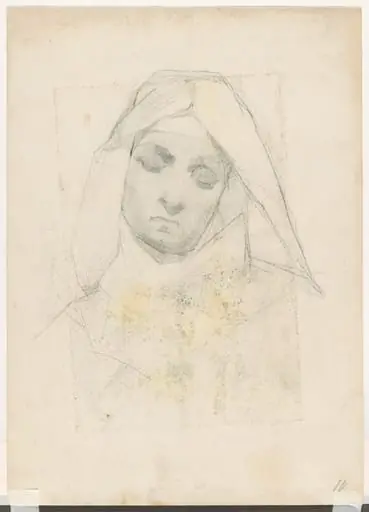
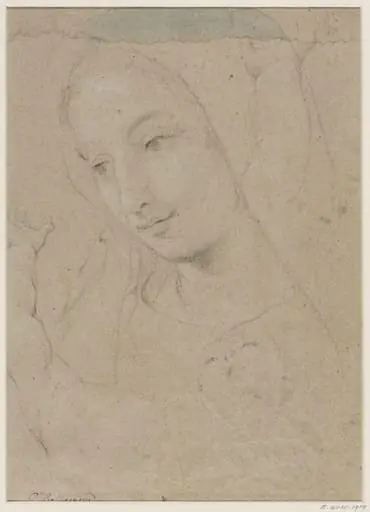
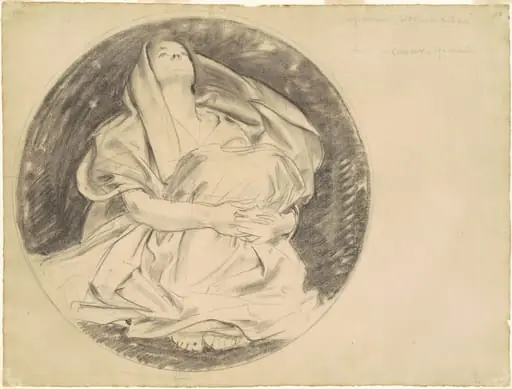
Head of the Virgin is a drawing by the Baroque artist Giacomo Cavedone. It dates from 1614 and is held in the collection of the Cleveland Museum of Art.
About this work
Overview
Created around 1614, this drawing by Giacomo Cavedone depicts a partial portrait of the Virgin Mary. Executed in a spontaneous, sketch-like manner, it is held in the collection of The Cleveland Museum of Art. The work is not a polished study but a rapid exploration of form and expression, suggesting it may have served as a preparatory note or personal exercise rather than a finished composition.
Subject & Meaning
The ambiguity of her visibility may reflect contemplative modesty or a devotional emphasis on inner spirituality over physical representation.
The subject is a veiled Virgin, her face partially obscured by folds of fabric. The ambiguity of her visibility may reflect contemplative modesty or a devotional emphasis on inner spirituality over physical representation. The partial concealment invites focus on the quiet presence of the figure rather than her full identity, aligning with devotional practices of the period that valued humility and mystery.
Technique & Style
Cavedone employed swift, uneven strokes with chalk or charcoal, using smudged tones to suggest volume and shadow. The contrast between dark, dense areas and faint, blurred highlights creates a sense of depth without defined contours. This approach prioritizes atmospheric effect over precision, revealing an interest in capturing transient light and emotional nuance through gestural mark-making.
History & Provenance
The drawing entered The Cleveland Museum of Art’s collection in the 20th century, though its earlier ownership history remains undocumented. Its survival as a private sketch rather than a commissioned work suggests it was retained by the artist or a close associate. Its modest scale and unfinished quality indicate it was not intended for public display during Cavedone’s lifetime.
Context
In early 17th-century Italy, artists increasingly turned to rapid drawings to investigate light, form, and emotional expression. Cavedone’s work reflects this trend, influenced by Caravaggio’s dramatic chiaroscuro and the Bolognese school’s emphasis on naturalism. Such sketches were vital tools for refining compositions, especially in religious imagery where emotional resonance mattered as much as doctrinal accuracy.
Legacy
Though not widely reproduced or studied, this drawing exemplifies the quiet, experimental side of Baroque draftsmanship. It reveals how artists used informal sketches to explore spiritual themes with immediacy and restraint. Its preservation underscores the value placed on process over polish in certain artistic circles, offering insight into the private practice behind more formal religious works of the era.
Artist & collection