Artwork
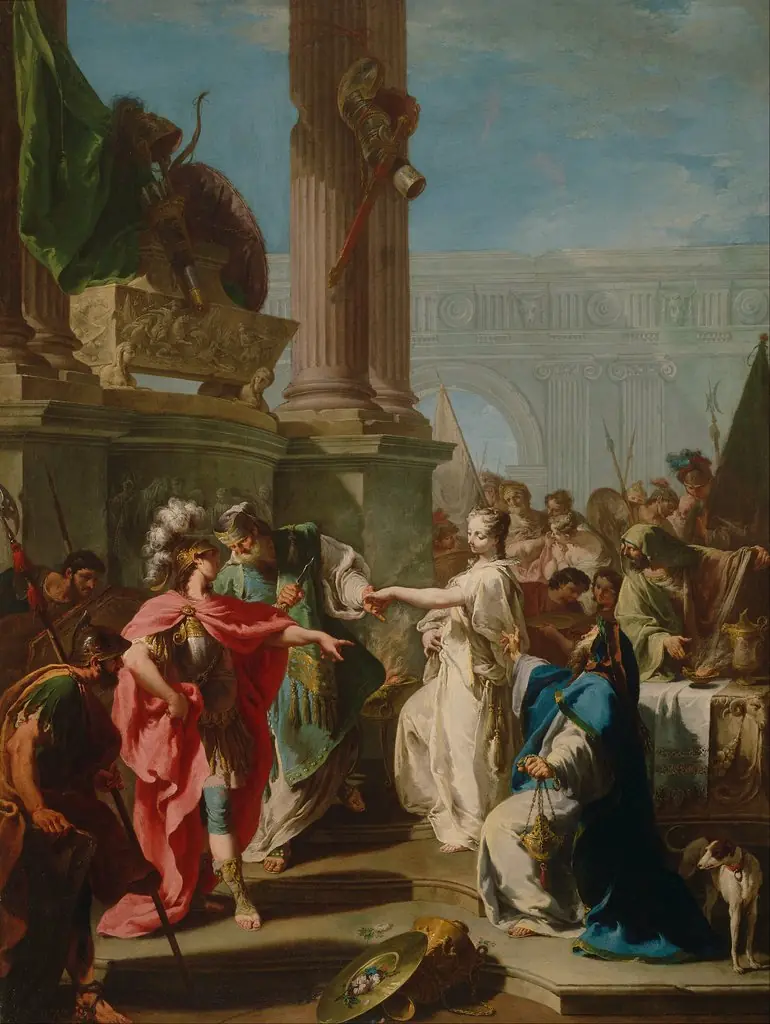
The Sacrifice of Polyxena at the Tomb of Achilles
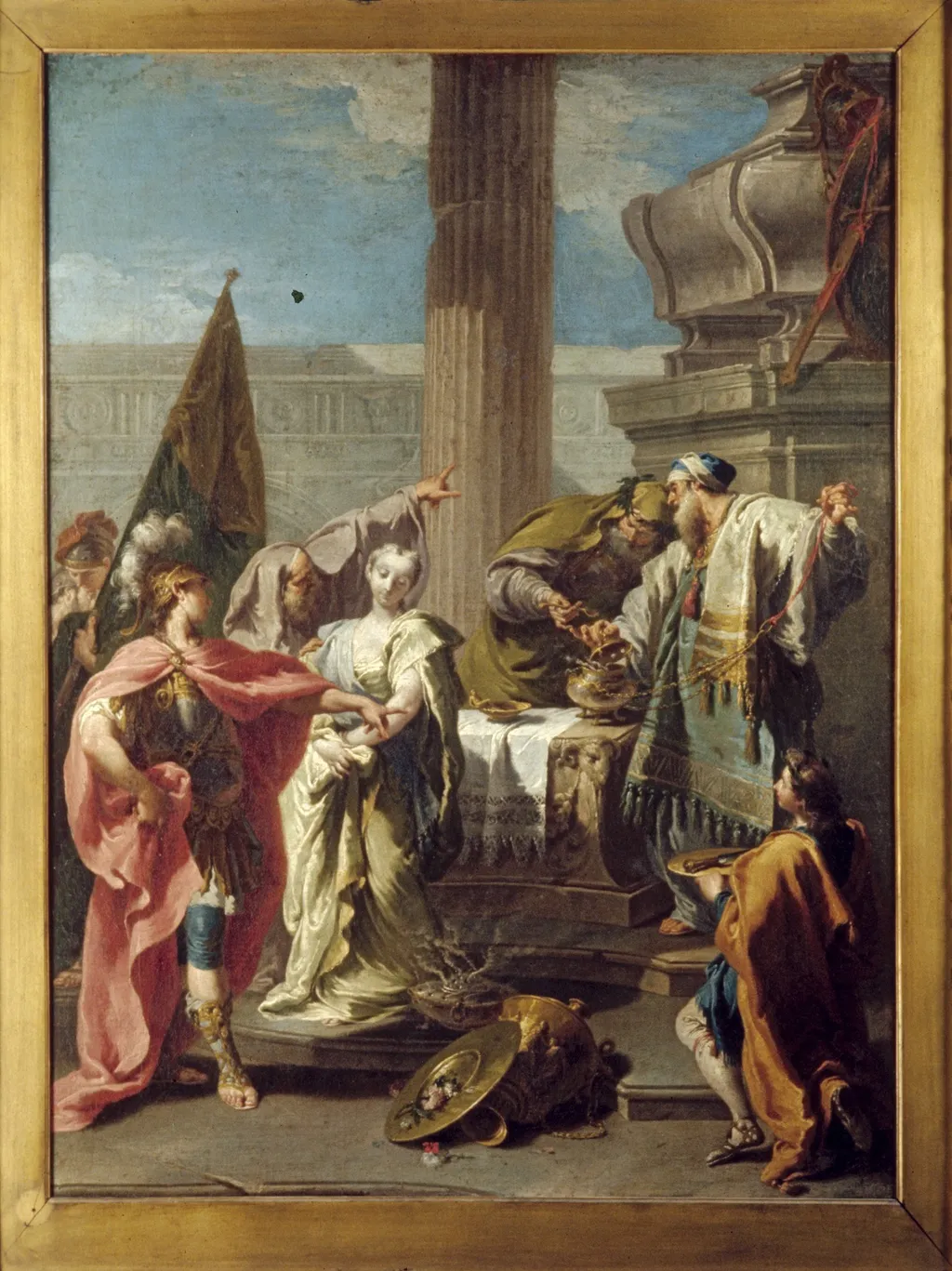
The Sacrifice of Polyxena at the Tomb of Achilles is an oil painting by the Rococo painting artist Giambattista Pittoni. It dates from 1735 and is held in the collection of the Walters Art Museum.
About this work
Overview
Painted in 1735 by Giambattista Pittoni, this oil-on-canvas work portrays a moment from Greek myth: the ritual killing of Polyxena at the tomb of Achilles.
Painted in 1735 by Giambattista Pittoni, this oil-on-canvas work portrays a moment from Greek myth: the ritual killing of Polyxena at the tomb of Achilles. Though Pittoni was active during the Rococo era, this piece diverges from the period’s typical lightness, instead embracing a restrained gravity. As a founding figure in Venice’s Academy of Fine Arts, he was known for mythological narratives, and this painting exemplifies his engagement with classical themes through disciplined composition.
Subject & Meaning
The scene depicts Polyxena, daughter of King Priam, being led to sacrifice as retribution for Achilles’ death, according to post-Iliadic tradition. Her bound hands and white robe signal purity and resignation, while the surrounding warriors display quiet resolve rather than triumph. The tomb of Achilles anchors the composition, transforming the site into a sacred altar. The moment captures the collision of duty and grief, reflecting ancient rituals where personal loss was subordinated to communal necessity.
Technique & Style
Pittoni employs a muted palette and controlled chiaroscuro to emphasize emotional weight over theatricality. The figures are arranged in a shallow, stage-like space, with soft modeling of flesh and fabric that avoids the ornamental excesses of Rococo. Classical architecture frames the scene with geometric clarity, while the pale sky and wisps of cloud introduce subtle atmospheric depth. Brushwork remains precise, favoring clarity of form over expressive flourish, aligning with Venetian traditions of narrative restraint.
History & Provenance
Commissioned during the height of Pittoni’s career, the painting reflects the tastes of Venetian patrons who favored mythological subjects with moral gravity. It remained in private collections in northern Italy before entering public ownership. Its survival through centuries without major alteration suggests it was valued for its compositional integrity rather than its decorative appeal, distinguishing it from more flamboyant contemporaries.
Context
While Rococo aesthetics dominated Venice’s decorative arts, Pittoni maintained a connection to classical antiquity and the legacy of Titian and Veronese. This painting emerges amid renewed scholarly interest in Homeric texts and the moral dimensions of myth. Unlike many Rococo works that celebrated pleasure, Pittoni’s scene engages with sacrifice and fate, aligning it with a quieter, more introspective current in 18th-century Venetian painting.
Legacy
Though less celebrated than his peers, Pittoni’s work influenced later Venetian historians by demonstrating how myth could be rendered with emotional nuance without relying on spectacle. The painting’s restrained tone and architectural precision contributed to a regional tradition of narrative seriousness. It remains a reference point for studies on how classical themes were adapted in early modern Italy beyond the dominant stylistic trends.
Artist & collection
Artist
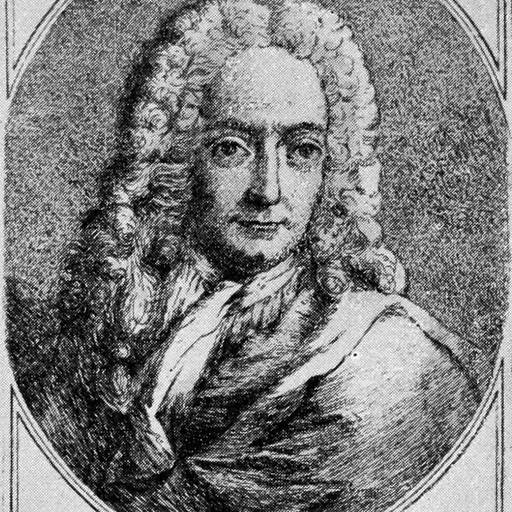
Giambattista Pittoni or Giovanni Battista Pittoni (6 June 1687 – 6 November 1767) was a Venetian painter of the late Baroque or Rococo period.


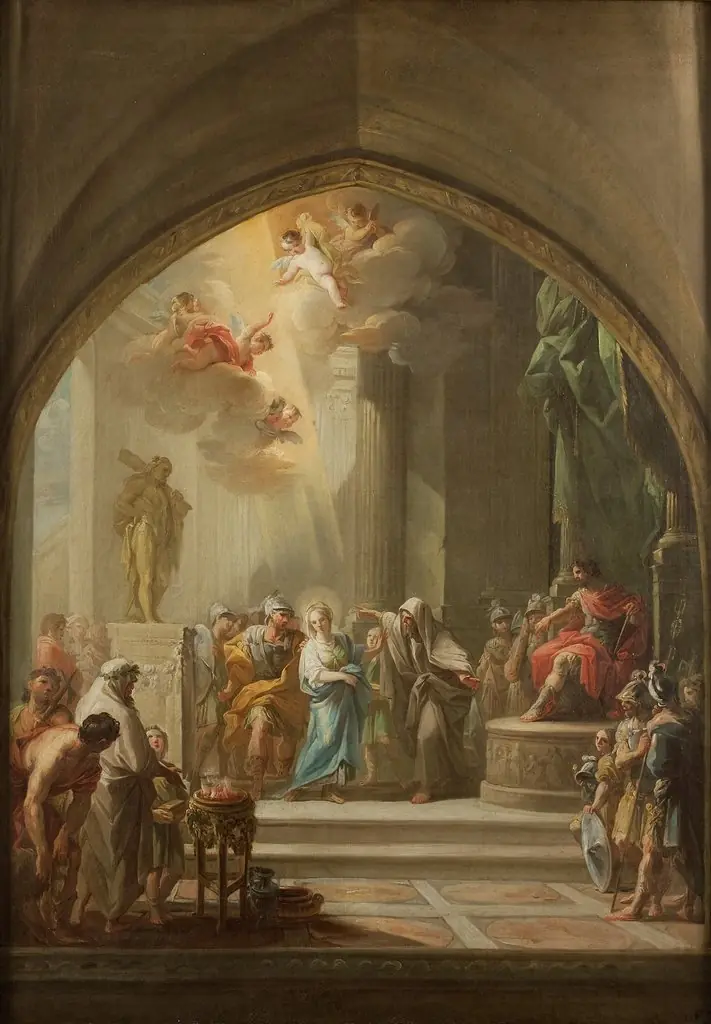 Saint Leocadia before the Praetor
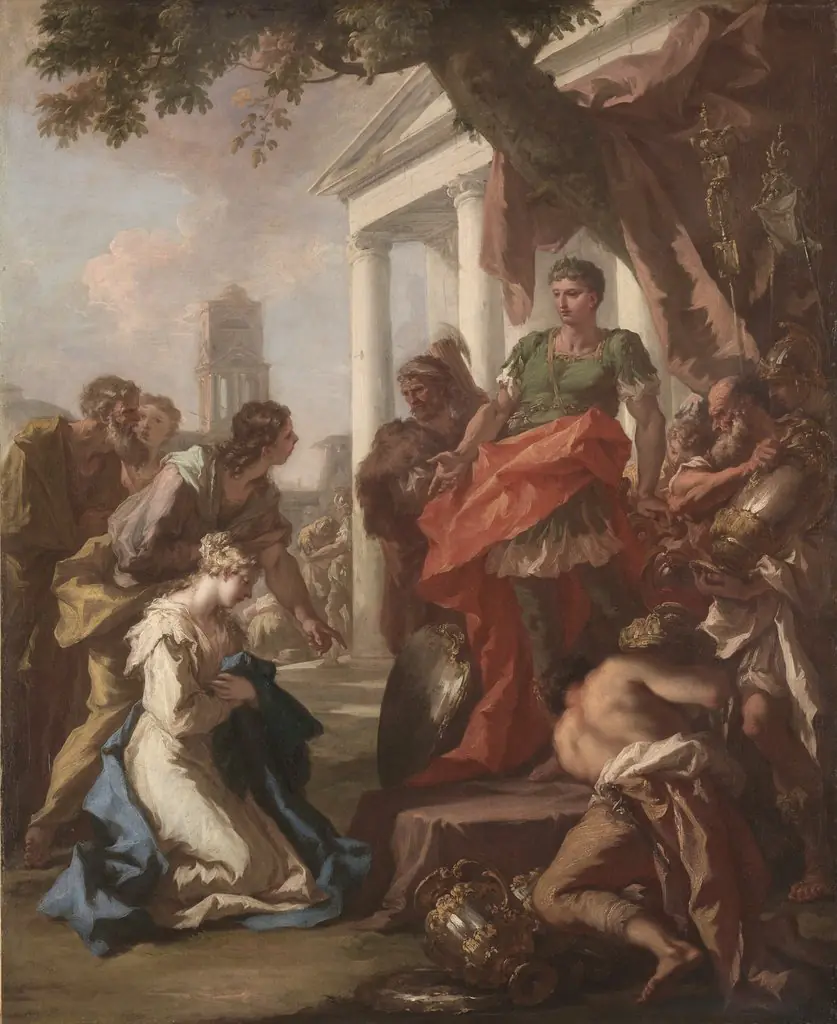 The Continence of Scipio
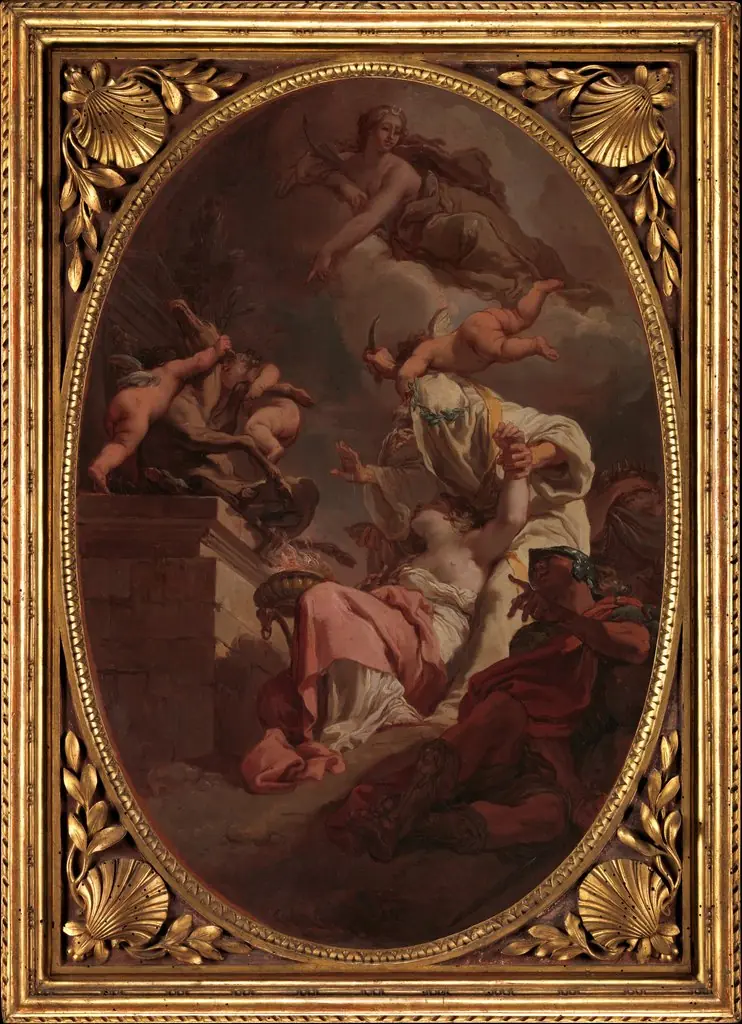 The Sacrifice of Iphigenia
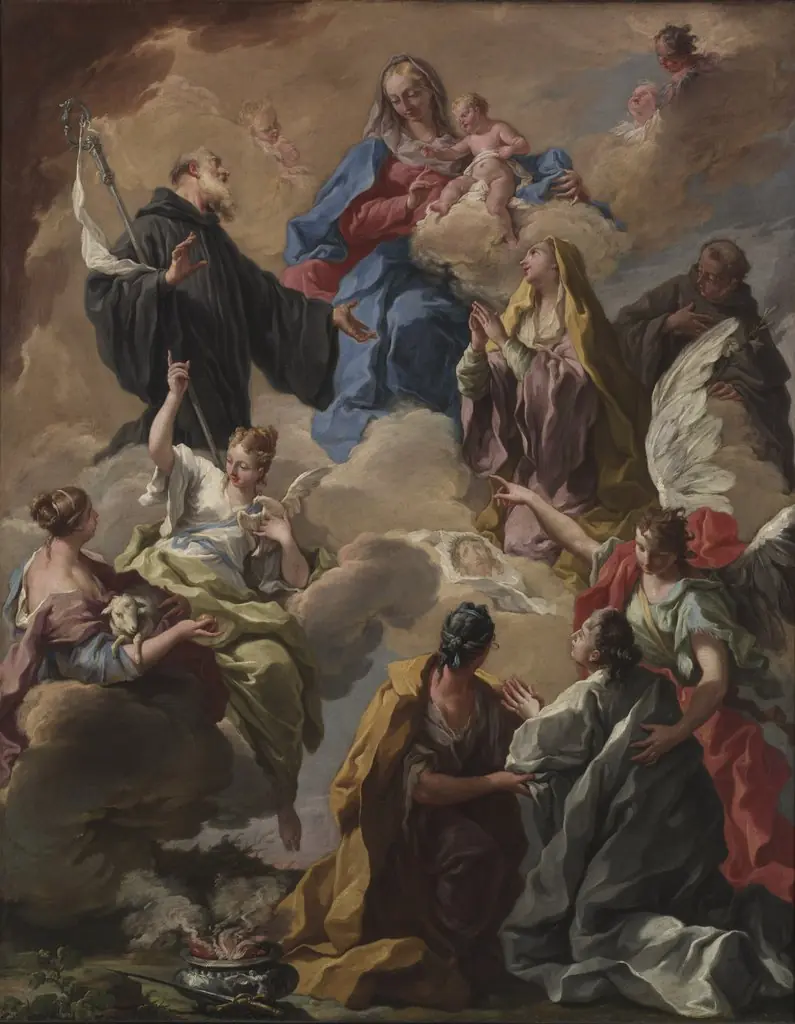
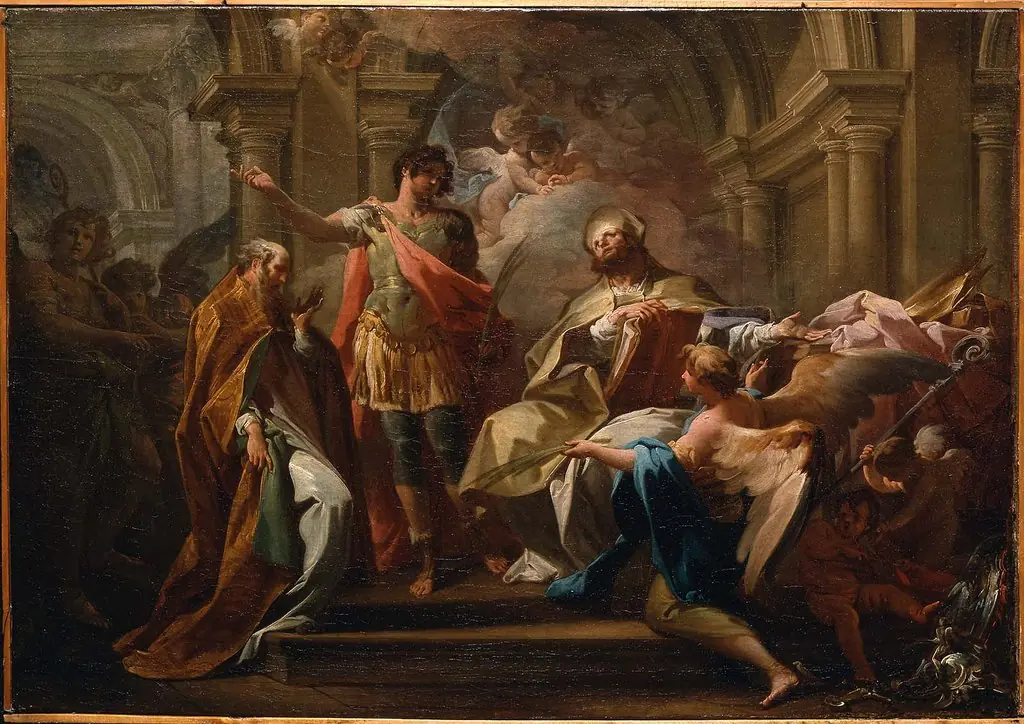 Saints Ippolito, Taurino, and Ercolano
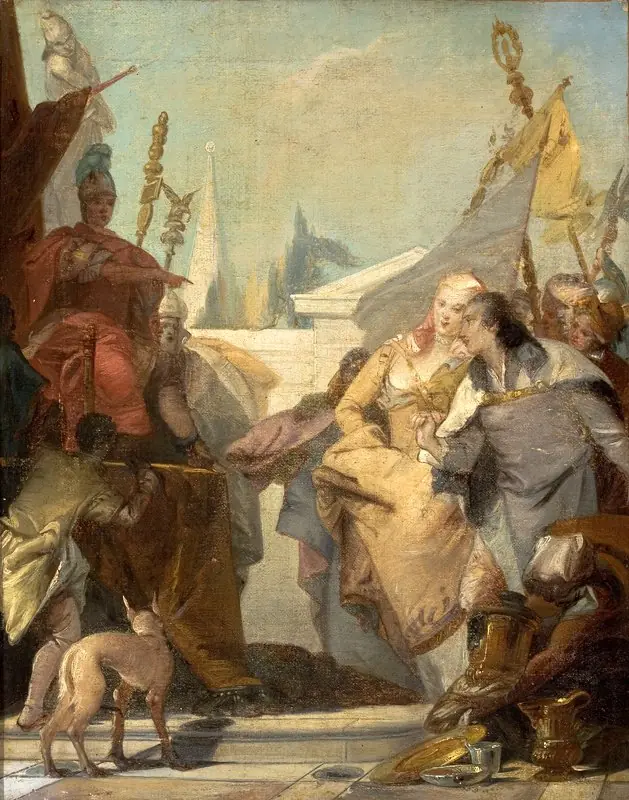 Continence of Scipio
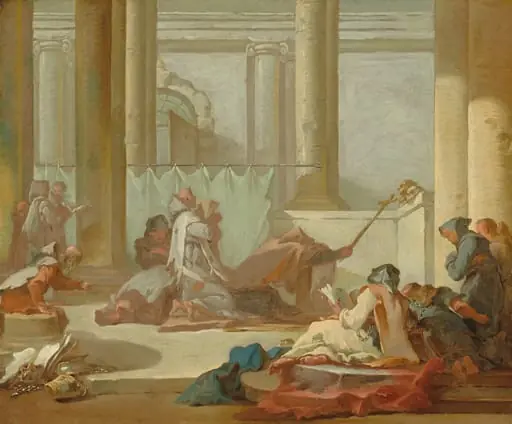 The Adoration of the Skulls
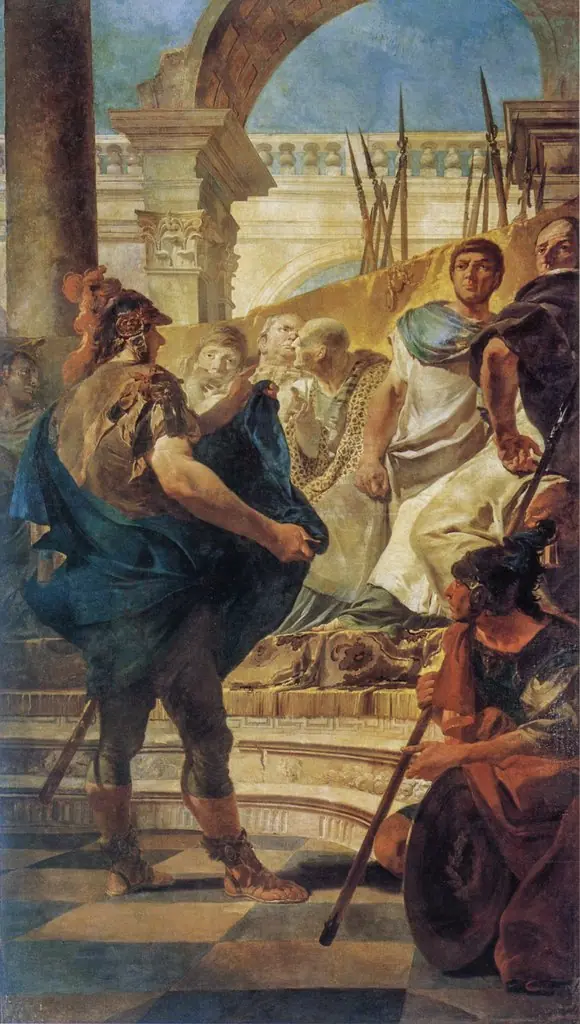 Quintus Fabius Maximus Before the Senate of Carthage
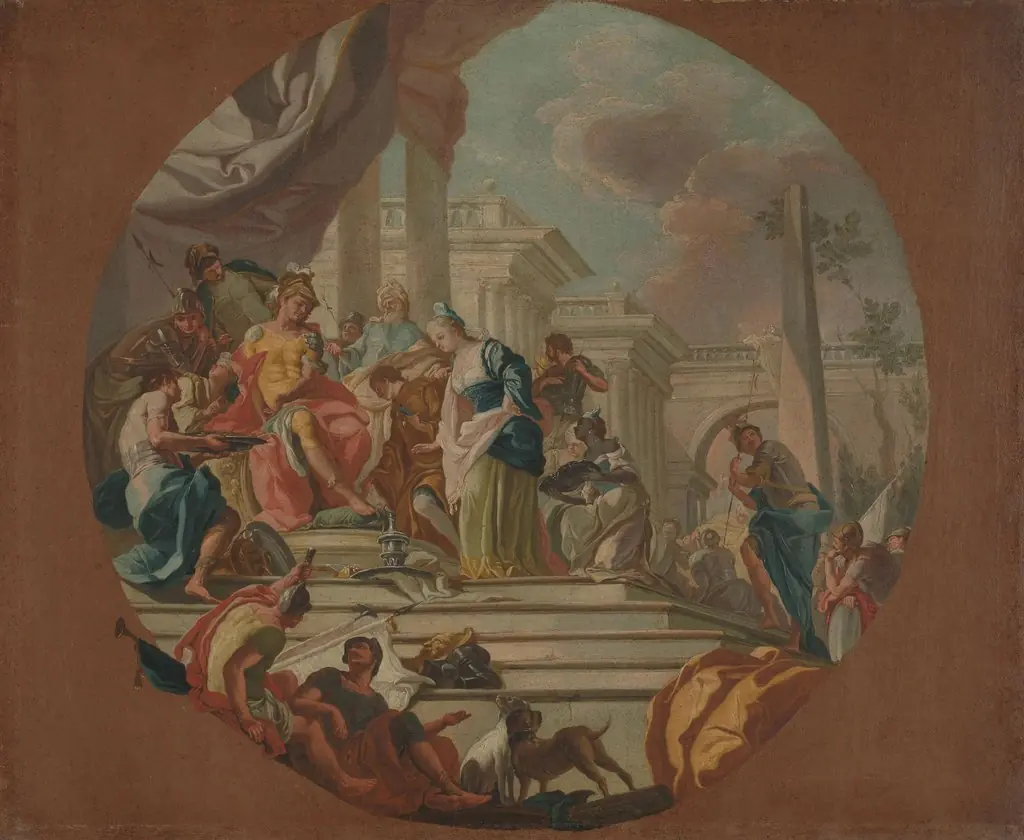 The Continence of Scipio
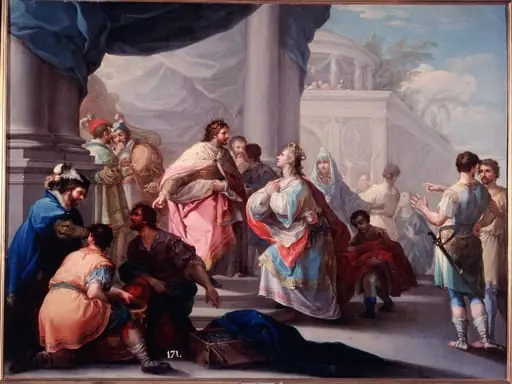 The Empress Marta de Constantinople before Alfonso X. Ramón Bayeu and Subías
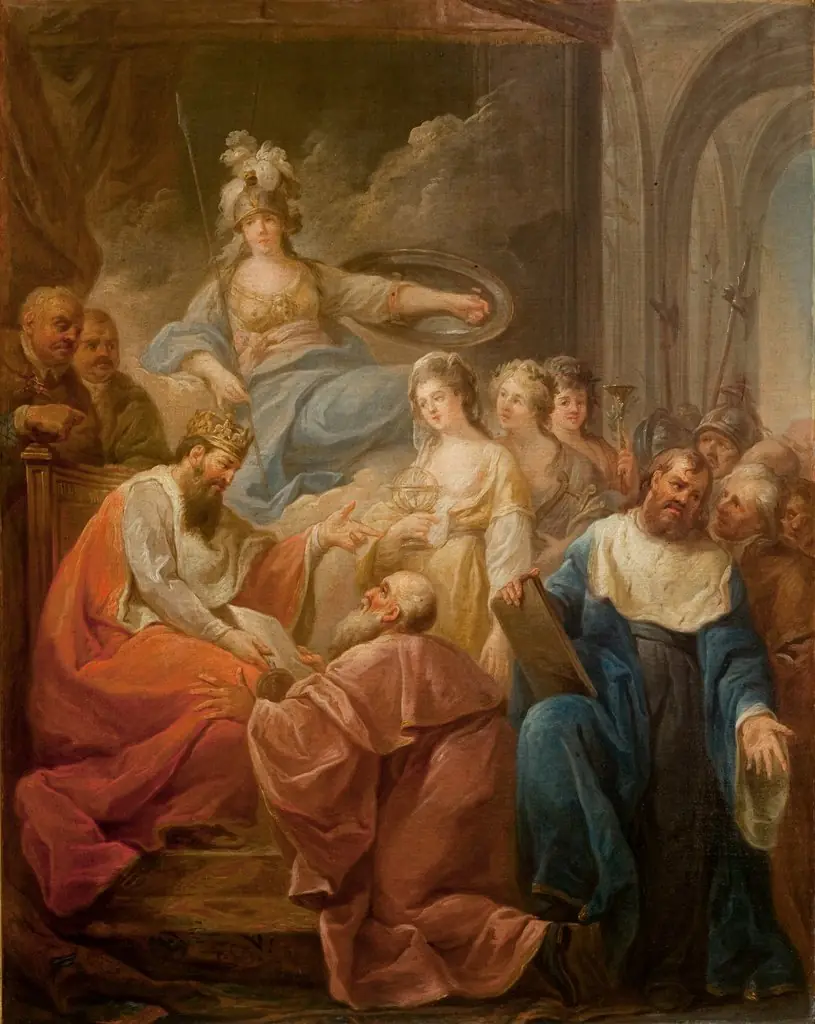 Granting of Privileges to Academy of Krakow
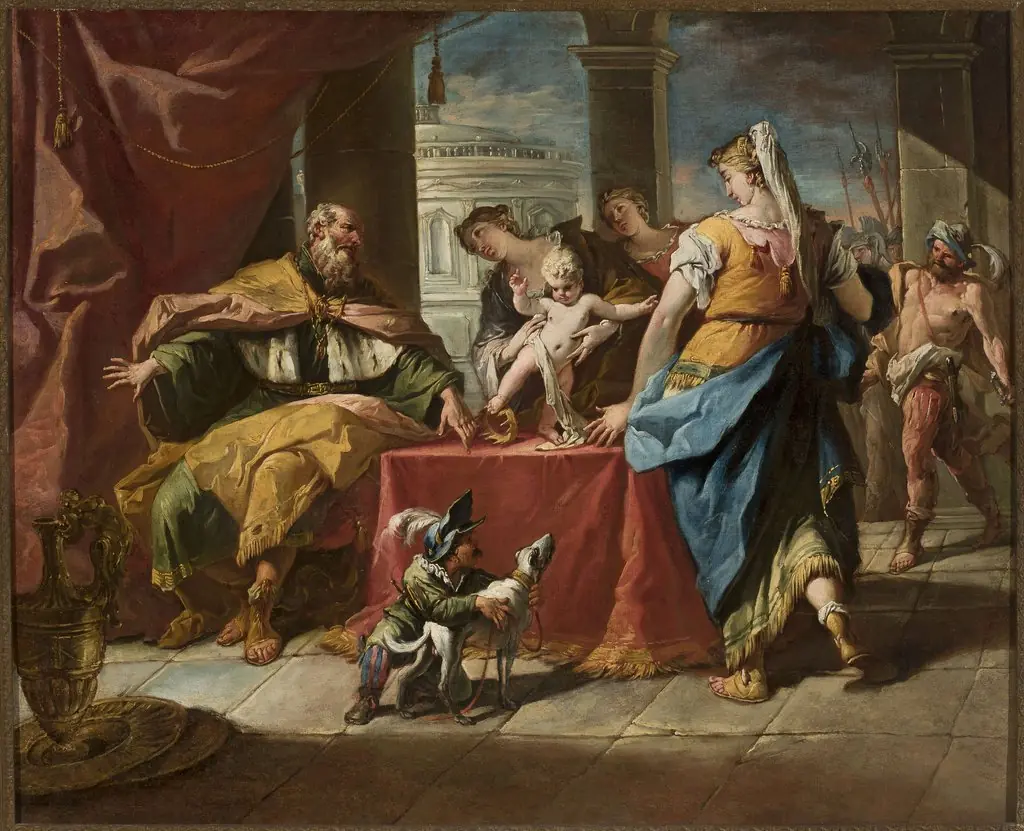 Moses trampling on the Pharaoh’s crown
 The Sacrifice of Polyxena in Malibu