Artwork
Studies of Ornament and Architecture
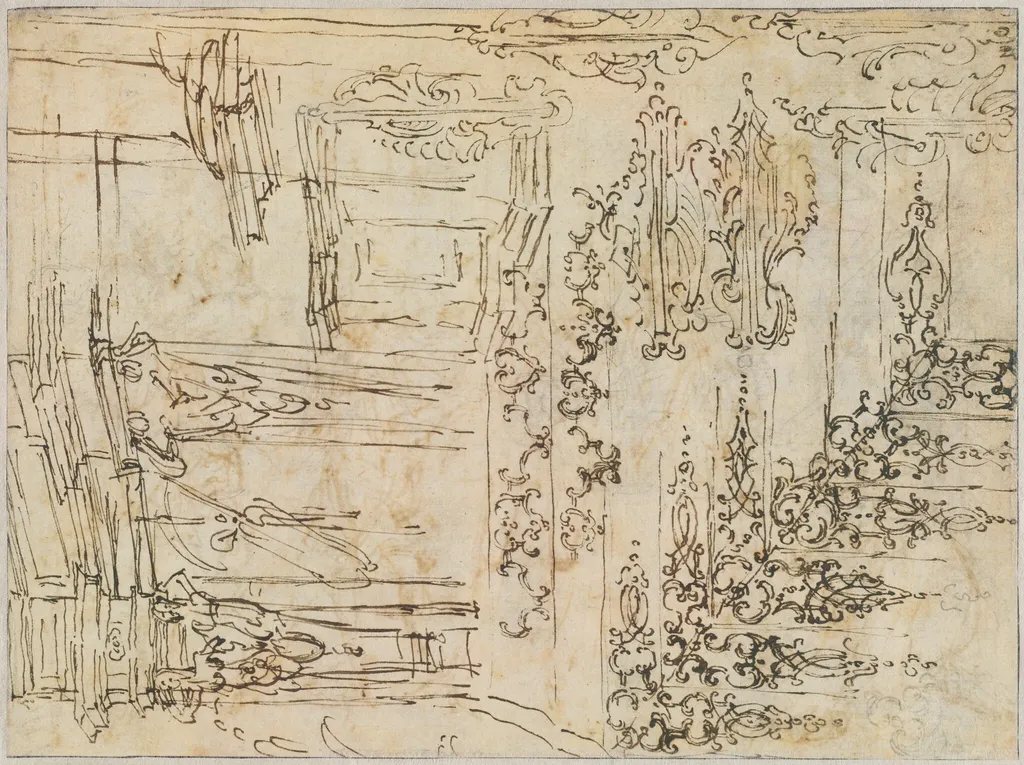
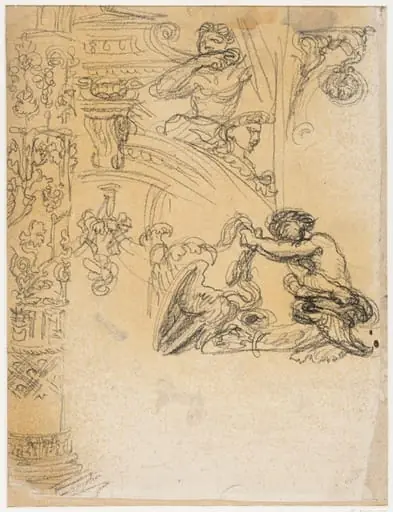
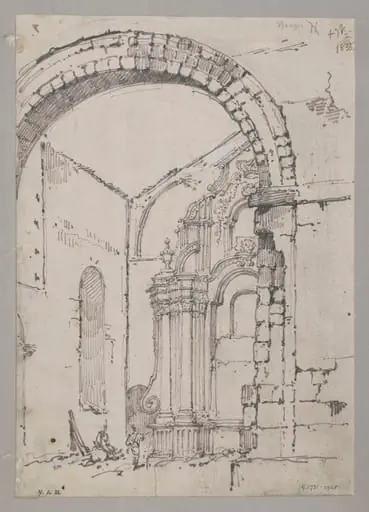
Studies of Ornament and Architecture is an ink drawing by the Baroque artist Claude Gillot. It dates from 1710 and is held in the collection of the National Gallery of Art.
About this work
Overview
Studies of Ornament and Architecture is a drawing created by French artist Claude Gillot around 1710, utilizing pen and brown ink over faint graphite traces on laid paper.
Subject & Meaning
The drawing comprises detailed studies of two primary subjects: ornamental motifs (including curls and leaves) and architectural elements (such as steps and walls), showcasing Gillot's proficiency in both areas.
Technique & Style
Characterized by dark, scratchy lines and rapid execution, the work features overlapping lines to define shapes, with notable use of cross-hatching to suggest shadowing, indicative of a possibly preparatory or exploratory purpose.
History & Provenance
Created during a flourishing period for French decorative arts and theatrical design, this work reflects Gillot's influence as a teacher to notable artists like Watteau and Lancret, though specific provenance details are not provided.
Context
The drawing aligns with the artistic climate of early 18th-century France, where meticulous detail in ornament and architecture was highly valued, particularly in decorative and theatrical contexts.
Artist & collection

Artist
Claude Gillot (April 27, 1673 – May 4, 1722) was a French painter, printmaker, and illustrator, best known as the master of Watteau and Lancret.

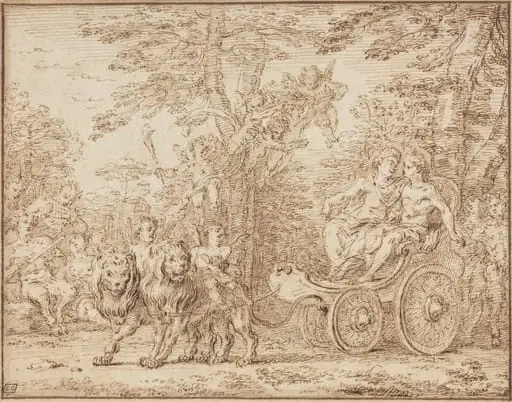 The Triumph of Marriage
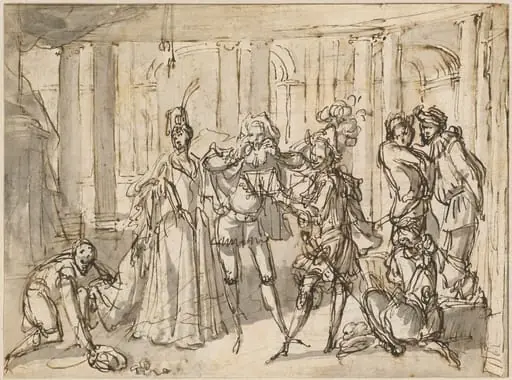 A Performance by the Commedia dell'Arte
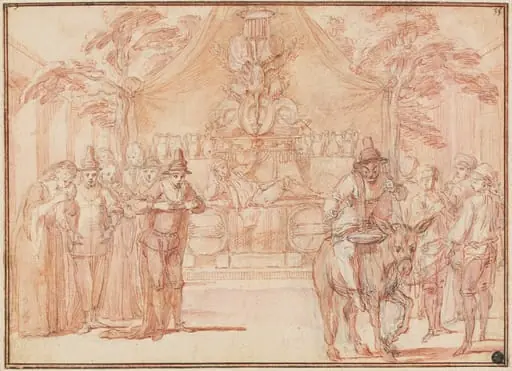 Scene from "The Tomb of Master André"
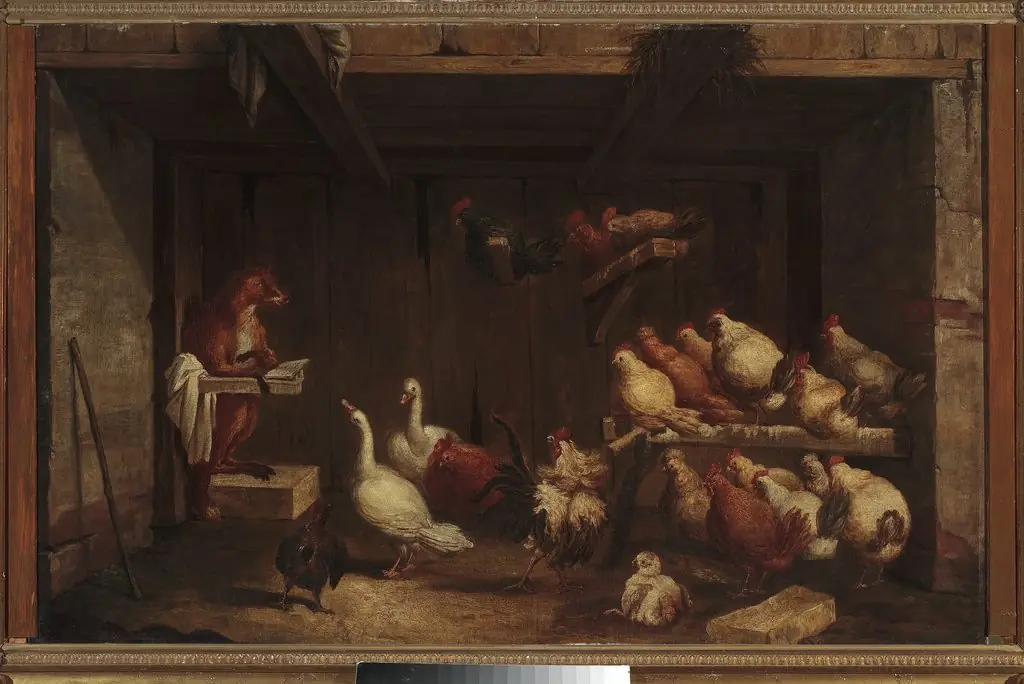 Fox preaching to birds
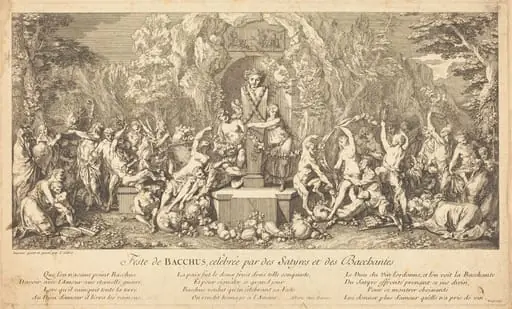 Feste de Bacchus, celebree par des Satyres et des Bacchantes (Feast of Bacchus Celeb rated by Satyrs and Bacchanales)
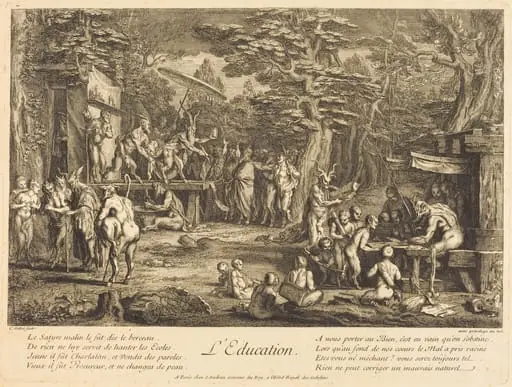 L'Education (Education)
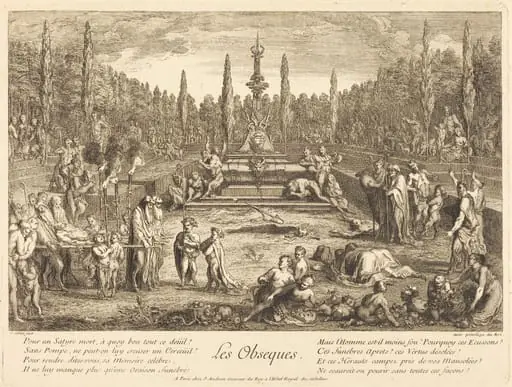 Les Obseques (The Funeral Rites)
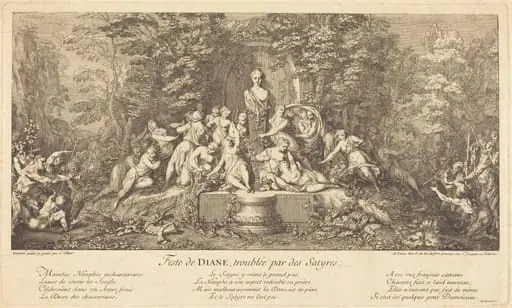 Feste de Diane, Troublee par des Satyres (Feast of Diana Disrupted by Satyrs)
![Gothic Vault [verso], by Parri Spinelli](https://artifactworldgallery.com/img/parri-spinelli--gothic-vault-verso--460e34f7da8824d7-w320.webp)
![Palatial Mantelpiece with a Scene of Ancient Sacrifice [recto], by Austrian 16th Century](https://artifactworldgallery.com/img/austrian-16th-century--palatial-mantelpiece-with-a-scene-of-ancient-sacrifice-recto--6818e7e0eb258b13-w320.webp)