Artwork
Fox preaching to birds
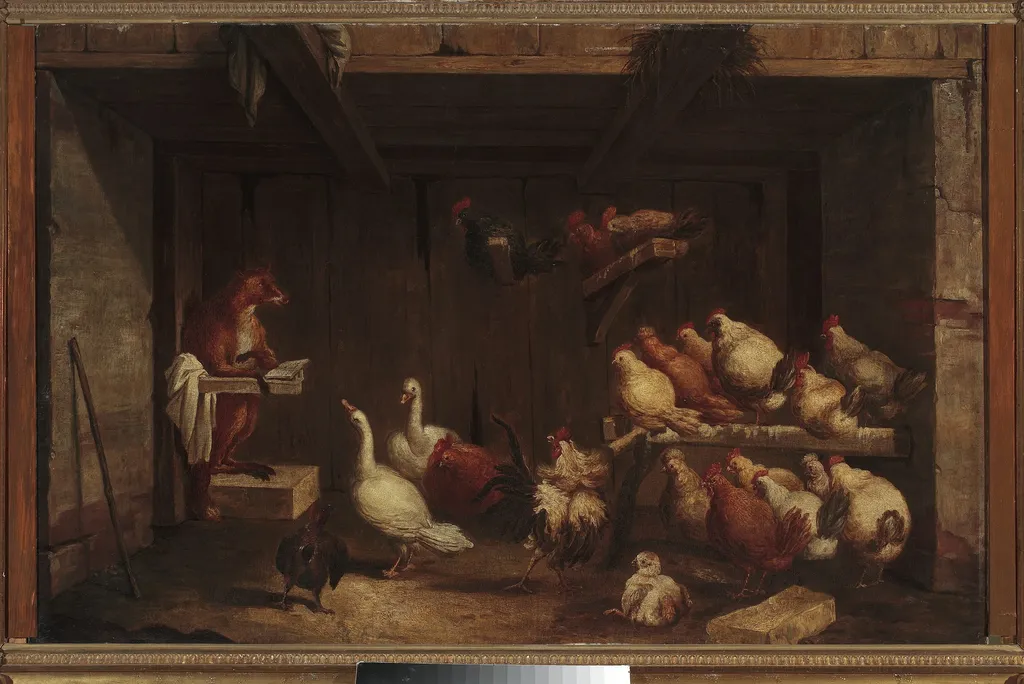
Fox preaching to birds is an oil painting by Claude Gillot. It dates from 1707 and is held in the collection of the National Museum in Warsaw.
About this work
If you're interested in learning more about the artist behind this painting, you might want to look up Claude Gillot (French, 1673–1722).
This painting shows a fox standing on a pedestal, reading from a book to a group of birds. The fox is depicted in a human-like pose, with its front legs resting on the pedestal and its back legs standing on the ground. The birds are gathered around the pedestal, looking up at the fox with interest.
The scene is set in a rustic, outdoor environment, with a few trees and rocks visible in the background. The overall mood of the painting is one of curiosity and engagement, as the fox and birds seem to be fully absorbed in the scene.
If you're interested in learning more about the artist behind this painting, you might want to look up Claude Gillot (French, 1673–1722).
Overview
Painted around 1707 by French artist Claude Gillot, this oil on canvas depicts a fox delivering a sermon to a circle of birds. The scene draws from fable traditions, merging animal behavior with human social rituals. Gillot, active in early 18th-century Paris, was known for his satirical eye and decorative sensibility, qualities evident in this work’s careful composition and subtle irony.
Subject & Meaning
The fox, traditionally a symbol of cunning in European folklore, assumes the role of a preacher—posing as a moral authority while likely harboring ulterior motives. The birds, gathered in attentive silence, reflect gullibility or naive trust. The painting critiques religious or political rhetoric through allegory, inviting viewers to question the legitimacy of those who claim moral superiority.
Technique & Style
Gillot employs fine brushwork to render textures—the fox’s fur, the birds’ feathers, and the rough stone pedestal—with delicate precision. The figures are arranged in a tight, circular composition, drawing focus to the fox’s gesture. Background elements are rendered lightly, preserving the narrative’s intimacy. The palette remains restrained, emphasizing tonal harmony over dramatic contrast.
History & Provenance
The painting entered the collection of the National Museum in Warsaw in the 20th century, though its earlier ownership remains undocumented. It was likely created during Gillot’s time in Paris, where he produced decorative works for aristocratic patrons. Its survival into modern times reflects its appeal as a rare example of French fable painting outside the mainstream of academic history painting.
Context
In early 18th-century France, fable-inspired imagery was popular in decorative arts, often used to convey moral lessons subtly. Gillot’s work emerged alongside the rise of Rococo sensibility, favoring whimsy and narrative over grandeur. His role as a teacher to Watteau and Lancret situates this painting within a broader shift toward intimate, character-driven scenes in French art.
Legacy
Though not widely exhibited, the painting exemplifies Gillot’s contribution to the transition from Baroque formality to lighter, narrative-driven painting. Its preservation in Warsaw underscores its recognition beyond France’s borders. The work continues to serve as a quiet example of how animal allegory was used to reflect human foibles in the age of Enlightenment.
Artist & collection
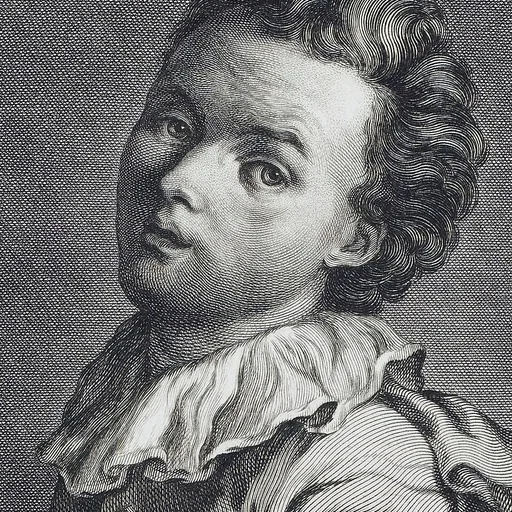
Artist
Claude Gillot (April 27, 1673 – May 4, 1722) was a French painter, printmaker, and illustrator, best known as the master of Watteau and Lancret.

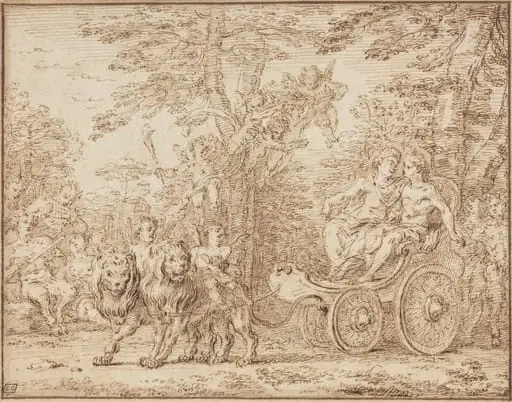 The Triumph of Marriage
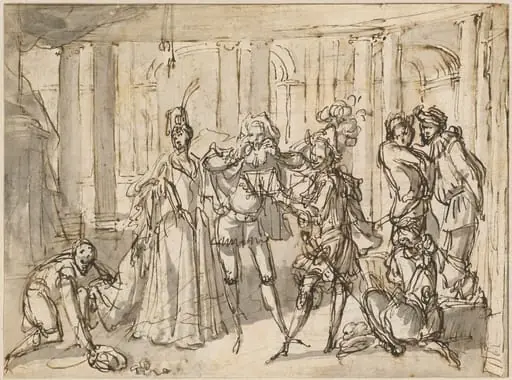 A Performance by the Commedia dell'Arte
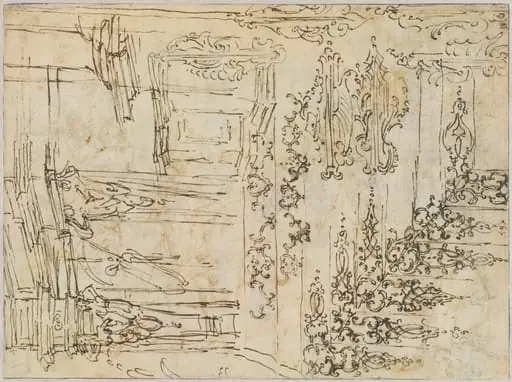 Studies of Ornament and Architecture
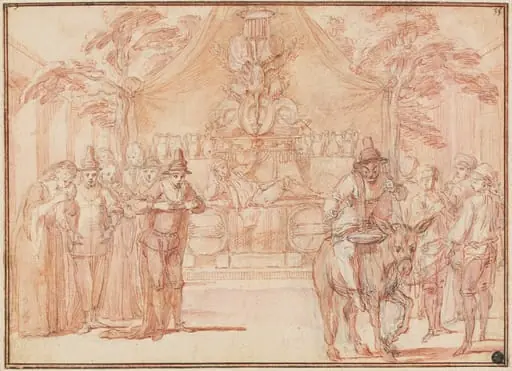 Scene from "The Tomb of Master André"
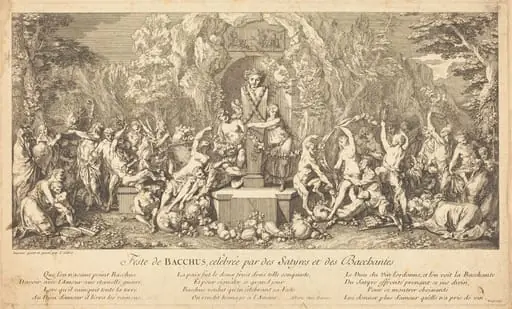 Feste de Bacchus, celebree par des Satyres et des Bacchantes (Feast of Bacchus Celeb rated by Satyrs and Bacchanales)
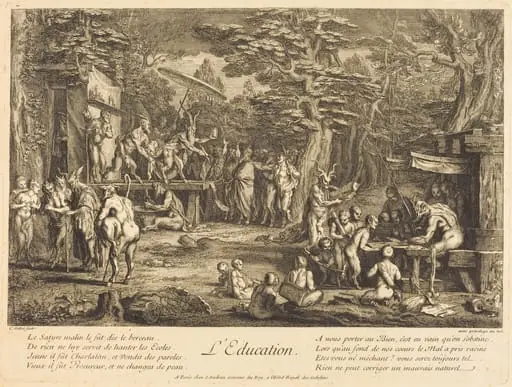 L'Education (Education)
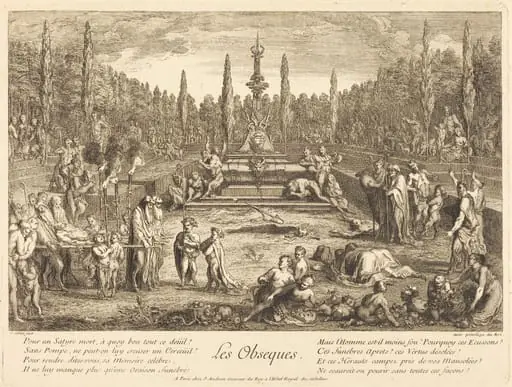 Les Obseques (The Funeral Rites)
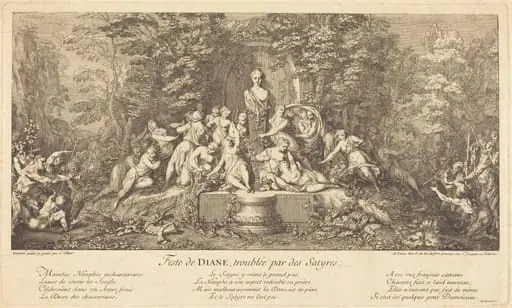 Feste de Diane, Troublee par des Satyres (Feast of Diana Disrupted by Satyrs)