Artwork
Venus
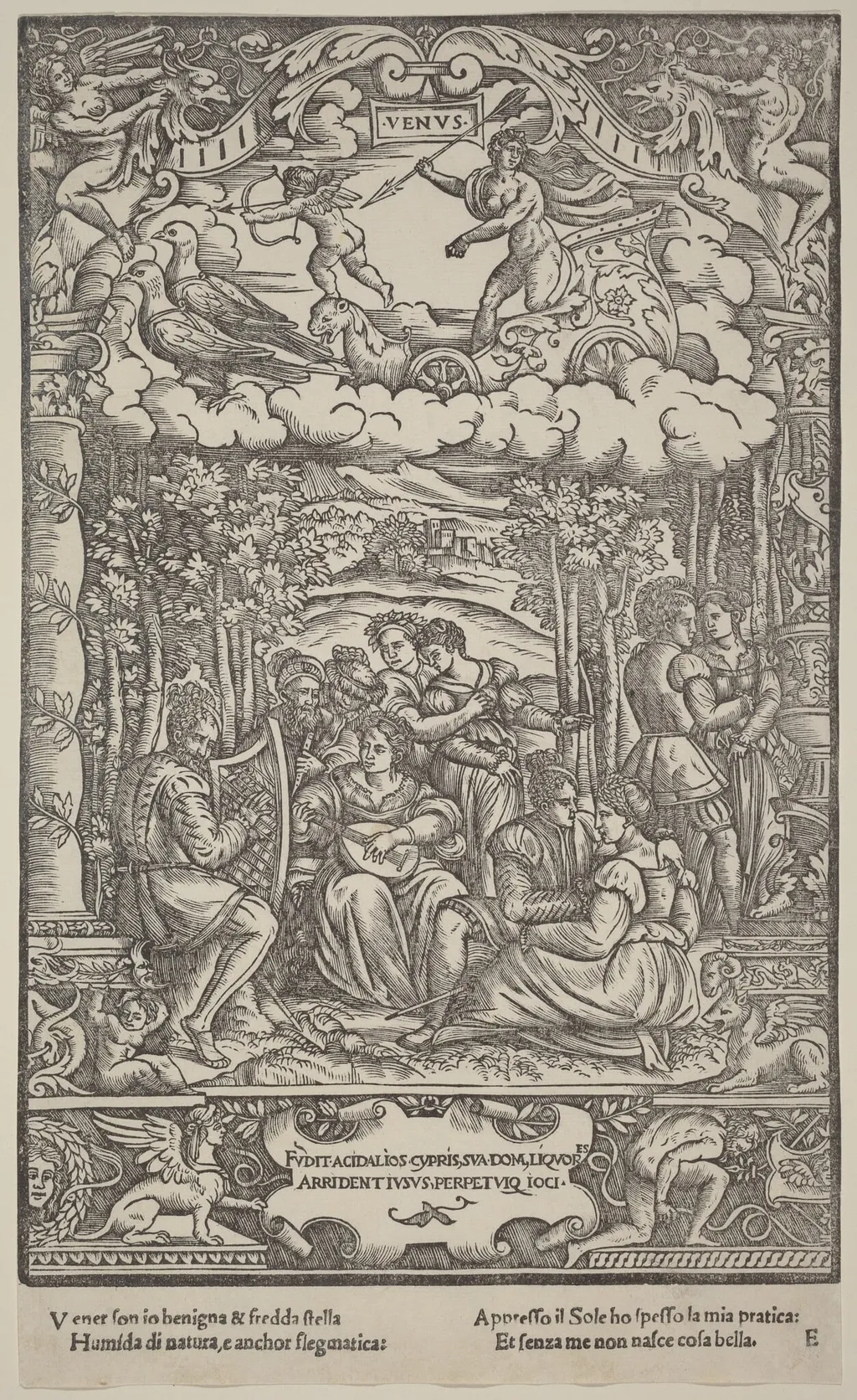
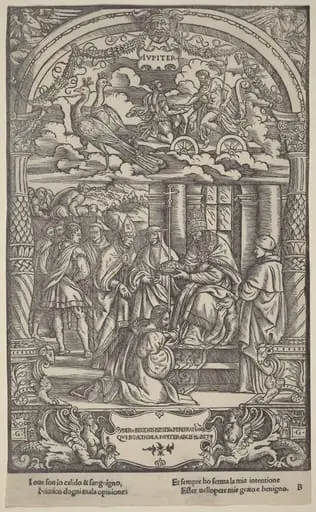
Venus is an ink print by the Renaissance artist Gabriele Giolito de' Ferrara. It dates from 1534 and is held in the collection of the National Gallery of Art.
About this work
Overview
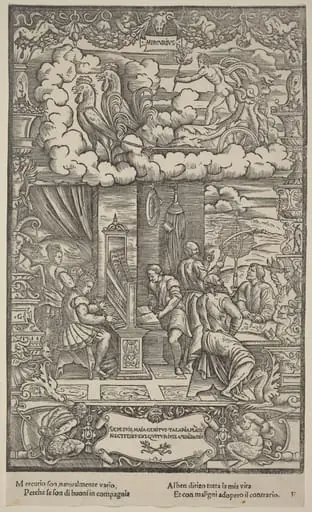
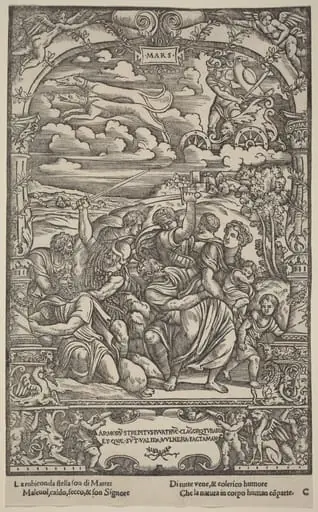
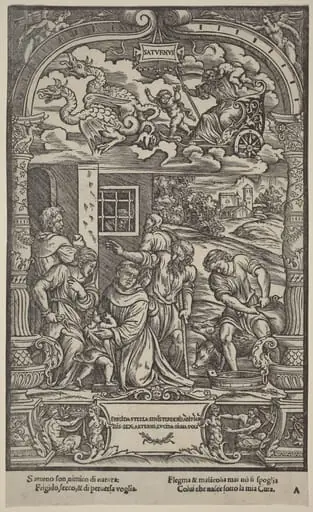
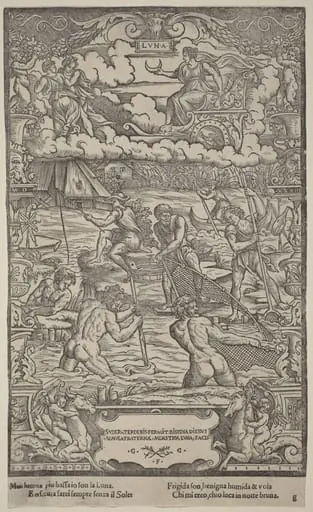
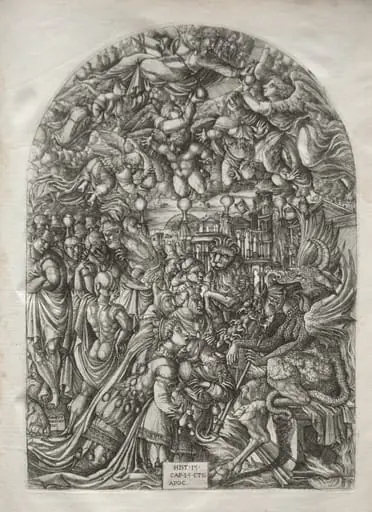
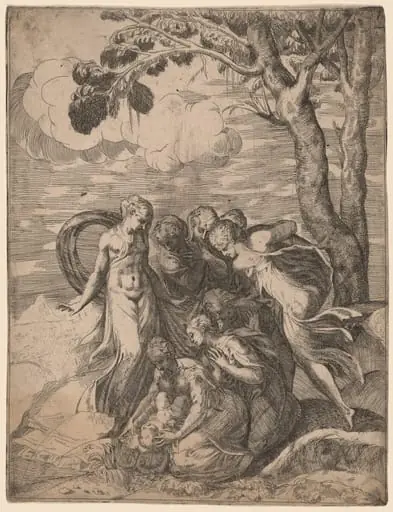
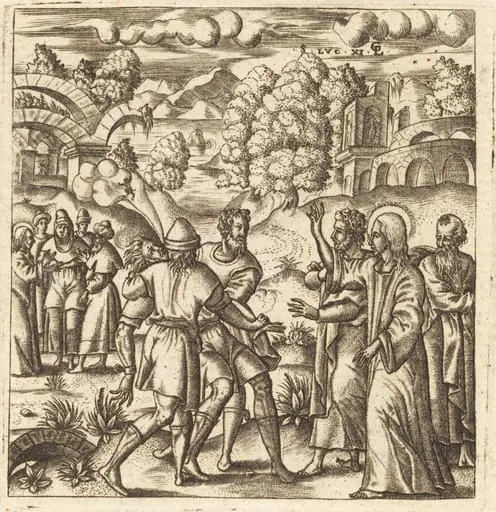
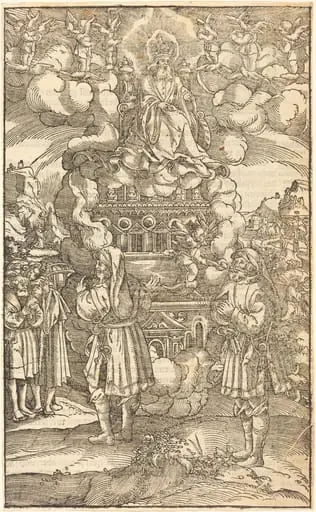
Giovanni Gabriele Giolito de’ Ferrara’s 1534 woodcut entitled *Venus* presents a densely populated composition rendered entirely in black ink. The print fills the page with interlacing lines, figures, and ornamental motifs, creating a bustling visual narrative that invites close inspection of each carved detail.
Subject & Meaning
The central theme references the Roman goddess Venus, yet the surrounding crowd of human and hybrid forms suggests a broader allegorical tableau. By surrounding the deity with tangled vines, clouds, and a multitude of faces, the artist hints at the intertwining of love, nature, and mythic storytelling.
Technique & Style
Executed as a traditional woodcut, the image relies on sharp, incised lines that generate strong contrasts and intricate patterns. The artist densely packs the surface, using repetitive hatching and stippling to suggest texture in foliage, fabric, and flesh, achieving a sense of movement despite the static medium.
History & Provenance
Printed in 1534, the work originates from the Venetian publishing house of Giolito de’ Ferrara, a leading printer of the Italian Renaissance. Surviving copies are held in several European print collections, indicating the piece circulated among patrons interested in classical subjects and the emerging market for illustrated books.
Context
During the early sixteenth century, woodcut illustrations were commonly employed to accompany literary and scholarly texts. *Venus* reflects the period’s fascination with classical antiquity and the humanist desire to visually render mythological narratives for an educated readership.
Artist & collection