Artwork
Mars
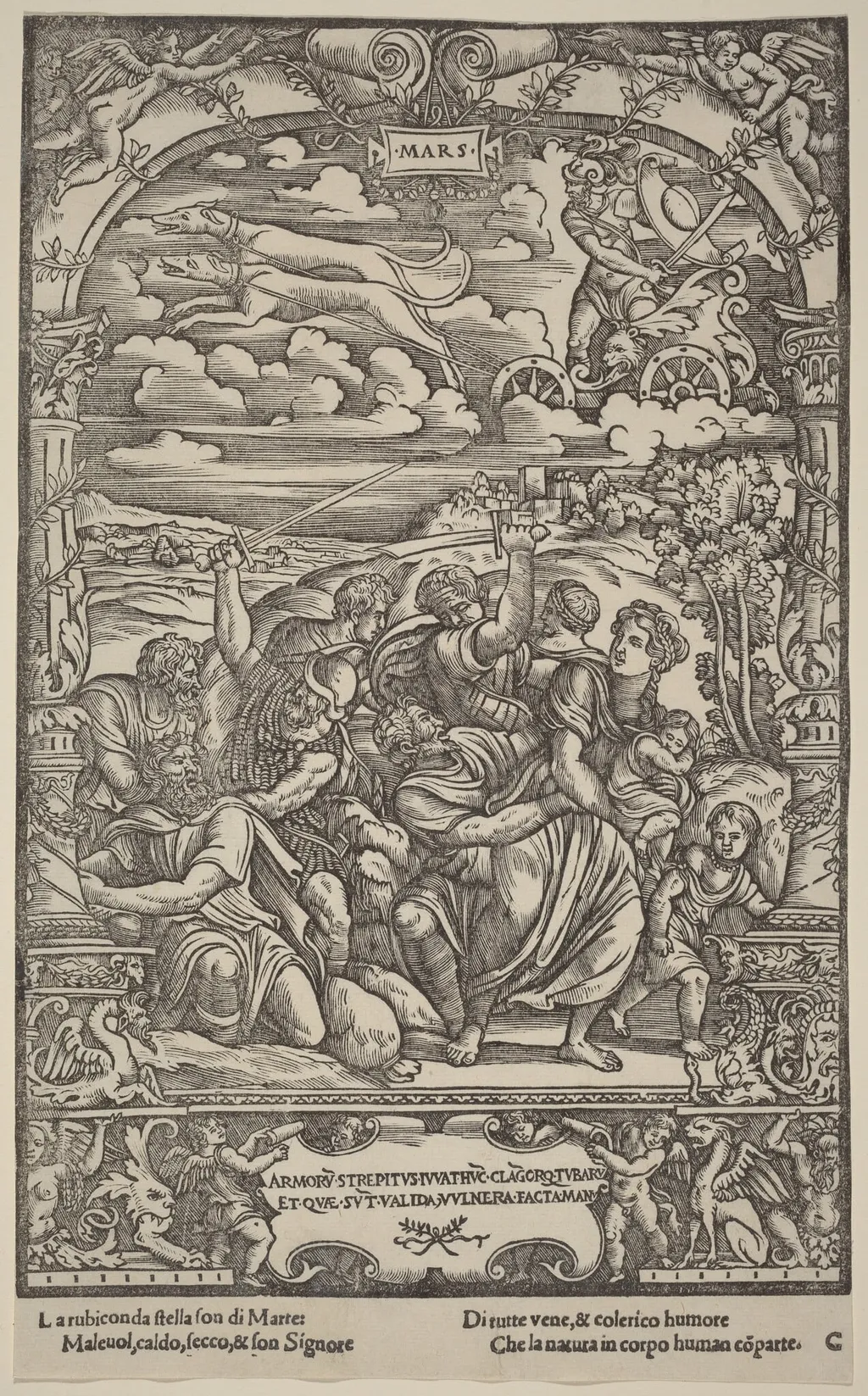
Mars is an ink print by the Renaissance artist Gabriele Giolito de' Ferrara. It dates from 1534 and is held in the collection of the National Gallery of Art.
About this work
Overview
Created in 1534, this woodcut print titled “Mars” depicts the Roman god of war in a densely populated, monochrome composition. The central figure, a heavily muscled Mars, grips a spear while a multitude of smaller figures engage in combat or flee, all set against a chaotic backdrop of trees, clouds and scattered Latin inscriptions.
Subject & Meaning
The work visualizes the mythological embodiment of war, emphasizing both the power of the deity and the turmoil he incites. By surrounding Mars with battling and fleeing individuals, the image conveys the pervasive disruption and disorder that accompany armed conflict.
Technique & Style
Executed with the fine, incised lines characteristic of Renaissance woodcutting, the print achieves a sense of depth through varied line density and cross‑hatching. The intricate detailing of figures and background elements reflects the high level of craftsmanship typical of early 16th‑century Italian printmaking.
History & Provenance
The print was produced by Gabriele Giolito de’ Ferrara, a prominent Venetian publisher known for disseminating literary and artistic works during the period. Its creation aligns with the flourishing of printed images that circulated widely among educated audiences of the Renaissance.
Context
During the early 1500s, woodcuts served both decorative and didactic purposes, often illustrating classical themes for a growing market of humanist readers. “Mars” fits within this tradition, pairing a mythological subject with the technical precision demanded by contemporary patrons.
Legacy
While not as frequently reproduced as later war imagery, this print exemplifies the integration of classical iconography and print technology that helped spread Renaissance artistic ideas across Europe.
Artist & collection


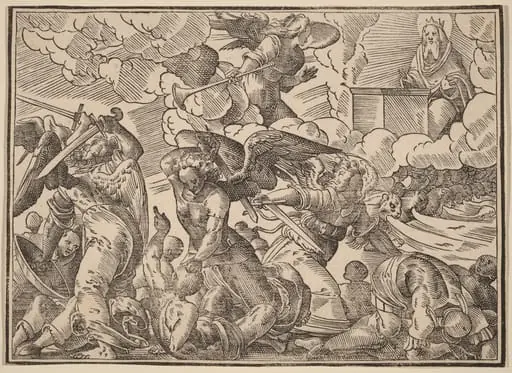
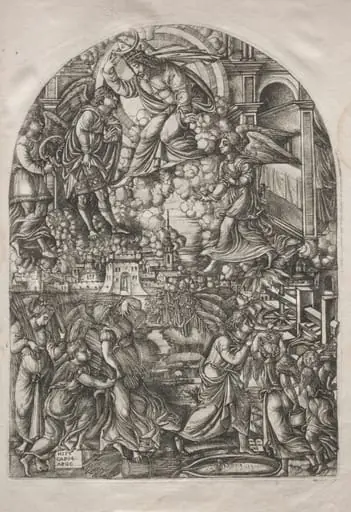 The Apocalypse: The Winepress of the Wrath of God
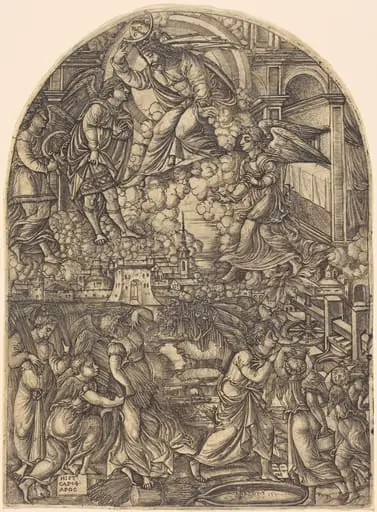 The Winepress of the Wrath of God
 The Four Horsemen of the Apocalypse
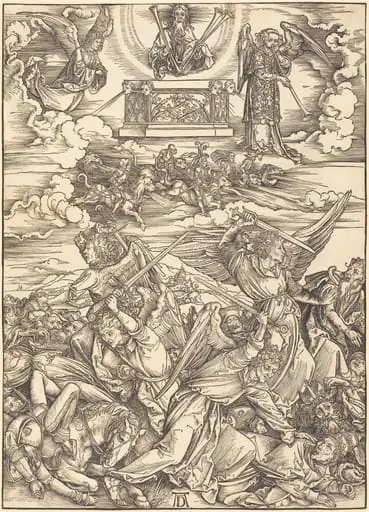 The Four Avenging Angels
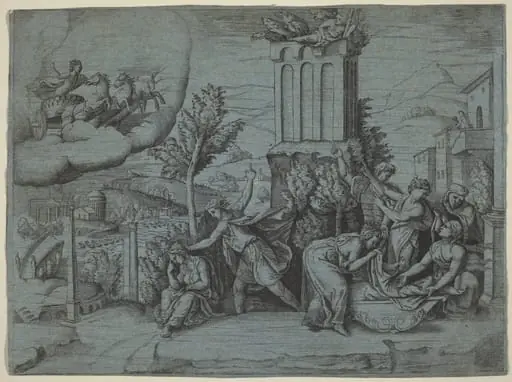 An Omen of Augustus's Future Greatness
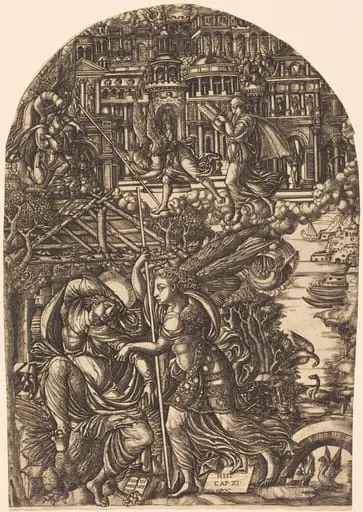 The Angel Shows Saint John the New Jerusalem
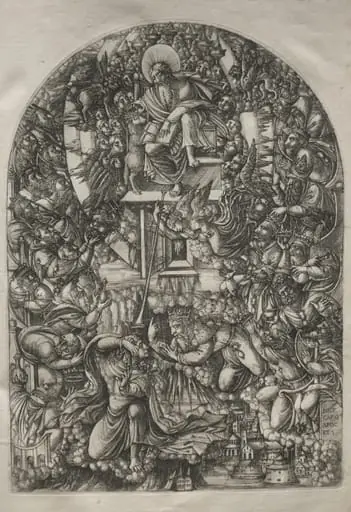 The Apocalypse: St. John Summoned to Heaven
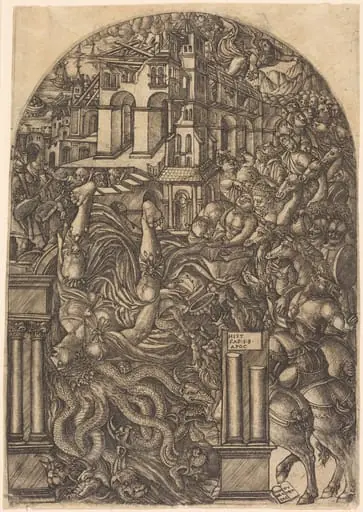 The Fall of Babylon
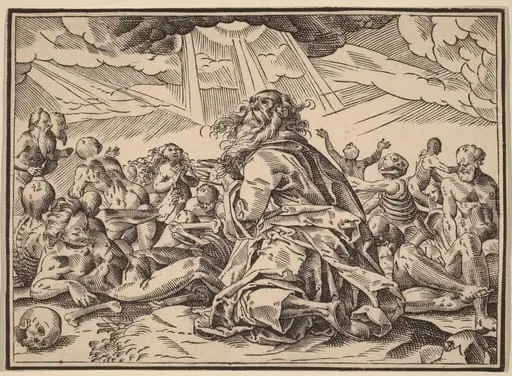 Christ Tells His Disciples of the Last Judgment
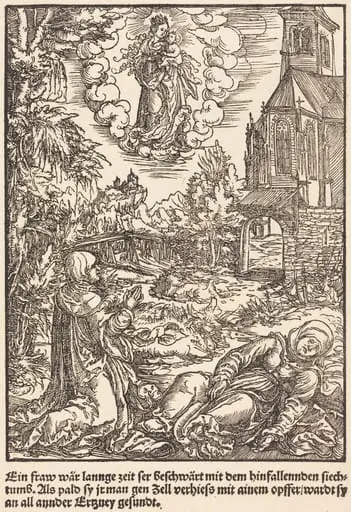 Ein Frau war lannge Zeit ...