Artwork
Moon
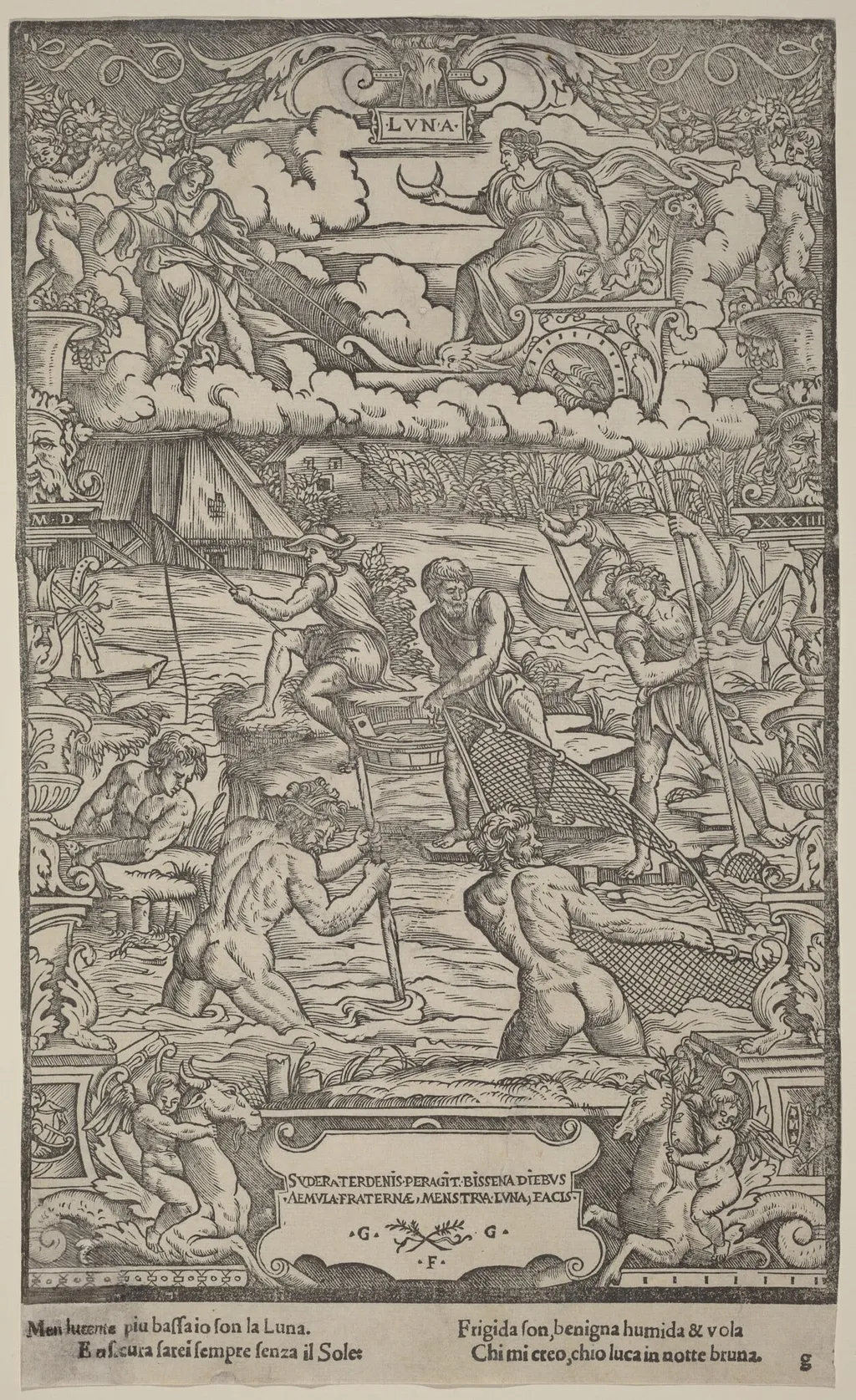
Moon is an ink print by the Renaissance artist Gabriele Giolito de' Ferrara. It dates from 1534 and is held in the collection of the National Gallery of Art.
About this work
Overview
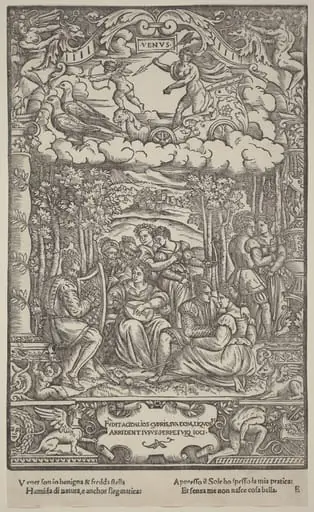
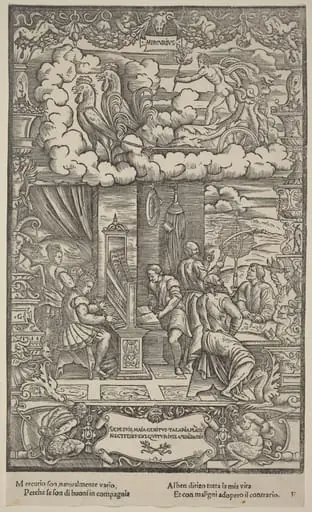
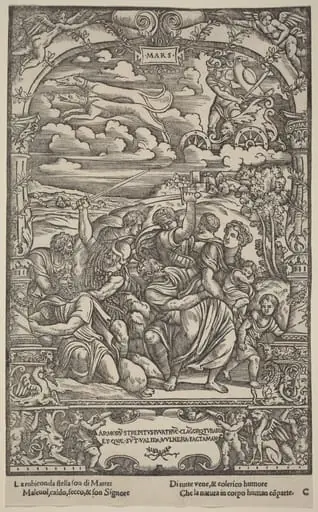
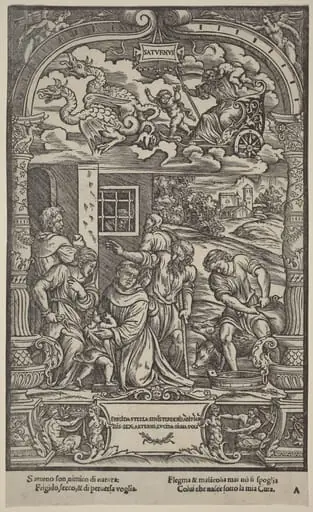
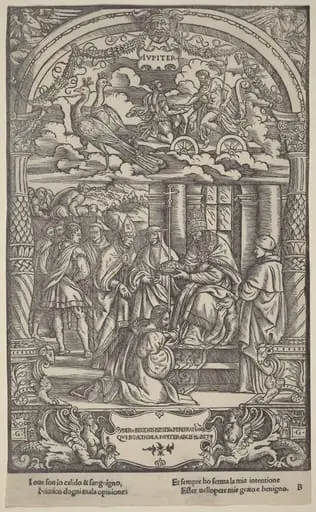
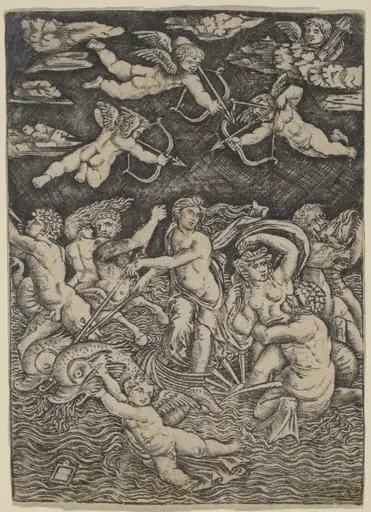
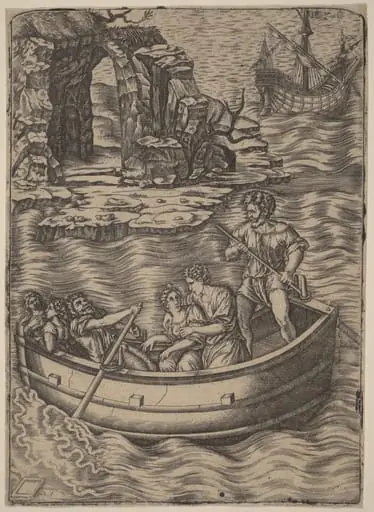
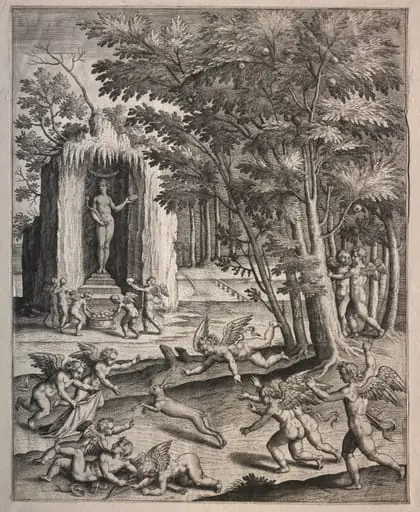
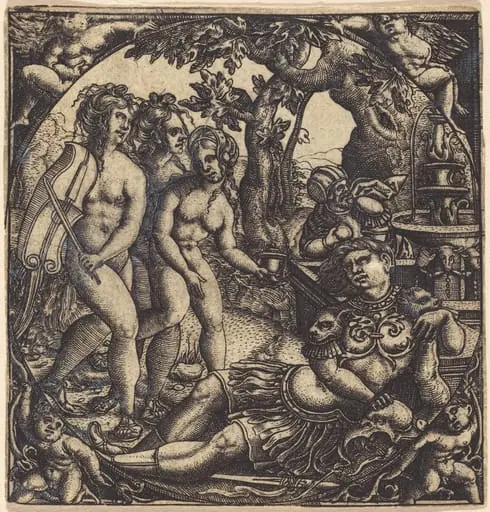
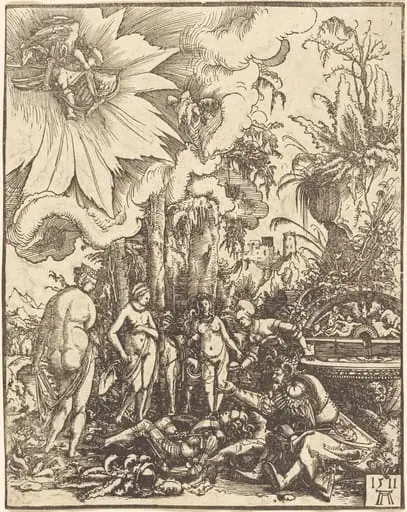
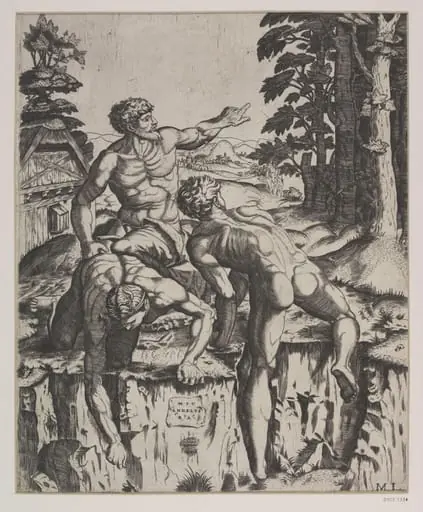
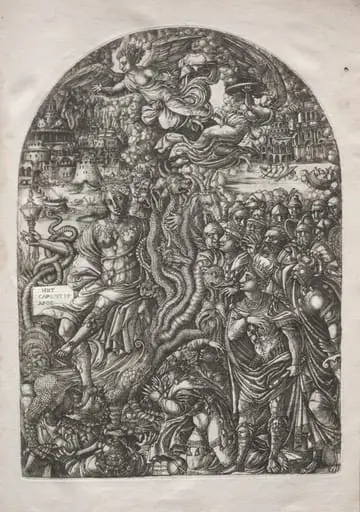
Created in 1534, the woodcut entitled *Moon* is attributed to the Italian printmaker Giolito de’ Ferrara, Gabriele. Executed as a black‑and‑white relief print, the composition is densely populated with minute figures, fantastical beasts, and ornamental foliage that together generate a bustling, otherworldly tableau.
Subject & Meaning
At the heart of the image a lone figure stands on a craggy shore, clutching a pole, while a winged being ascends a ladder toward a crowned lunar disc. Encircling this central action are swirling vines, clouds and a menagerie of strange creatures, accompanied by Latin inscriptions that suggest an allegorical or cosmological narrative.
Technique & Style
The work employs the woodcut process, in which the artist incised the design into a wooden block, applied ink to the raised surfaces, and transferred the image onto paper. This method, prevalent in the Renaissance for its efficiency, allows for the crisp linear quality and intricate, repetitive patterns evident throughout the print.
History & Provenance
*Moon* originates from the early sixteenth‑century Italian print market, a period when such images were circulated to disseminate ideas and decorative motifs. While specific ownership records are scarce, the print’s attribution to Giolito de’ Ferrara situates it within a workshop known for producing widely distributed illustrative sheets.
Context
The piece reflects the Renaissance fascination with celestial symbolism and the blending of classical, mythological, and grotesque elements. Its dense composition and inclusion of Latin text align with contemporary humanist interests in merging visual art with scholarly discourse, serving both decorative and didactic purposes.
Artist & collection