Artwork
The Apocalypse: Babylon the Harlot, Seated on the Seven-headed Beast
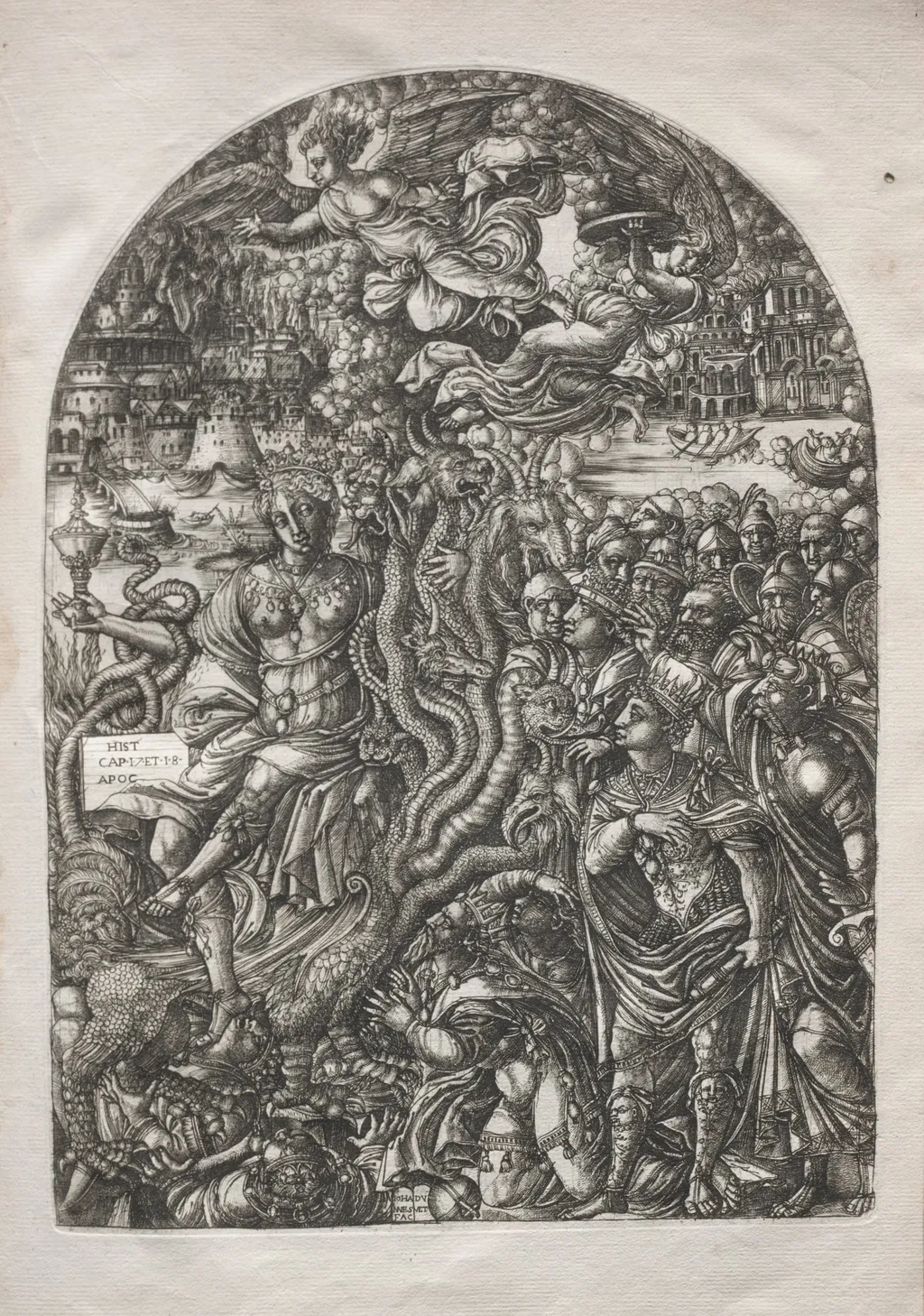
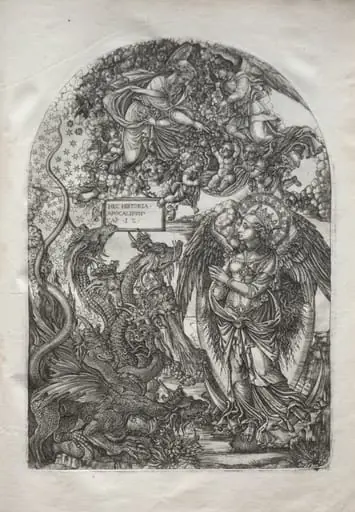
The Apocalypse: Babylon the Harlot, Seated on the Seven-headed Beast is a print by the Renaissance artist Jean Duvet. It dates from 1551 and is held in the collection of the Cleveland Museum of Art.
About this work
Overview
This engraving is one of twenty-three plates in a series illustrating the Book of Revelation, created by Jean Duvet over several years.
This engraving is one of twenty-three plates in a series illustrating the Book of Revelation, created by Jean Duvet over several years. It belongs to one of only seven known complete sets of the volume. Duvet, a French artist based in Langres, was among the earliest significant printmakers in France. His work stands apart for its intricate detail and distinctive visual language, developed independently of major artistic centers.
Subject & Meaning
The image depicts the Whore of Babylon, as described in Revelation, seated atop a seven-headed beast. Her disheveled hair and intense gaze convey moral corruption, while the beast, crowned and clawed, symbolizes worldly power and divine judgment. Snakes coil around her limbs, reinforcing themes of sin and entanglement. The scene draws from apocalyptic prophecy, presenting a vision of decadence destined for destruction.
Technique & Style
Duvet employed fine-line engraving to achieve dense, layered textures. His figures are robustly modeled, showing awareness of Italian Renaissance forms, yet the composition rejects spatial logic. Crowded, overlapping elements create a surface rich with ornamentation rather than depth. The result is a highly stylized, almost hallucinatory effect, distinct from the clarity of contemporary Northern or Italian prints.
History & Provenance
Duvet produced the complete series between approximately 1550 and 1560. The prints were circulated in limited numbers, and only seven bound volumes survive today. The museum’s copy is among these rare extant sets. Duvet’s isolation in Langres meant his exposure to Italian art came primarily through imported engravings, particularly those by Marcantonio Raimondi, which he reinterpreted through a personal, idiosyncratic lens.
Context
In mid-16th-century France, printmaking remained a niche pursuit compared to painting or sculpture. Duvet’s series emerged during a period of religious upheaval, when biblical imagery carried heightened political and spiritual weight. His work reflects both the lingering influence of Italian Mannerism and a uniquely French engagement with apocalyptic themes, shaped by local piety and limited access to continental trends.
Legacy
Duvet’s Apocalypse series established him as a foundational figure in French printmaking. His unconventional style—marked by emotional intensity and decorative complexity—set him apart from his contemporaries. Though not widely imitated, his work influenced later generations interested in symbolic, non-naturalistic imagery. The survival of only seven complete sets underscores its rarity and the singular nature of his artistic vision.
Artist & collection

Artist
Jean Duvet (1485 – after 1562) was a French Renaissance goldsmith and engraver, now best known for his engravings.

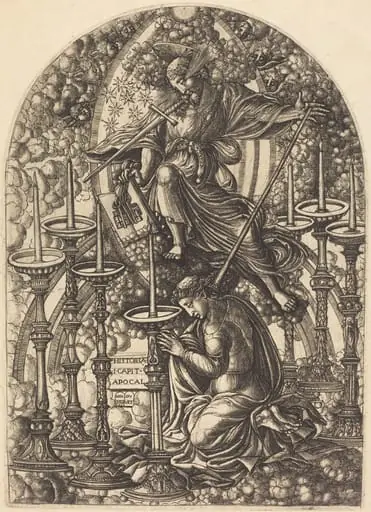
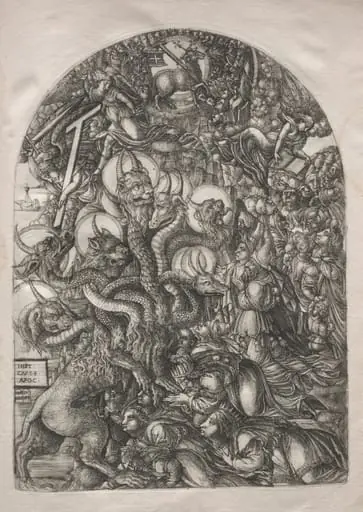 The Apocalypse: The Beast with Seven Heads and Ten Horns
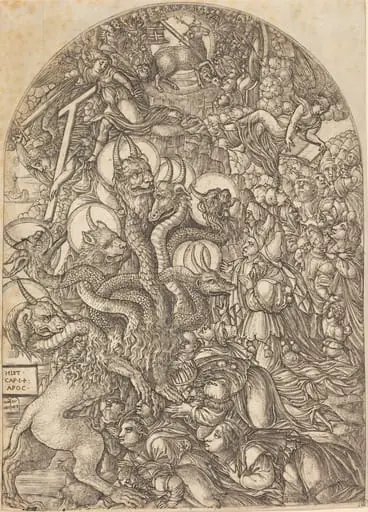
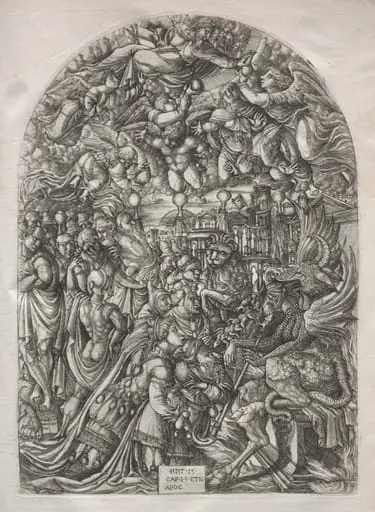 The Apocalypse: The Dragon with Two Horns and the Beast with Seven
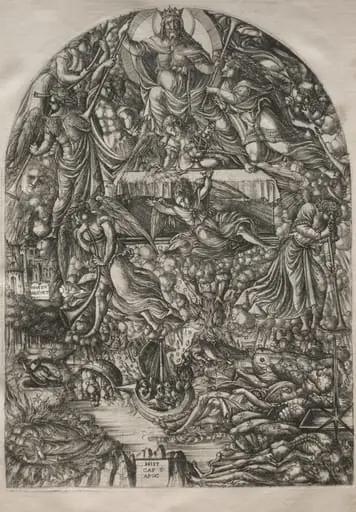 The Apocalypse: The Opening of the Seventh Seal
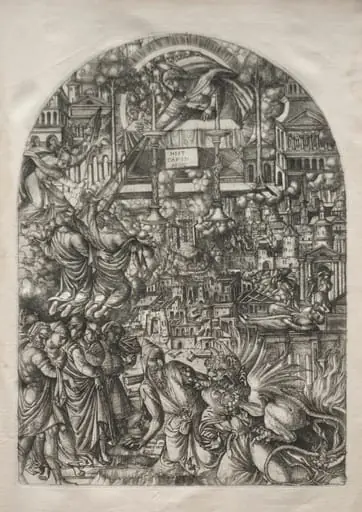 The Apocalypse: The Measurement of the Temple
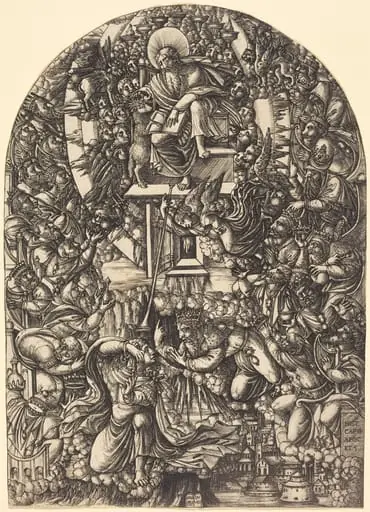
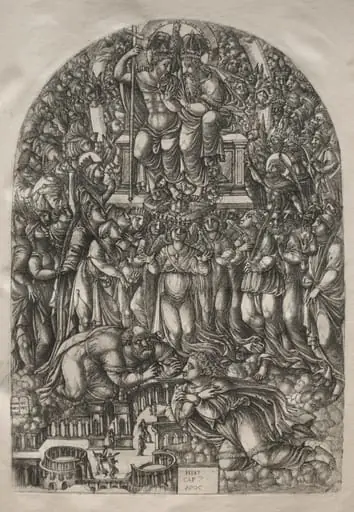 The Apocalypse: An Innumerable Multitude Which Stand before the Throne
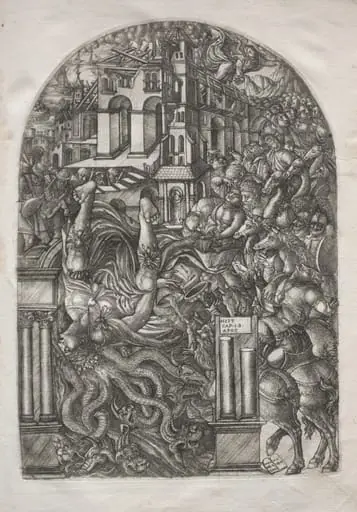 The Apocalypse: The Fall of Babylon
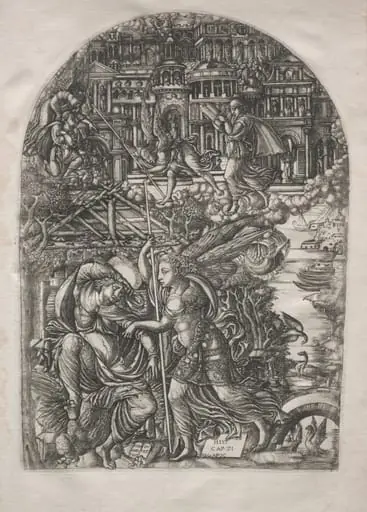 The Apocalypse: The Angel Shows St. John the New Jerusalem
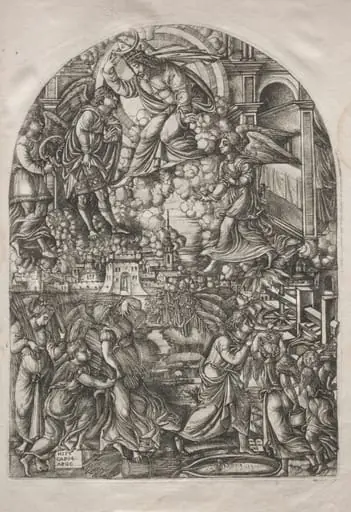 The Apocalypse: The Winepress of the Wrath of God
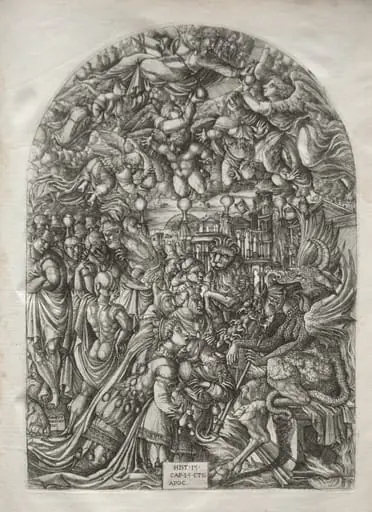 The Apocalypse: The Woman Clothed with the Sun
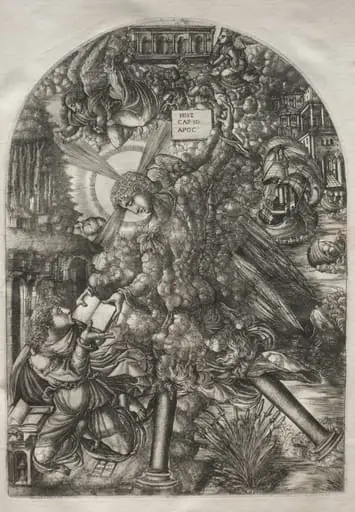 The Apocalypse: The Angel Gives St. John the Book to Eat
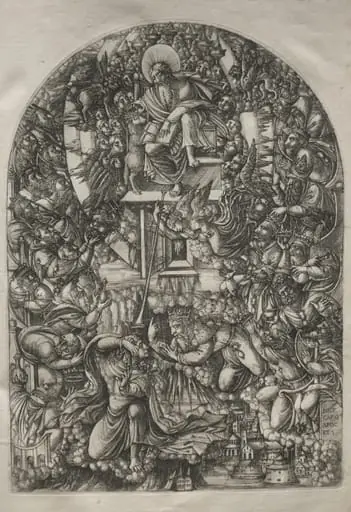 The Apocalypse: St. John Summoned to Heaven
 The Apocalypse: St. Michael and the Dragon