Artwork
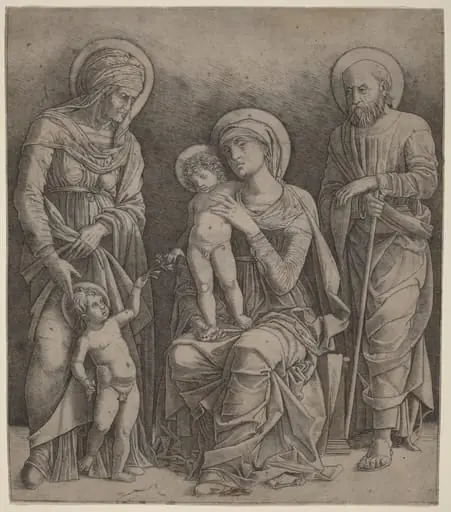
Holy Family with St. Elizabeth and the Infant St. John the Baptist
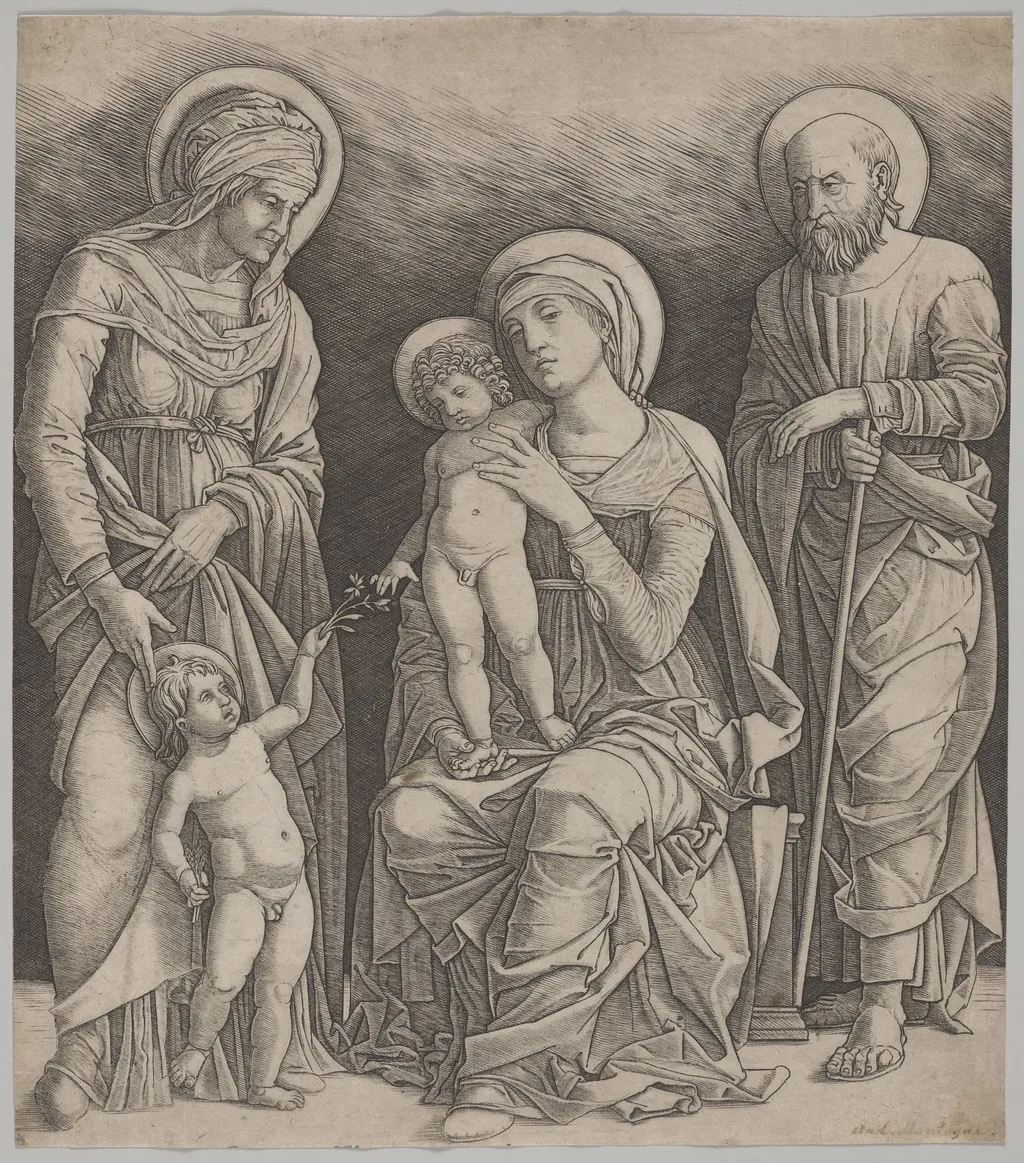
Holy Family with St. Elizabeth and the Infant St. John the Baptist is a print by the Renaissance artist Giovanni Antonio da Brescia. It dates from 1500 and is held in the collection of the Cleveland Museum of Art.
About this work
Overview
Giovanni Antonio da Brescia, an Italian engraver active in northern Italy around 1500, produced this religious print during the height of the Renaissance.
Giovanni Antonio da Brescia, an Italian engraver active in northern Italy around 1500, produced this religious print during the height of the Renaissance. Though initially signing works with 'Z.A.', he later adopted the monogram 'IO.AN.BX.'—a shift that helps date his output. This engraving belongs to a small body of prints that reflect his engagement with devotional imagery, combining narrative clarity with refined line work characteristic of early 16th-century northern Italian printmaking.
Subject & Meaning
The scene unites the Holy Family—Mary, Joseph, and the Christ Child—with St. Elizabeth and the infant John the Baptist, drawing from the biblical account of Mary’s visitation to her cousin. The grouping emphasizes kinship and divine continuity, with John’s presence foreshadowing his role as precursor to Christ. The composition avoids dramatic tension, instead fostering quiet reverence, aligning with devotional practices that valued contemplation over spectacle.
Technique & Style
Brescia employed fine, controlled lines typical of engraving to define forms with precision. Rather than relying on chiaroscuro or sfumato, he achieved softness through delicate hatching and graduated tonal zones. The figures are arranged in a stable, pyramidal structure, grounded in naturalistic posture but simplified to enhance legibility. His approach reflects a transitional style—bridging late Gothic clarity and emerging Renaissance harmony.
History & Provenance
The print survives in a limited number of impressions, primarily held in European institutional collections. Early ownership records are sparse, but its technical quality suggests it was produced for a learned, devotional audience rather than mass circulation. The shift in Brescia’s signature from 'Z.A.' to 'IO.AN.BX.' around 1500 helps anchor this work to his mature period, distinguishing it from earlier, less refined attempts.
Context
Produced in the wake of Albrecht Dürer’s rise and the spread of printmaking across Italy, Brescia’s work reflects regional adaptations of northern techniques. While Venetian painters explored color and atmosphere, northern Italian engravers like him focused on linear clarity and religious narrative. This print aligns with a broader trend of devotional imagery tailored for private worship, circulating among clergy and educated laypeople.
Legacy
Brescia’s prints, though not widely celebrated in his lifetime, contributed to the dissemination of sacred imagery in early 16th-century Italy. His restrained style influenced regional engravers who prioritized compositional balance over ornamental flourish. Though overshadowed by contemporaries like Marcantonio Raimondi, his work remains a quiet testament to the role of print in shaping devotional culture beyond major artistic centers.
Own this work as a print
Artist & collection

Artist
Giovanni Antonio da Brescia was an Italian engraver of northern Italy, active in the approximate period 1490–1519, during the Italian Renaissance.

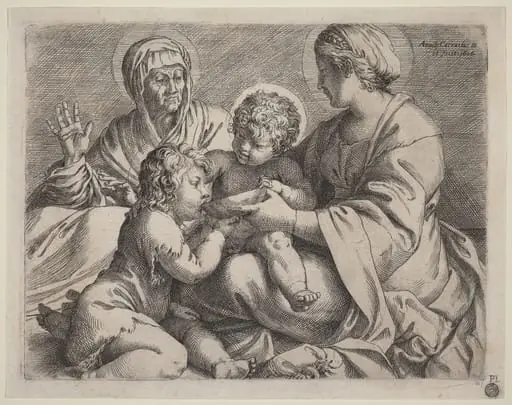 The Madonna della Scodella
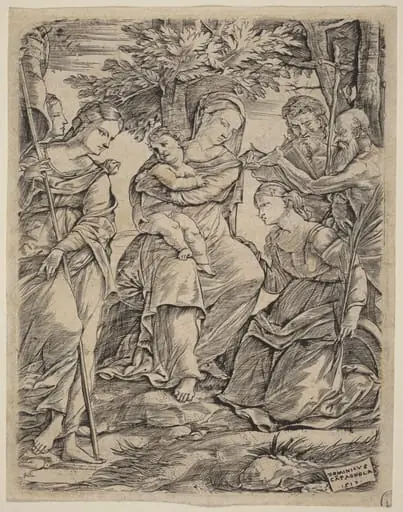 The Virgin and Child with Saints
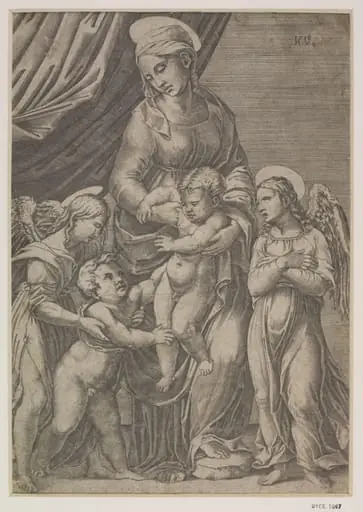 Untitled
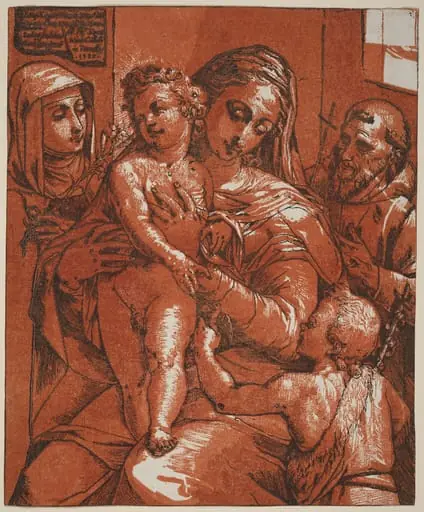 Madonna and Child Accompanied by Saints
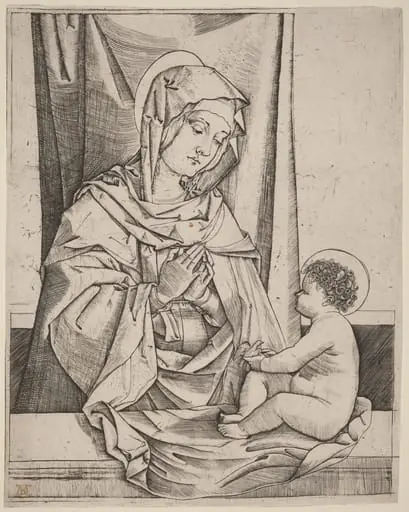 The Virgin and Child
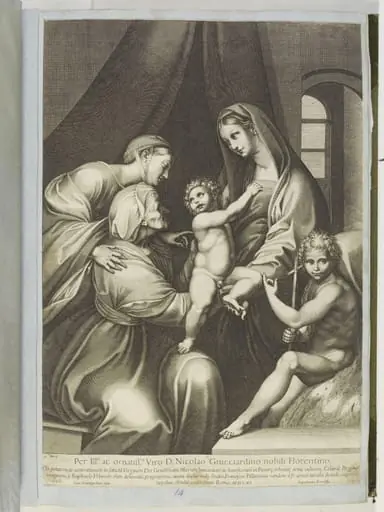 Untitled
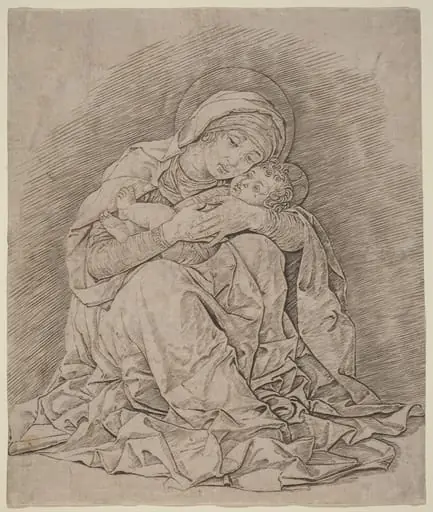 The Virgin and Child
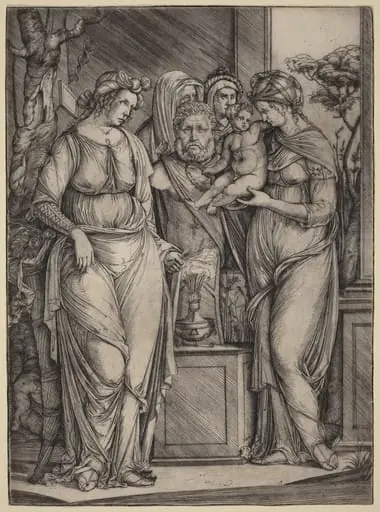 Large Sacrifice to Priapus
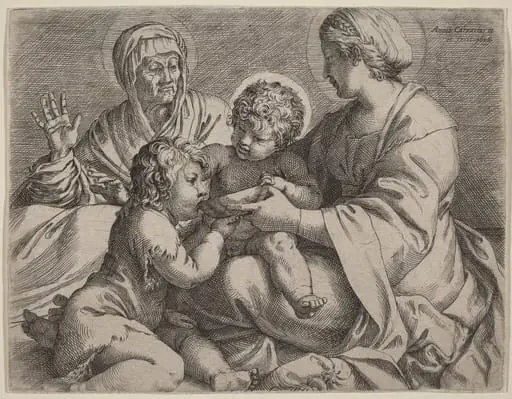 Madonna and Child with Saints Elizabeth and John the Baptist (La Madonna della Scodella)
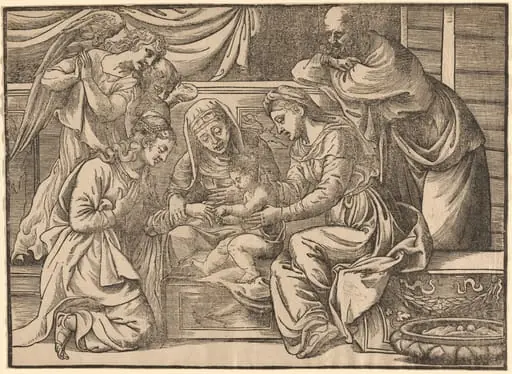 The Mystic Marriage of Saint Catherine
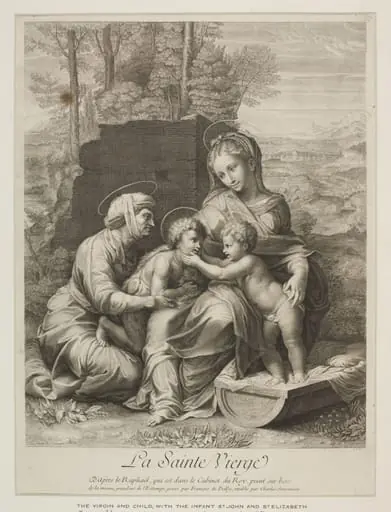 LA SAINTE VIERGE