Artwork
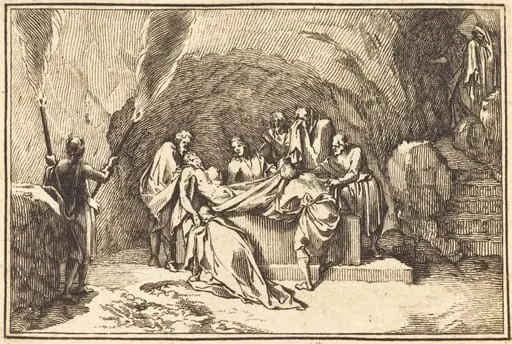
The Entombment with Three Birds
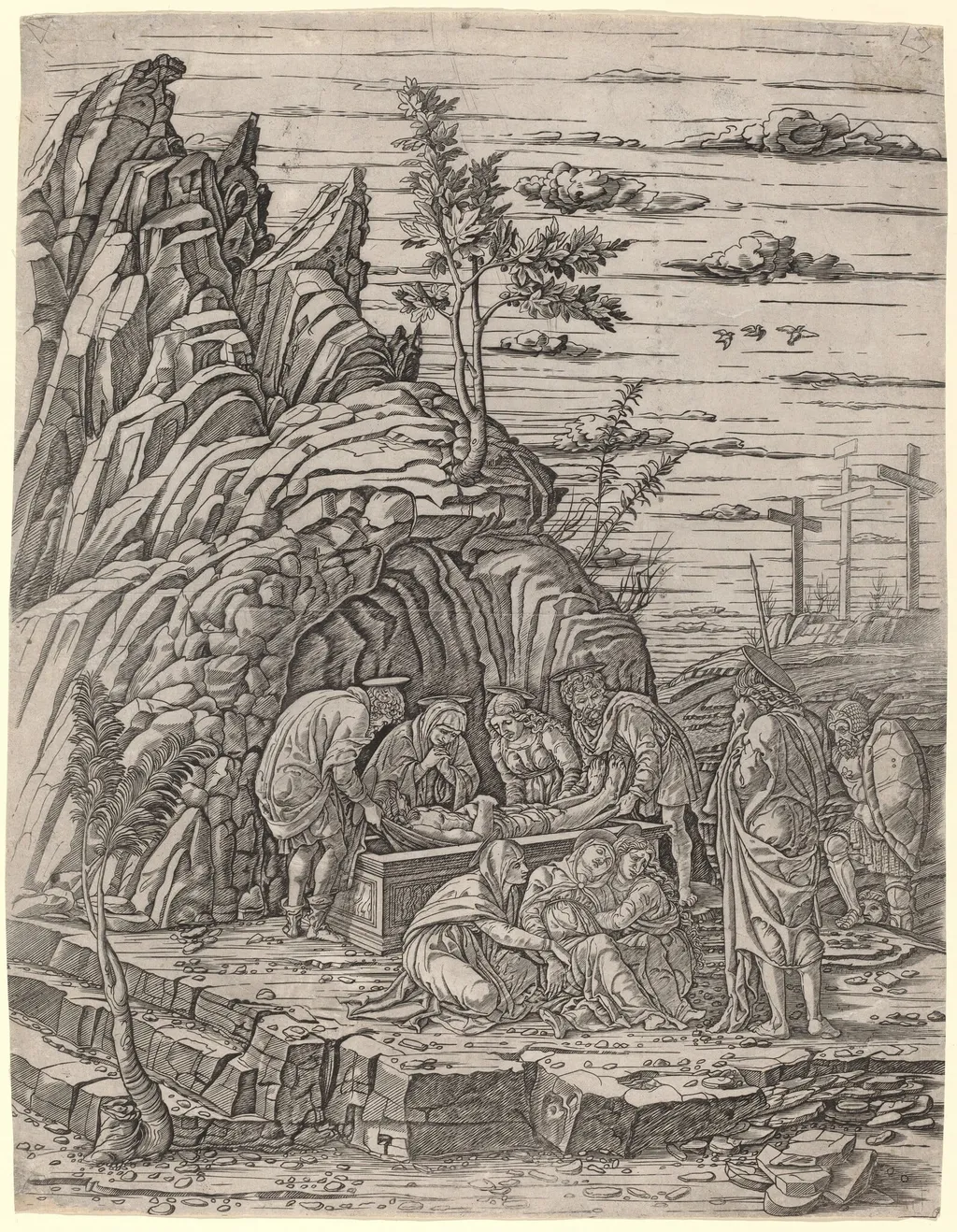
The Entombment with Three Birds is an ink print by the Renaissance artist Giovanni Antonio da Brescia. It dates from 1502 and is held in the collection of the National Gallery of Art.
About this work
Overview
The composition is restrained, emphasizing stillness over drama, with subtle tonal gradations achieved through fine cross-hatching.
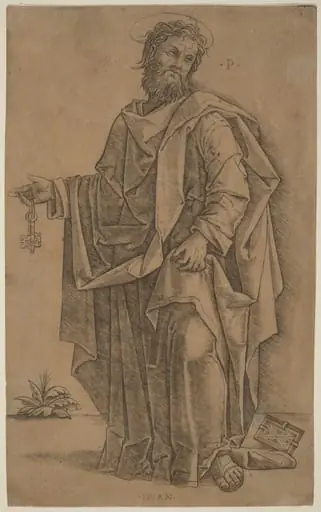
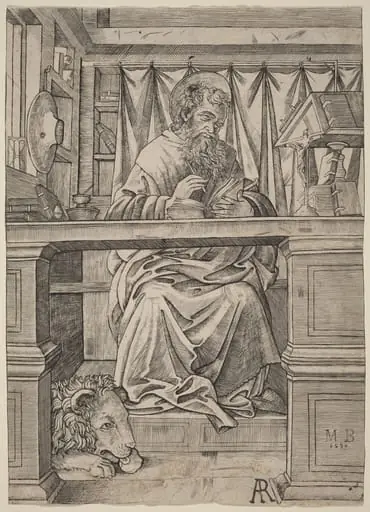
Created around 1502 by Giovanni Antonio da Brescia, this engraving captures a quiet moment from the burial of Christ. Executed in the precise, linear style characteristic of early Renaissance printmaking, the work reflects the artist’s evolving signature practice—from early initials to the more elaborate IO.AN.BX. The composition is restrained, emphasizing stillness over drama, with subtle tonal gradations achieved through fine cross-hatching.
Subject & Meaning
The scene portrays Christ’s body being lowered into a tomb, a common devotional subject in Renaissance Italy. Three small birds perch on the lip of the dark burial cavity, an unusual detail that introduces an element of natural observation into a sacred narrative. Their presence may suggest solitude, divine witness, or the persistence of life amid death, though no definitive symbolic meaning is recorded.
Technique & Style
The image is rendered in metal engraving, with tightly controlled lines creating form through shading rather than wash or tone. Cross-hatching builds depth in the rocky tomb and drapery, while the smooth, unmarked areas of the figures’ skin contrast sharply with the surrounding darkness. The birds are rendered with minimal strokes, their simplicity enhancing the scene’s quietude and focus on spatial stillness.
History & Provenance
Giovanni Antonio da Brescia was active in northern Italy during the early 16th century, producing engravings influenced by Mantegna and other Paduan masters. This print is among his known works bearing the signature IO.AN.BX., indicating a mature phase of his career. No early ownership records are documented, but the print circulated among collectors of Northern Italian prints in the 16th and 17th centuries.
Context
In early 1500s Italy, religious prints served both devotional and artistic functions, often disseminating iconography beyond painted altarpieces. While most Entombment scenes emphasized emotional intensity or architectural grandeur, this work’s restraint and inclusion of natural elements reflect a quieter, more contemplative trend emerging in printmaking circles of the time.
Legacy
The engraving is not widely cited in major art-historical narratives, but it exemplifies the nuanced approach of lesser-known Renaissance printmakers who prioritized subtlety over spectacle. Its inclusion of birds as quiet observers has drawn occasional scholarly attention as an early example of naturalistic detail in sacred print subjects, influencing later Northern European engravers.
Artist & collection

Artist
Giovanni Antonio da Brescia was an Italian engraver of northern Italy, active in the approximate period 1490–1519, during the Italian Renaissance.