Artwork
Sibylla Cimmeria
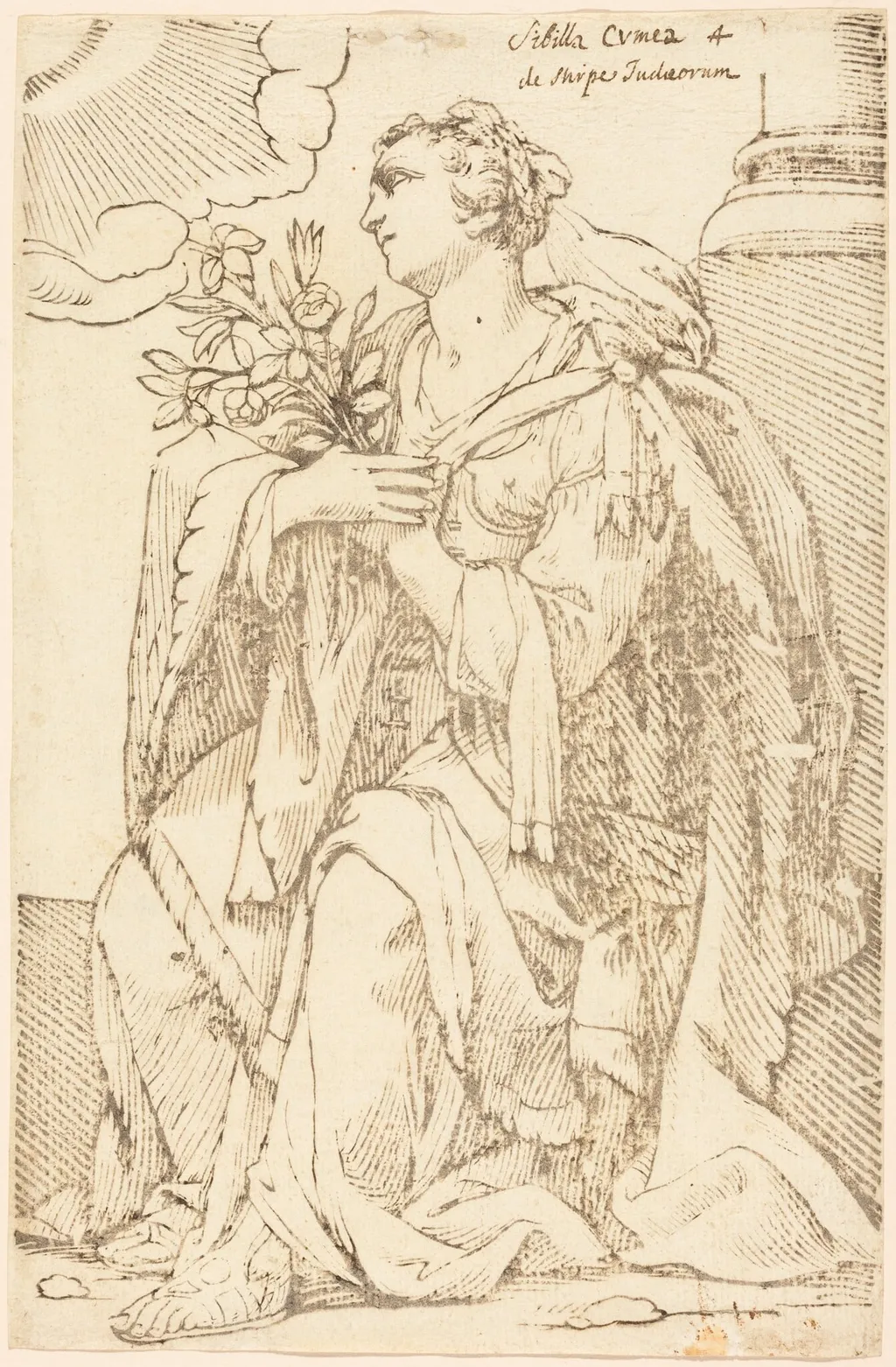
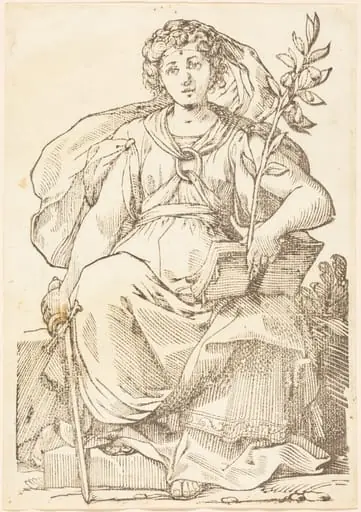
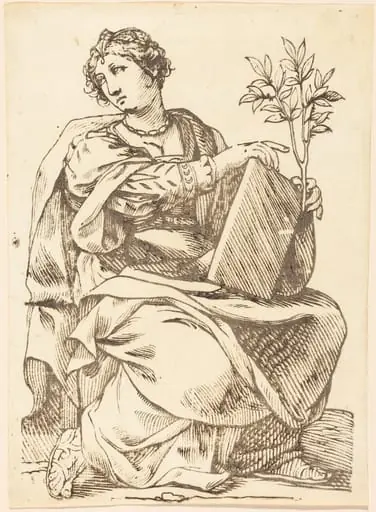
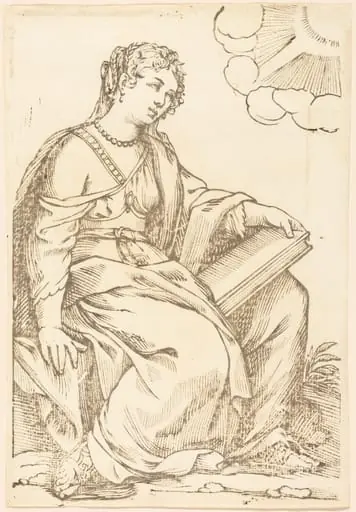
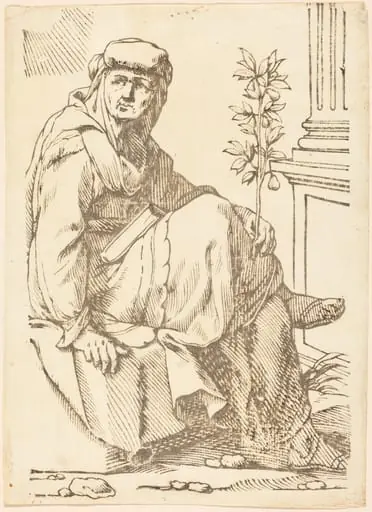
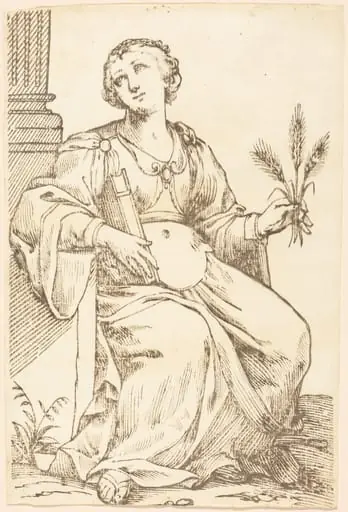
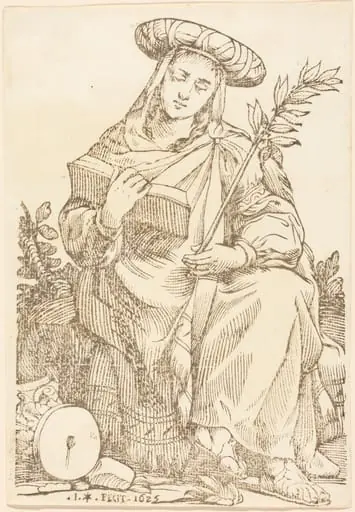
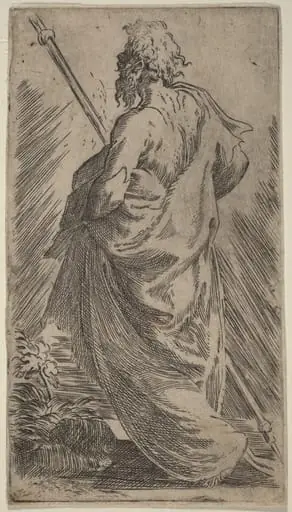
Sibylla Cimmeria is an ink print by the Baroque artist Paul Maupin. It dates from 1625 and is held in the collection of the National Gallery of Art.
About this work
Overview
Sibylla Cimmeria is a woodcut printed on laid paper around 1625, attributed to the artist Paul Maupin.
Sibylla Cimmeria is a woodcut printed on laid paper around 1625, attributed to the artist Paul Maupin. The work belongs to the tradition of early 17th-century Northern European printmaking, where mythological and allegorical subjects were rendered with precision for scholarly and devotional audiences. Its small scale and fine line work reflect the technical demands of woodcut engraving at the time.
Subject & Meaning
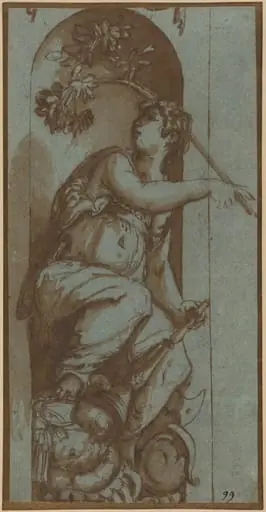
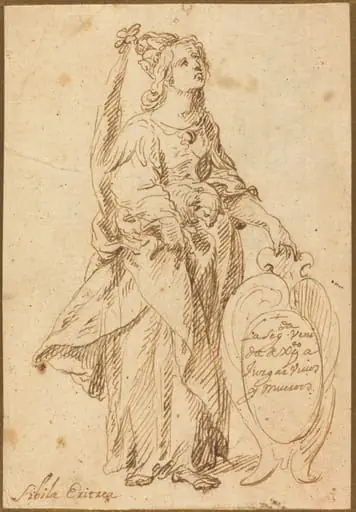
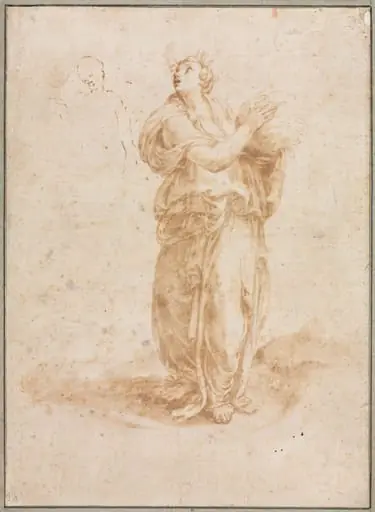
The figure is interpreted as the Cimmerian Sibyl, a prophetic woman from classical antiquity associated with the underworld and hidden knowledge. Her bare feet, veil, and seated posture evoke a contemplative seer, while the bouquet may symbolize fleeting life or divine favor. The beam of light piercing clouds suggests revelation, reinforcing her role as an intermediary between the mortal and the divine.
Technique & Style
The image is executed in fine, controlled lines characteristic of woodcut engraving, with delicate hatching to model form and texture. The robe’s folds, the veil’s drapery, and the architectural detail are rendered with meticulous care, demonstrating the artist’s command of the medium. The contrast between the solid figure and the ethereal background enhances the sense of otherworldliness.
History & Provenance
The print’s early history is undocumented, but its style aligns with works produced in the Dutch or German regions during the early Baroque period. It likely circulated among collectors of emblematic or allegorical imagery. No known institutional records trace its ownership prior to the 20th century, suggesting it remained in private hands for centuries.
Context
In the early 1600s, interest in classical sibyls persisted in Northern Europe, often linked to Christian eschatology and the anticipation of prophecy. Artists and printers frequently adapted ancient figures into visual allegories for educated audiences. Maupin’s print fits within this trend, blending classical myth with contemporary print culture’s demand for symbolic imagery.
Legacy
Sibylla Cimmeria remains a rare example of Paul Maupin’s graphic work, offering insight into the niche market for mythological prints in the early 17th century. Though not widely reproduced or studied, it contributes to the understanding of how classical themes were sustained in print form beyond major artistic centers like Rome or Venice.
Artist & collection