Artwork
Maecenas Presenting the Liberal Arts to Emperor Augustus
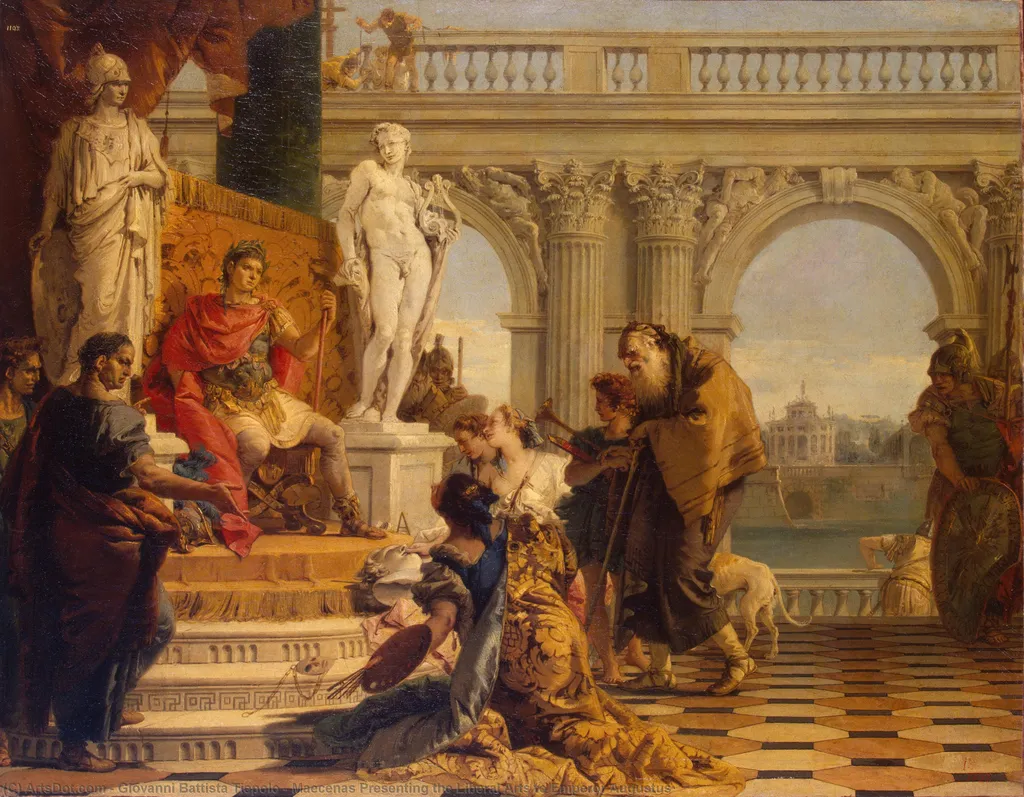
Maecenas Presenting the Liberal Arts to Emperor Augustus is an oil painting by the Rococo painting artist Giovanni Battista Tiepolo. It dates from 1743 and is held in the collection of the Hermitage Museum.
About this work
Overview
Giovanni Battista Tiepolo’s oil on canvas, dated 1743, depicts a ceremonial presentation before the Roman emperor Augustus. The composition is dominated by a central arch framed by columns and statues, within which a dignified figure in a toga offers a group of women, each embodying a liberal art, to the seated ruler. The work now belongs to the collection of the State Hermitage Museum.
Subject & Meaning
The painting visualises the ancient patron‑client relationship, with Maecenas—historically Augustus’s chief adviser—introducing the personified liberal arts to the emperor. The women’s flowing garments and poised gestures symbolize poetry, music, geometry, astronomy and other intellectual pursuits, suggesting that cultural refinement is offered as a tribute to imperial authority.
Technique & Style
Tieposo employs his characteristic luminous palette and fluid brushwork, creating a sense of airy space within the architectural setting. The chiaroscuro highlights the emperor’s laurel‑crowned head and the delicate drapery of the allegorical figures, while the subtle inclusion of a small dog adds a naturalistic counterpoint to the formal tableau.
History & Provenance
Executed in the mid‑18th century, the canvas was later acquired by the State Hermitage Museum, where it remains on display. Its provenance traces a typical path for Tiepolo’s works, moving from private aristocratic collections into public institutions during the 19th‑century expansion of European museum holdings.
Own this work as a print
Artist & collection

Artist
Giovanni Battista Tiepolo, also known as Giambattista Tiepolo, was an Italian painter and printmaker from the Republic of Venice who painted in the Rococo style, considered an important member of the 18th-century Venetian school.

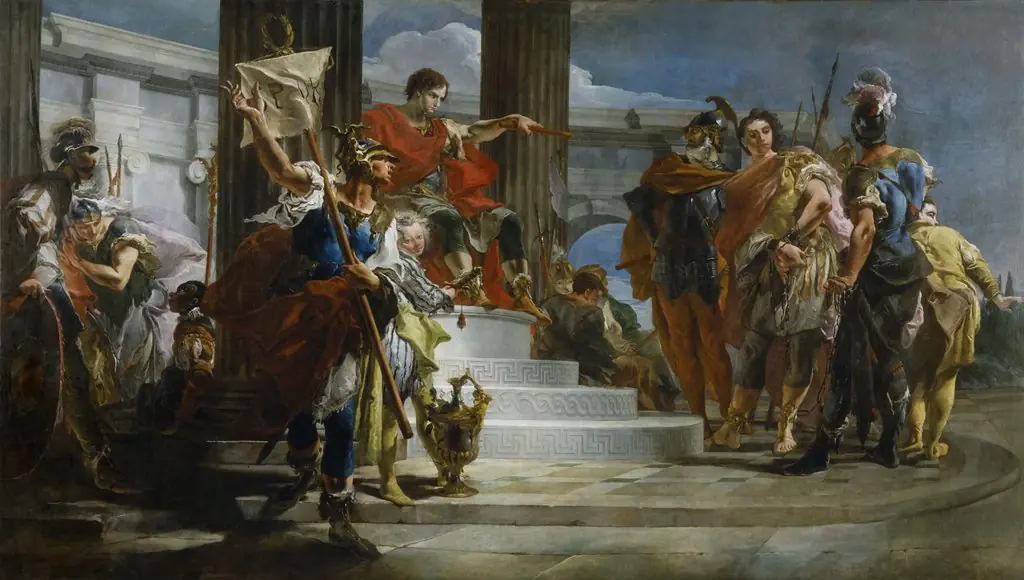 Scipio Africanus Freeing Massiva
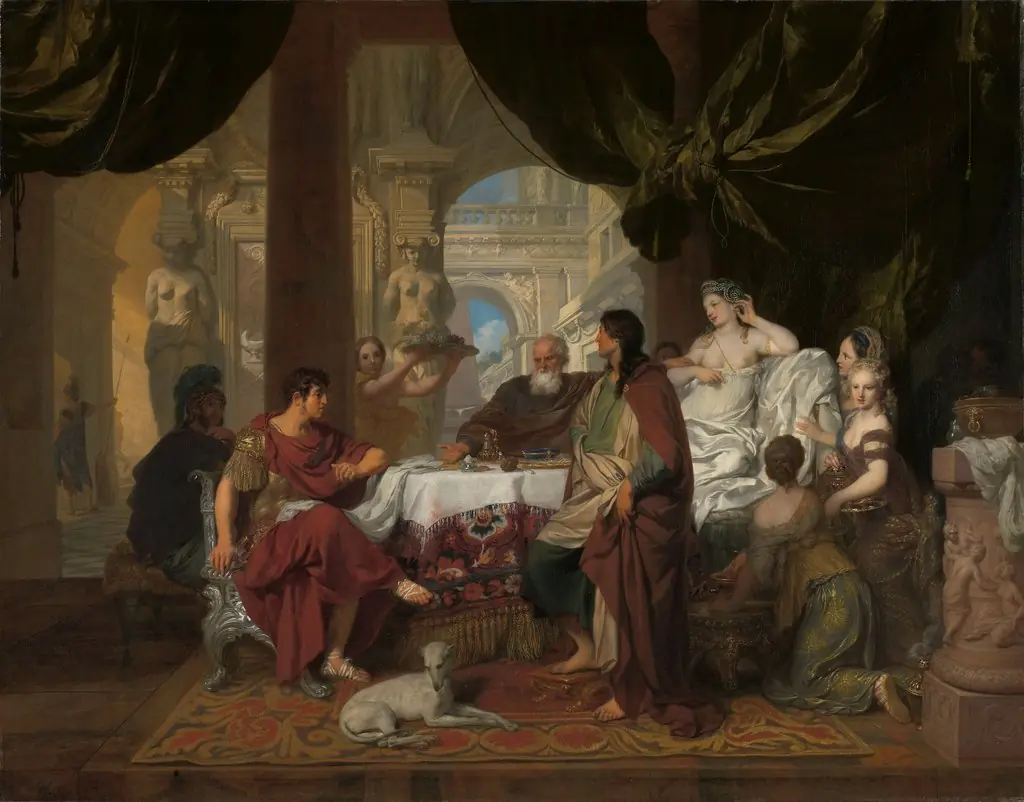 The Banquet of Cleopatra
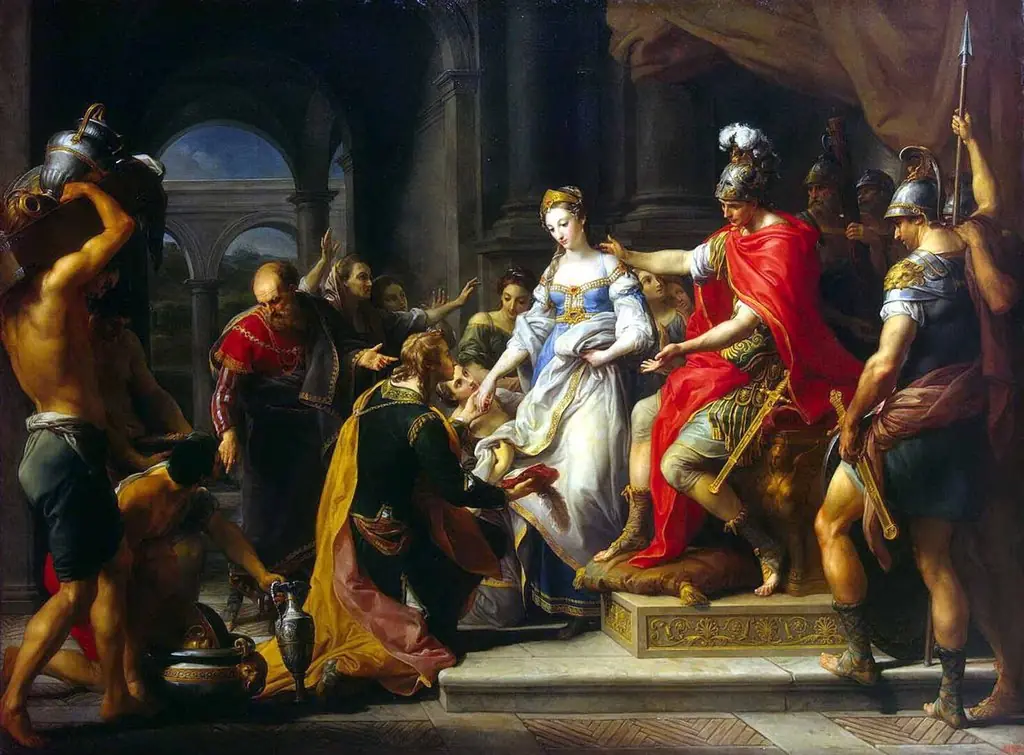 Continence of Scipio
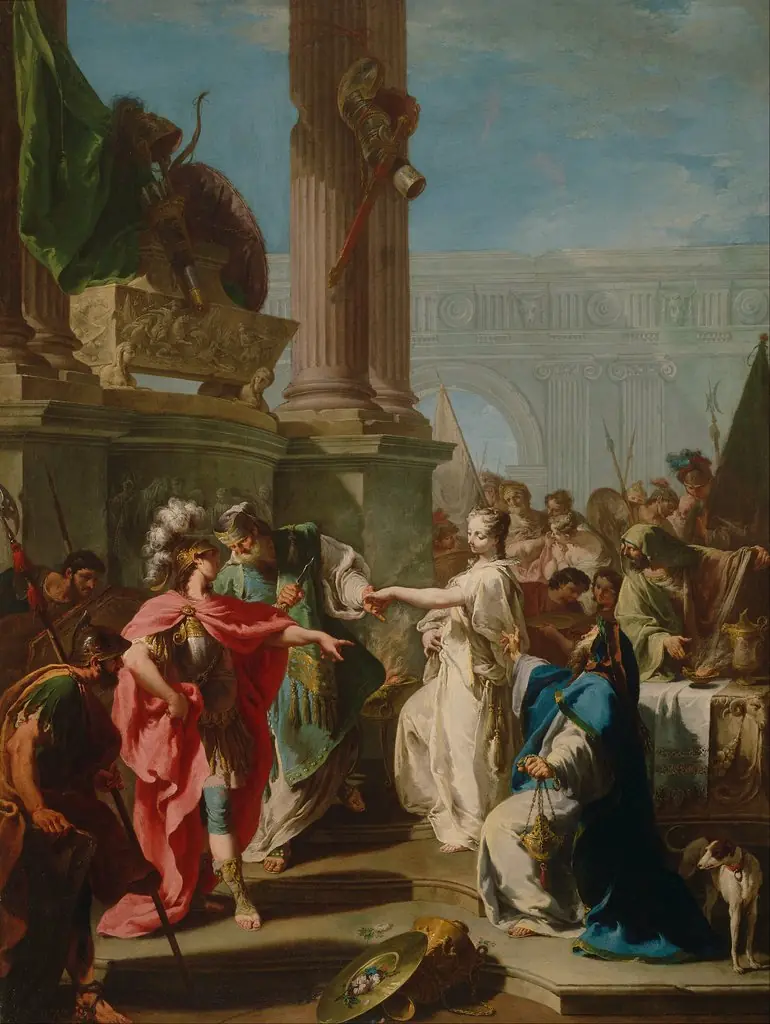 The Sacrifice of Polyxena in Malibu
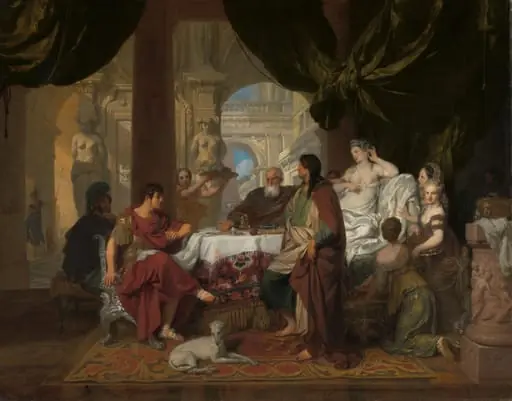 Cleopatra’s Banquet
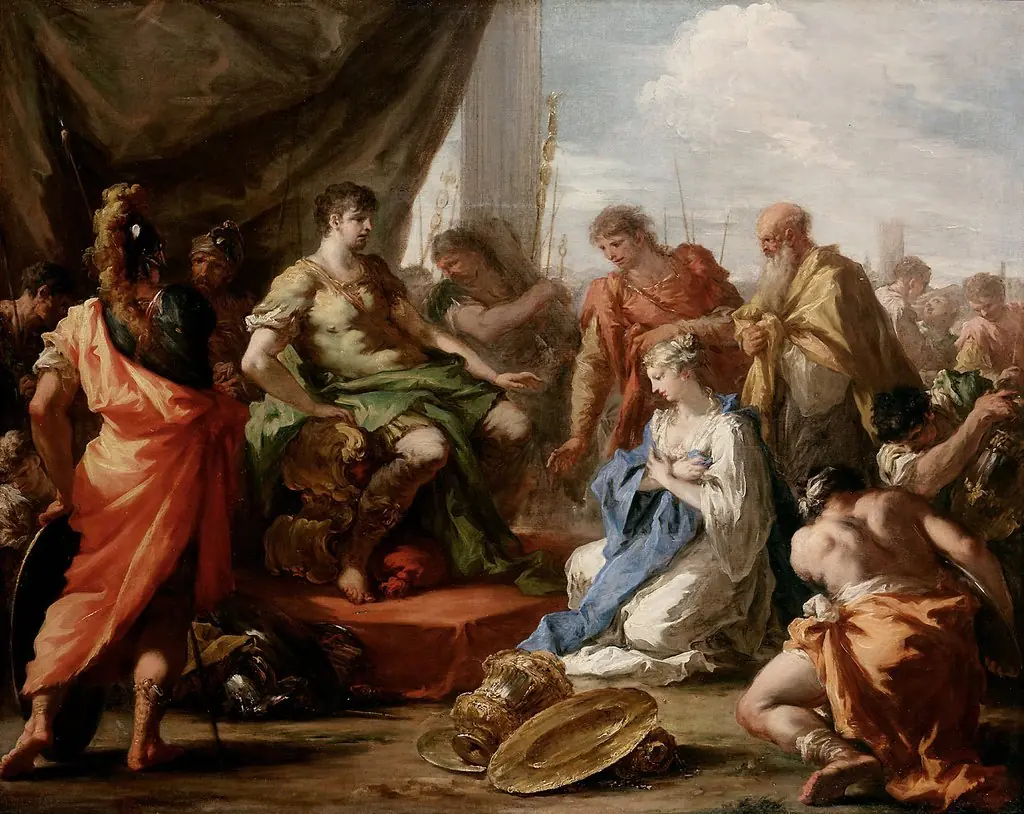 Enthaltsamkeit des Scipio
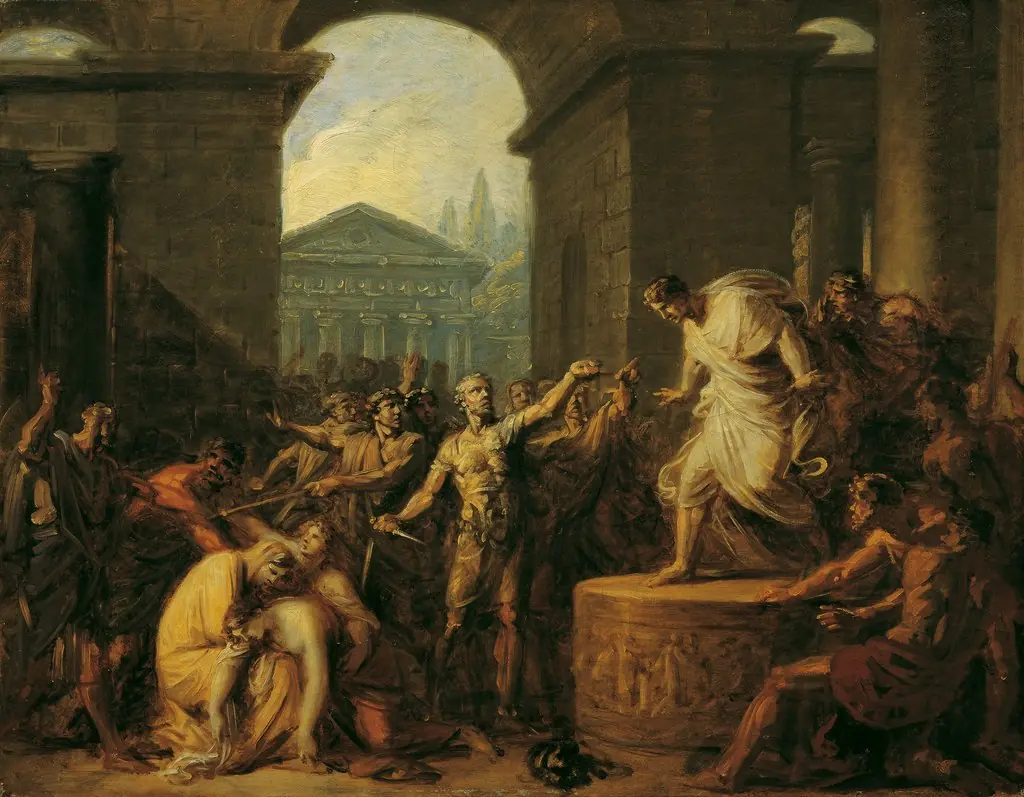 The Death of Virginia
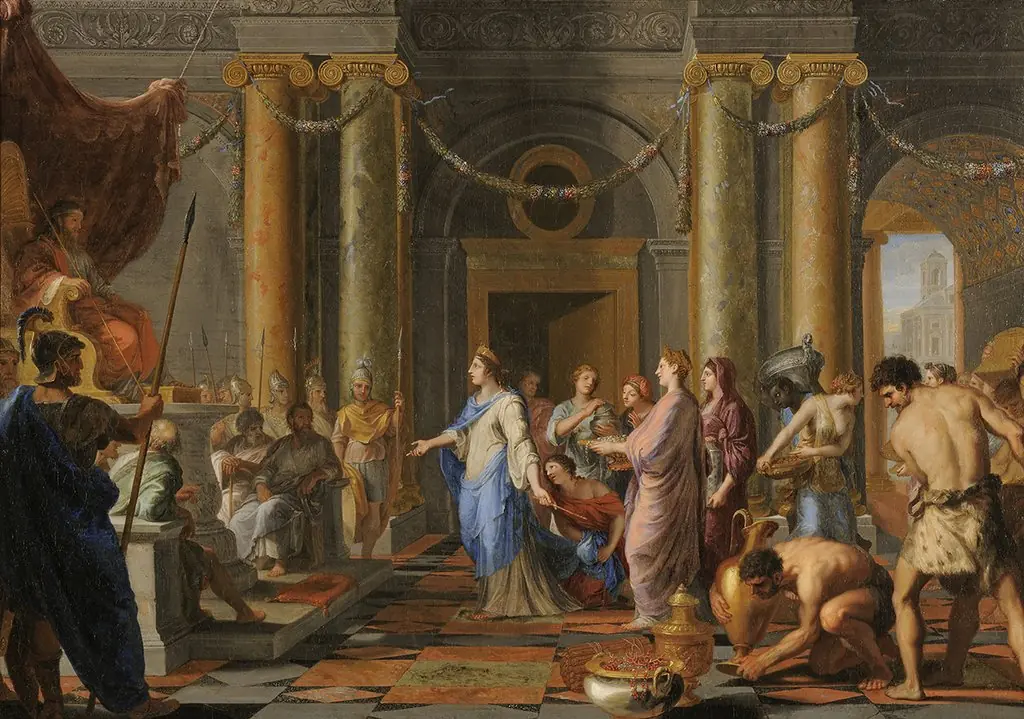 Solomon Receiving the Queen of Sheba
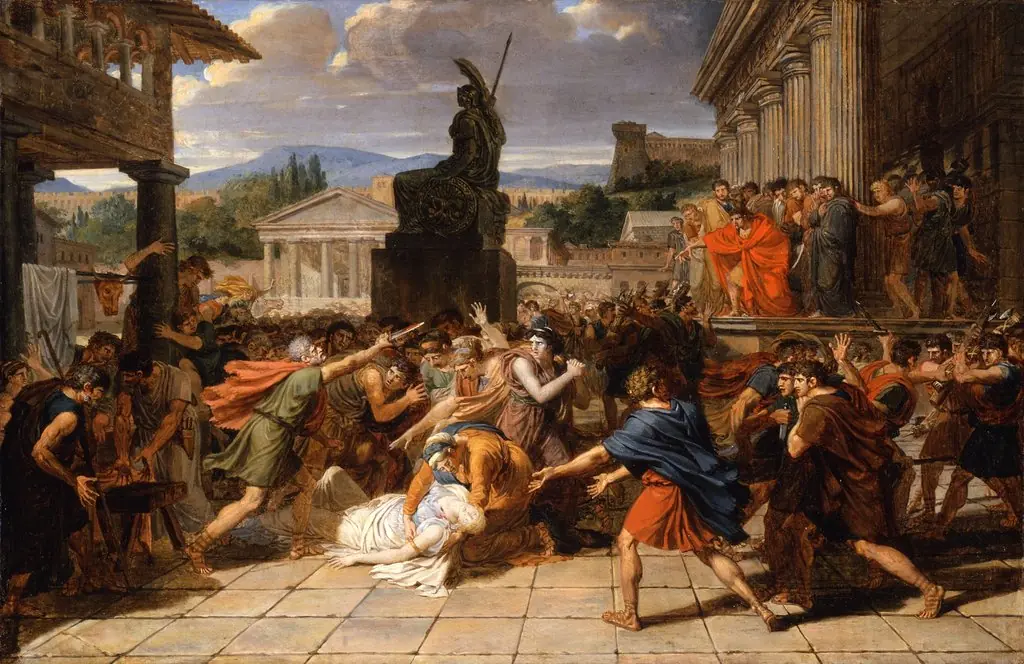 The Death of Virginia
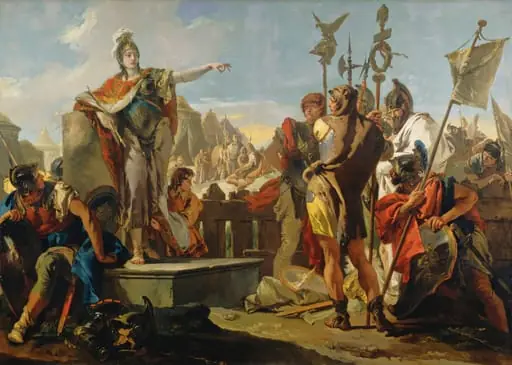 Queen Zenobia Addressing Her Soldiers
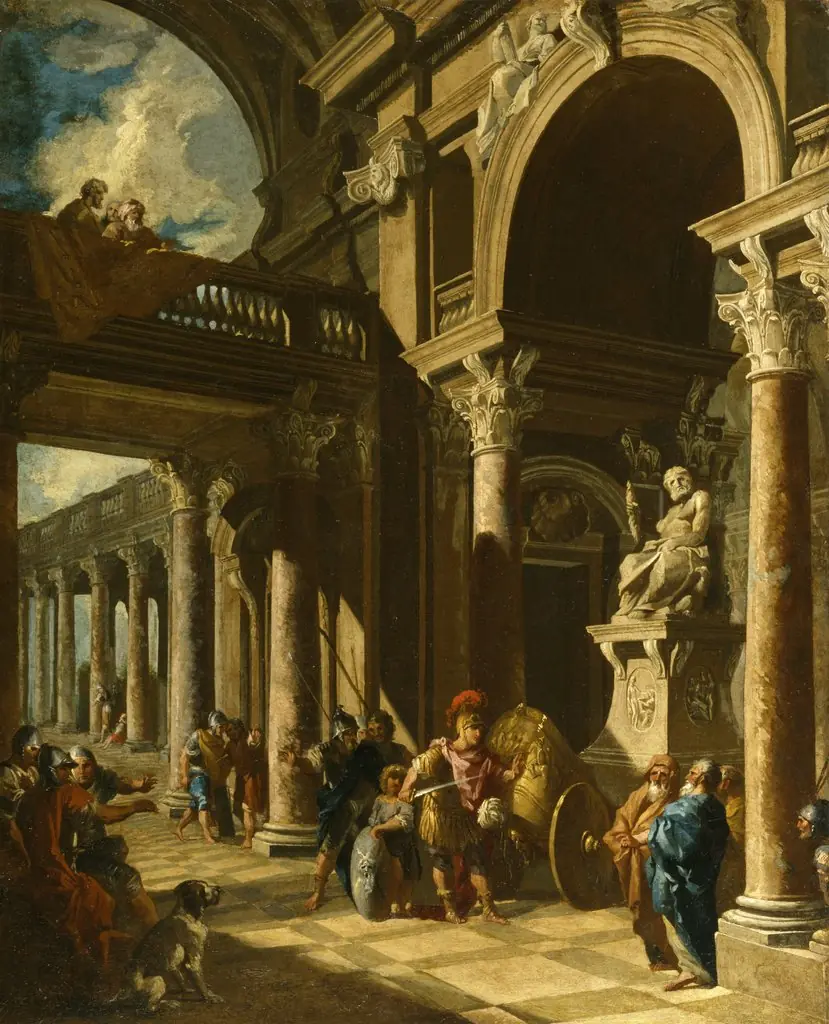 Alexander the Great Cutting the Gordian Knot
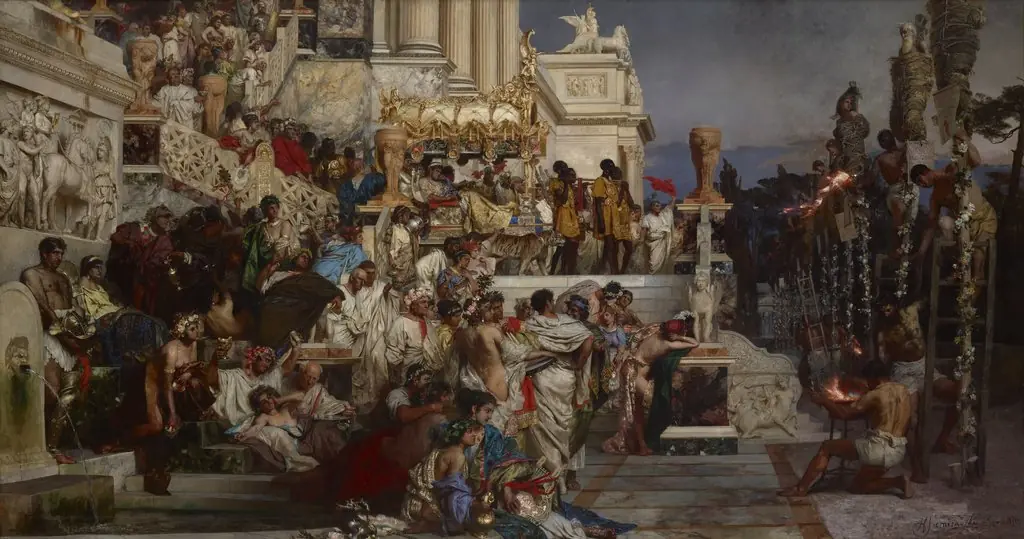 Nero's Torches