Artwork
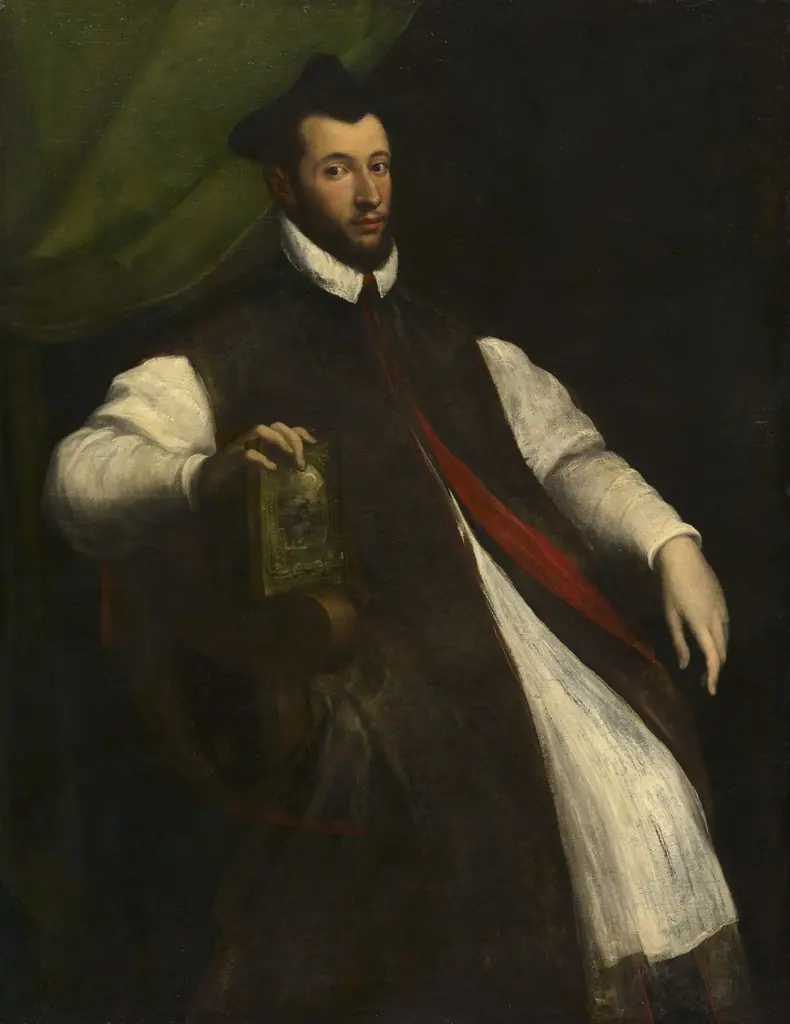
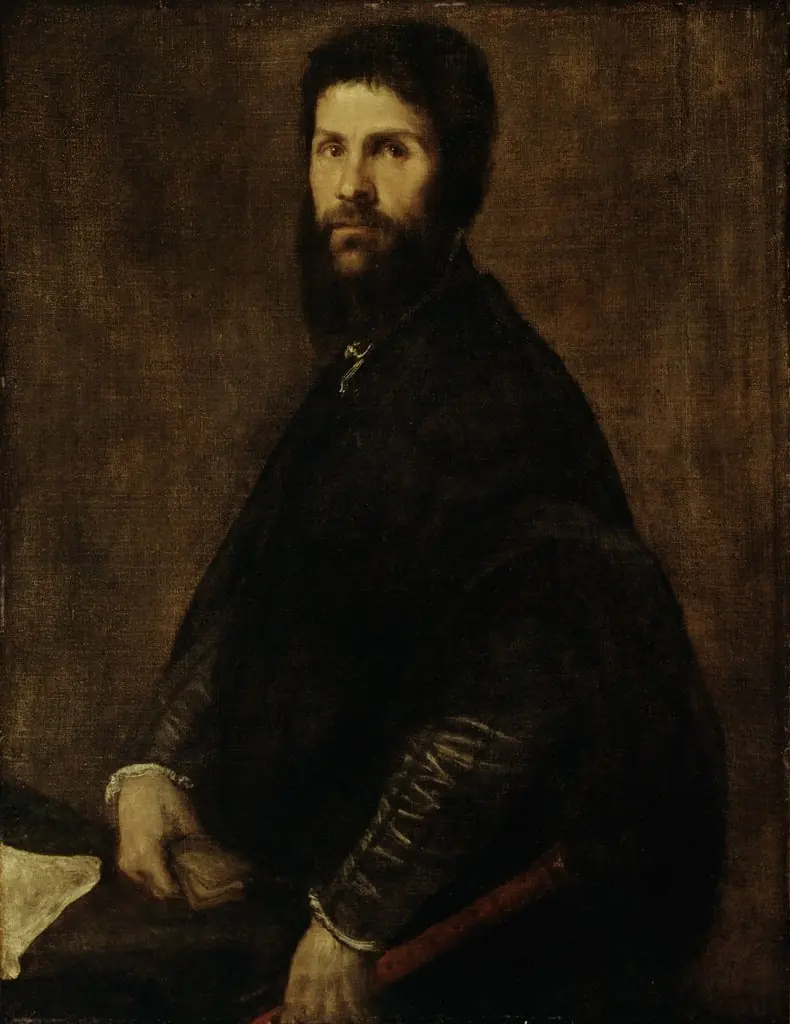
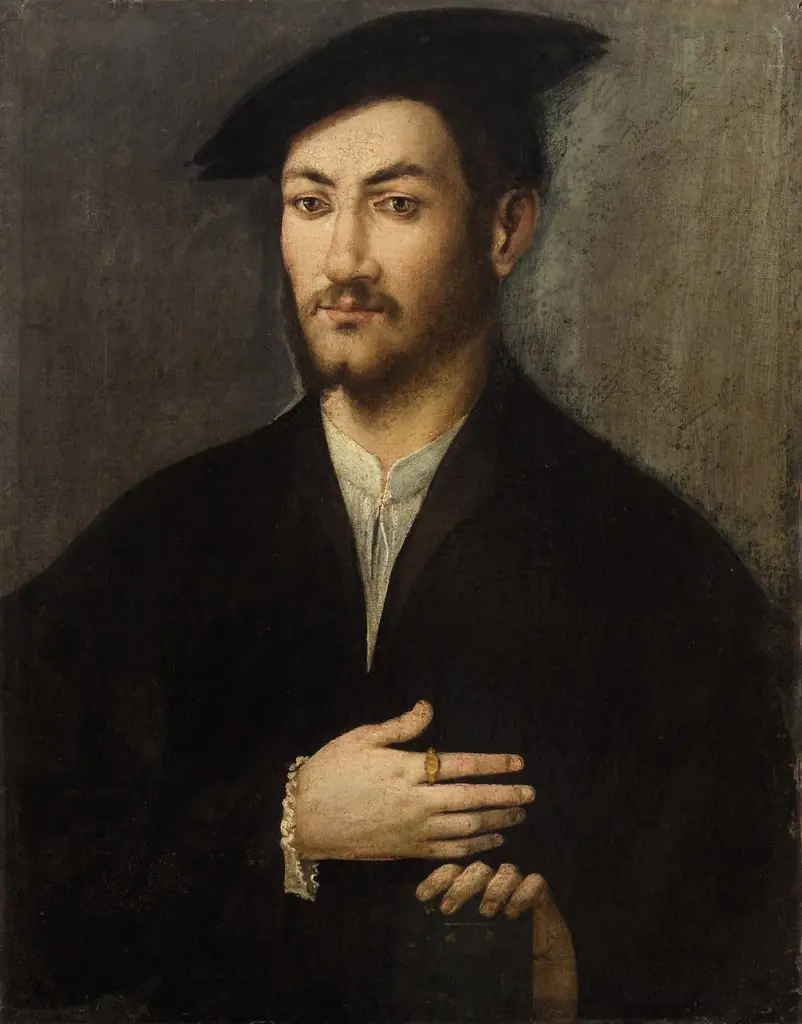
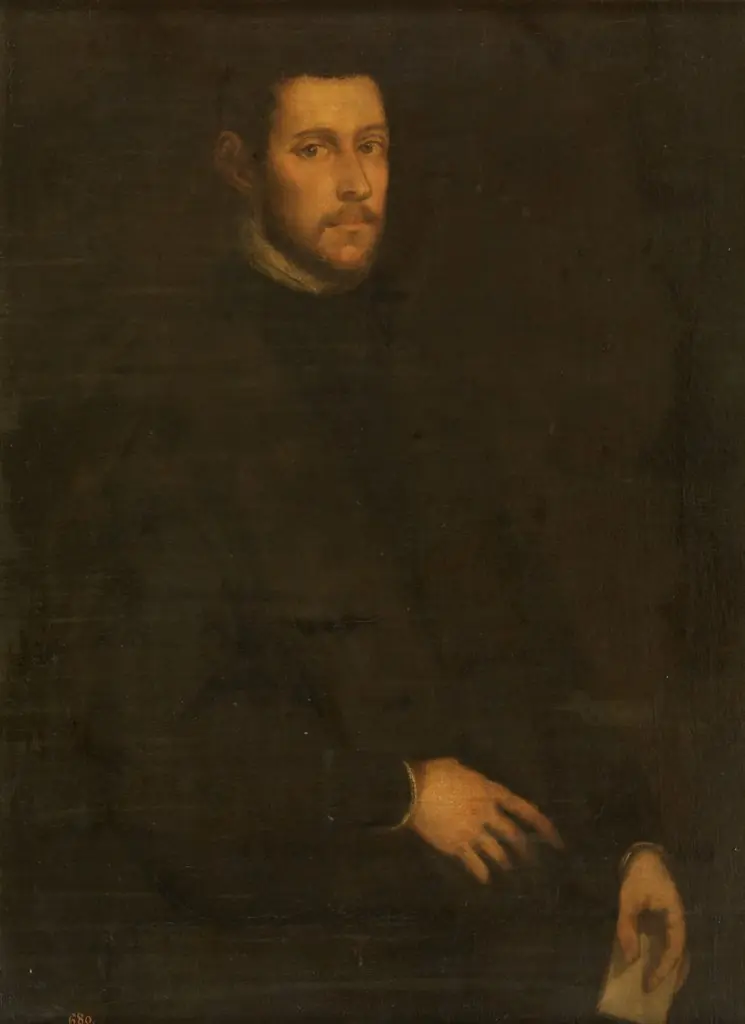
Portrait of a virile man
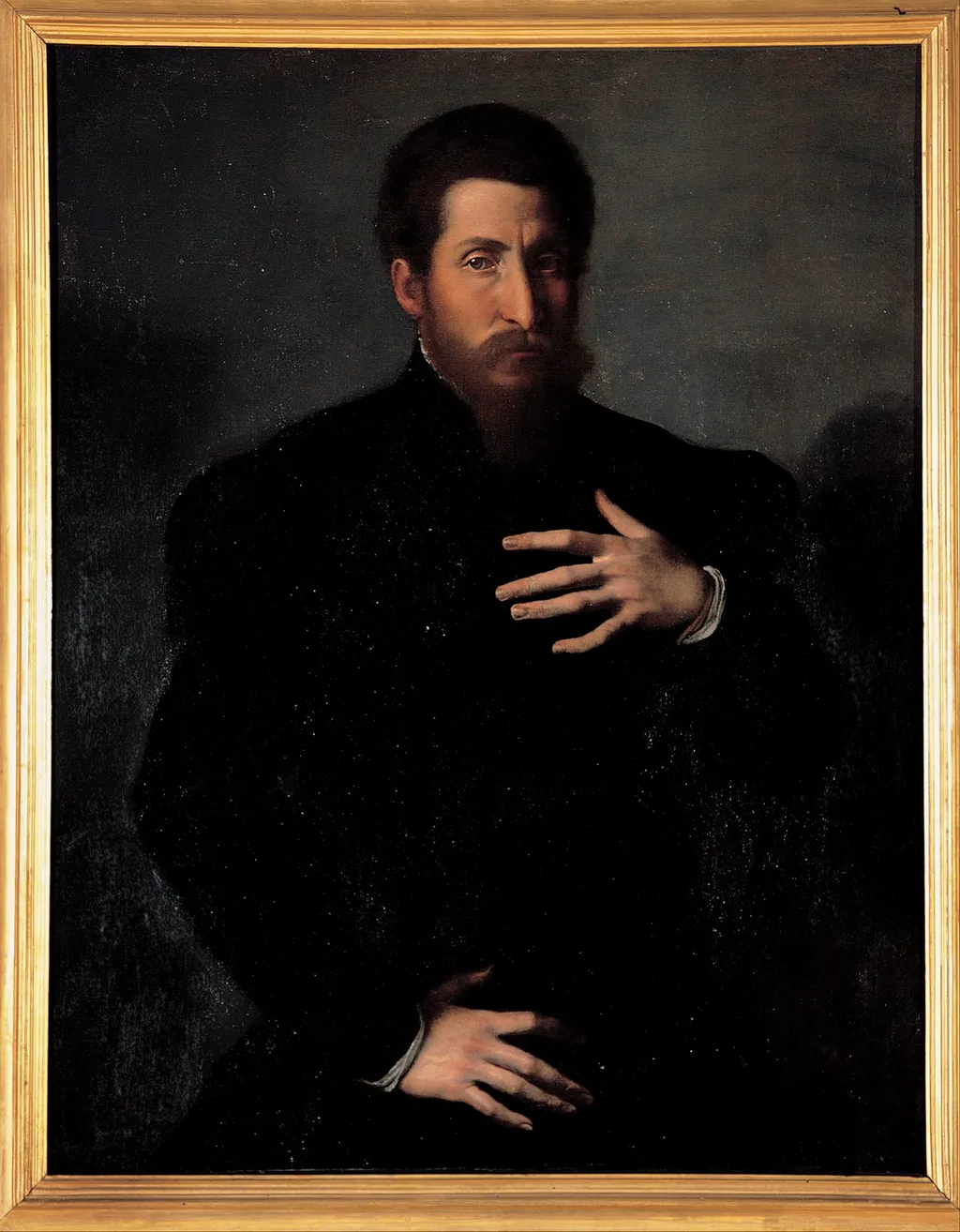
Portrait of a virile man is an oil painting by the Mannerist artist Girolamo da Carpi. It dates from 1545 and is held in the collection of the Capitoline Museums.
About this work
Overview
Girolamo da Carpi’s *Portrait of a Virile Man* (1545) is an oil painting that presents a solitary male sitter in a dark interior. Executed during the artist’s mature period, the work exemplifies the Mannerist interest in refined elegance and controlled composition, and it now forms part of the collection of the Capitoline Museums in Rome.
Subject & Meaning
The portrait depicts a bearded, middle‑aged man dressed in a black coat, his right hand placed over his chest and his left hand resting on his stomach. The sitter’s solemn expression, neatly trimmed hair and restrained pose convey a sense of dignified self‑possession, typical of portraiture intended to emphasize personal virtue and status.
Technique & Style
Da Carpi employs a pronounced chiaroscuro, using deep shadows to model the figure’s face and hands against a nearly black background. This contrast creates a three‑dimensional effect, highlighting the texture of the beard and the folds of the coat. The handling of oil paint is smooth, with subtle gradations that reinforce the Mannerist taste for refined surface and controlled drama.
History & Provenance
Born in Ferrara, Girolamo da Carpi trained locally before establishing himself in Bologna, where he became a leading member of the Bolognese School. The painting, dated 1545, entered the Capitoline Museums’ holdings at an unspecified later date, where it remains on display as a representative example of mid‑sixteenth‑century Italian portraiture.
Artist & collection

Artist
Girolamo Da Carpi (1501 – 1 August 1556) was an Italian painter and decorator who worked at the Court of the House of Este in Ferrara.