Artwork
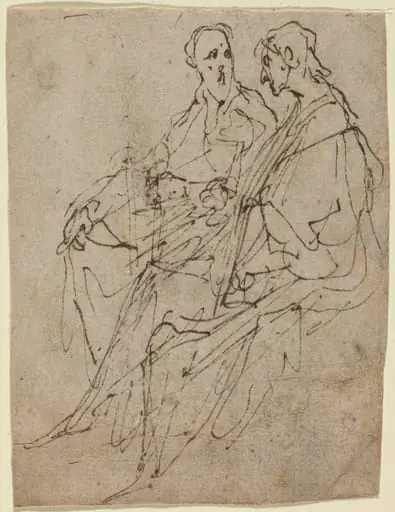
Two Figures
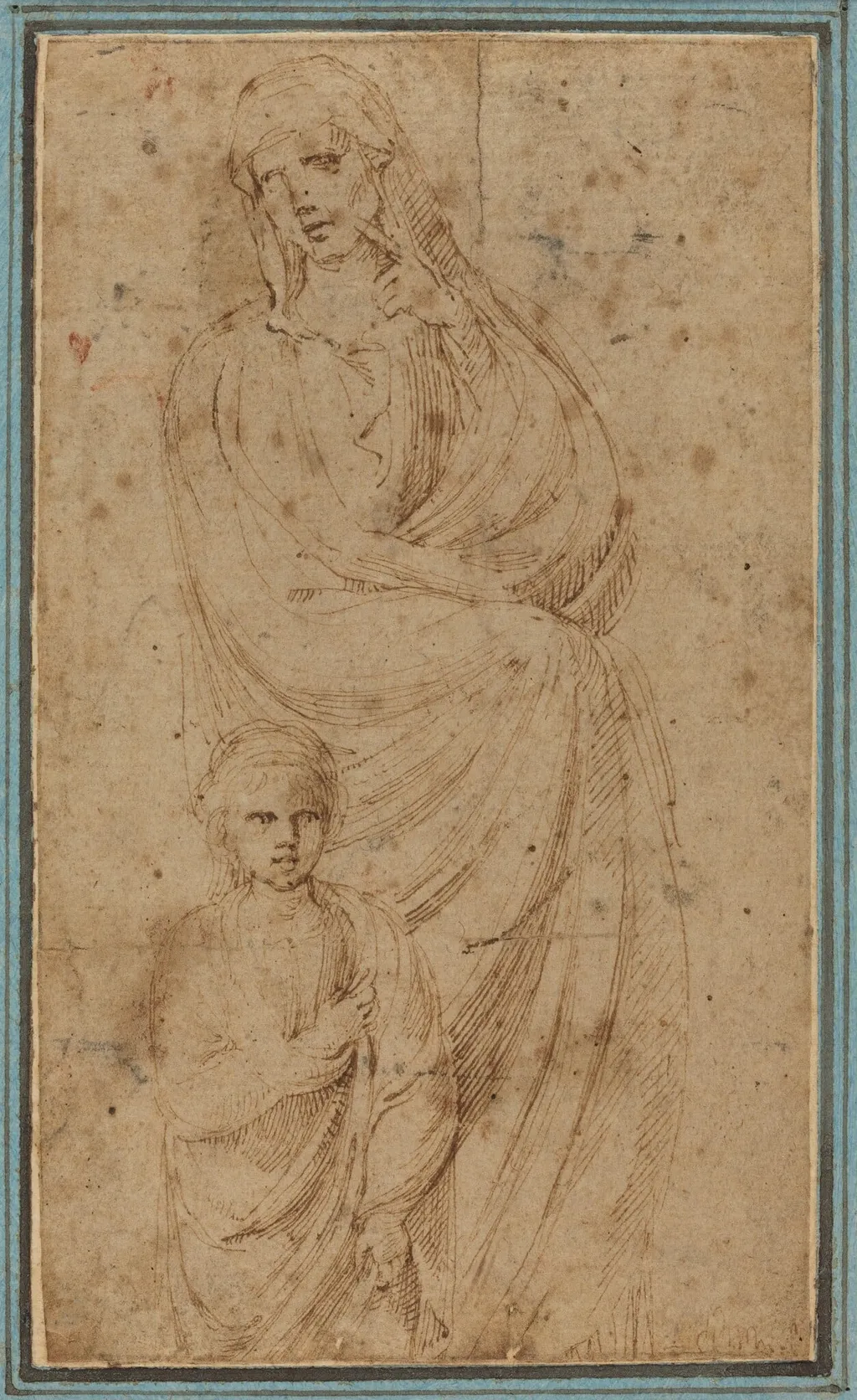
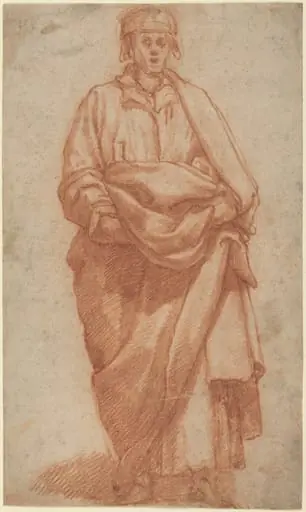
Two Figures is an ink drawing by the Renaissance artist Girolamo da Carpi. It dates from 1528 and is held in the collection of the National Gallery of Art.
About this work
Overview
Carpi, active in Bologna, was part of a regional tradition that blended Ferrarese training with local stylistic sensibilities.
Created in 1528, this drawing by Girolamo da Carpi is executed in pen and brown ink on laid paper, a common support for preparatory sketches in early 16th-century Italy. Carpi, active in Bologna, was part of a regional tradition that blended Ferrarese training with local stylistic sensibilities. The work exemplifies the period’s emphasis on figure study, capturing motion and form with minimal means.
Subject & Meaning
The drawing presents two robed figures, one significantly larger than the other, possibly indicating hierarchical or narrative distinction. The larger figure, adorned with a head covering, may represent a figure of authority or spiritual presence, while the smaller, arms crossed, suggests contemplation or submission. The lack of contextual detail invites interpretation rooted in religious or allegorical themes common in Bolognese draftsmanship.
Technique & Style
Carpi employs fluid, expressive ink lines that convey movement rather than rigid definition. The laid paper’s texture subtly influences the ink’s flow, enhancing the organic quality of the strokes. Rather than precise modeling, the artist relies on rhythmic contours to suggest volume and gesture, reflecting a preference for dynamic composition over polished finish.
History & Provenance
The drawing’s early provenance is undocumented, but its style aligns with Carpi’s known works from his Bolognese period. As a draftsman, he produced numerous studies for larger compositions, many of which circulated among local artists. This piece likely served as a preparatory sketch, though its independent aesthetic value has ensured its preservation.
Context
In 1528, Bologna was a center of artistic exchange, where Ferrarese influences merged with emerging Mannerist tendencies. Carpi’s work reflects this transitional moment, balancing classical restraint with expressive line. Drawings like this were essential tools for artists developing compositions, often serving as private studies rather than public displays.
Legacy
Though Carpi is less known today than his contemporaries, this drawing illustrates the vitality of regional draftsmanship in Renaissance Italy. Its emphasis on gesture and economy of line anticipates later developments in figure study, contributing to the broader understanding of how artists refined form through rapid, intuitive mark-making.
Artist & collection
Artist
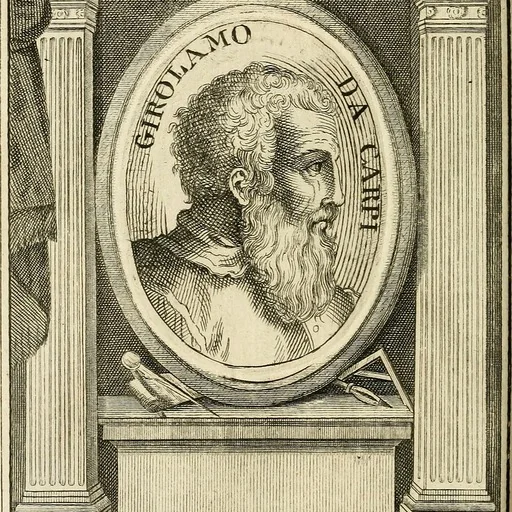
Girolamo Da Carpi (1501 – 1 August 1556) was an Italian painter and decorator who worked at the Court of the House of Este in Ferrara.

 Two Seated Male Figures
 Mystic Marriage of Saint Catherine with Saint Jerome
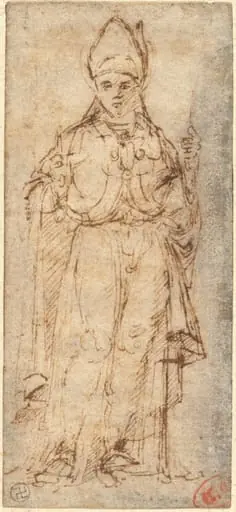 Saint Louis of Toulouse Holding a Staff
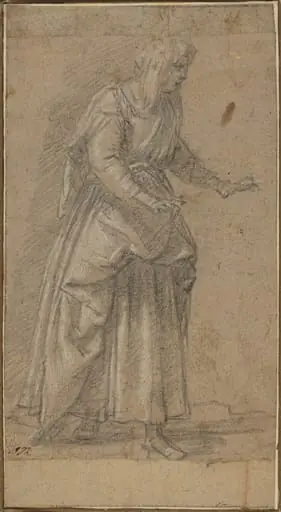 Woman Walking to the Right
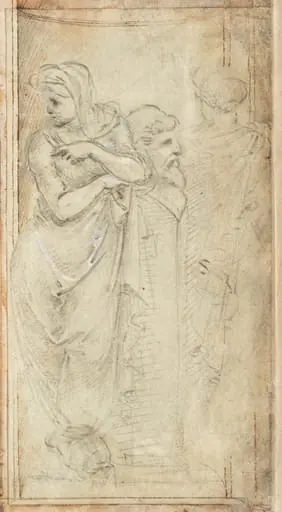 Two Draped Women Standing on Either Side of a Herm
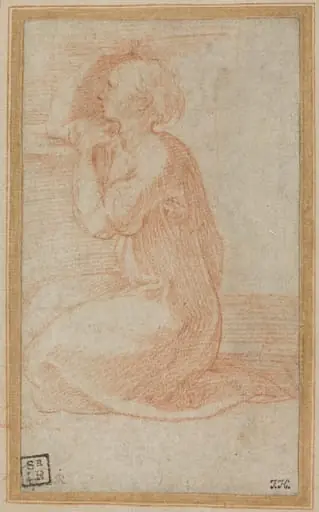 Kneeling Woman Lifting Her Hand to Her Head
 God the Father with Angels
 A Standing Saint
 Angel Standing
![Prudence [recto], by Cherubino Alberti](https://artifactworldgallery.com/img/cherubino-alberti--prudence-recto--3f44e6d72db5eb8c-w320.webp) Prudence [recto]
Prudence [recto] A Standing Man with Cloak and Gloves
 Standing Man