Artwork
Ceiling Study: Allegory of Peace and War
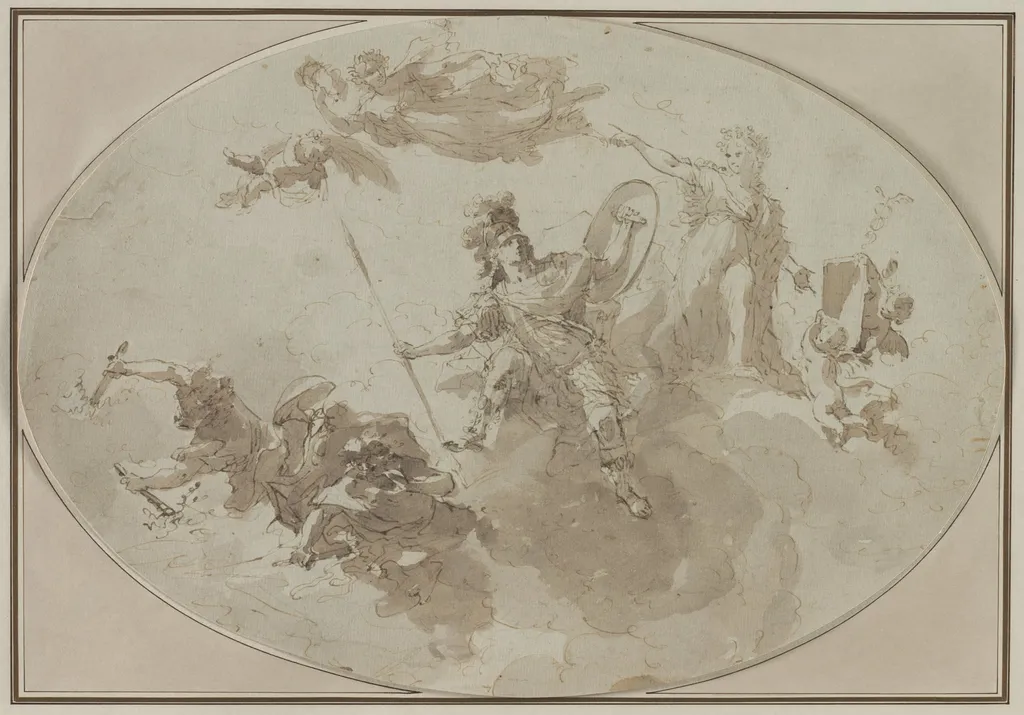
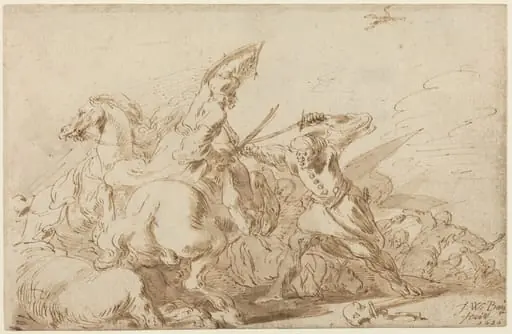
Ceiling Study: Allegory of Peace and War is a drawing by the Romanticist artist Giuseppe Bernardino Bison. It dates from 1800 and is held in the collection of the Cleveland Museum of Art.
About this work
Overview
The work is part of the collection at The Cleveland Museum of Art, where it illustrates the artist’s approach to large-scale decorative projects.
Created around 1800 by Giuseppe Bernardino Bison, this ink drawing serves as a preparatory study for a ceiling composition. Executed with rapid, expressive lines, it captures a dynamic, turbulent scene meant to convey the tension between conflict and tranquility. The work is part of the collection at The Cleveland Museum of Art, where it illustrates the artist’s approach to large-scale decorative projects.
Subject & Meaning
The drawing presents an allegorical struggle between war and peace, rendered through chaotic human and equine figures in motion. Weapons are raised, faces contort in distress, and swirling clouds suggest divine or cosmic intervention. The contrast between violent action and implied stillness hints at the fragility of peace, a common theme in post-Revolutionary European art.
Technique & Style
Bison employed loose, energetic pen strokes to build form and movement, using dark ink against a pale, untoned paper surface. The absence of color emphasizes contrast and rhythm, while the sketchy quality suggests spontaneity and immediacy. Dramatic chiaroscuro enhances the emotional intensity, guiding the viewer’s eye through the swirling composition.
History & Provenance
The drawing was likely made as a study for a ceiling fresco, though the final commission remains unidentified. It entered the Cleveland Museum of Art’s collection through documented acquisitions in the 20th century. Its survival as a standalone work reflects its artistic value beyond its original functional purpose.
Context
Produced during the early 19th century, the piece aligns with Romantic-era interests in emotion, drama, and historical allegory. Bison, active in northern Italy, responded to shifting political climates by translating abstract ideals into visceral imagery. This study reflects broader European trends in using mythic narratives to comment on contemporary unrest.
Legacy
Though Bison is less widely known than his contemporaries, this drawing exemplifies the vitality of preparatory work in decorative painting traditions. It offers insight into how allegorical themes were visualized before being translated into monumental formats, preserving the raw energy of the artist’s initial vision.
Artist & collection

Artist
Giuseppe Bernardino Bison was an itinerant Italian painter of frescoes, landscapes, vedute, capriccios and some religious works.

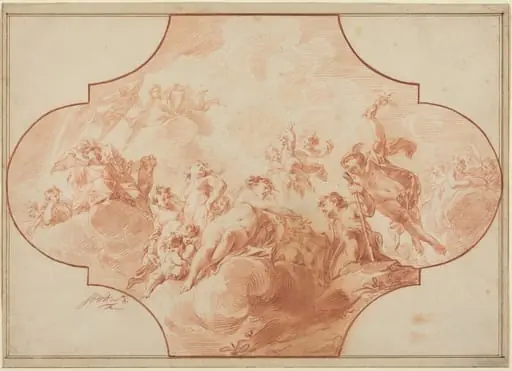 The Judgment of Paris
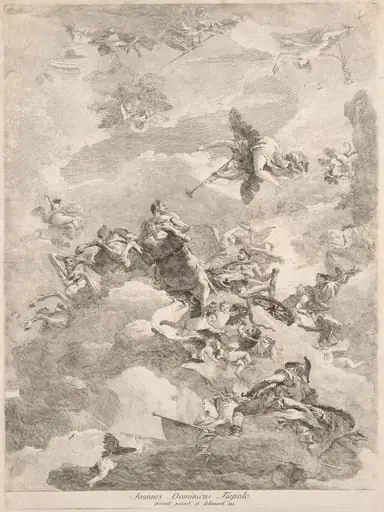 The Triumph of Hercules
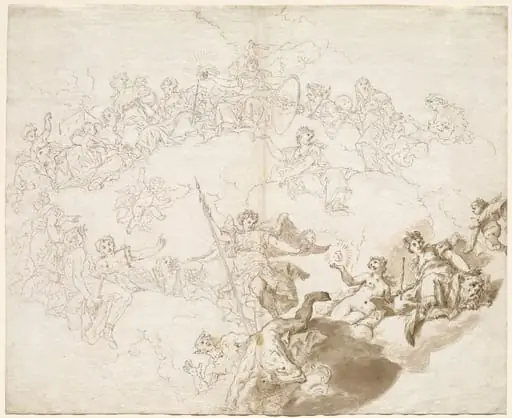 The Triumph of Virtue and Divine Wisdom
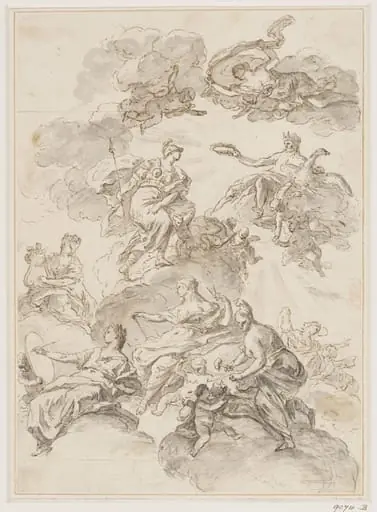 Minerva commending the arts of sculpture, architecture, painting and music to Jupiter
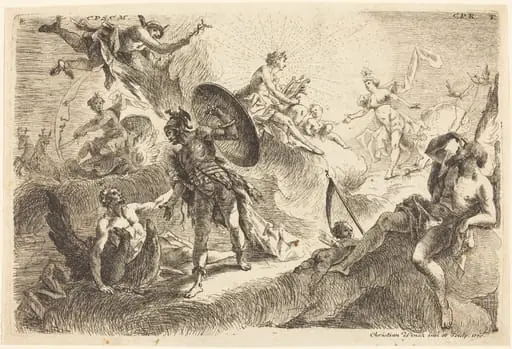 The Seven Planets
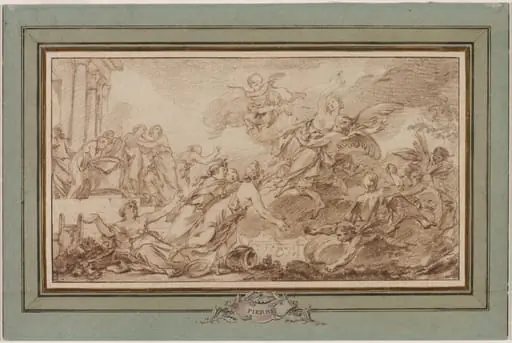 Boreas Abducting Oreithyia
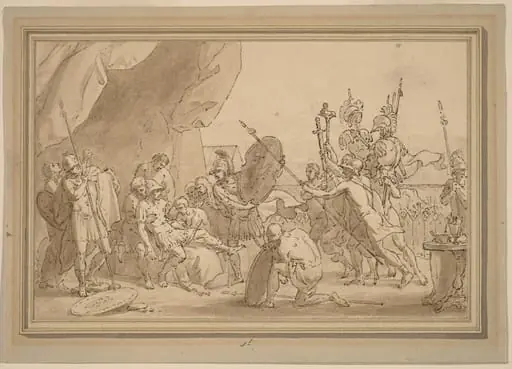 Death of a General
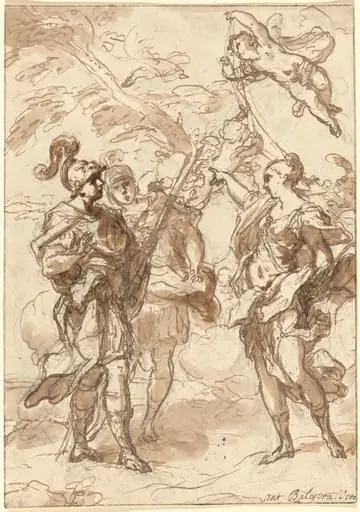 Venus as a Huntress Appearing to Aeneas and Achates
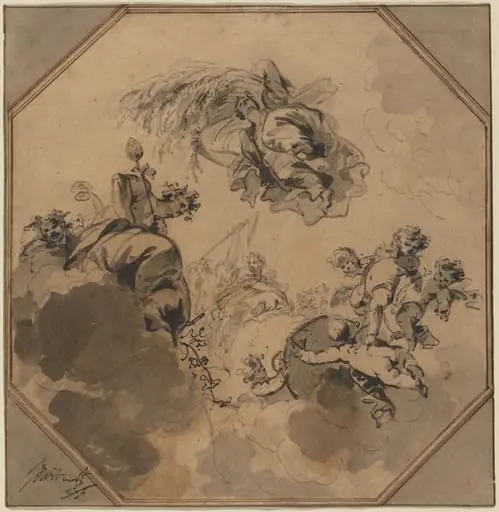 Study for a Ceiling: Allegory of the Harvest with Dionysus and Ceres
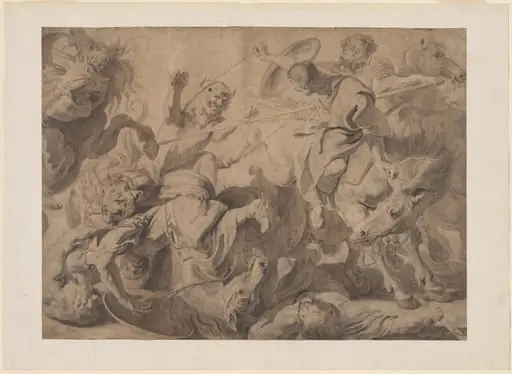 Lion Hunt
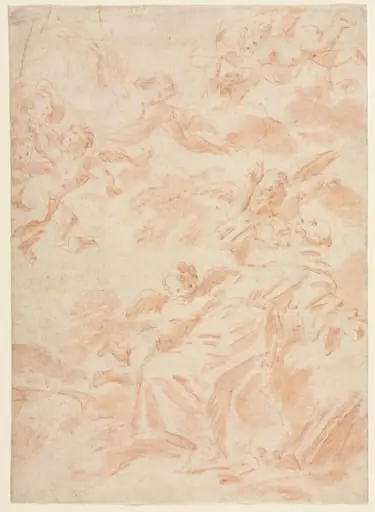 The Stigmatization of Saint Francis
 A Battle between Oriental Cavalry and Soldiers