Artwork
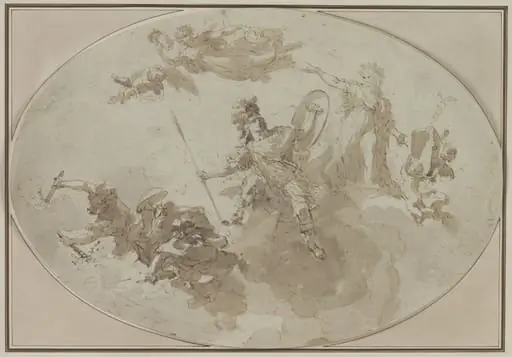
Study for a Ceiling: Allegory of the Harvest with Dionysus and Ceres
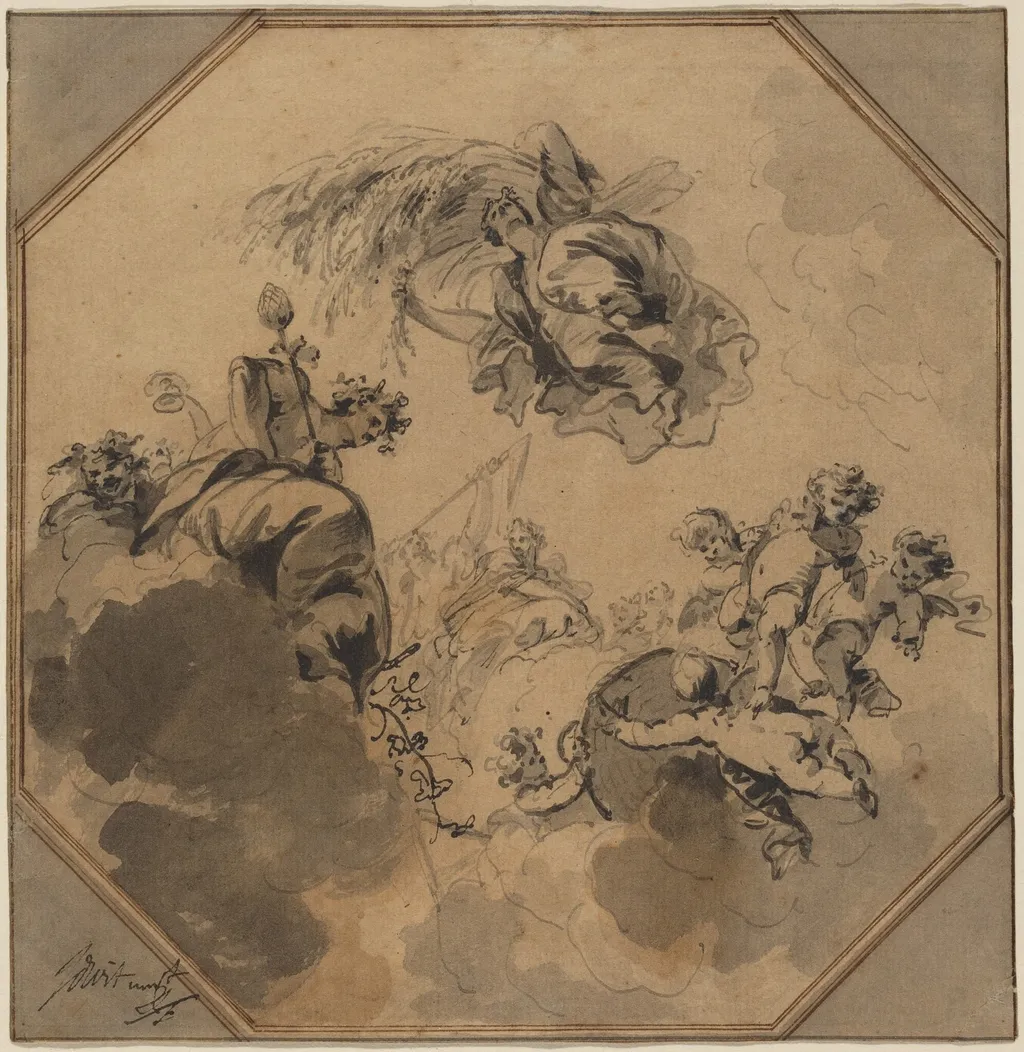
Study for a Ceiling: Allegory of the Harvest with Dionysus and Ceres is an ink drawing by the Baroque artist Jacob de Wit. It dates from 1724 and is held in the collection of the National Gallery of Art.
About this work
Overview
Study for a Ceiling: Allegory of the Harvest with Dionysus and Ceres is a drawing created by Jacob de Wit in 1724. Executed in pen and ink with gray and brown washes on laid paper, it serves as a preparatory study for a ceiling decoration.
Subject & Meaning
The drawing presents an allegory centered around the themes of harvest and abundance, featuring Dionysus (god of wine and fertility) and Ceres (goddess of agriculture), symbolizing the fruitful season.
Technique & Style
De Wit employed a characteristic Baroque drawing technique, combining pen and black and brown inks with subtle gray and brown washes. This medium allowed for both detailed linework and expressive shading, typical of the period's emphasis on dynamic contrast.
History & Provenance
Created in 1724, the work is attributed to Jacob de Wit, a Dutch artist known primarily for religious scenes and interior decoration designs. Specific provenance details are not provided.
Context
This study reflects the Baroque period's penchant for allegorical and mythological subjects in decorative arts, particularly in ceiling designs intended to evoke grandeur and thematic unity in interior spaces.
Legacy
As a preparatory study, its legacy lies in its contribution to the broader tradition of Baroque ceiling decorations, though its direct influence or the fate of the intended ceiling piece are not specified.
Artist & collection
Artist
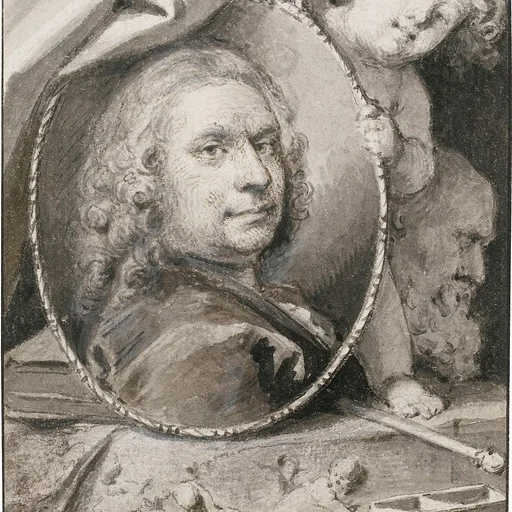
Jacob de Wit (19 December 1695 – 12 November 1754) was a Dutch painter and interior decorator. He is best known for his depictions of religious scenes.


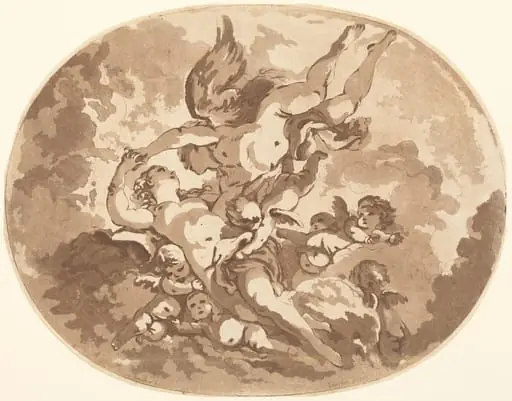 Eros and Psyche
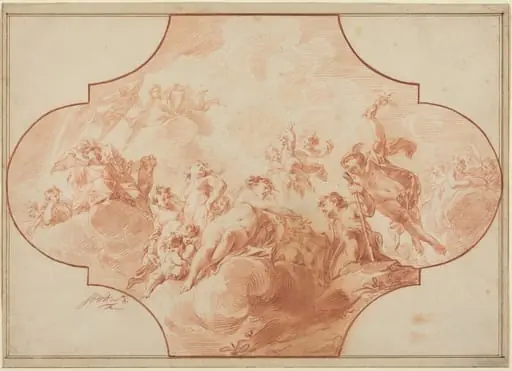 The Judgment of Paris
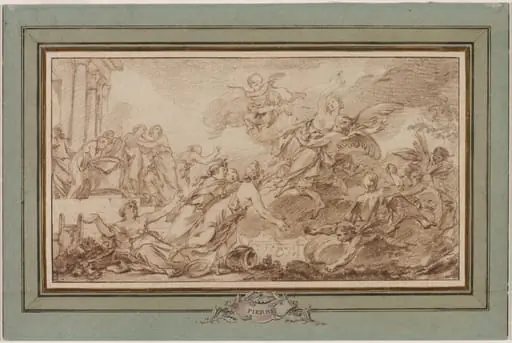 Boreas Abducting Oreithyia
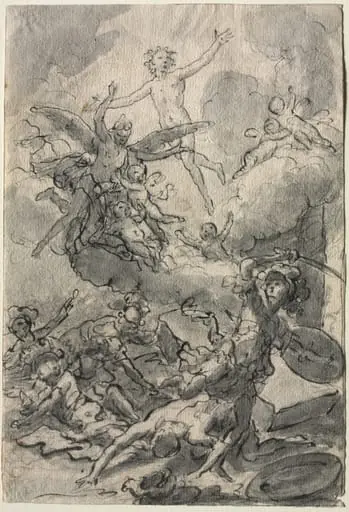 The Resurrection
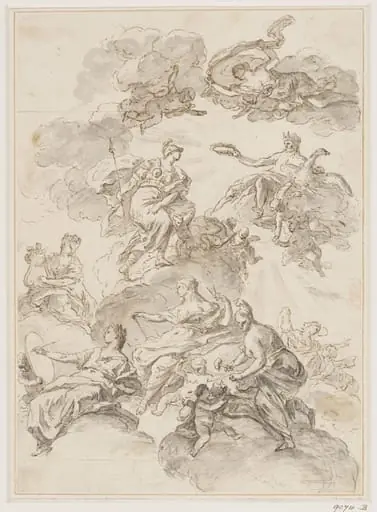 Minerva commending the arts of sculpture, architecture, painting and music to Jupiter
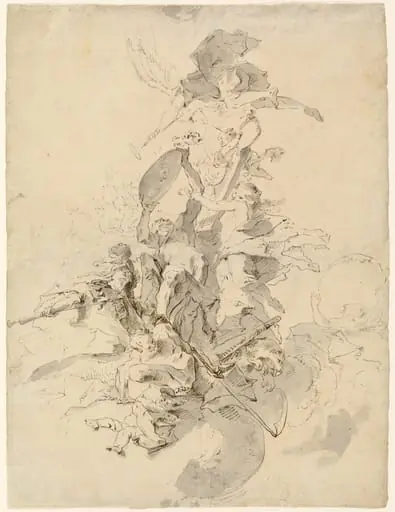 The Glorification of a Prelate
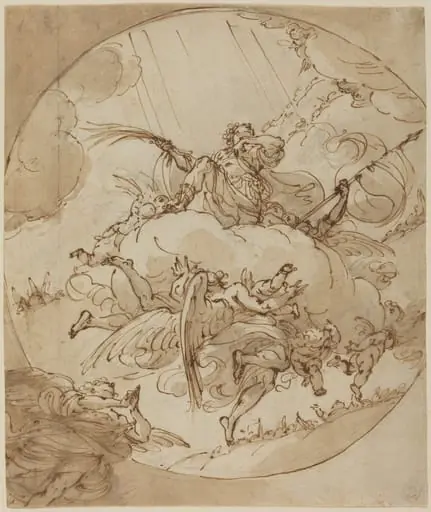 The Apotheosis of San Vitale
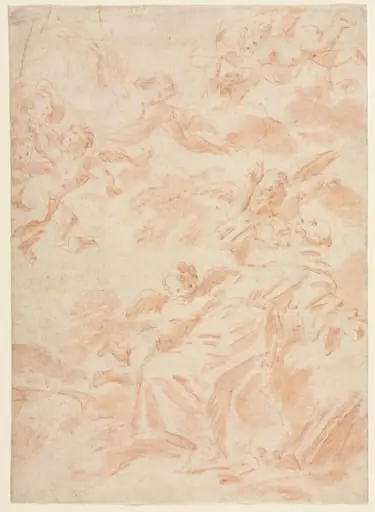 The Stigmatization of Saint Francis
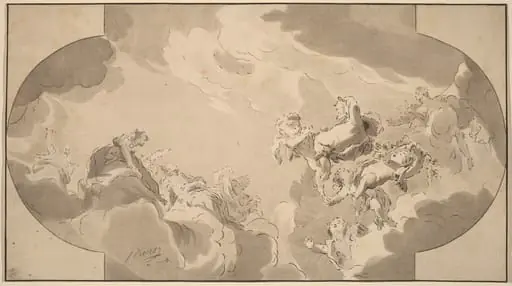 Ceiling Decoration
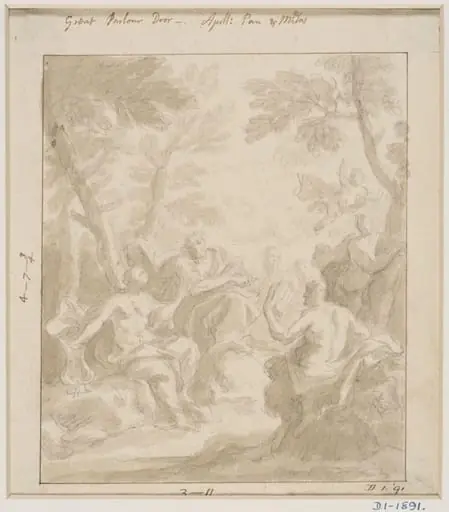 Design for an overdoor painting depicting Apollo, Pan and Midas
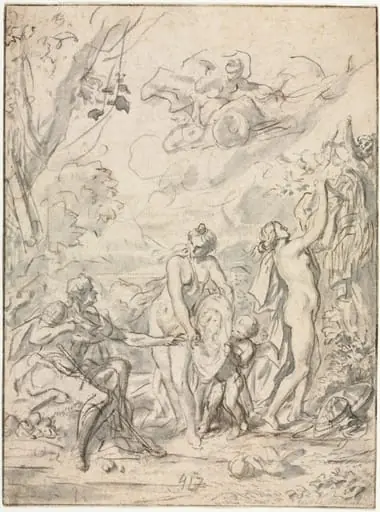 The Judgment of Paris
 Ceiling Study: Allegory of Peace and War