Artwork
Josina Hamels
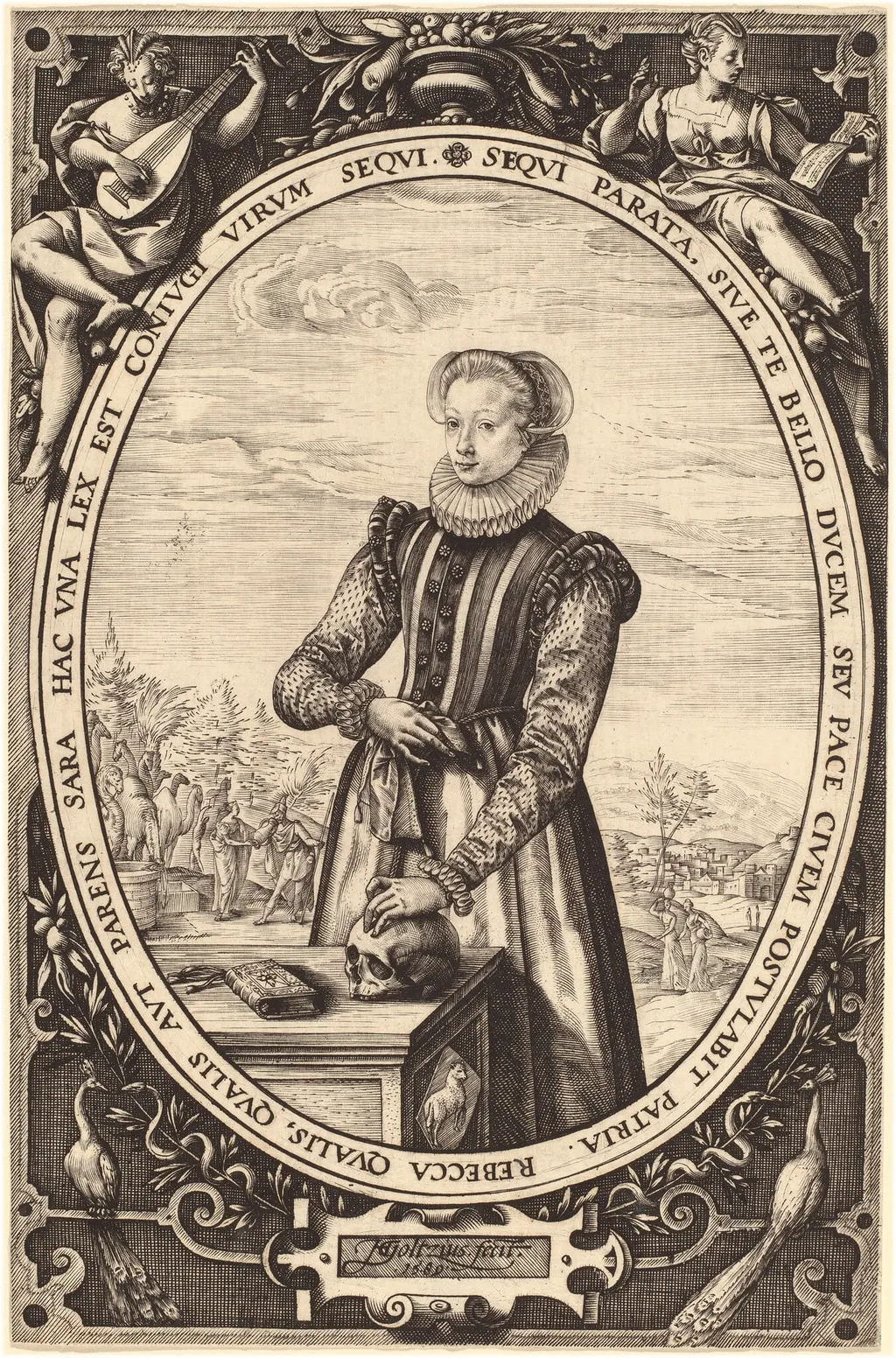
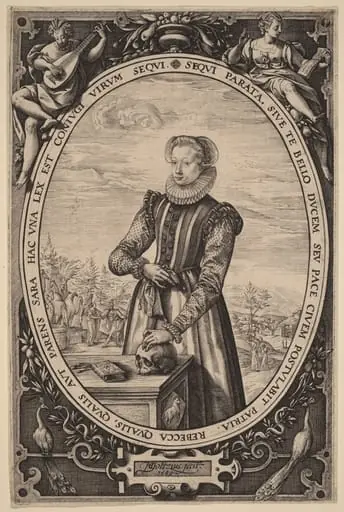
Josina Hamels is an ink print by the Renaissance artist Hendrik Goltzius. It dates from 1580 and is held in the collection of the National Gallery of Art.
About this work
Overview
The piece combines portraiture with symbolic elements, framed within an ornate circular border that extends its narrative beyond the central figure.
Created in 1580 by Hendrick Goltzius, this engraving depicts Josina Hamels, a woman of known social standing. As a highly skilled printmaker active in the Netherlands, Goltzius produced this work during a period of intense technical experimentation in Northern European printmaking. The piece combines portraiture with symbolic elements, framed within an ornate circular border that extends its narrative beyond the central figure.
Subject & Meaning
Josina Hamels is portrayed standing before a table bearing a skull and an open book—traditional memento mori symbols suggesting contemplation of mortality and learning. Her poised posture and refined attire indicate status, while the surrounding border includes allegorical figures and inscriptions that may reference virtue, time, or familial legacy. The composition invites reflection on life’s transience and intellectual pursuit.
Technique & Style
Goltzius employed fine cross-hatching and precise line control to render texture and depth, characteristic of his mature engraving style. The intricate border features miniature scenes and script, executed with remarkable clarity. The landscape background, though subtle, is rendered with delicate tonal gradations, demonstrating his ability to suggest space and atmosphere within the constraints of the medium.
History & Provenance
The engraving was produced during Goltzius’s early career in Haarlem, when he was establishing his reputation for technical virtuosity. It likely served as a commemorative portrait, possibly commissioned by Hamels’s family. While its early ownership is undocumented, it entered institutional collections in the 19th century and is now held in major print repositories, including the Rijksmuseum and the British Museum.
Context
In late 16th-century the Netherlands, engraved portraits often merged personal commemoration with moral symbolism. Goltzius’s work responded to a growing market for refined prints among educated elites. His integration of classical motifs and detailed ornamentation aligned with Northern Mannerist trends, distinguishing his output from simpler Flemish or German counterparts of the era.
Legacy
This engraving exemplifies Goltzius’s influence on the evolution of printmaking as a serious artistic medium. His ability to fuse portraiture with complex symbolism set a precedent for later Northern European artists. Though less widely known than his mythological subjects, works like this underscore his role in elevating the engraving’s expressive potential beyond mere reproduction.
Artist & collection
Artist
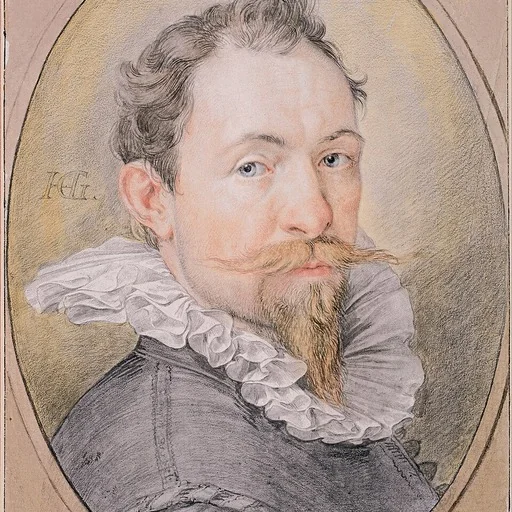
Hendrick Goltzius (German: , Dutch: ; né Goltz; January or February 1558 – 1 January 1617) was a German-born Dutch printmaker, draftsman, and painter.

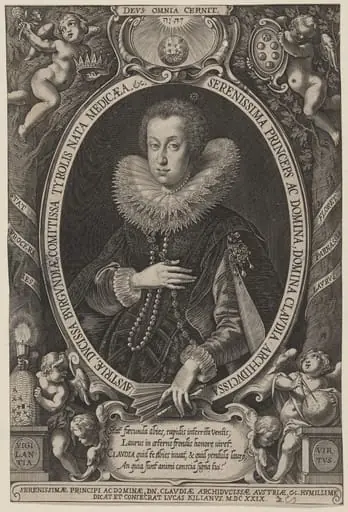 Claudia de Medici, Wife of Leopold of Austrian Tyrol
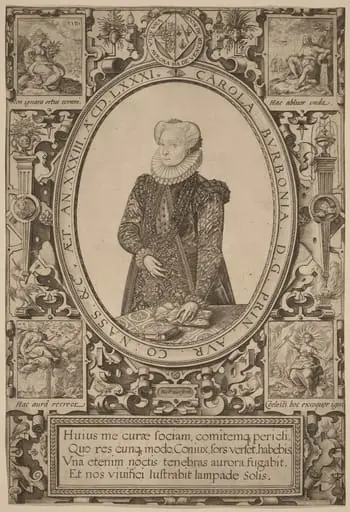 Charlotte of Bourbon
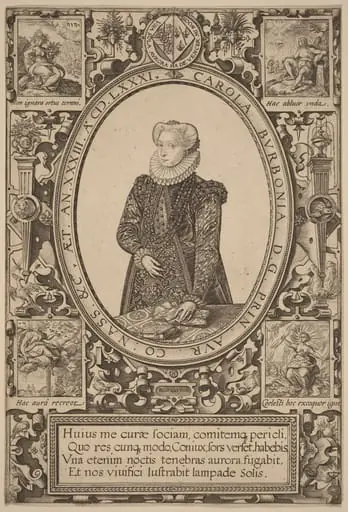 Charlotte of Bourbon
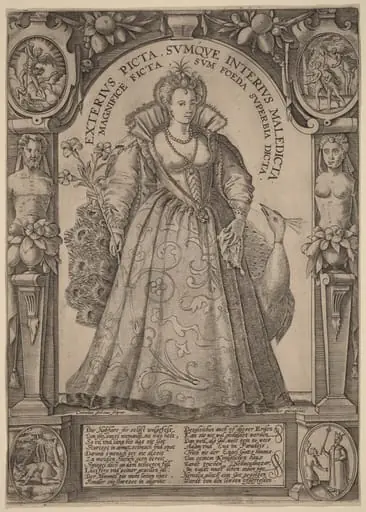 Pride
Pride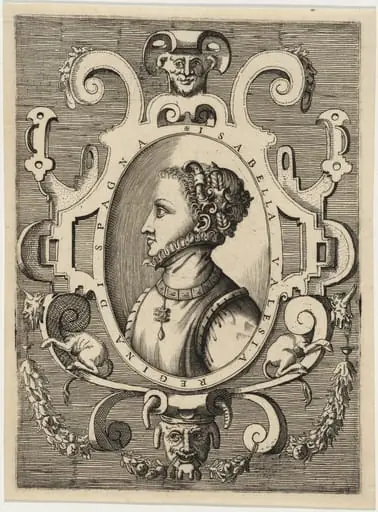 Isabella, Wife of Philip IV of Spain
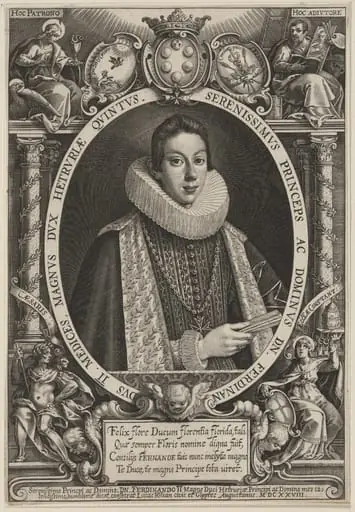 Ferdinand II, Roman Emperor
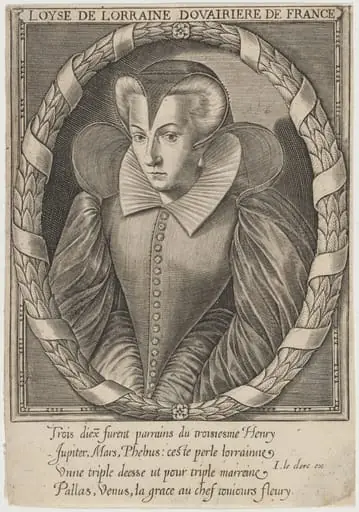 Louise de Lorraine, Wife of Henry III
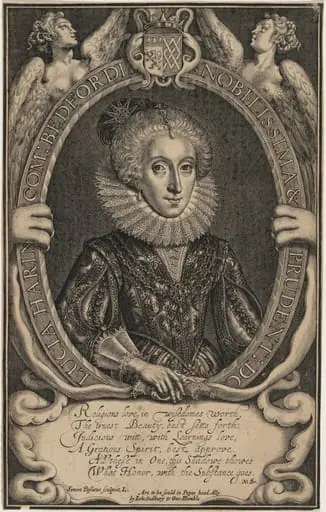 Lucia Harrington, Countess of Bedford
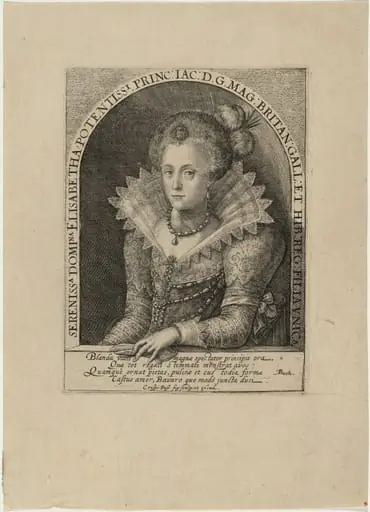 Elizabeth, Princess, Wife of the Elector Palatine Frederick V, King of Bohemia
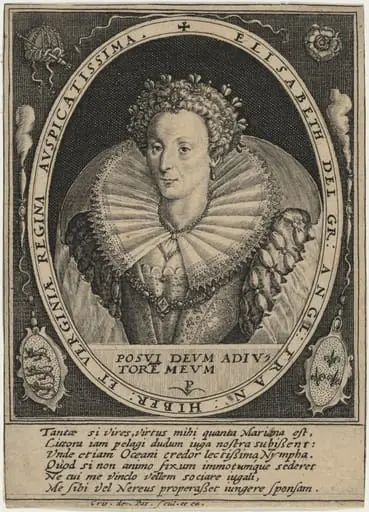 Elizabeth, Queen of England
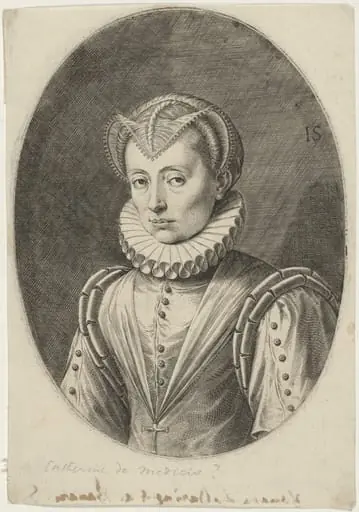 Catherine de Medici (?)
 Josina Hamels