Artwork
Pluto
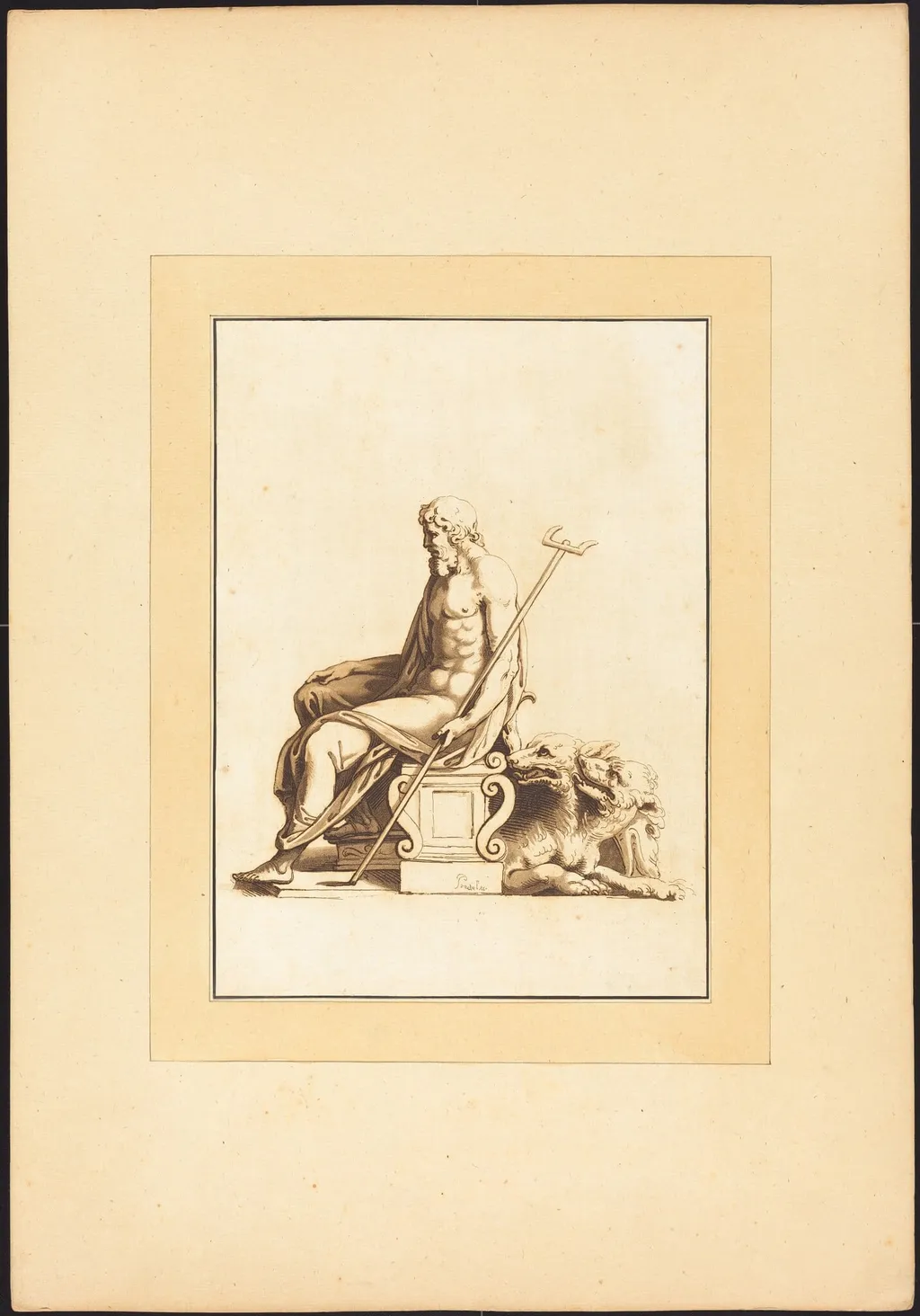
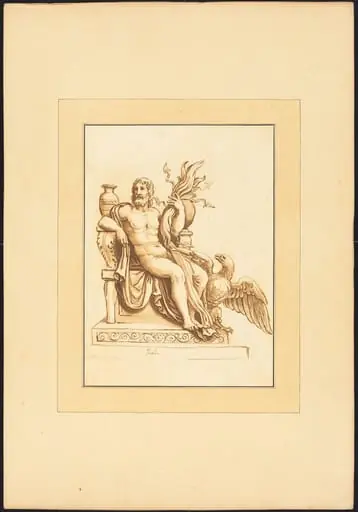
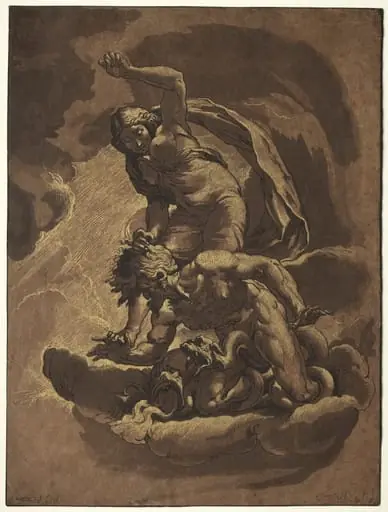
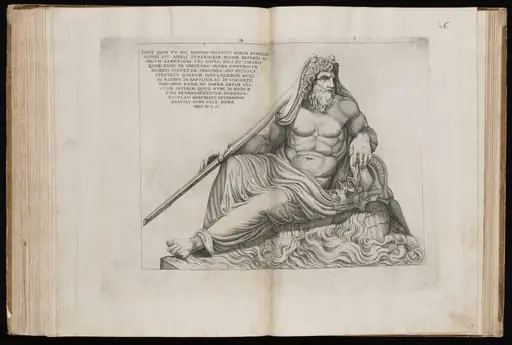
Pluto is an ink print by the Romanticist artist Maria Catharina Prestel. It dates from 1781 and is held in the collection of the National Gallery of Art.
About this work
Overview
Created in 1781, *Pluto* is an aquatint and etching by Maria Catharina Prestel, rendered in nuanced shades of dark and light brown. Born Maria Katharina Höll in Nuremberg in 1747, she later established herself as a printmaker in London. This work exemplifies her command of intaglio techniques during a period when female artists were rarely recognized in the field of printmaking.
Subject & Meaning
At his feet, a snarling dog, likely Cerberus, guards the threshold.
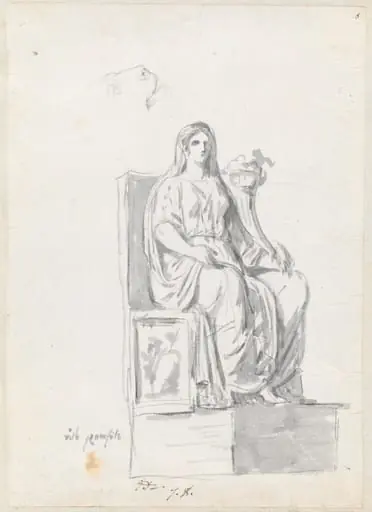
The figure depicted is Pluto, the Roman god of the underworld, shown seated with a long beard, holding a staff and a key—symbols of his dominion over the realm of the dead. At his feet, a snarling dog, likely Cerberus, guards the threshold. The composition conveys authority and stillness, evoking mythological narratives without overt drama, suggesting a quiet, enduring power rather than violent spectacle.
Technique & Style
Prestel employed aquatint to achieve subtle gradations of brown ink, creating atmospheric depth and volume in the figure’s musculature. Etching defined sharp contours, particularly in the dog’s fur and the texture of the pedestal. The restrained palette enhances the somber tone, while precise line work draws attention to the contrast between the god’s calm posture and the animal’s alert tension.
History & Provenance
Prestel, trained in Nuremberg, moved to London where she produced prints for commercial and artistic markets. *Pluto* was made during her active years in England, likely intended for collectors interested in classical themes. While specific early ownership records are scarce, the work survives as part of a small but significant body of prints by a rare female engraver of the period.
Context
In late 18th-century Europe, mythological subjects remained popular in print culture, often used to demonstrate intellectual refinement. Female artists faced barriers in accessing formal training and public recognition. Prestel’s engagement with complex techniques like aquatint placed her among a small group of women who navigated these constraints to contribute meaningfully to the printmaking tradition.
Legacy
Though not widely known today, *Pluto* stands as evidence of Prestel’s technical proficiency and her role in expanding the presence of women in printmaking. Her work contributes to a broader understanding of how female artists engaged with classical themes and sophisticated methods during a time when their contributions were often overlooked in historical narratives.
Artist & collection
Artist
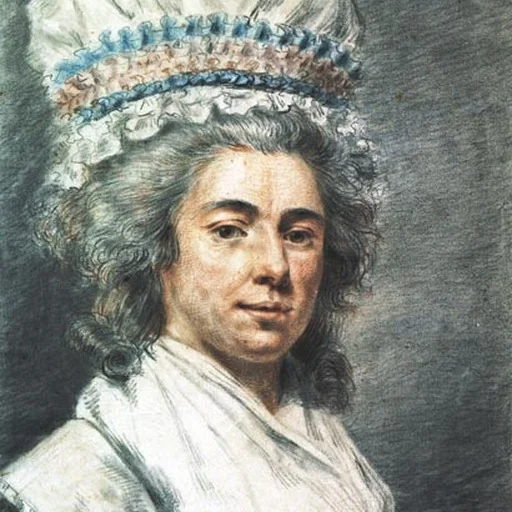
Maria Katharina Prestel (22 July 1747 – 16 March 1794) née Maria Katharina Höll, was an engraver and painter from Nuremberg, and active in London.