Artwork
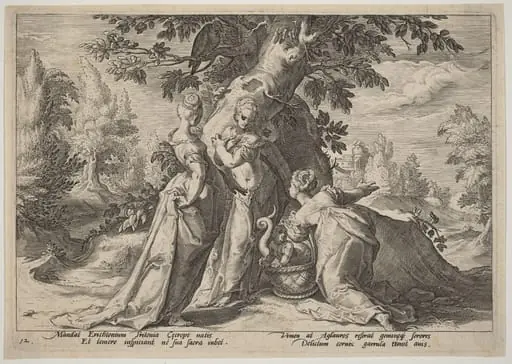
The Daughters of Cecrops Open the Casket Entrusted to Them by Minerva
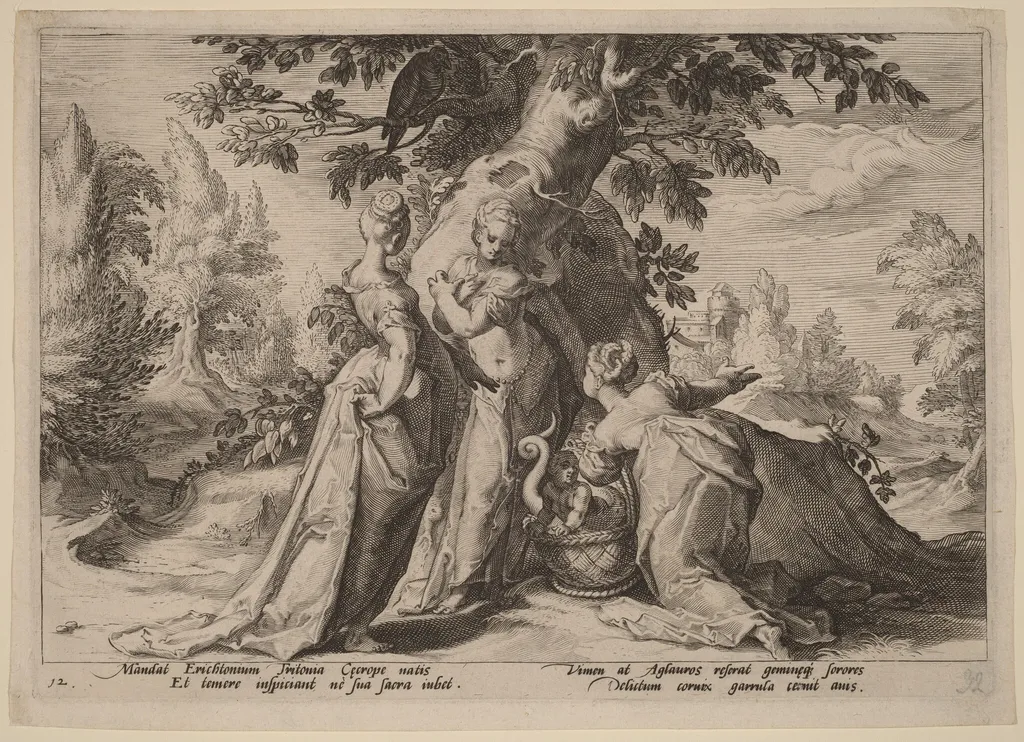
The Daughters of Cecrops Open the Casket Entrusted to Them by Minerva is an ink print by the Renaissance artist Hendrik Goltzius. It dates from 1590 and is held in the collection of the National Gallery of Art.
About this work
Overview
Created in 1590, this engraving by Hendrick Goltzius depicts a moment from Athenian myth, rendered in fine black-and-white lines on laid paper.
Created in 1590, this engraving by Hendrick Goltzius depicts a moment from Athenian myth, rendered in fine black-and-white lines on laid paper. As a leading Northern Mannerist printmaker, Goltzius specialized in intricate compositions designed for reproduction. The work exemplifies his technical precision and ability to translate complex narratives into detailed monochrome imagery, reflecting the high status of printmaking in late 16th-century Europe.
Subject & Meaning
The scene illustrates the daughters of King Cecrops, who, against Minerva’s warning, opened a sacred casket containing the infant Erichthonius. Their curiosity led to madness or death, depending on the version of the myth. Goltzius captures the moment of revelation: one daughter holds the child, another kneels beside the open chest, and the third leans forward in awe. The composition conveys tension between divine command and human transgression.
Technique & Style
Goltzius employed fine, controlled engraving lines to model form and texture with remarkable subtlety. The flowing drapery of the figures, the delicate rendering of foliage, and the atmospheric depth of the forest are achieved through varying line density and cross-hatching. The background—distant architecture and perched birds—adds spatial context without distraction, reinforcing the narrative’s solemnity through restrained detail.
History & Provenance
Produced in Haarlem during Goltzius’s mature period, the print was part of a series of mythological subjects he designed for wide circulation. Though originally intended for reproduction, this impression likely comes from the first state, showing crisp lines and minimal wear. Its survival in good condition suggests early collector interest, aligning with the period’s growing market for scholarly and mythological prints.
Context
In late 16th-century Northern Europe, mythological themes were favored by humanist patrons seeking classical learning expressed through visual art. Goltzius’s work responded to this demand, blending narrative clarity with technical virtuosity. His prints circulated widely among educated elites, serving both aesthetic and intellectual purposes, bridging literary tradition and visual culture in an era before mass reproduction.
Legacy
Goltzius’s engraving influenced generations of printmakers through its emphasis on line as a vehicle for emotional and spatial expression. While later artists adopted broader styles, his method of using engraving to convey psychological nuance remained a benchmark. The work endures as a testament to the capacity of print to transmit complex myths with precision and gravity.
Artist & collection
Artist
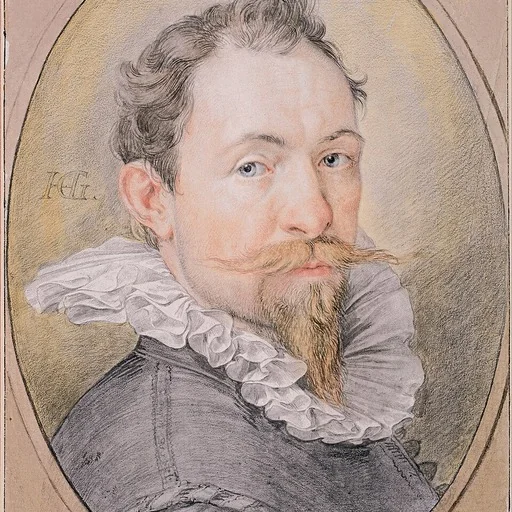
Hendrick Goltzius (German: , Dutch: ; né Goltz; January or February 1558 – 1 January 1617) was a German-born Dutch printmaker, draftsman, and painter.

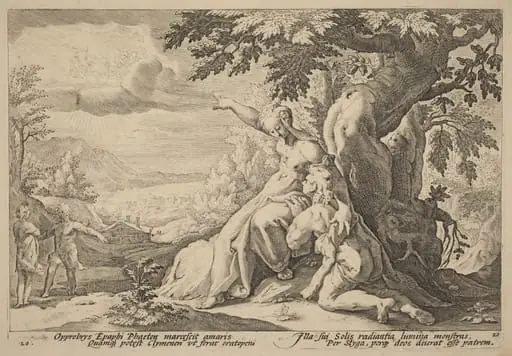 Clymene Urging Phaeton to Find Helios
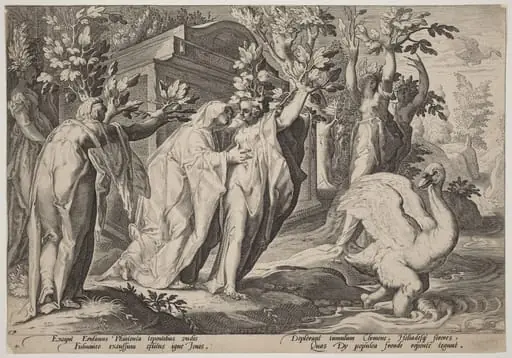 Phaeton's Sisters Changed into Poplars, and Cygnus into a Swan
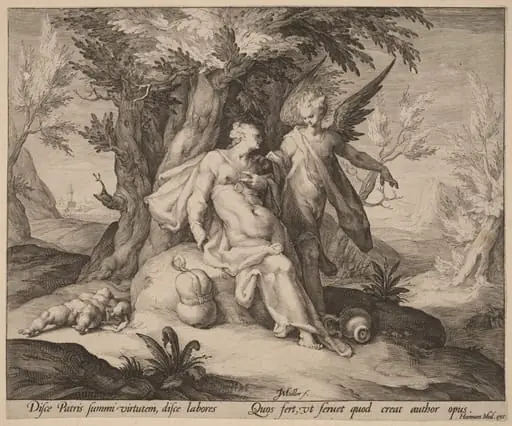 Hagar in the Desert Consoled by an Angel
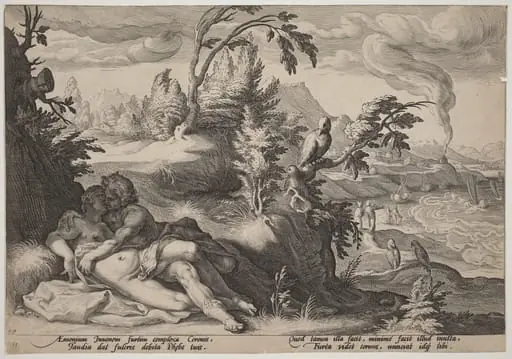 Apollo and Coronis
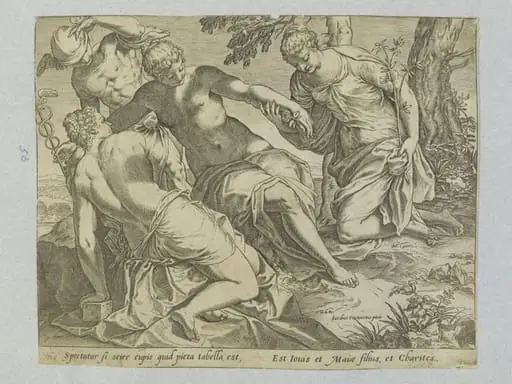 Mercury and the Graces
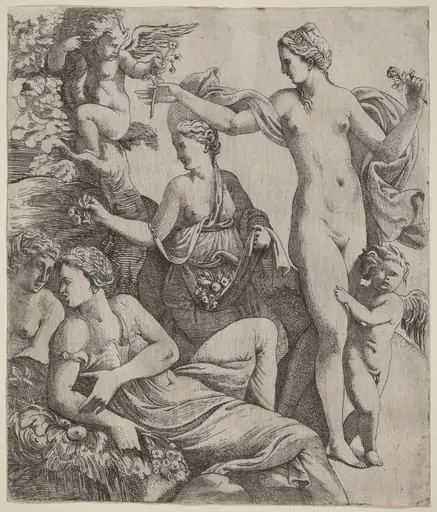 Venus with the Graces and Putti
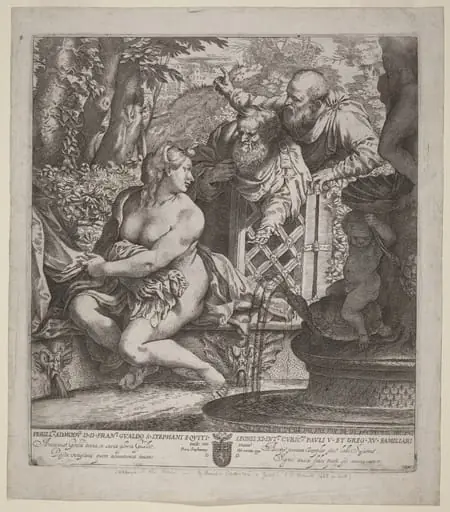 Susanna and the Elders
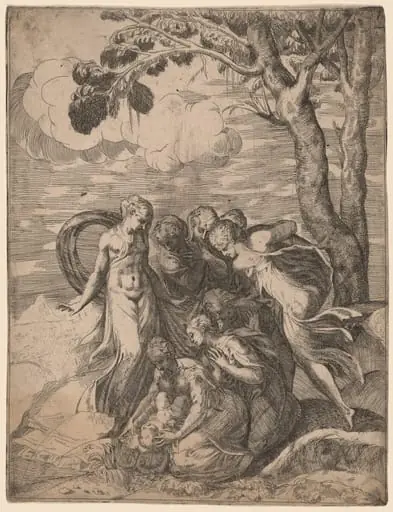 The Finding of Moses
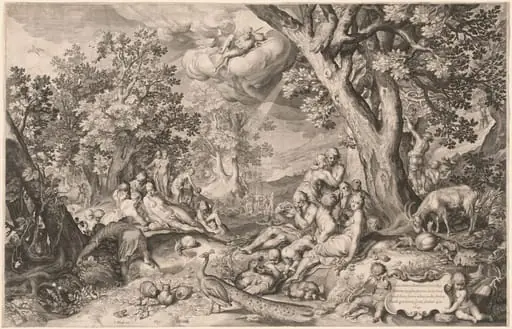 The Golden Age
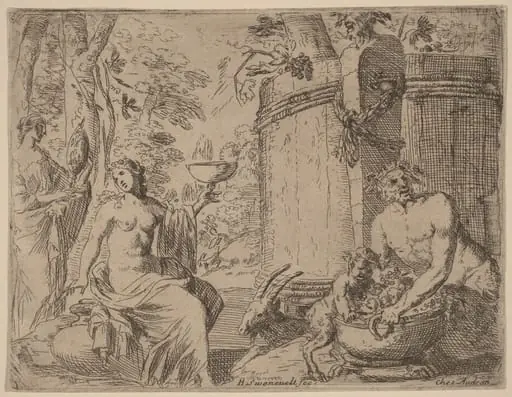 Two Nymphs and a Satyr before a Large Vat
 The Daughters of Cecrops Open the Casket Entrusted to Them by Minerva
 Mercury Falling in Love with Herse