Artwork
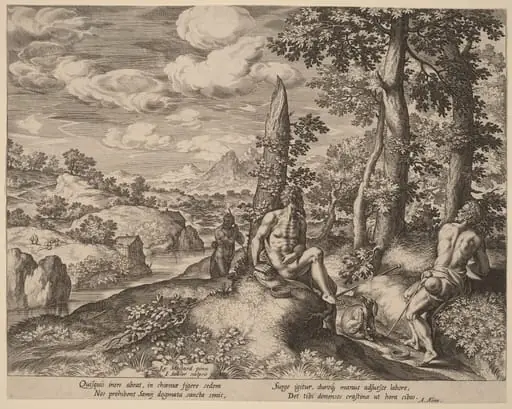
Hagar in the Desert Consoled by an Angel
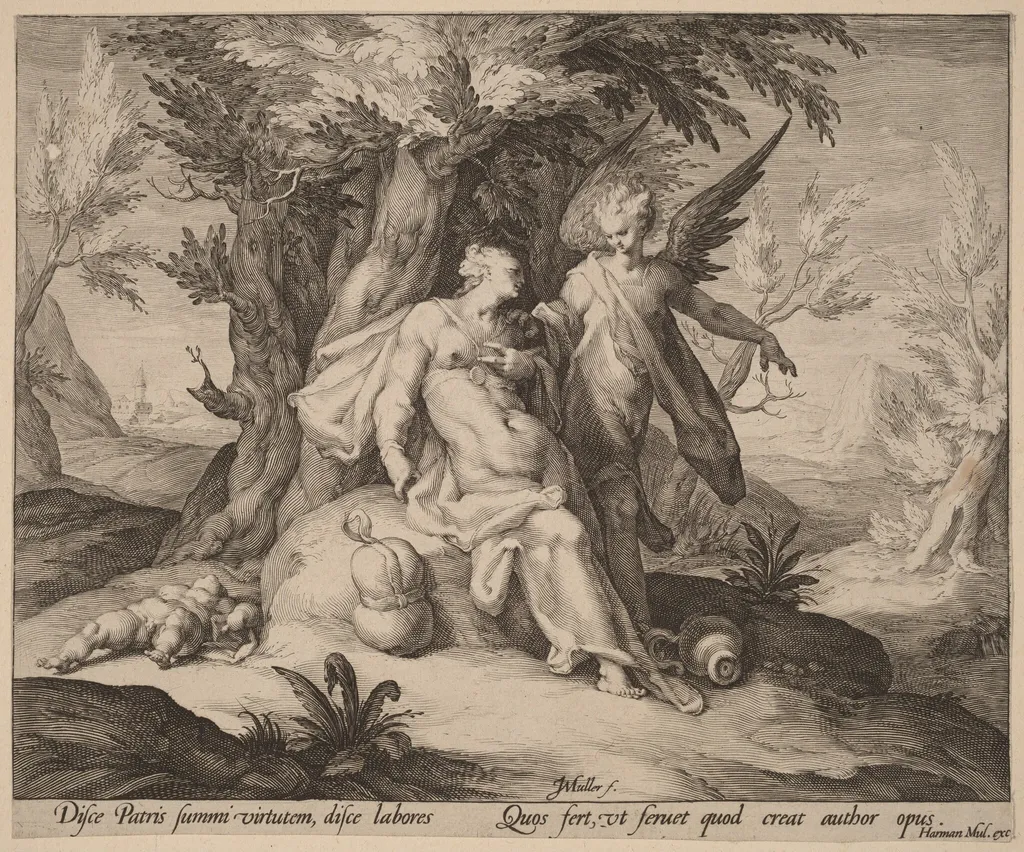
Hagar in the Desert Consoled by an Angel is an ink print by the Renaissance artist Jan Muller. It dates from 1591 and is held in the collection of the National Gallery of Art.
About this work
Overview
Hagar in the Desert Consoled by an Angel is an engraving on laid paper created by Jan Harmensz. Muller around 1591. The work depicts a poignant biblical scene of comfort in adversity.
Subject & Meaning
The print illustrates the moment when Hagar, abandoned by Abraham, receives solace from an angel in the desert. The angel's comforting gesture and Hagar's calm, weary pose convey a sense of divine reassurance amidst hardship.
Technique & Style
Muller employed fine lines to achieve detailed textures and shadows, lending a three-dimensional quality to the composition. The intricate rendering of natural elements, such as leaves and rocks, showcases his mastery of engraving techniques.
History & Provenance
Created circa 1591 by Jan Harmensz. Muller, a Dutch artist trained in his family's printing and engraving business in Amsterdam, with later influences from his time in Italy.
Context
This engraving reflects the Renaissance interest in biblical narratives and the technical advancements in printmaking during the late 16th century, allowing for widespread dissemination of religious themes.
Legacy
While specific lasting impacts of this piece are not prominently documented, it contributes to the broader legacy of Muller's contributions to Dutch printmaking and the enduring depiction of biblical subjects in early modern European art.
Artist & collection

Artist
Jan Harmensz. Muller (1571–1628) was a Dutch engraver and painter. Muller was born in Amsterdam. His father was a book printer, engraver and publisher. He learned the engraving trade while working in the family…

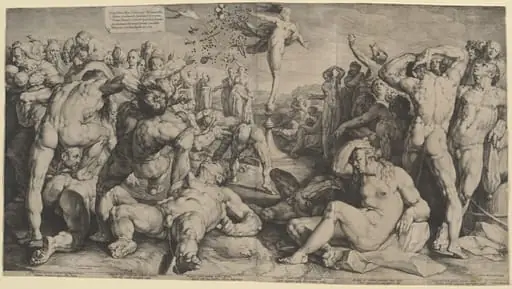
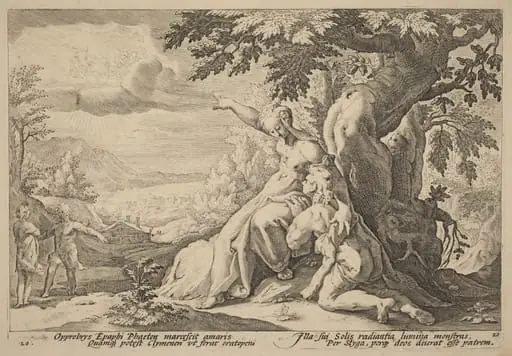 Clymene Urging Phaeton to Find Helios
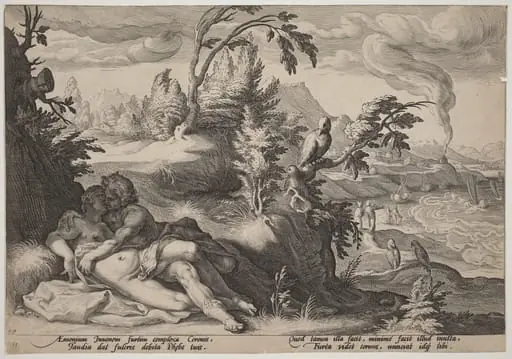 Apollo and Coronis
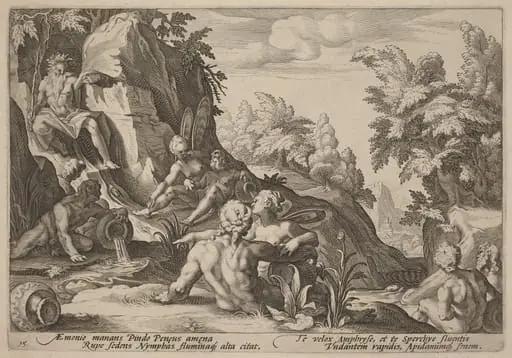 The River God Peneus Surrounded by Other Divinities
 Ahijah and Jeroboam
 The Prodigal Son as a Swineherd
 The Daughters of Cecrops Open the Casket Entrusted to Them by Minerva
 The Daughters of Cecrops Open the Casket Entrusted to Them by Minerva
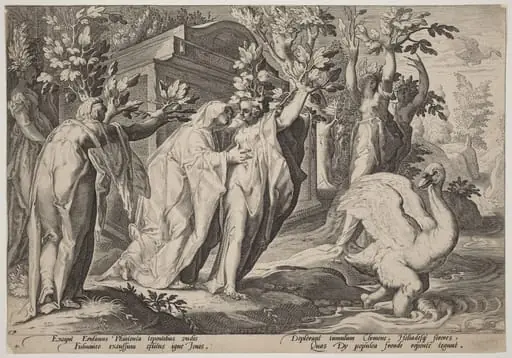 Phaeton's Sisters Changed into Poplars, and Cygnus into a Swan
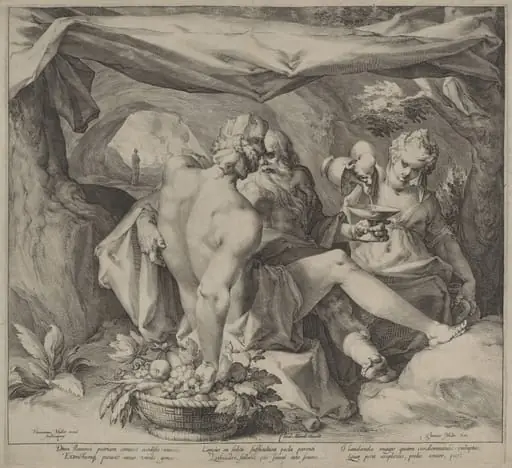 Lot and His Daughters
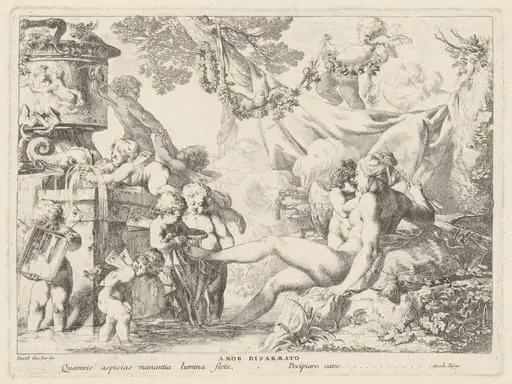 Amor Disarmato (Cupid Disarmed)
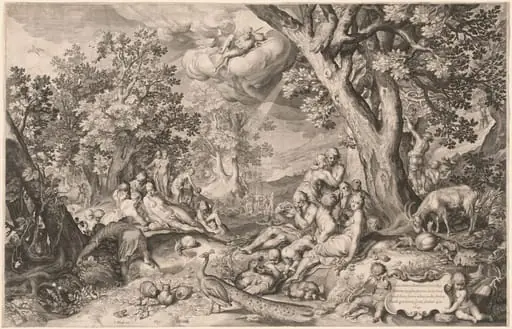 The Golden Age
 Landscape with Three Nude Men and a Dog