Artwork
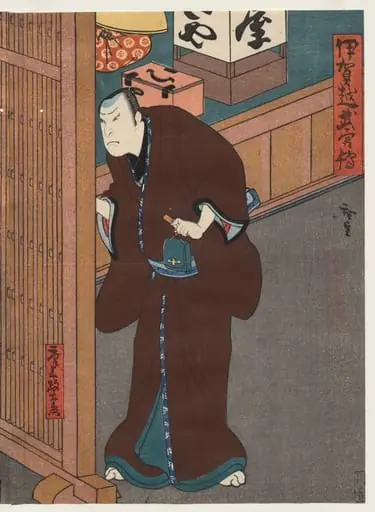
Nakayama Nanshi II as Otani (From the series A Tale of Valor at Iga Pass)
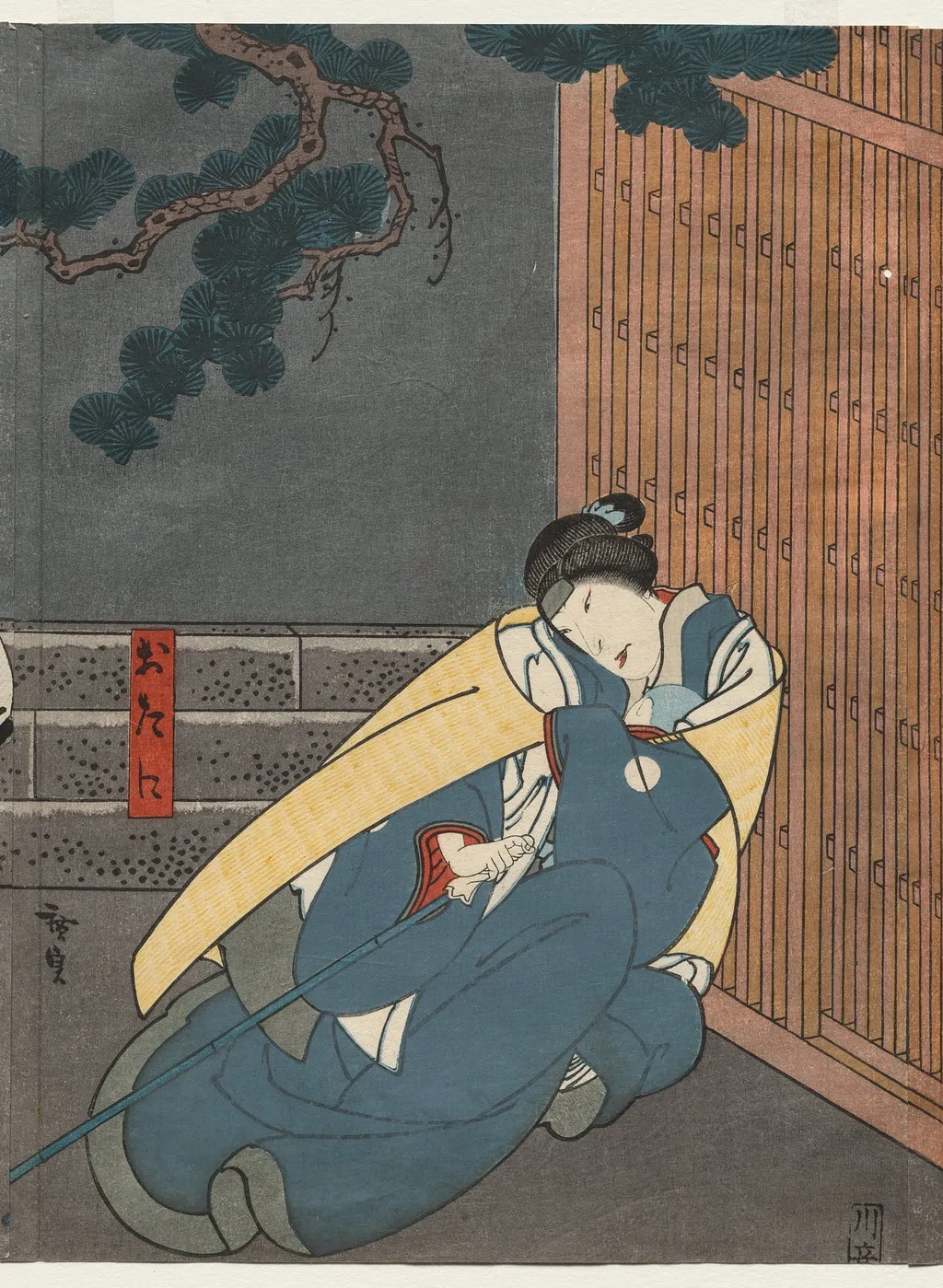
Nakayama Nanshi II as Otani (From the series A Tale of Valor at Iga Pass) is a print by the Romanticist artist Gosōtei Hirosada. It dates from 1850 and is held in the collection of the Cleveland Museum of Art.
About this work
Overview
This woodblock print, created around 1850 by Gosōtei Hirosada, is part of a series depicting dramatic scenes from the tale of valor at Iga Pass.
This woodblock print, created around 1850 by Gosōtei Hirosada, is part of a series depicting dramatic scenes from the tale of valor at Iga Pass. It portrays the actor Nakayama Nanshi II in the role of Otani, a character from kabuki theater. The image captures a moment of stillness amid implied tension, characteristic of ukiyo-e portraiture of the period. The print is currently held in the collection of The Cleveland Museum of Art.
Subject & Meaning
The figure represents Otani, a female role performed by a male actor in kabuki tradition. Seated against a wooden wall, she holds a staff, suggesting readiness or authority. Her attire—blue kimono with yellow sash and blue hair ribbon—signals both elegance and martial intent. The composition implies narrative pause, inviting viewers to infer the preceding or impending action within the larger story of heroism and sacrifice at Iga Pass.
Technique & Style
Hirosada employed bold, flat areas of color and clean outlines typical of mid-19th century Osaka printmaking. The contrast between the vivid blue kimono and the muted gray background enhances the figure’s presence. Minimalist background elements—a single tree branch and vertical slats—focus attention on the subject’s posture and expression. The print’s simplicity amplifies emotional gravity without ornamental distraction.
History & Provenance
Produced during the late Edo period, this print was likely distributed as a theatrical souvenir or collectible for kabuki enthusiasts. It entered the Cleveland Museum of Art’s collection through documented acquisitions of Japanese prints in the 20th century. Its preservation reflects the museum’s long-standing interest in ukiyo-e and performance-related imagery from Japan’s urban cultural scene.
Context
This print belongs to a series illustrating episodes from the Iga Pass legend, a popular kabuki narrative centered on loyalty and sacrifice. Osaka-based artists like Hirosada specialized in actor portraits, catering to audiences who followed theatrical stars. The depiction of a male actor in a female role underscores the conventions of onnagata performance, a defining feature of Edo-period theater.
Legacy
Hirosada’s work contributes to the broader tradition of yakusha-e, actor prints that documented and celebrated kabuki’s golden age. Though less widely known than his Edo counterparts, his prints remain vital for understanding regional artistic practices and the social role of theater in 19th-century Japan. This print continues to inform scholarly study of gender, performance, and visual culture in Edo-period Japan.
Artist & collection

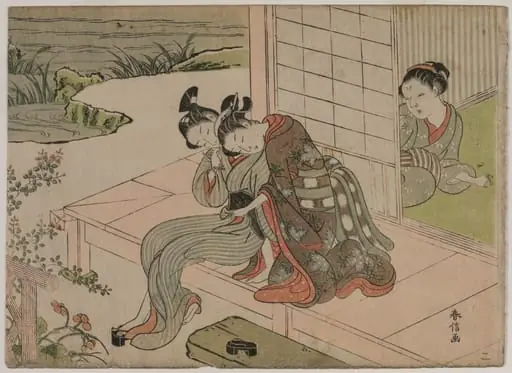 Woman Watching Young Couple Embrace on a Veranda
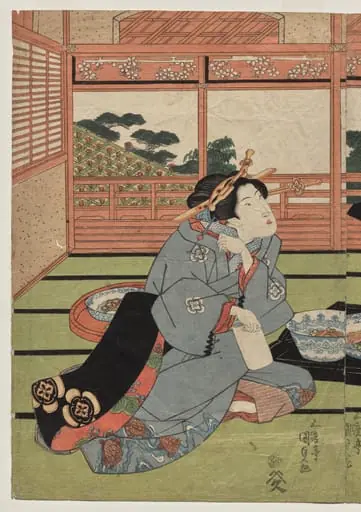 A View of the Large New Room at Sakurai
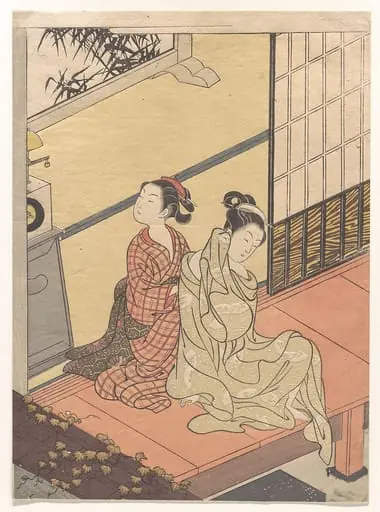 鈴木春信画 坐鋪八景 とけひの晩鐘|Evening Chime of the Clock (Tokei no banshō), from the series “Eight Parlor Views” (Zashiki hakkei)
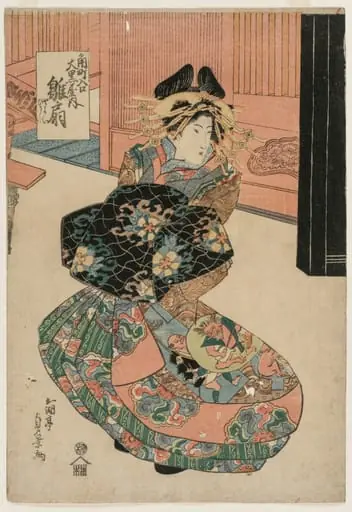 The Courtesan Hinaogi of the Daikokuya at the Entrance of Kadomachi
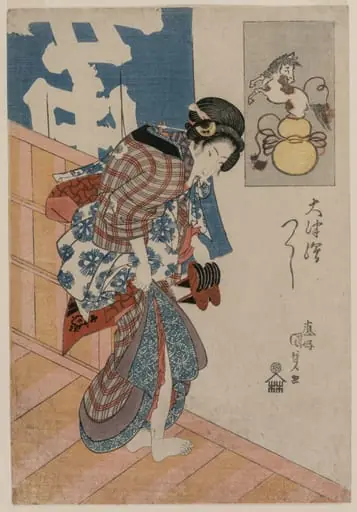 Woman Leaving a Bath House (from the series Pictures from Otsu)
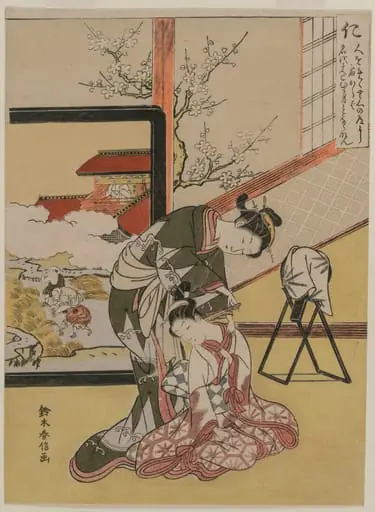 Benevolence, from The Five Virtues
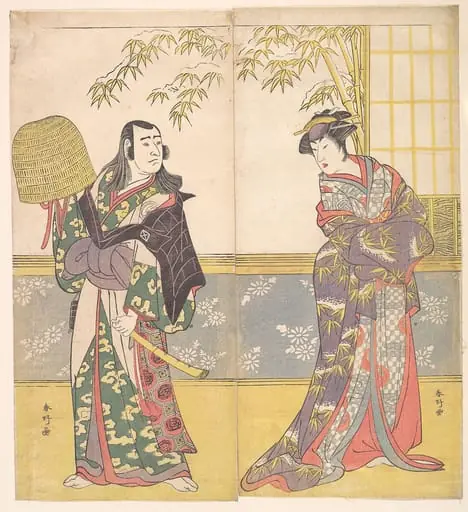 勝川春好画 三代目澤村宗十郎 三代目佐野川市松 |Kabuki Actors Sawamura Sōjūrō III and Sanogawa Ichimatsu III in "A Courtesan’s Mirror for the Eastern Provinces" (Keisei Azuma kagami)
 Untitled
 Untitled
 Untitled