Artwork
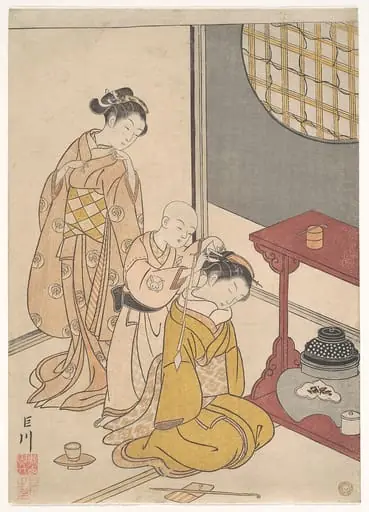
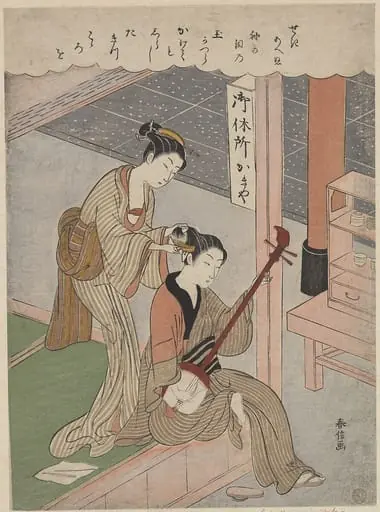
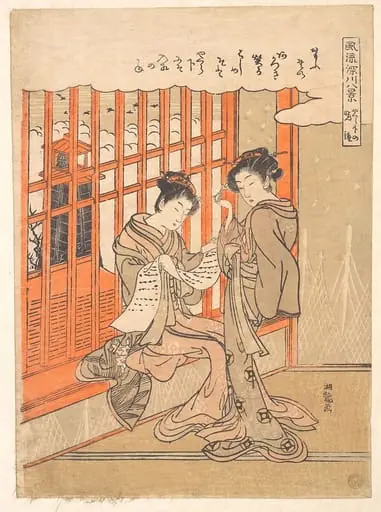
鈴木春信画 坐鋪八景 とけひの晩鐘|Evening Chime of the Clock (Tokei no banshō), from the series “Eight Parlor Views” (Zashiki hakkei)
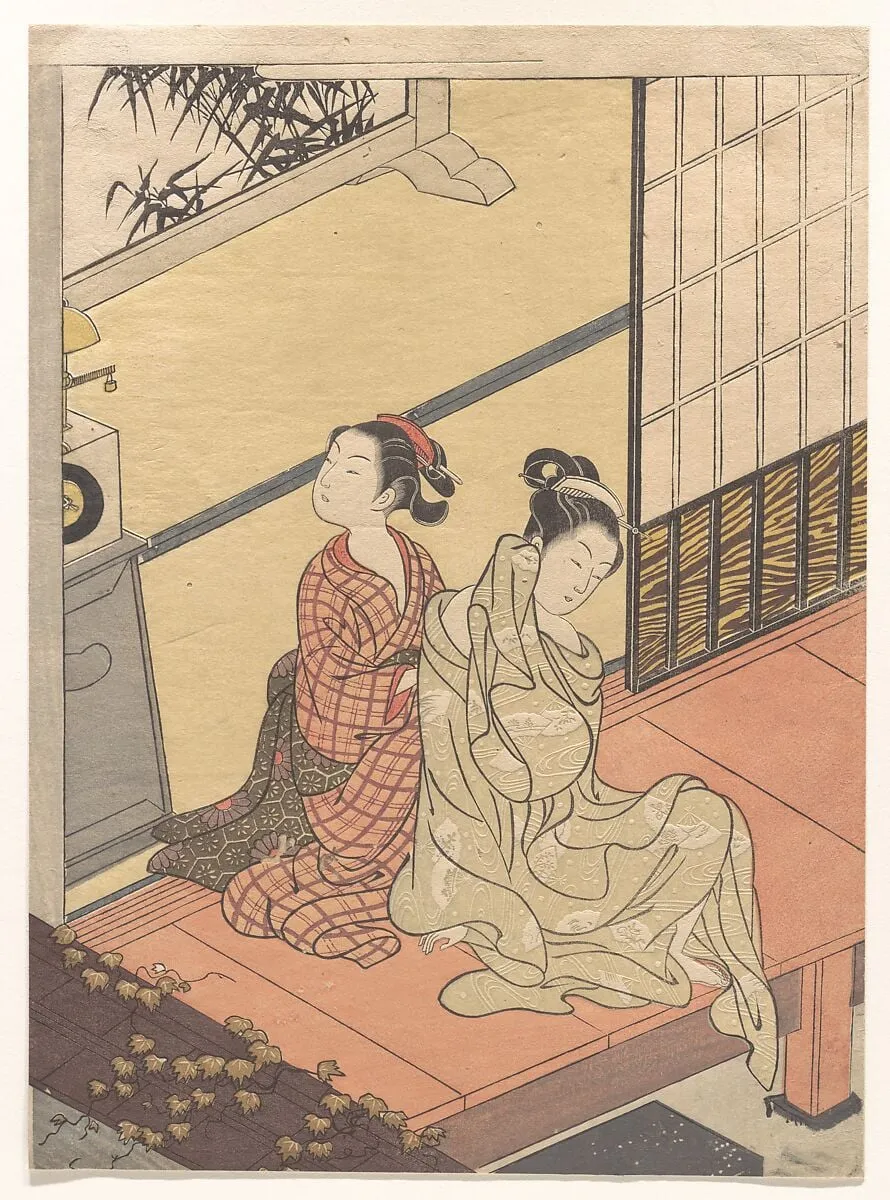
鈴木春信画 坐鋪八景 とけひの晩鐘|Evening Chime of the Clock (Tokei no banshō), from the series “Eight Parlor Views” (Zashiki hakkei) is an ink print by the Romanticist artist Suzuki Harunobu. It dates from 1766 and is held in the collection of the Metropolitan Museum of Art.
About this work
Overview
Evening Chime of the Clock (Tokei no banshō) is a chuban-sized woodblock print from Suzuki Harunobu's series 'Eight Parlor Views' (Zashiki hakkei), dated circa 1766. The work is part of The Metropolitan Museum of Art's collection.
Subject & Meaning
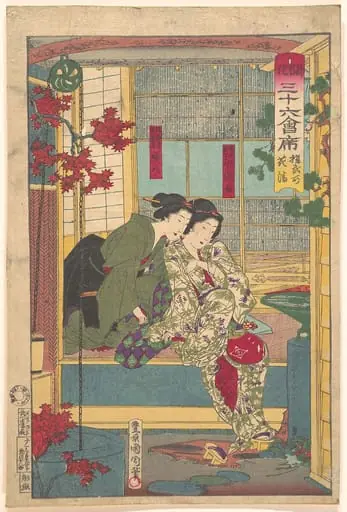
The print depicts an intimate indoor scene with two women. One, wearing a red-and-black checkered robe, assists the other, dressed in a pale, patterned dress, by adjusting her hair. The serene atmosphere is enhanced by the contrast between the interior's warmth and the exterior's natural elements.
Technique & Style
Harunobu employed fine lines to render intricate fabric folds and subtle shadows, notably on the seated woman's dress. This technique, akin to cross-hatching, achieves a soft, realistic texture, highlighting the artist's attention to detail and mastery of ukiyo-e printing.
History & Provenance
Created around 1766, the print is now housed at The Metropolitan Museum of Art, though its ownership history prior to museum acquisition is not detailed here.
Context
Part of 'Eight Parlor Views', this work reflects 18th-century Japanese domestic life, offering a glimpse into the private, everyday moments of women in a traditional setting, juxtaposed with the subtle presence of nature.
Legacy
As a piece from Harunobu's influential series, it contributes to the broader impact of ukiyo-e on Japanese art, known for its detailed, serene depictions of daily life, though specific legacy details of this piece are not provided.
Artist & collection

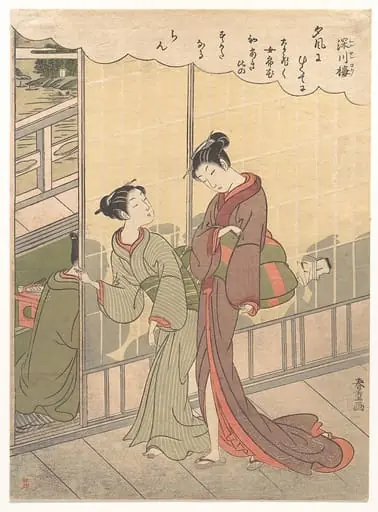 Untitled
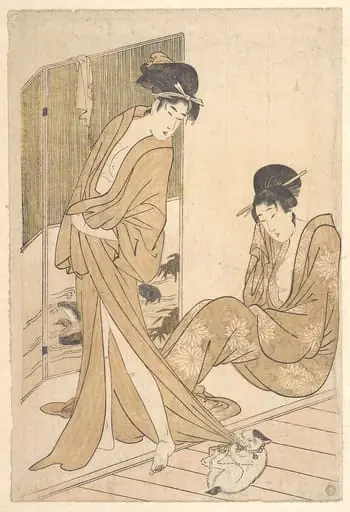 Untitled
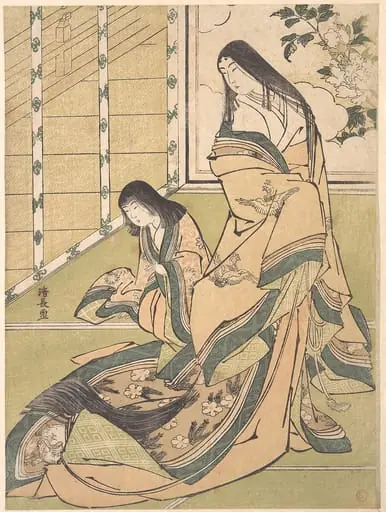
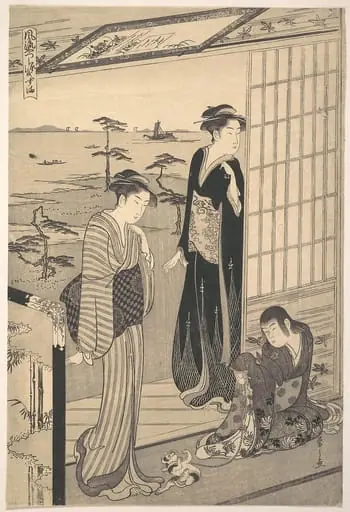 鳥文斎栄之画 「風流やつし源氏 須磨」|Genji in Exile at Suma, from the series Genji in Fashionable Modern Guise (Fūryū yatsushi Genji: Suma)
 Untitled
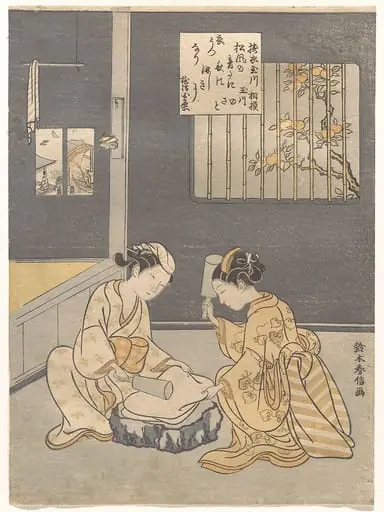 鈴木春信画 六玉川 「壔衣の玉川 摂津の名所」|Kōromō Uchi Tamagawa|The Cloth-Fulling Jewel River, a Famous Place in Settsu Province (Tōi no Tamagawa, Settsu no meisho), from an untitled series of Six Jewel Rivers (Mu Tamagawa)
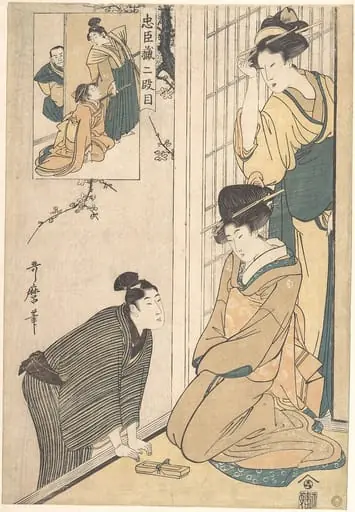 忠臣蔵二段目|A Young Man at the Side of a House
 Untitled
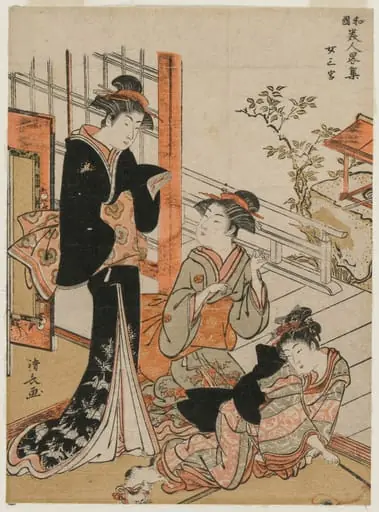 Three Women (from the series A Brief Collection of Japanese Beauties)
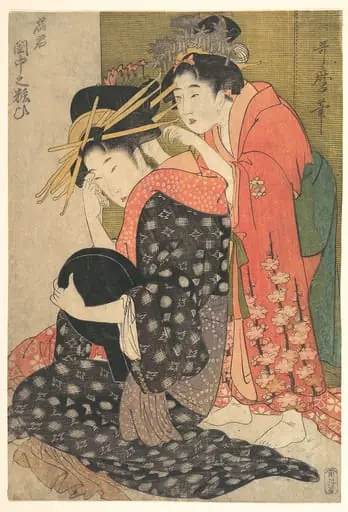 名君 閨中の粧ひ|The Oiran Yoso-oi Seated at Her Toilet
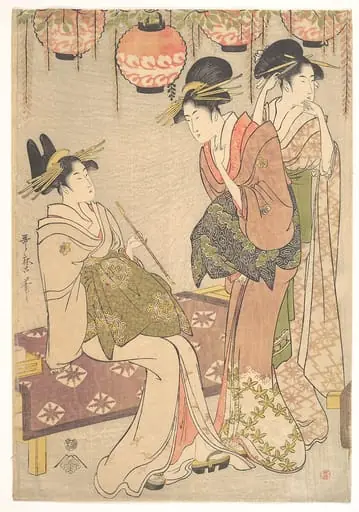 Untitled
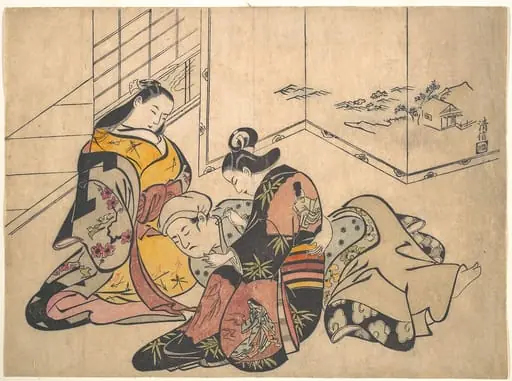 Untitled
 Untitled