Artwork
Enicurus Scouleri (Little Forktail)
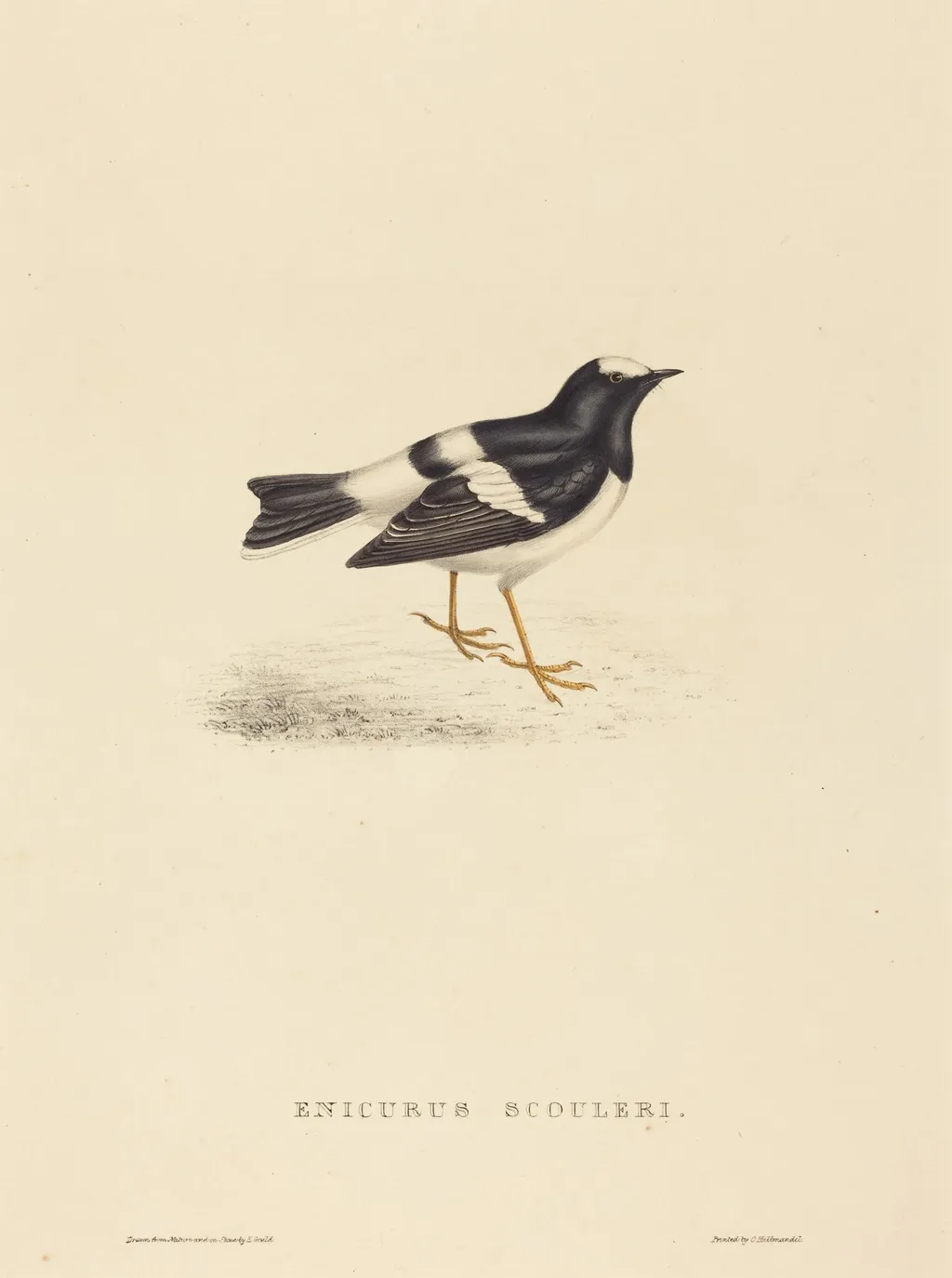
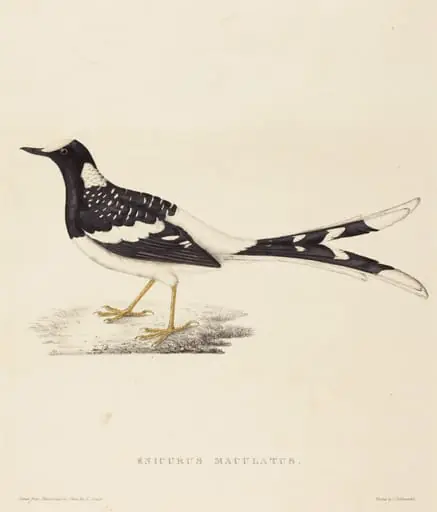
Enicurus Scouleri (Little Forktail) is an ink print by the Romanticist artist Elizabeth Gould. It dates from 1822 and is held in the collection of the National Gallery of Art.
About this work
Overview
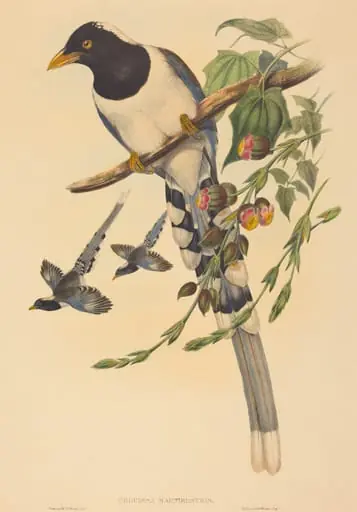
Elizabeth Gould’s hand‑coloured lithograph of the Little Forktail (Enicurus scouleri) dates from 1822. Executed as a print, the image presents the bird perched on a tuft of grass, rendered against a muted beige backdrop that subtly frames its striking plumage.
Subject & Meaning
The illustration captures the species’ characteristic black head, neck and wings contrasted with a white belly and tail. A black bill and vivid yellow legs complete the naturalistic portrayal, emphasizing the bird’s distinctive field markings.
Technique & Style
Produced through lithography, the work was subsequently hand‑coloured, allowing for precise control of hue and texture. Fine line work conveys feather detail, while delicate shading suggests softness and depth, reflecting the meticulous approach typical of early nineteenth‑century natural history illustration.
History & Provenance
Created by Elizabeth Gould, a prominent illustrator of ornithological subjects, the print formed part of a series accompanying scientific texts of the period. Its 1822 date places it within the early phase of her collaborative work with her husband, John Gould, who later expanded the publication of such plates.
Context
The Little Forktail inhabits forested streams of Southeast Asia, a region of growing interest to European naturalists in the early 1800s. Gould’s depiction contributed to the visual documentation of Asian avifauna, aiding both scientific description and public awareness.
Artist & collection