Artwork
American Magpie
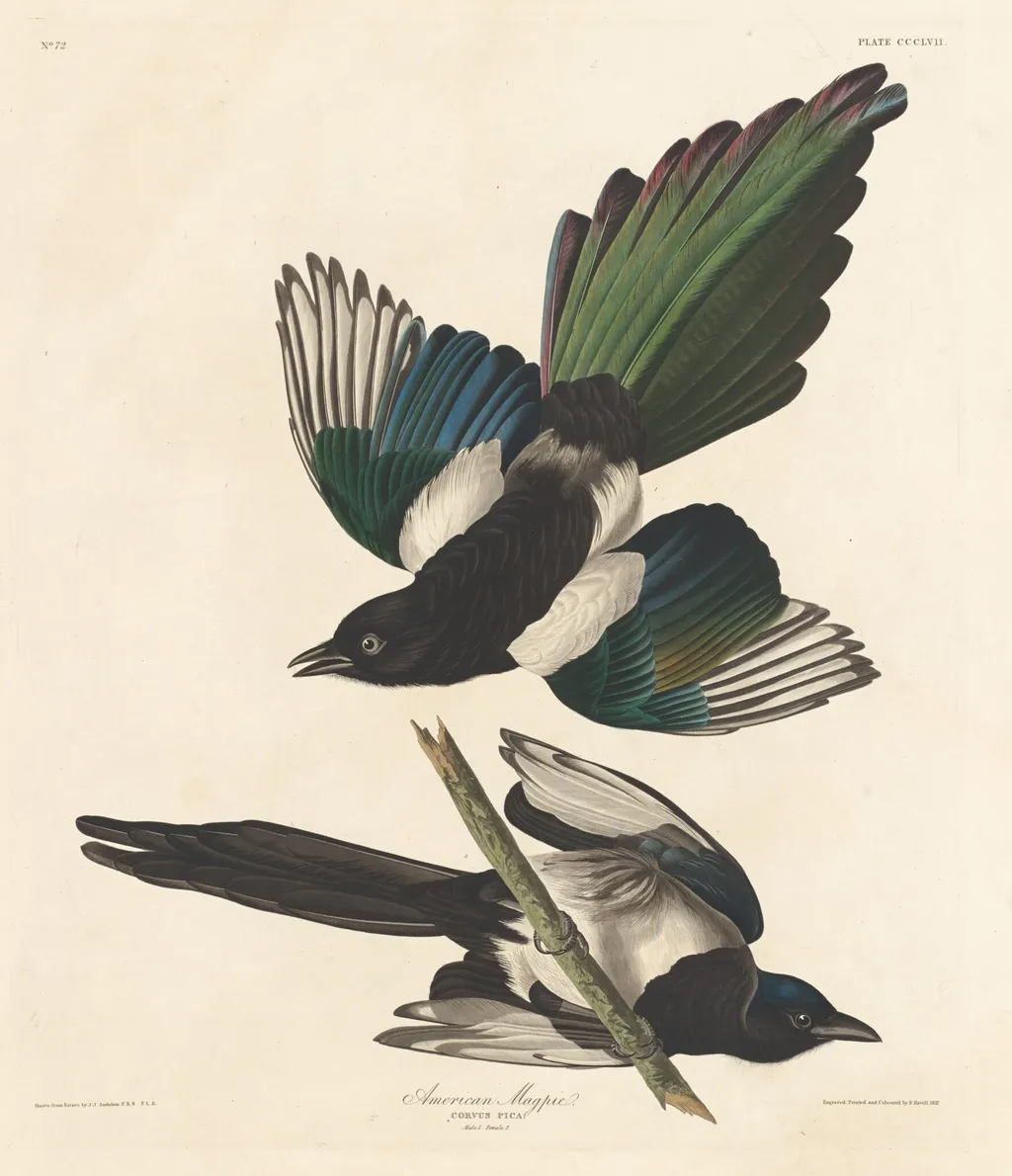
American Magpie is an ink print by the Romanticist artist Robert Havell Jr.. It dates from 1837 and is held in the collection of the National Gallery of Art.
About this work
Overview
American Magpie, created by Robert Havell Jr. in 1837, is a hand-colored engraving and aquatint print on Whatman wove paper, showcasing the artist's skill in combining these techniques to achieve detailed, realistic imagery.
Subject & Meaning
The print depicts two magpies in contrasting poses: one in flight with outstretched wings, the other perched, turning its head towards the viewer. This juxtaposition may symbolize the balance between movement and stillness, or the interplay between freedom and observation.
Technique & Style
Havell Jr. employed hand-coloring over aquatint and engraving to capture the intricate textures of the magpies' feathers and the subtle play of light on their forms. The light beige background enhances the vividness of the birds' plumage, contributing to an overall sense of elegance.
History & Provenance
Part of the Havell family's printmaking legacy, known for their aquatint expertise and connections to Indian art, American Magpie reflects the family's technical prowess in color printing, though specific provenance details for this work are not provided.
Context
Created in 1837, the piece sits within the broader 19th-century interest in natural history and ornithological illustration, where detailed, realistic depictions of birds were highly valued for both aesthetic and educational purposes.
Legacy
While specific legacy or influence of American Magpie on subsequent art or ornithological illustration is not detailed, it contributes to the Havell family's reputation for high-quality, detailed printmaking, particularly in the realm of natural subjects.
Artist & collection

Artist
The Havell family of Reading, Berkshire, England, included a number of notable engravers, etchers and painters, as well as writers, publishers, educators, and musicians.

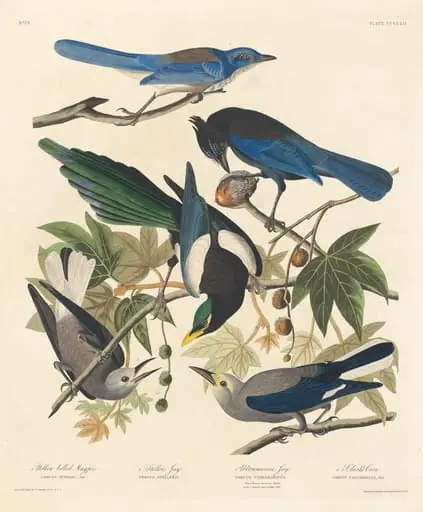 Yellow-billed Magpie, Stellers Jay, Ultramarine Jay and Clark's Crow
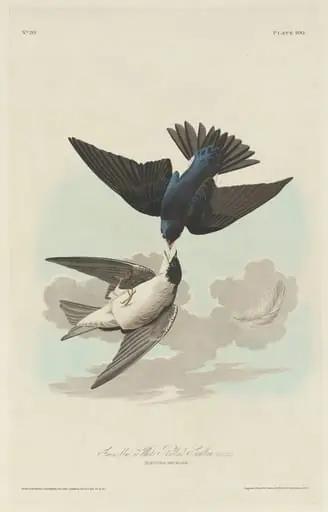 Green-blue or White-bellied Swallow
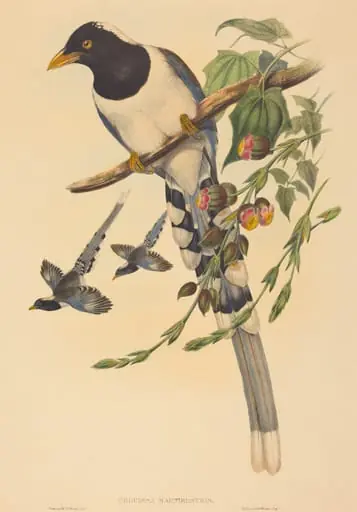 Urocissa magnirostris
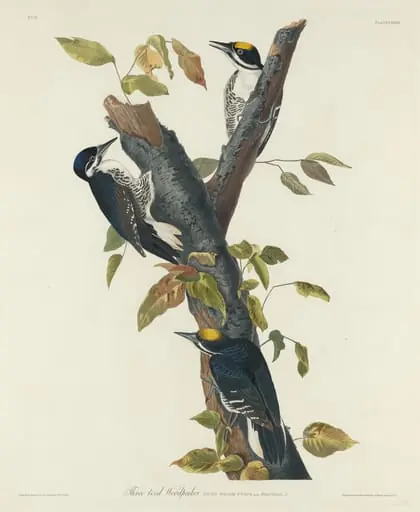 Three-Toed Woodpecker
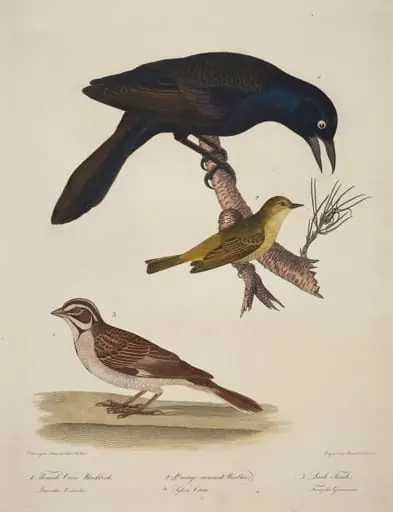 Female Crow Blackbird, Orange-Crowned Warbler, Lark Finch
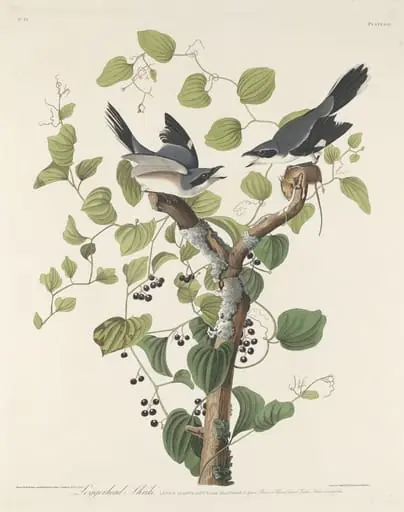 Loggerhead Shrike
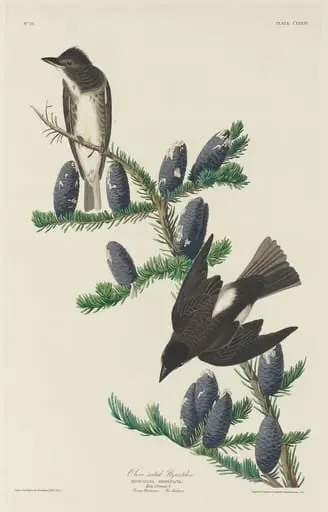 Olive-sided Flycatcher
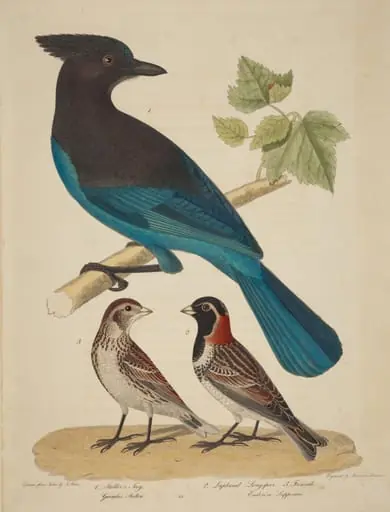 Stellar's Jay, Lapland Longspur and Female
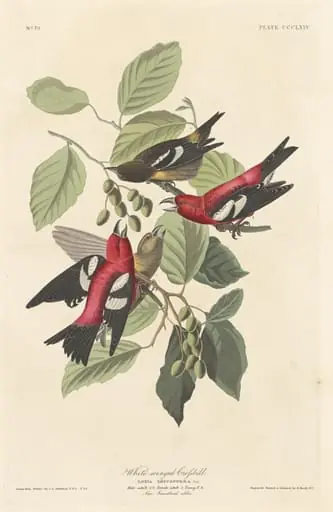 White-winged Crossbill
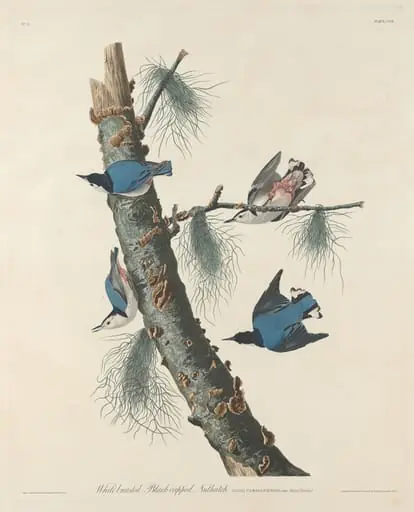 White-breasted Black-capped Nuthatch