Artwork
The Red Legged Thrush (Turdus plumbeus)
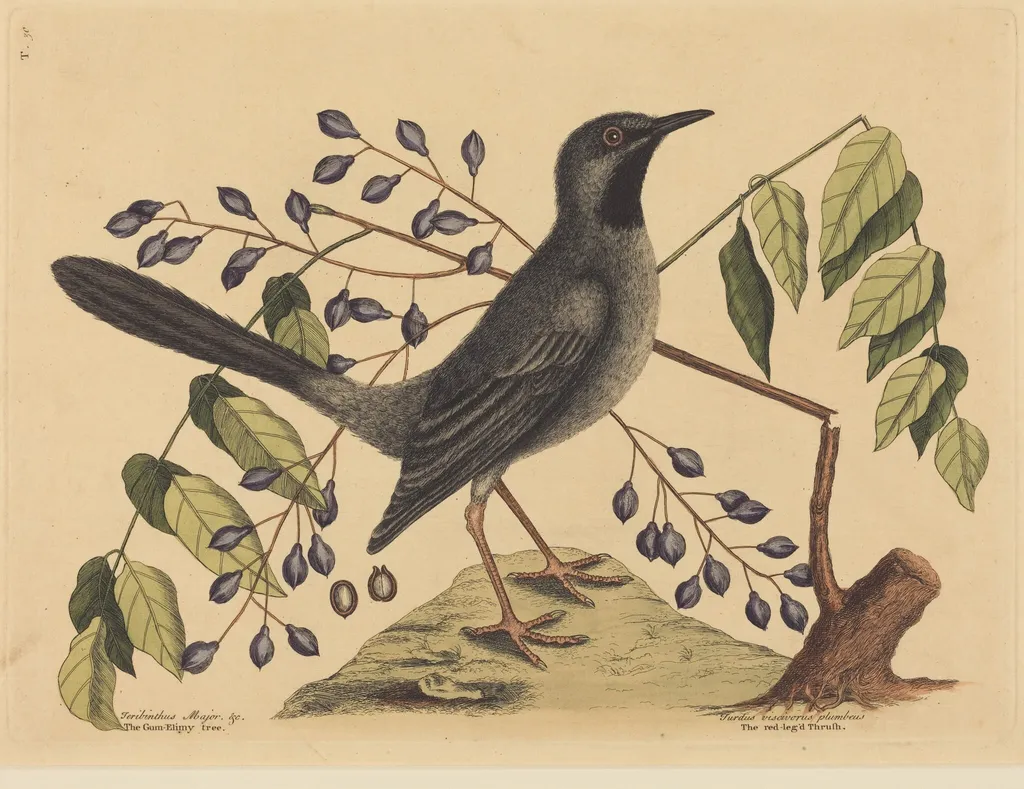
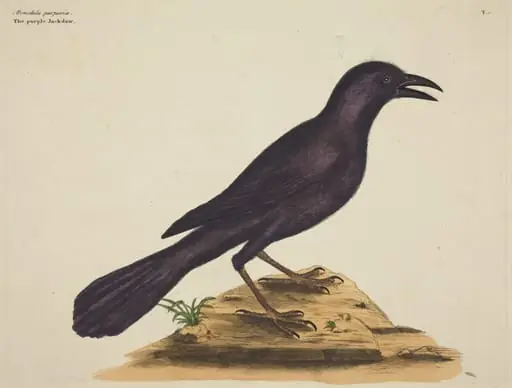
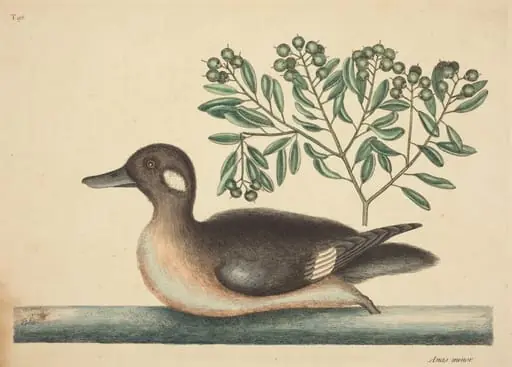
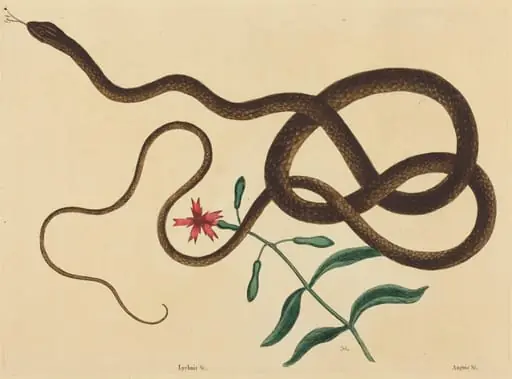
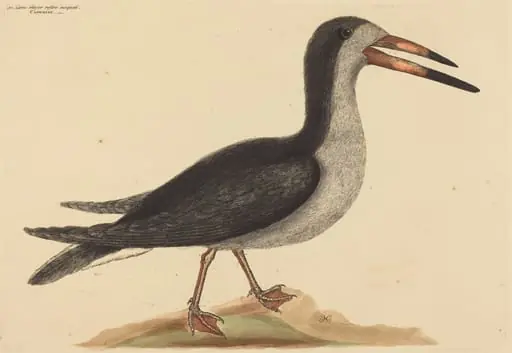
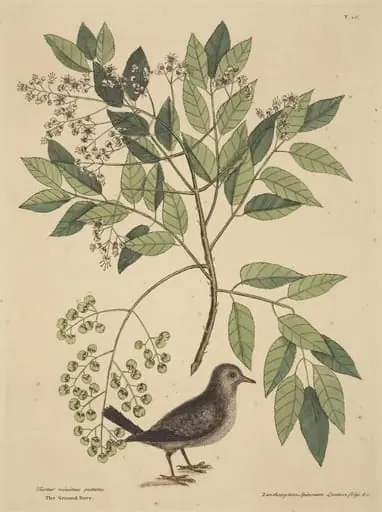
The Red Legged Thrush (Turdus plumbeus) is an ink print by the Baroque artist Mark Catesby. It dates from 1737 and is held in the collection of the National Gallery of Art.
About this work
Overview
Created in 1737 by the English naturalist Mark Catesby, this print portrays a bird perched upon a rock amid foliage. Executed on laid paper, the image combines etching and engraving with hand‑applied color, highlighting the bird’s long tail and striking red leg against a subdued background.
Subject & Meaning
The work depicts the red‑legged thrush (Turdus plumbeus), a North American songbird. Catesby’s careful rendering emphasizes anatomical accuracy, presenting the bird in a natural pose that reflects his aim to document regional wildlife for scientific and educational purposes.
Technique & Style
Catesby employed copperplate etching and engraving to outline the forms, then added watercolor washes by hand to bring out the plumage and surrounding vegetation. The realistic treatment, with fine line work and modest coloration, aligns with the empirical illustration tradition of the early eighteenth century.
History & Provenance
The print forms part of Catesby’s multi‑volume series *Natural History of Carolina, Florida and the Bahama Islands*, issued between 1729 and 1747. The series was among the first comprehensive visual records of North American flora and fauna, circulating among European scholars and collectors of natural history.
Artist & collection

Artist
Mark Catesby (24 March 1683 – 23 December 1749) was an English naturalist who studied the flora and fauna of the New World.