Artwork
Lampornis prevosti
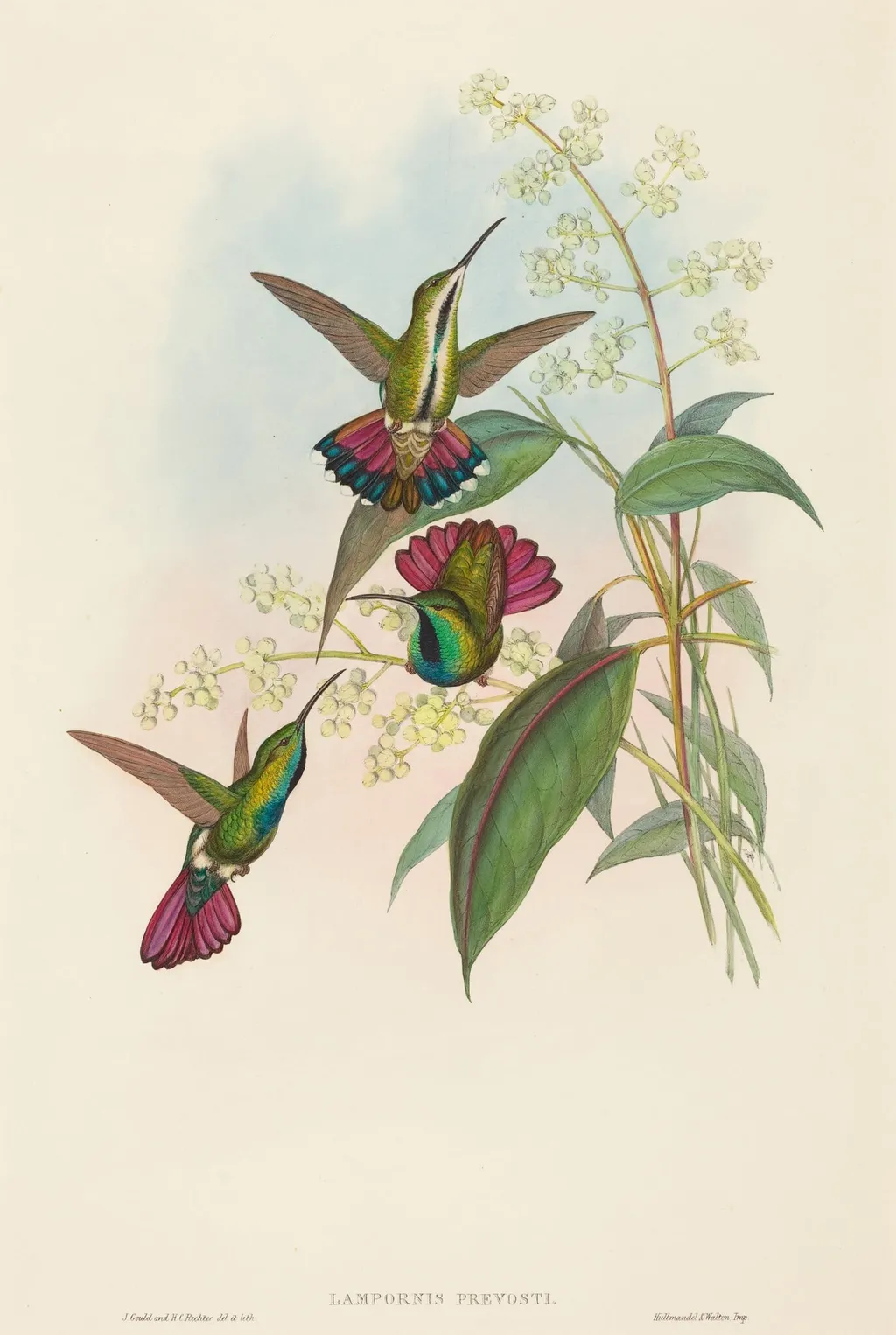
Lampornis prevosti is an ink print by the Romanticist artist John Gould. It dates from 1842 and is held in the collection of the National Gallery of Art.
About this work
Overview
This hand-colored lithograph on wove paper was produced in 1842 as part of John Gould’s systematic documentation of bird species.
This hand-colored lithograph on wove paper was produced in 1842 as part of John Gould’s systematic documentation of bird species. Gould, an English ornithologist, commissioned skilled artists to translate specimens into detailed prints for his publications. The image belongs to a larger project focused on hummingbirds, reflecting the era’s scientific drive to classify and illustrate global avian biodiversity through printed media.
Subject & Meaning
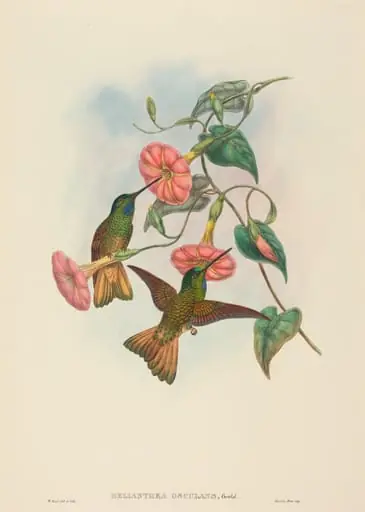
The print depicts three hummingbirds of the genus Lampornis, shown in dynamic poses: two perched on red blossoms with blurred wings, and one in mid-flight with tail feathers spread. The composition emphasizes movement and the birds’ interaction with their floral environment. The inclusion of the scientific name *Lampornis prevosti* signals its role as a taxonomic record, intended for scholarly use rather than decorative display.
Technique & Style
The image was created using lithography, a process allowing fine detail and tonal gradation. Each print was individually hand-colored with water-based pigments to replicate the iridescent greens and reds of live specimens. Delicate rendering of feathers, petals, and leaves demonstrates a commitment to botanical and ornithological accuracy, with soft background hues enhancing the birds’ vividness without distracting from their form.
History & Provenance
Created during Gould’s work on *A Monograph of the Trochilidae*, this print was produced between 1849 and 1861, though dated 1842 in some records. It was likely printed in London and distributed to scientific institutions and private collectors. The plate was part of a series that helped establish Gould’s reputation as a leading figure in 19th-century ornithological publishing, with specimens sourced from expeditions across the Americas.
Context
In the mid-19th century, European naturalists were rapidly cataloging species from newly accessible regions. Gould’s publications coincided with growing interest in evolution and taxonomy, though Darwin’s *Origin of Species* had not yet been published. These prints served both scientific and cultural purposes, shaping public perception of exotic wildlife through accessible, visually precise imagery.
Legacy
Gould’s illustrated works remain valuable references for ornithologists and historians of science. The precision of his prints, including this one, set a standard for biological illustration. While *Lampornis prevosti* is no longer a recognized species name—modern taxonomy has revised classifications—the image endures as a record of 19th-century scientific practice and the collaborative effort behind natural history documentation.
Artist & collection
Artist
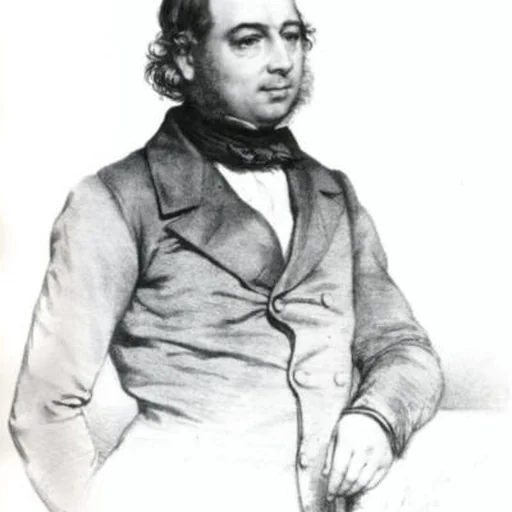
John Gould (; 14 September 1804 – 3 February 1881) was an English ornithologist who published monographs on birds, illustrated by plates produced by his wife, Elizabeth Gould, and several other artists, including Edward…

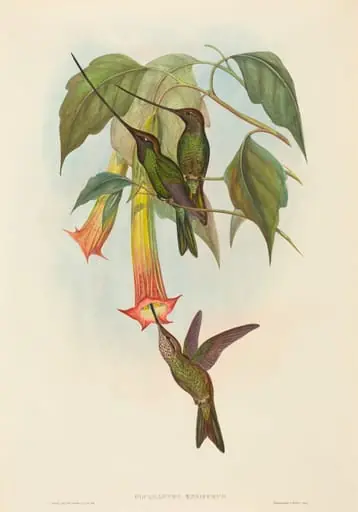 Docimastes ensiferus (Sword-billed Hummingbird)
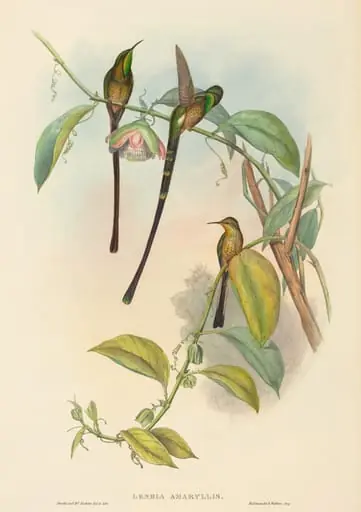 Lesbia Amaryllis
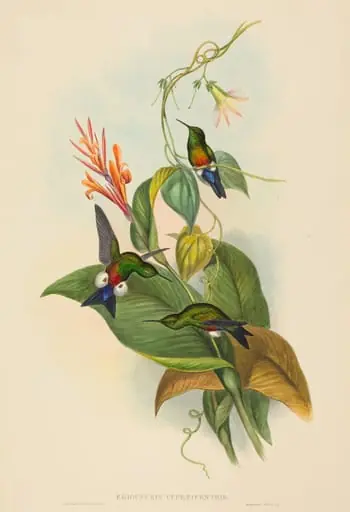 Eriocnemis cupreiventris (Coppery-vented Puff-Leg)
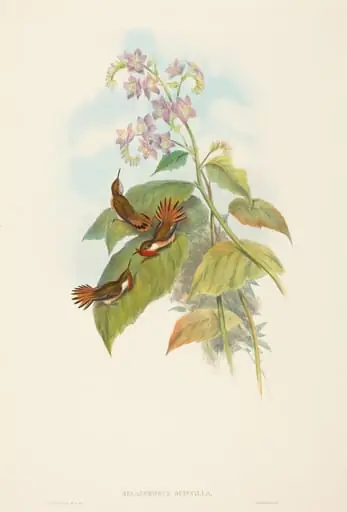 Selashorus scintilla (Scintillant Hummingbird)
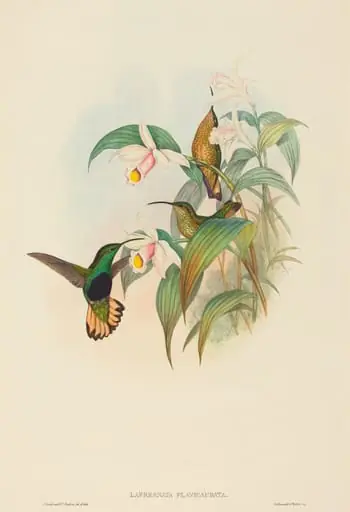 Lafresnaya flavicaudata (Buff-tailed Velvet-breast)
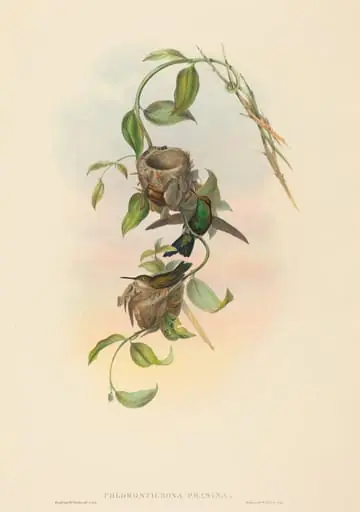 Chlorostilbona prasina (Puncheran's Emerald)
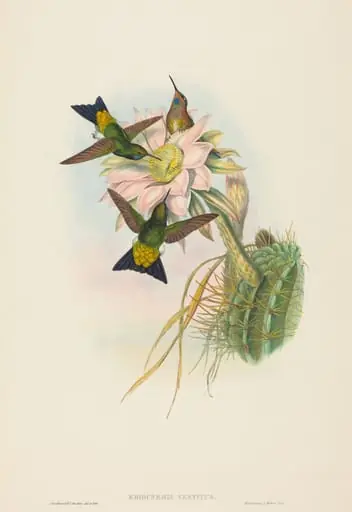 Eriocnemis vestitus (Glowing Puff-Leg)
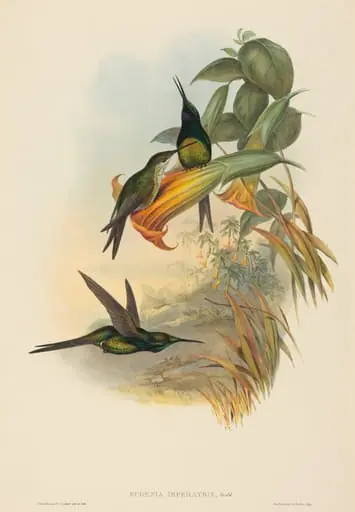 Eugenia imperatrix (Empress Hummingbird)
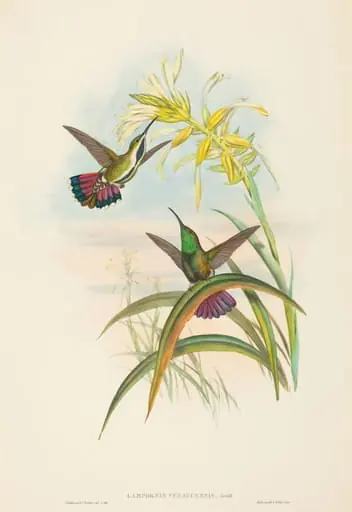 Lampornis veraguensis (Veraguan Mango)
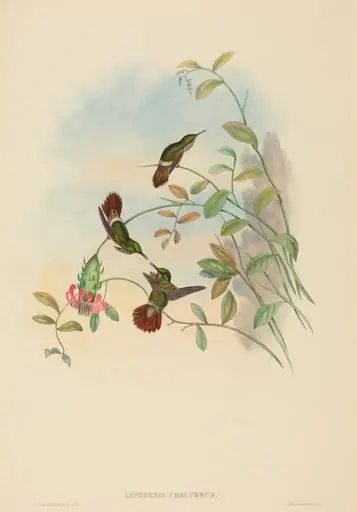 Lophornis chalybeus (Festive Coquette)
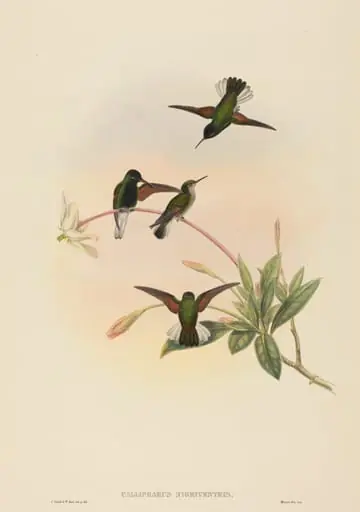 Callipharus nigriventris (Black-bellied Hummingbird)
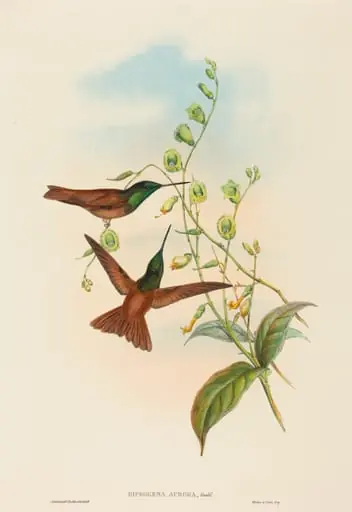 Diphogena aurora (Gould's Rainbow)
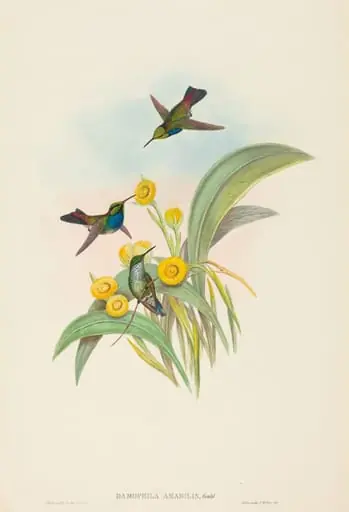 Damophila amabilis (Blue-breasted Hummingbird)
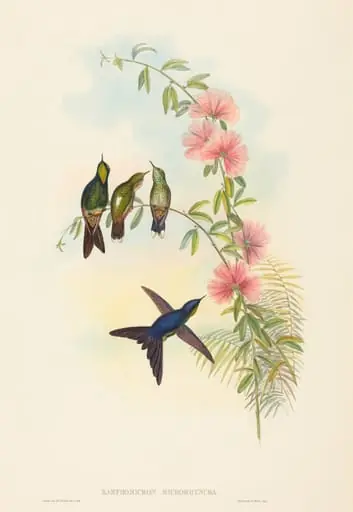 Ramphomicron microrhyncha (Small-billed Thornbill)
 Helianthea osculans (Buff-tailed Star-Frontlet)