Artwork
Lophornis chalybeus (Festive Coquette)
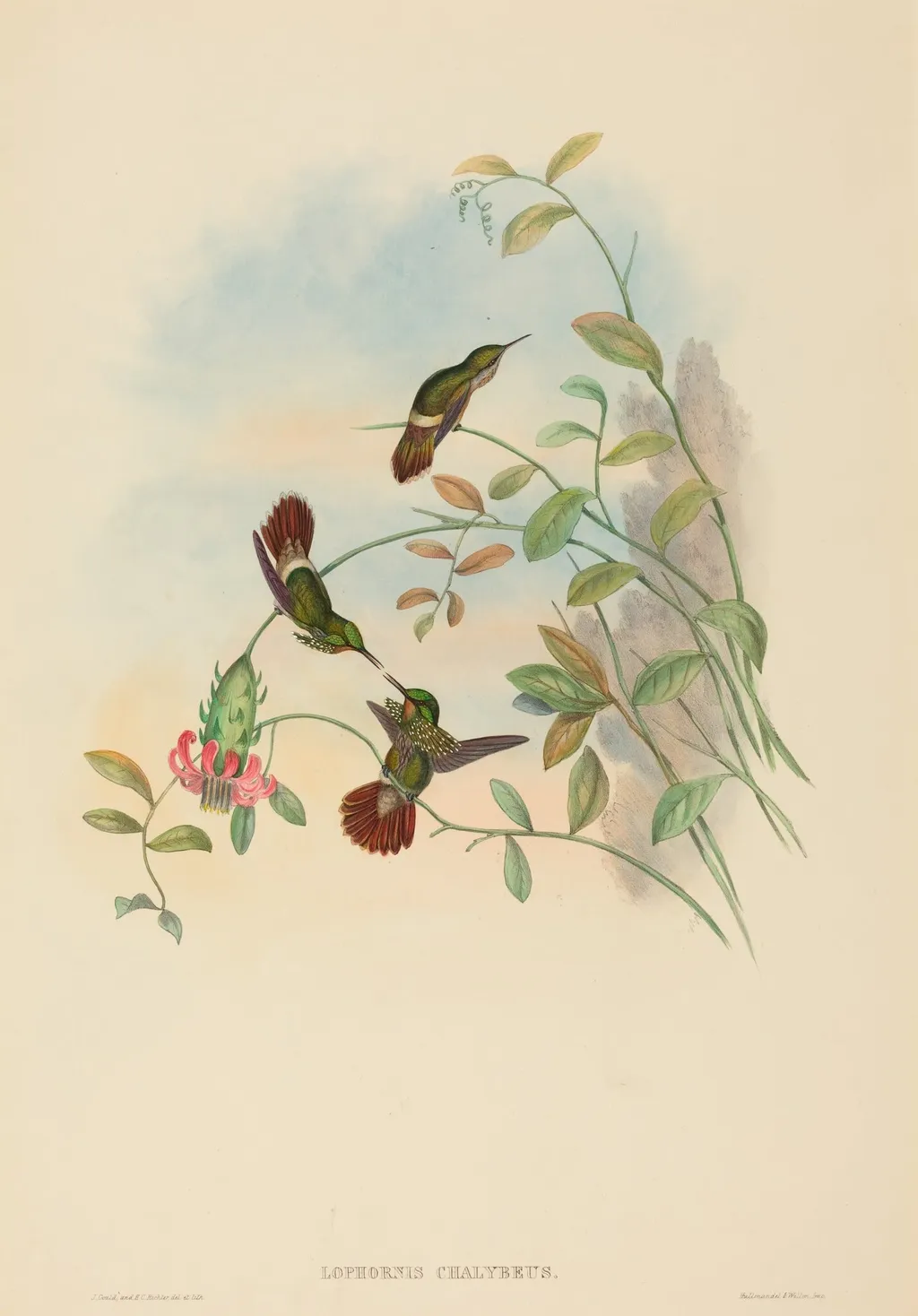
Lophornis chalybeus (Festive Coquette) is an ink print by the Romanticist artist H.C. Richter. It dates from 1842 and is held in the collection of the National Gallery of Art. Created in 1842 by H.
About this work
Overview
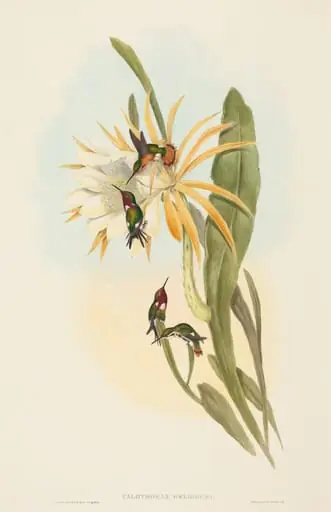
Created in 1842 by H.C. Richter, this hand‑colored lithograph depicts three vivid green hummingbirds poised among blossoms. The composition centers on the birds as they hover near red and pink flowers, set against a muted backdrop of soft foliage and a pale sky, emphasizing the delicate interaction between fauna and flora.
Subject & Meaning
The print illustrates the Festive Coquette (Lophornis chalybeus), a small South American hummingbird noted for its iridescent plumage. Two individuals are shown feeding on nectar, while a third hovers nearby, suggesting a moment of natural observation that highlights the bird’s feeding behavior and its role within a flowering environment.
Technique & Style
Richter employed the lithographic process, drawing the image on a limestone plate before transferring it to paper. After printing, the work was hand‑colored to achieve the bright greens of the birds and the vivid reds of the blossoms, allowing fine details such as curved beaks and feather texture to emerge with precision.
History & Provenance
The lithograph originates from the mid‑nineteenth century, a period when natural history illustration flourished in Europe. Produced by the German artist Heinrich Carl Richter, it reflects contemporary scientific interest in exotic species, and the inclusion of the Latin name underscores its dual function as both artwork and educational reference.
Artist & collection


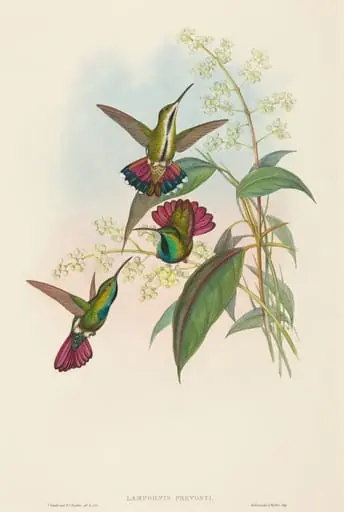 Lampornis prevosti
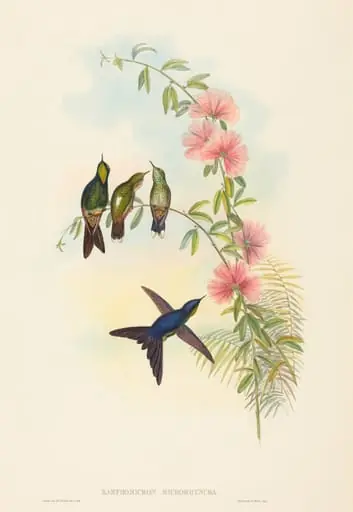 Ramphomicron microrhyncha (Small-billed Thornbill)
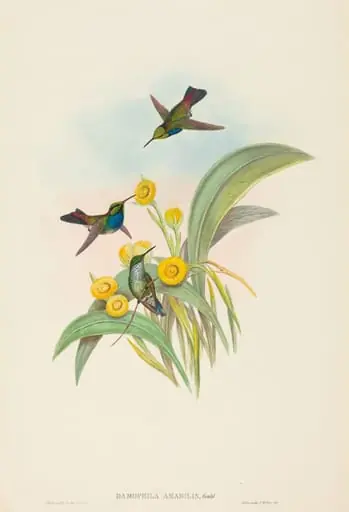 Damophila amabilis (Blue-breasted Hummingbird)
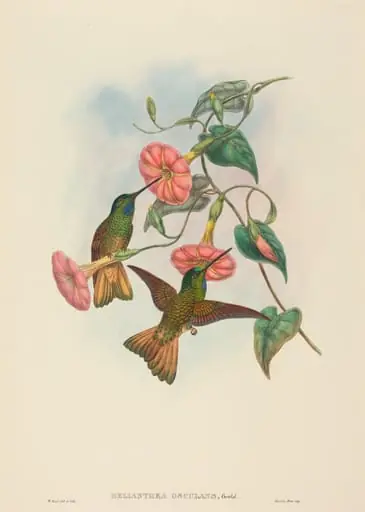 Helianthea osculans (Buff-tailed Star-Frontlet)
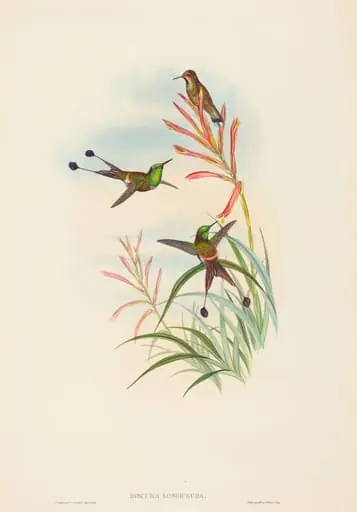 Discura longicauda (Racket-Tail)
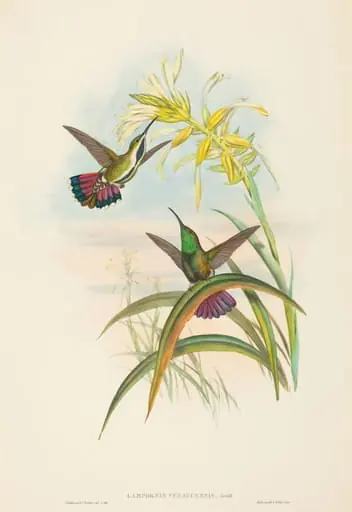 Lampornis veraguensis (Veraguan Mango)
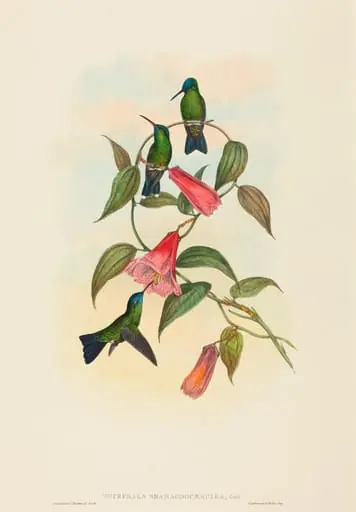 Eucephala smaragdocaerulea (Gould's Wood Nymph)
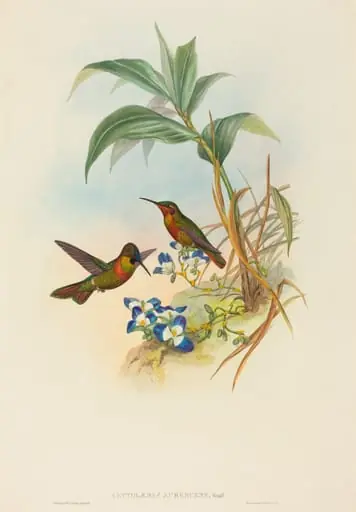 Clytolaema aurescens (Banded Ruby or Gould's Ruby)
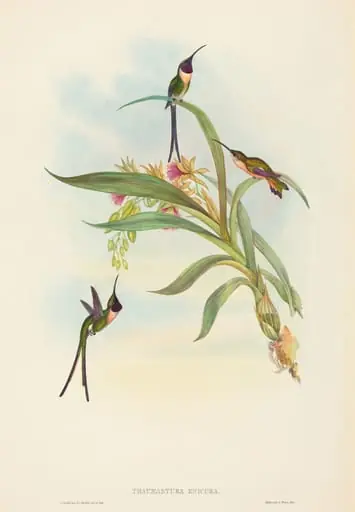 Tharmastura enicura (Slender Shear-Tail)
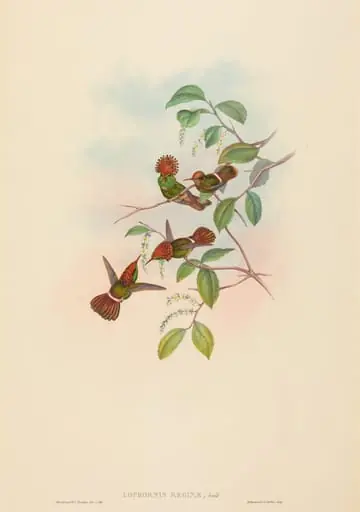 Lophornas reginae (Spangled Coquette)