Artwork
Spathura rufocaligata (Red-booted Racket-Tail)
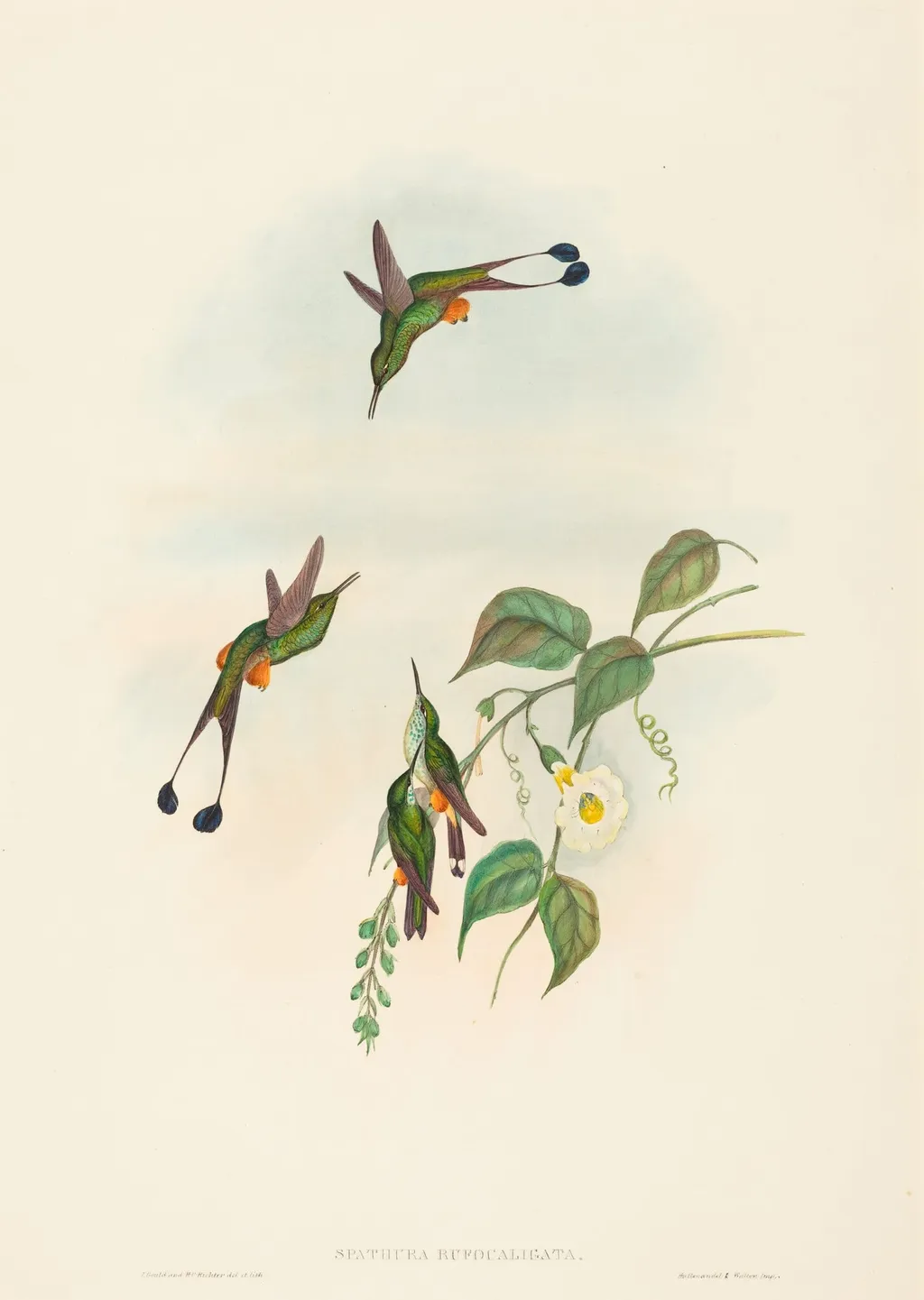
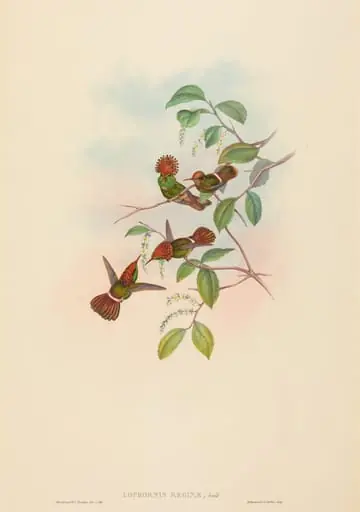
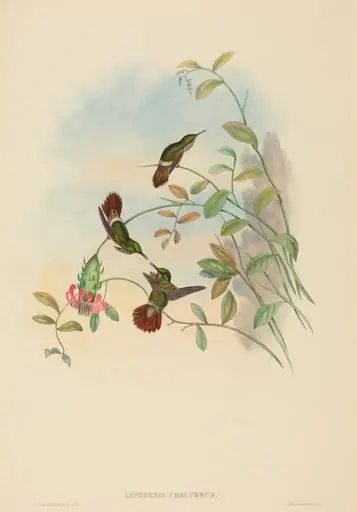
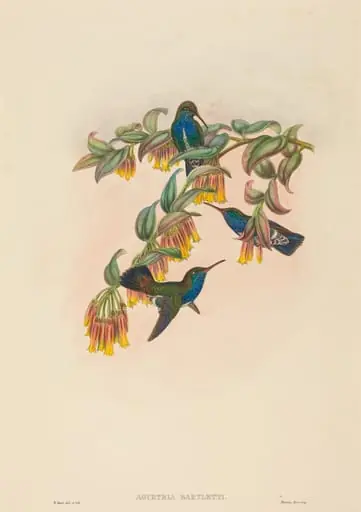
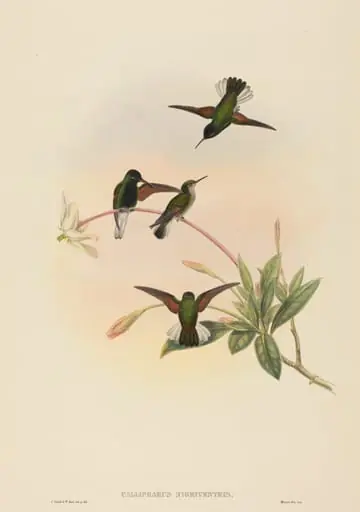
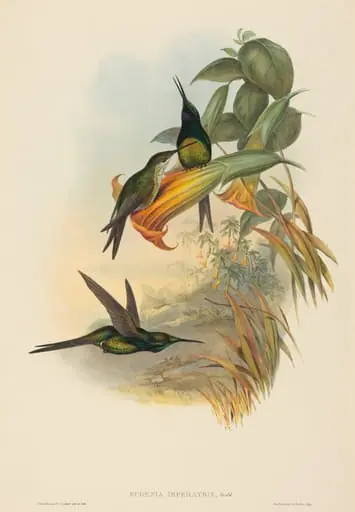
Spathura rufocaligata (Red-booted Racket-Tail) is an ink print by the Romanticist artist John Gould. It dates from 1842 and is held in the collection of the National Gallery of Art. This hand-colored lithograph, created in 1842, portrays the Red-booted Racket-Tail, a hummingbird native to Australia.
About this work
Overview
The image combines scientific precision with artistic craftsmanship, typical of 19th-century natural history illustration.
This hand-colored lithograph, created in 1842, portrays the Red-booted Racket-Tail, a hummingbird native to Australia. It was produced as part of John Gould’s ambitious project to document the continent’s avian species. The image combines scientific precision with artistic craftsmanship, typical of 19th-century natural history illustration. Lithography allowed for multiple reproductions, making detailed ornithological imagery accessible beyond academic circles.
Subject & Meaning
The bird depicted, Spathura rufocaligata, is distinguished by its vivid red leg feathers, a rare trait among hummingbirds. Rendered in isolation against a plain background, the focus remains on its physical form, emphasizing taxonomic clarity over environmental context. The illustration serves as a visual record, intended for scientific classification rather than symbolic or aesthetic interpretation, reflecting the era’s empirical approach to natural history.
Technique & Style
The image was produced using lithography, a printmaking method that enabled fine detail and tonal variation. Hand-coloring was applied meticulously with watercolors to match the specimen’s true hues, a labor-intensive process requiring skilled artisans. Feathers, beak structure, and leg plumage are rendered with exacting precision, demonstrating a commitment to anatomical accuracy over dramatic composition or atmospheric effect.
History & Provenance
The lithograph originated in Gould’s seven-volume work, *The Birds of Australia*, published between 1840 and 1848. It was one of many plates produced with the assistance of artists including Elizabeth Gould, Edward Lear, and Henry Constantine Richter. Gould’s publications were widely distributed in scientific and private collections, establishing a visual archive of Australian fauna that remained influential for decades.
Context
Gould’s work emerged during a period of intense colonial-era natural history exploration. His illustrations contributed to European scientific understanding of Australasian biodiversity, often based on specimens collected by explorers and settlers. Though not directly involved in evolutionary theory, his meticulous documentation later informed broader biological discourse, including Charles Darwin’s studies of island species.
Legacy
Gould’s illustrated volumes set a standard for ornithological publishing, blending scientific rigor with visual clarity. His plates remain referenced in modern taxonomy and conservation studies. The hand-colored lithographs are preserved in major natural history institutions, valued not only for their biological accuracy but also as artifacts of 19th-century scientific practice and artisanal print culture.
Artist & collection
Artist
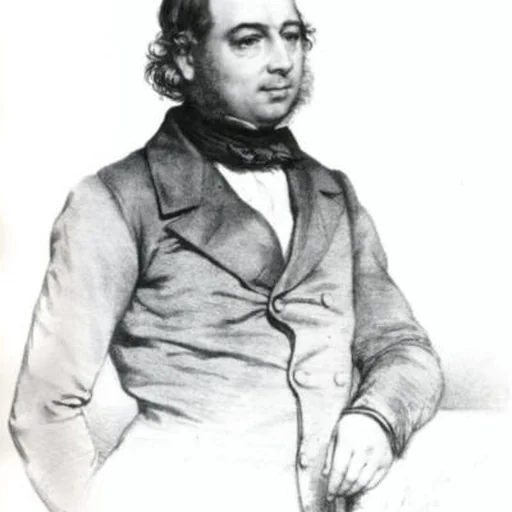
John Gould (; 14 September 1804 – 3 February 1881) was an English ornithologist who published monographs on birds, illustrated by plates produced by his wife, Elizabeth Gould, and several other artists, including Edward…

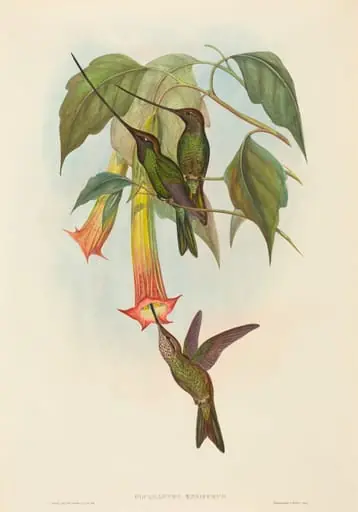 Docimastes ensiferus (Sword-billed Hummingbird)
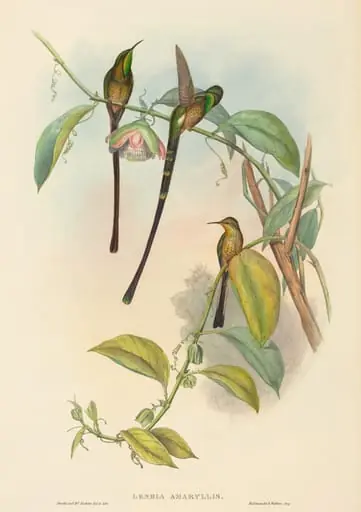 Lesbia Amaryllis
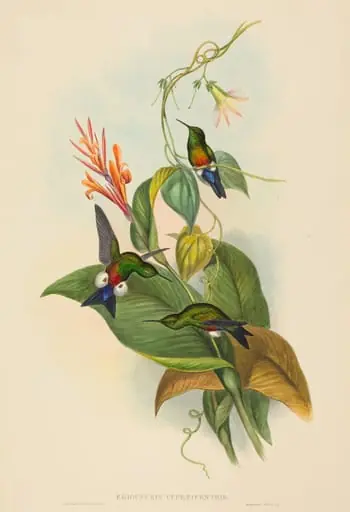 Eriocnemis cupreiventris (Coppery-vented Puff-Leg)
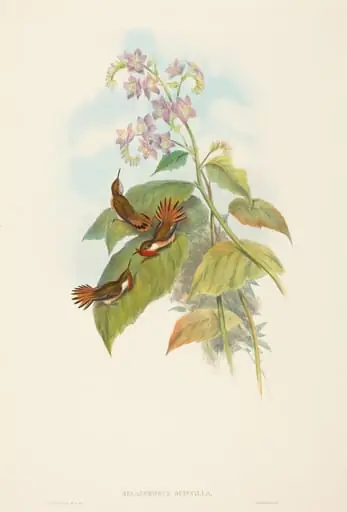 Selashorus scintilla (Scintillant Hummingbird)
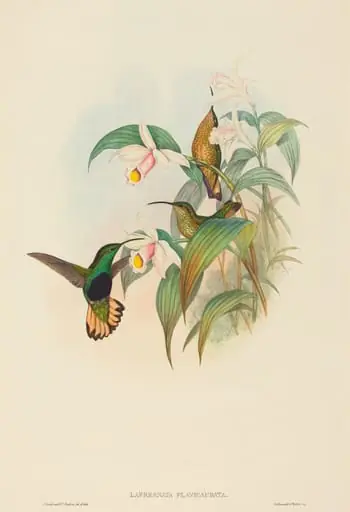 Lafresnaya flavicaudata (Buff-tailed Velvet-breast)
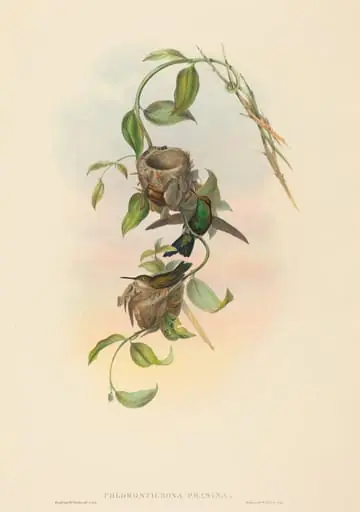 Chlorostilbona prasina (Puncheran's Emerald)
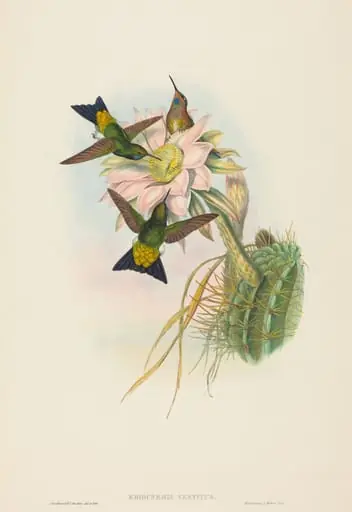 Eriocnemis vestitus (Glowing Puff-Leg)
 Eugenia imperatrix (Empress Hummingbird)