Artwork
Apollo and Daphne
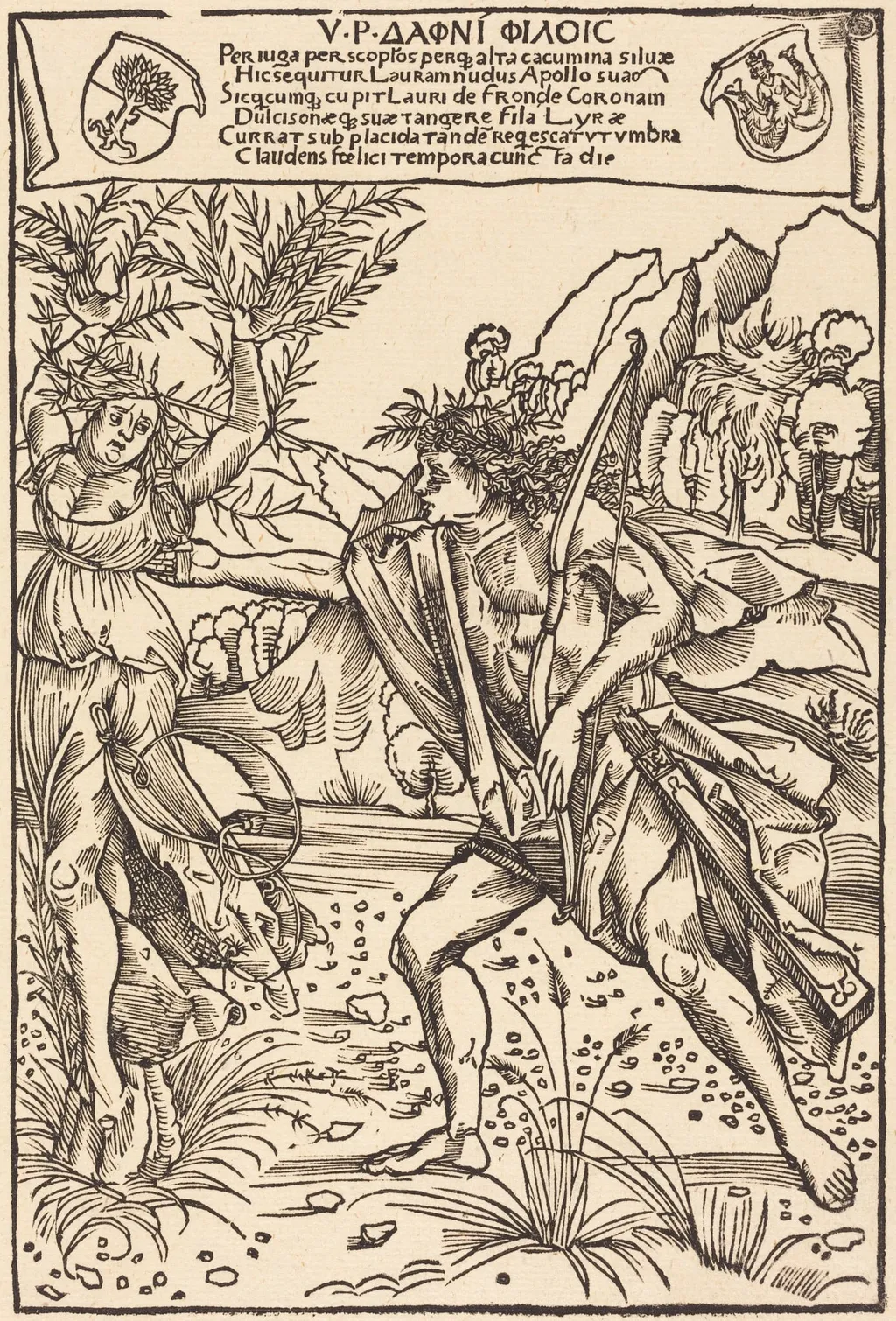
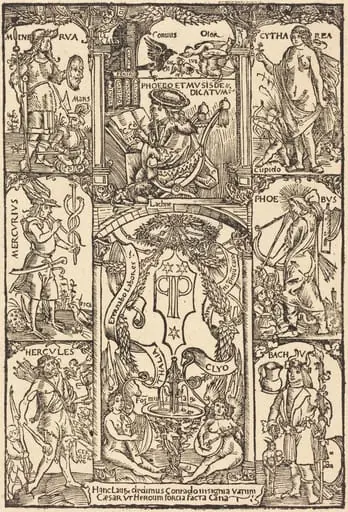
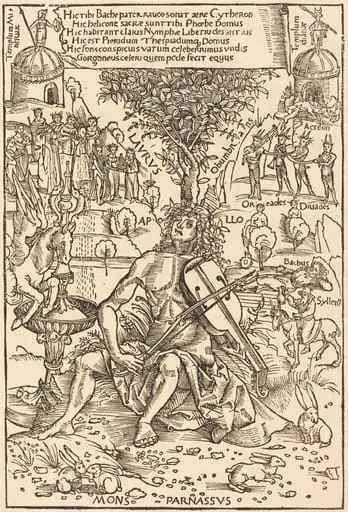
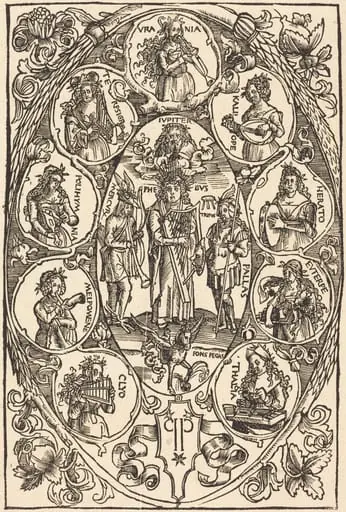
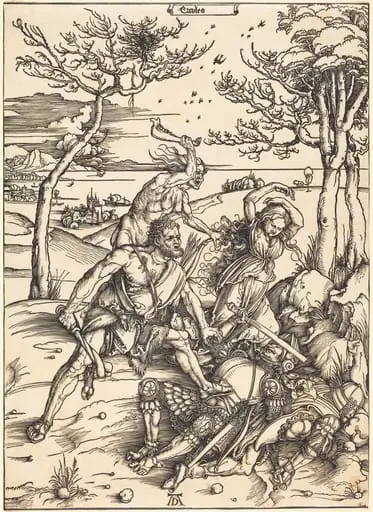
Apollo and Daphne is an ink print by the Renaissance artist Hans Süss von Kulmbach. It dates from 1502 and is held in the collection of the National Gallery of Art.
About this work
Overview
Rendered in fine linear detail, the scene captures Apollo’s pursuit of Daphne as she begins to transform into a laurel tree.
Created in 1502, this woodcut by Hans Süss von Kulmbach depicts a moment from Ovid’s Metamorphoses. Rendered in fine linear detail, the scene captures Apollo’s pursuit of Daphne as she begins to transform into a laurel tree. The composition is tightly framed within a naturalistic landscape, emphasizing the tension between movement and metamorphosis through intricate engraving techniques typical of early 16th-century German printmaking.
Subject & Meaning
The scene illustrates the myth in which Apollo, struck by Cupid’s arrow, chases the nymph Daphne, who prays to be saved from his advances. As she transforms, her limbs become tree bark and her hair sprouts leaves. The bow and arrow she holds allude to her identity as a follower of Diana, while Apollo’s flowing garment suggests divine motion. The moment captures desire, divine intervention, and the boundary between human and natural forms.
Technique & Style
Kulmbach employed fine, controlled lines to render texture in skin, fabric, foliage, and rock. The woodcut’s precision reveals mastery of the medium, with delicate hatching defining drapery and subtle tonal gradations suggesting depth. The figures are elongated and stylized, reflecting Renaissance ideals of form, yet the composition retains a Northern European attention to natural detail, particularly in the rendering of plants and terrain.
History & Provenance
The print was produced in the early 1500s in the German-speaking regions, likely for a learned or devotional audience familiar with classical mythology. As a woodcut, it was part of a broader circulation of illustrated narratives during the Reformation era. While its early ownership is undocumented, it aligns with the output of Kulmbach’s workshop, known for religious and mythological subjects distributed across Central Europe.
Context
During the Renaissance, classical myths were revived as subjects for visual art, especially in print form, allowing wider dissemination beyond elite patrons. Kulmbach’s work reflects the fusion of Italian humanist themes with Northern European graphic traditions. Woodcuts like this served both aesthetic and educational purposes, bridging ancient literature and contemporary visual culture in an age of expanding literacy.
Legacy
This woodcut stands as an example of how German artists adapted classical narratives through precise, expressive line work. Though less celebrated than later engravings, Kulmbach’s prints contributed to the development of narrative printmaking in Northern Europe. His approach influenced subsequent generations of printmakers who sought to balance mythological drama with technical refinement in woodcut form.
Artist & collection