Artwork
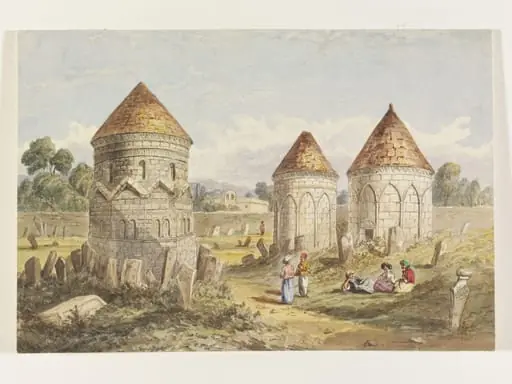
Ancient Armenian Church at Varzahan
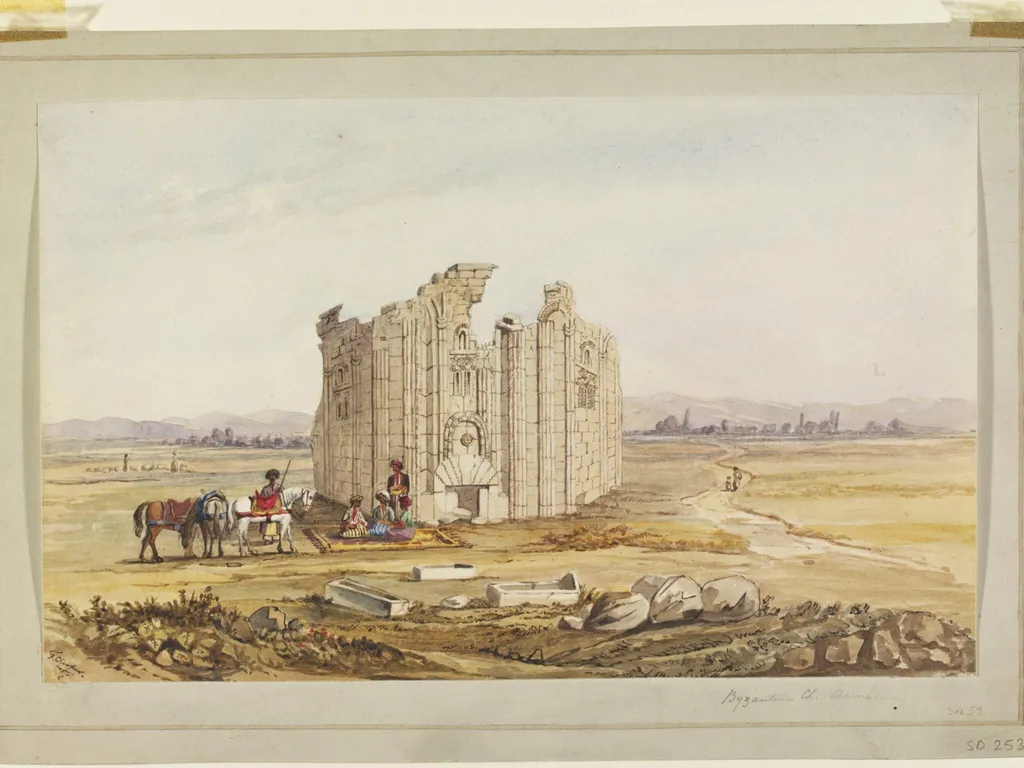
Ancient Armenian Church at Varzahan is a watercolor work on paper by the Romanticist artist Frederick Charles Cooper. It dates from 1849 and is held in the collection of the Victoria and Albert Museum.
About this work
Overview
Frederick Charles Cooper’s 1849 watercolour records the ruins of an Armenian church at Varzahan, a remote settlement in eastern Anatolia.
Frederick Charles Cooper’s 1849 watercolour records the ruins of an Armenian church at Varzahan, a remote settlement in eastern Anatolia. Rendered in a single sheet of paper, the image captures the stone edifice amid a barren landscape, with a solitary rider and a few figures traversing the foreground. The composition balances architectural detail with the surrounding terrain, offering a snapshot of a historic site in a state of decay.
Subject & Meaning
The central focus is the ancient church, its weathered walls and towering columns suggesting former grandeur now overtaken by time. Human presence is minimal—a man seated on a donkey and a standing companion—emphasising the monument’s isolation. The sparse figures serve as scale, underscoring the building’s monumental size and the desolate environment that frames it.
Technique & Style
Cooper employs transparent washes to model light across the crumbling masonry, creating a contrast between illuminated surfaces and deep shadows. The delicate handling of watercolour allows atmospheric effects, such as the hazy horizon and the muted tones of the rocky ground. This approach reflects mid‑nineteenth‑century practices of rendering topographical subjects with a subtle, emotive touch.
History & Provenance
The watercolour was produced during Sir Austen Henry Layard’s second archaeological mission to the ruins of Nineveh, when Cooper accompanied the team as a draftsman. Sketches from the same journey are preserved in the British Museum’s Department of Western Asiatic Antiquities, and Cooper’s 1850 field diary provides additional insight into the expedition’s observations and itinerary.
Context
Mid‑1800s European interest in the Near East combined scientific documentation with Romantic fascination for exotic landscapes. Artists like Cooper recorded ancient structures not only for scholarly purposes but also to evoke the sublime qualities of ruin and wilderness. The Varzahan church, situated against a stark horizon, exemplifies how such works merged empirical detail with the era’s emotional engagement with history and nature.
Artist & collection
Artist
Frederick Charles Cooper painted watercolours of Ottoman-era landmarks he saw in 1849.

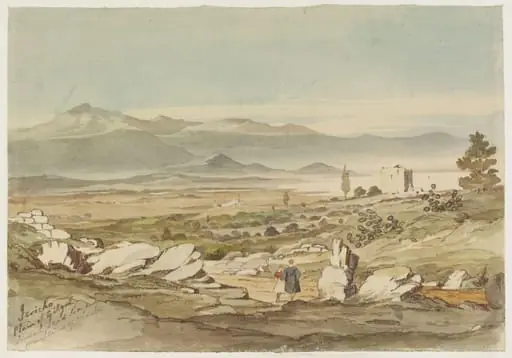 Jericho Plain of Gilgal, Jordan, Dead Sea, and Mountains of Moab
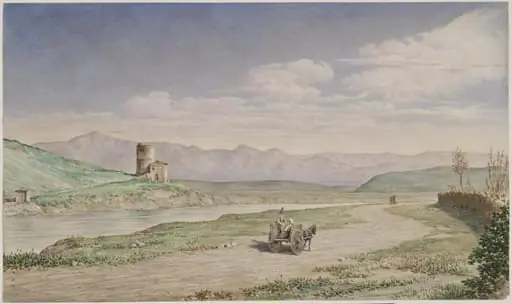 Parti ved Ponte Molle i Roms Campagne
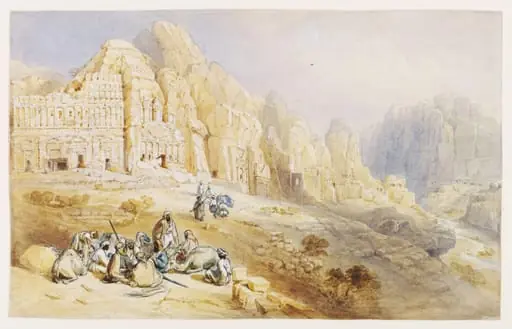 Principal range of tombs
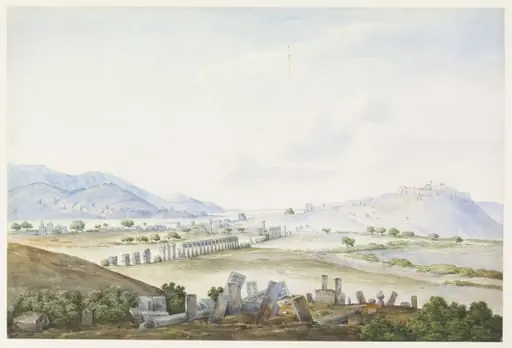 Ephesus
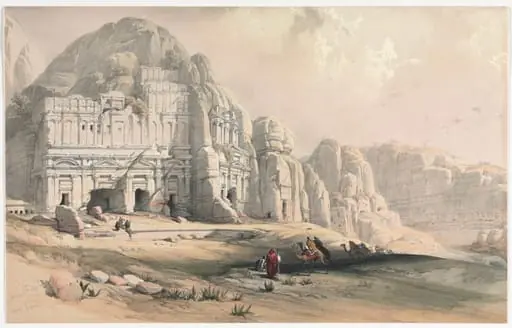 Petra, Eastern End of the Valley
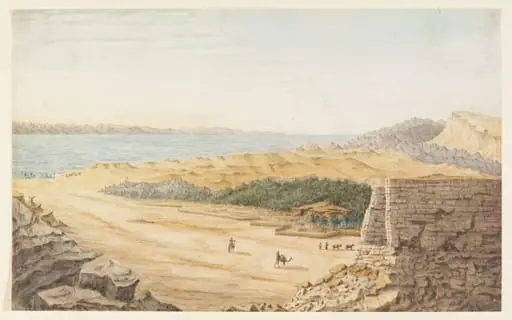 Ancient Ruins in the land of Edom above the bed of a valley and Arab Date gardens
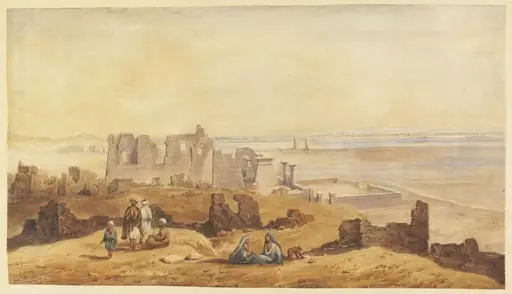 Luxor: the West Bank, with the Temple of Ramesses III at Madinat Habu; looking east towards the Nile
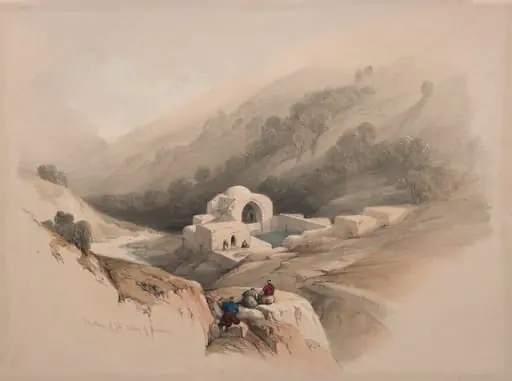 Fountain of Job, Valley of Hinnom
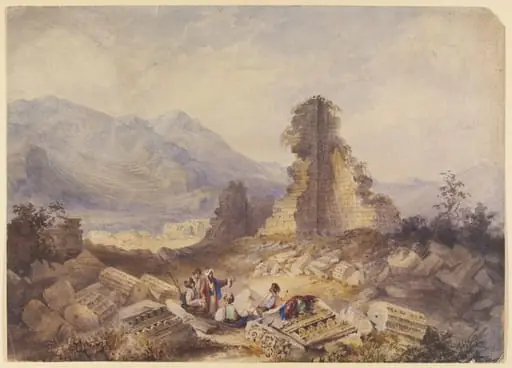 Ephesus (Ruins of the Temple of Diana)
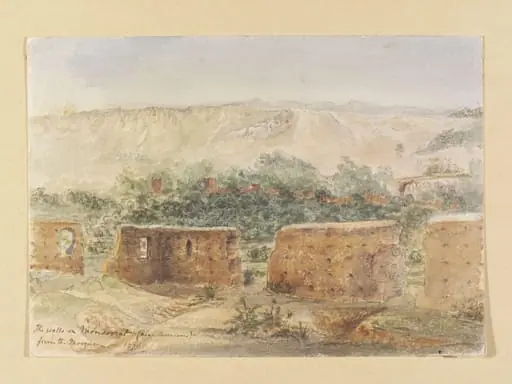 The walls on Monsoorat (near Tlemcen) from the Mosque
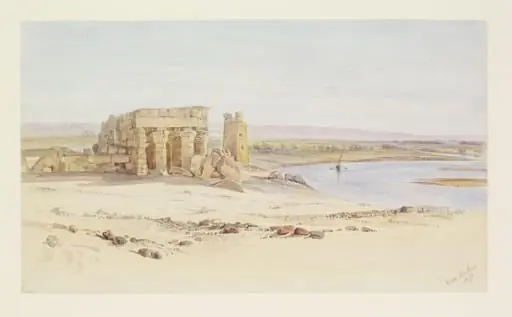 Kom Ombos