Artwork
Peisaj urban
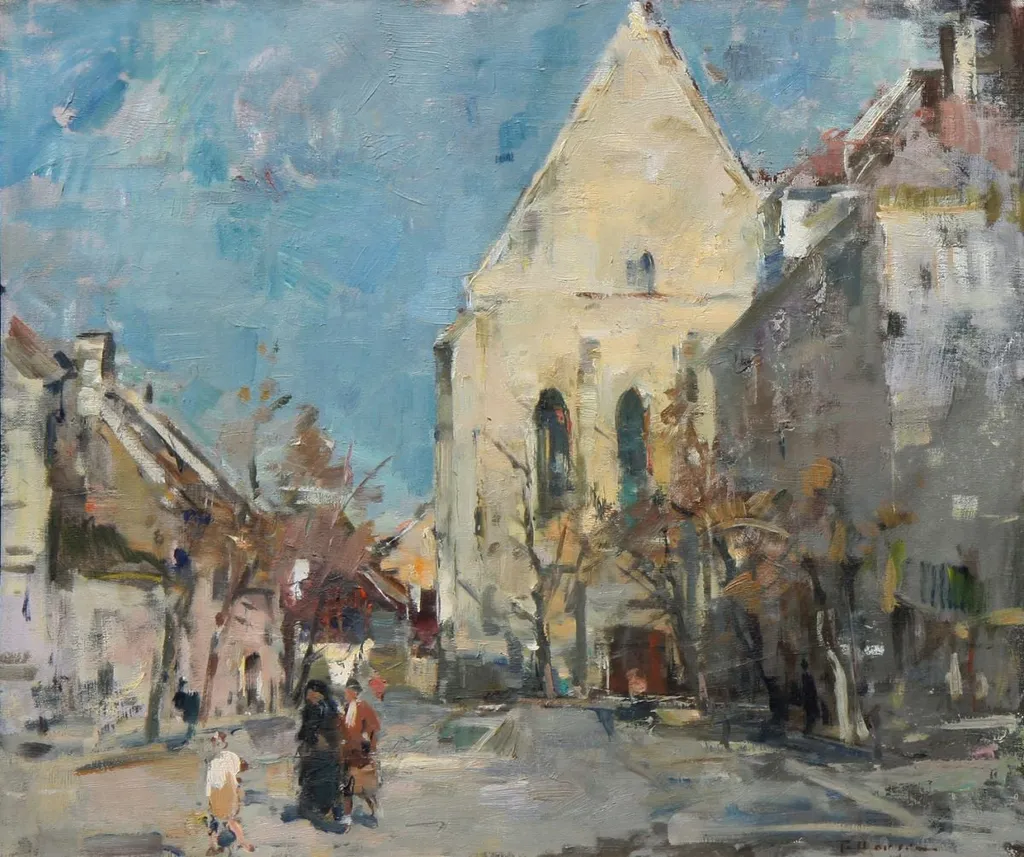
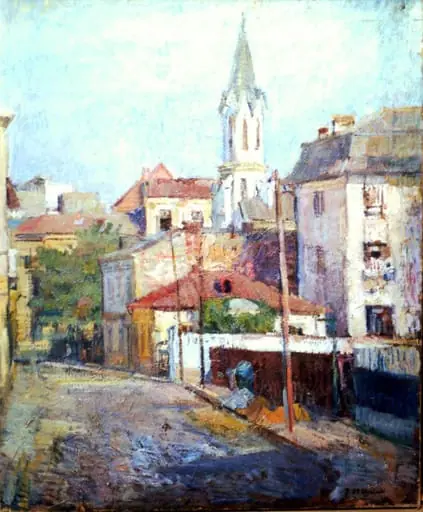
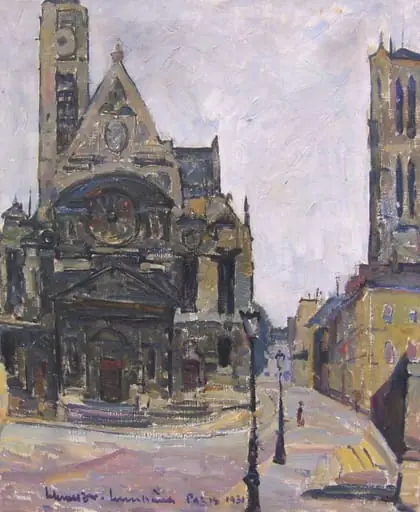
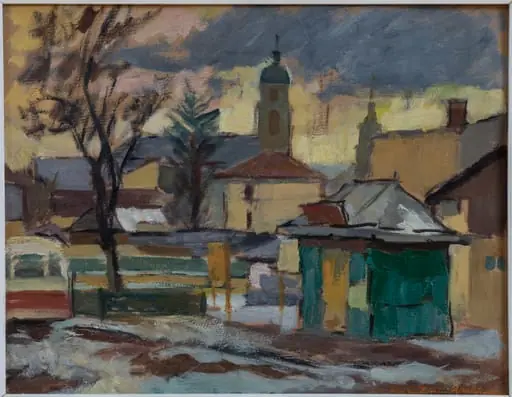
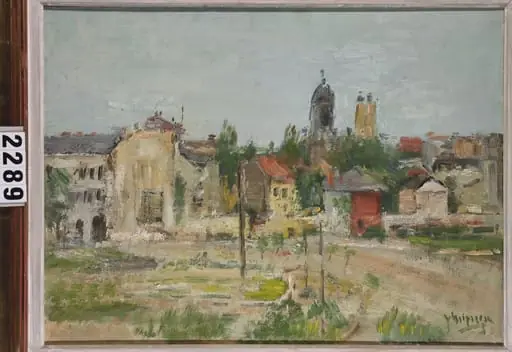
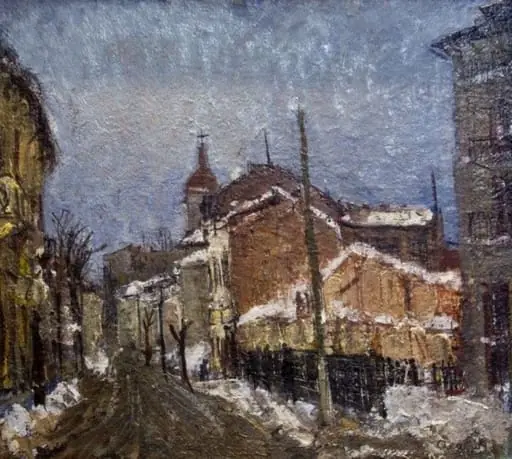
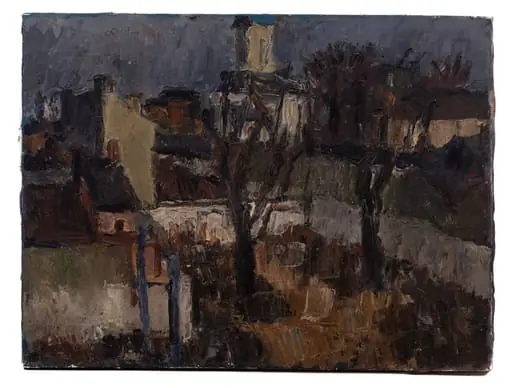
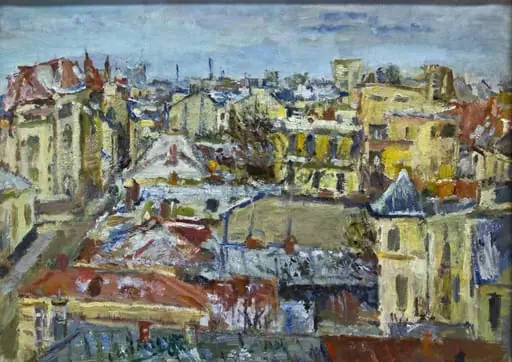
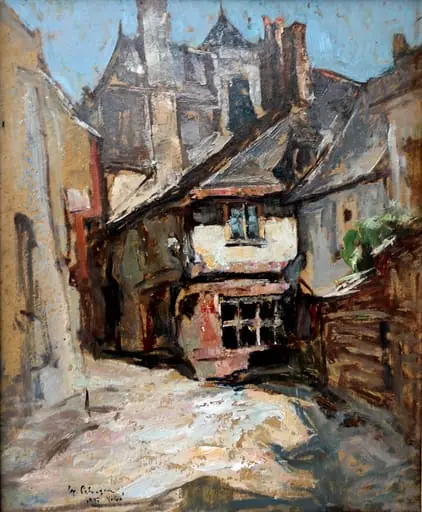
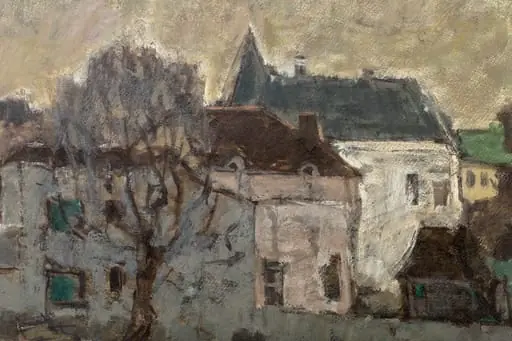
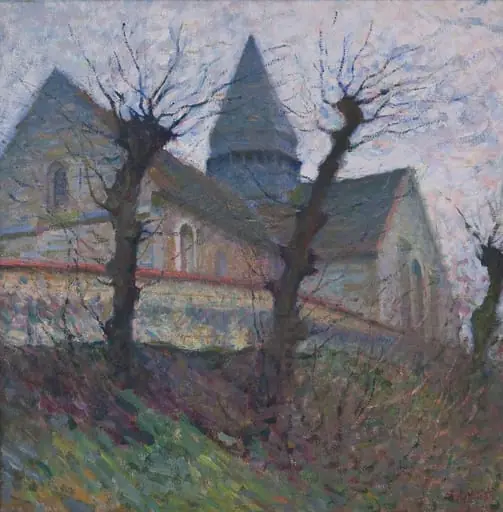
Peisaj urban is an unspecified painting by Antiveduto Gramatica. It is held in the collection of the Museum of Art Cluj-Napoca. This urban landscape depicts a quiet city street centered on a prominent white church with a tall spire and arched windows.
About this work
Overview
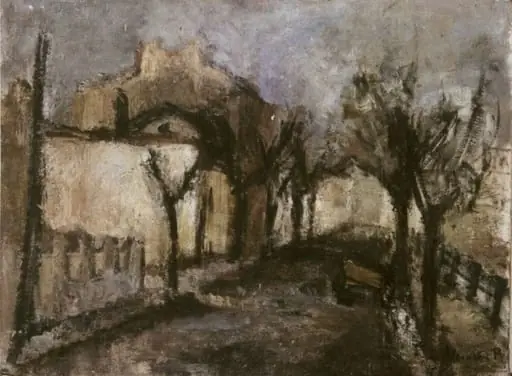
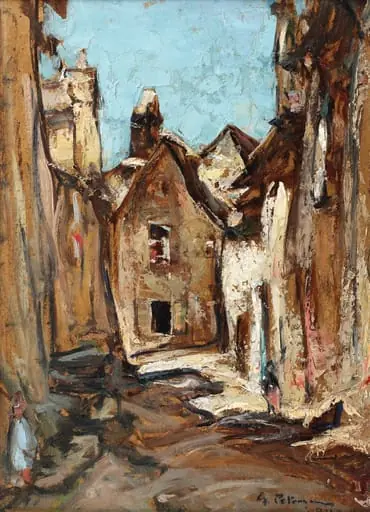
This urban landscape depicts a quiet city street centered on a prominent white church with a tall spire and arched windows. Bare trees frame the sidewalks, and pedestrians move under umbrellas, suggesting damp weather. The painting’s surface is built up with thick, tactile brushwork, creating a physical texture that emphasizes the atmosphere and materiality of the scene over precise detail.
Subject & Meaning
The scene captures an ordinary moment in urban life, neither celebratory nor dramatic. The church stands as a quiet anchor amid daily routines, its presence suggesting spiritual or cultural continuity. The figures, small and unremarkable, blend into the environment, reinforcing a sense of quiet solitude rather than bustling activity.
Technique & Style
The artist employs impasto, applying paint in thick, deliberate strokes that catch light and cast subtle shadows. This method gives the surface a sculptural quality, enhancing the sense of weather and texture—rain-slicked pavement, rough brick, and wind-tossed branches. The visible brushwork rejects smooth finish, favoring emotional resonance over realism.
History & Provenance
The work’s origin and early ownership are not documented in available records. It appears to be a standalone piece, not part of a known series or exhibition. Its date and artist remain unidentified, though its style aligns with early 20th-century European urban scenes that prioritized materiality over narrative.
Context
This painting reflects a broader trend in modern art where everyday urban environments became subjects worthy of serious attention. Rather than idealizing the city, the artist presents it as worn and lived-in, echoing contemporaneous movements that valued emotional truth over polished representation.
Legacy
Though not widely exhibited or reproduced, the work exemplifies how impasto could transform mundane scenes into tactile experiences. Its influence, if any, remains subtle—contributing to a quiet lineage of painters who used texture to convey mood rather than to impress.
Artist & collection

Artist
Antiveduto Grammatica was a proto-Baroque Italian painter, active near Rome.