Artwork
Arms of the King of France with Wings and Scientific Instruments
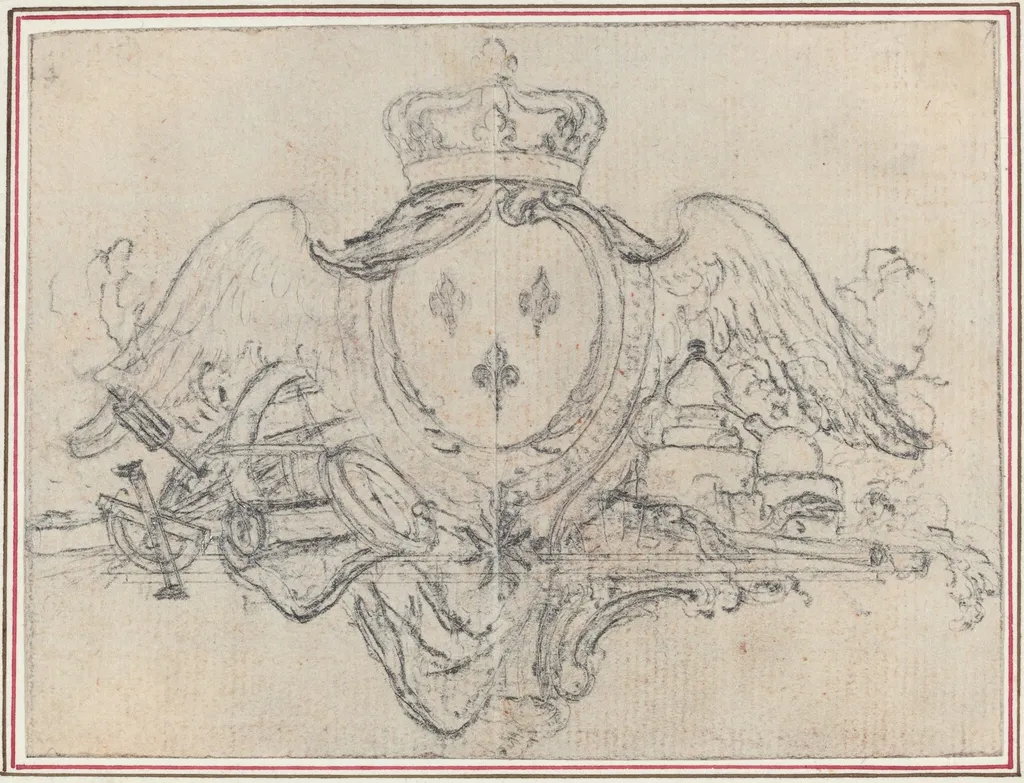
Arms of the King of France with Wings and Scientific Instruments is a graphite drawing by the Baroque artist Hubert François Gravelot. It dates from 1736 and is held in the collection of the National Gallery of Art.
About this work
Overview
Arms of the King of France with Wings and Scientific Instruments is a 1736 drawing by Hubert-François Gravelot, executed in graphite with incised lines for transfer on laid paper. The piece combines heraldic symbols with scientific instruments and ornamental elements.
Subject & Meaning
The drawing features the arms of the French monarchy, identifiable by the crown and fleur-de-lis, juxtaposed with outstretched wings and scientific tools such as a telescope and compass. This blend may symbolize the intersection of royal authority and Enlightenment-era scientific pursuits.
Technique & Style
Gravelot's use of loose, sketchy graphite lines and deeper incised details reflects a quick study approach. The overall design embodies the decorative, ornamental spirit of the Rococo style, which Gravelot helped popularize in London.
History & Provenance
Created in 1736 by French artist Hubert-François Gravelot, who had relocated to London in 1732. The drawing's current status is described as 'laid down' on its support.
Context
This work aligns with the transitional artistic period from Baroque to Rococo, reflecting the latter's emphasis on lightness and ornamentation. It also touches on the scientific curiosity of the Enlightenment.
Legacy
While the sketch's direct influence is not detailed, it represents Gravelot's contribution to disseminating Rococo aesthetics through his designs and illustrations in 18th-century London.
Artist & collection

Artist
Hubert-François Bourguignon, commonly known as Gravelot (26 March 1699 – 20 April 1773), was a French engraver, a famous book illustrator, designer and drawing-master.

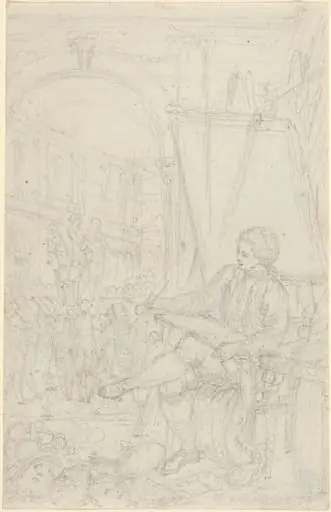 Self-Portrait
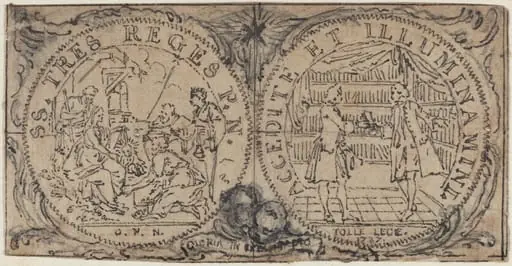 Ornamental Medallions with the Adoration of the Magi and Two Bibliophiles
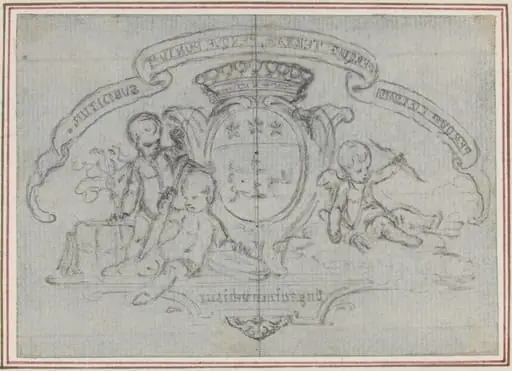 Coat of Arms with Three Putti
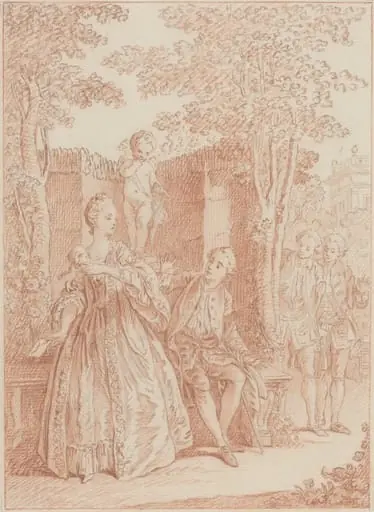 Oui, je la connais Traitre, et je connais ton Coeur
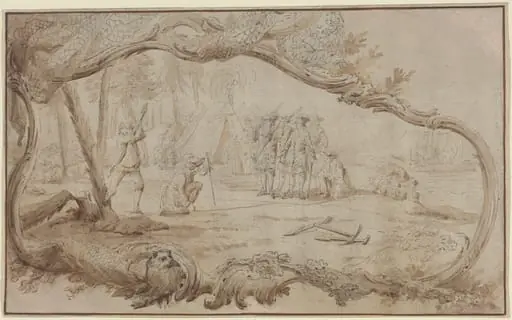 The Landing of the Dutch Expedition Party in New York
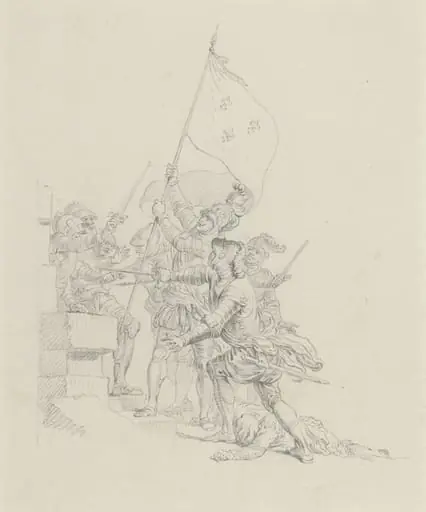 Il monte: il a déjà de ses mains triomphantes...
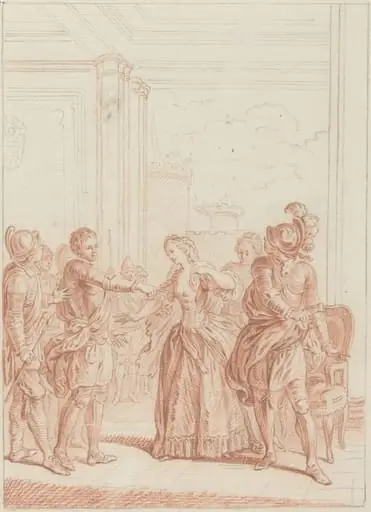 Je suis vengé de toi: l'on te hait, et l'on m'aime
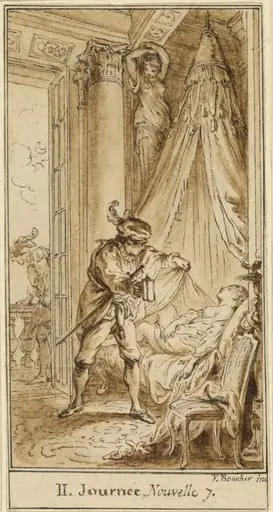 Second Day, Seventh Story: The Duke of Athens Contemplating the Sleeping Princess Alatiel
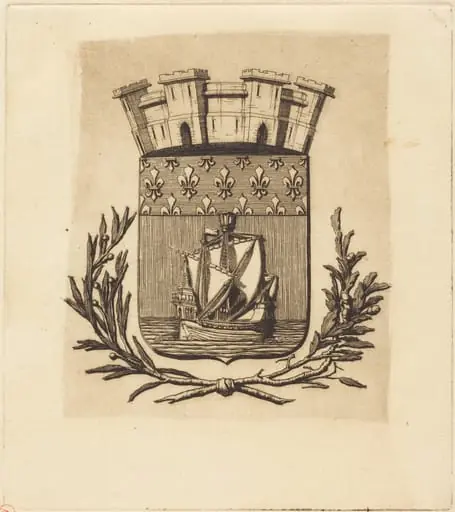 Armes symboliques de la ville de Paris (Symbolical Arms of the City of Paris)
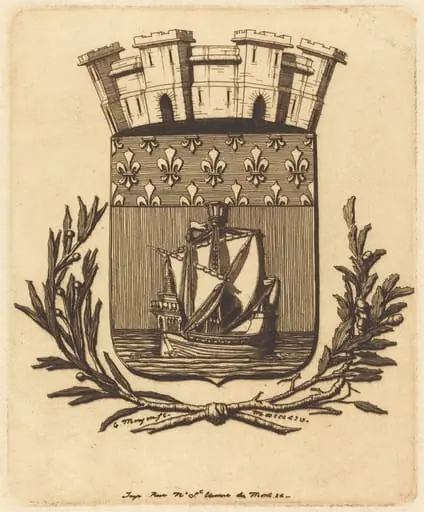 Armes symboliques de la ville de Paris (Symbolical Arms of the City of Paris)
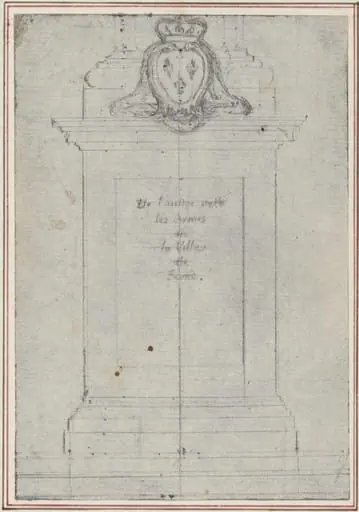 A Plinth Surmounted by the Arms of the King of France
 Coat of Arms of Nicolas Francis of Lorraine
 Arms with a Dedication to Grand Duke Ferdinand II
 Louis XV, King of France