Artwork
Studies of Men in Togas [recto]
![Studies of Men in Togas [recto], by Otto Greiner, chalk, 1892](https://artifactworldgallery.com/img/otto-greiner--studies-of-men-in-togas-recto--3d22c2162285bf09-w1024.webp)
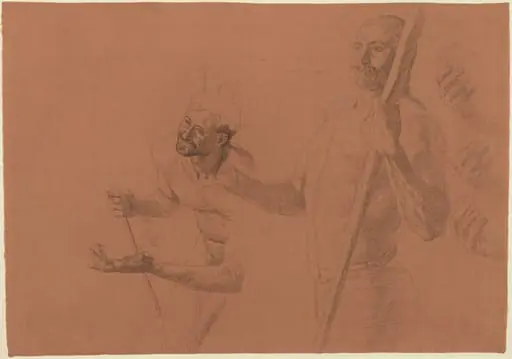
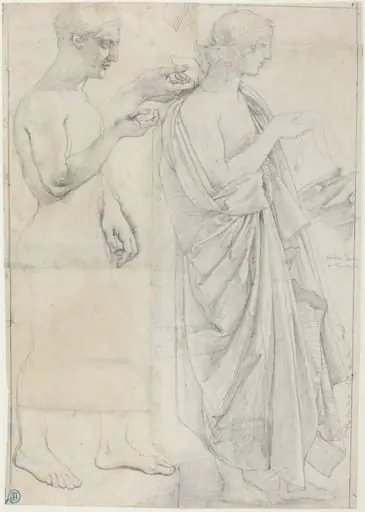
Studies of Men in Togas [recto] is a chalk drawing by the Impressionist artist Otto Greiner. It dates from 1892 and is held in the collection of the National Gallery of Art.
About this work
Overview
Created in 1892 by Otto Greiner, this drawing on wove paper uses black chalk to explore multiple male figures draped in Roman-style togas.
Created in 1892 by Otto Greiner, this drawing on wove paper uses black chalk to explore multiple male figures draped in Roman-style togas. It belongs to a series of studies focused on classical drapery and human form, reflecting the artist’s engagement with historical costume and anatomical observation. The work is a preparatory sketch rather than a finished composition, emphasizing process over final presentation.
Subject & Meaning
The figures depicted are anonymous men in togas, their poses varied but all centered on the study of draped fabric and bodily structure. Rather than narrating a myth or historical event, the drawing prioritizes formal inquiry—how cloth falls over muscle, how weight shifts beneath fabric. The absence of identifiable individuals suggests an academic interest in classical aesthetics, detached from storytelling.
Technique & Style
Greiner employed black chalk with controlled strokes to model volume and texture, blending soft shading with sharp contour lines. The handling shows awareness of Realist attention to physical detail alongside the looser, observational quality associated with Impressionism. This hybrid approach reveals a transitional moment in late 19th-century drawing, where academic tradition met modern sensibilities.
History & Provenance
The drawing was produced during Greiner’s active years in Germany, likely as part of his teaching or studio practice. While its early ownership is undocumented, it entered the National Gallery of Art’s collection through established acquisition channels. Its preservation reflects institutional interest in lesser-known academic drawings from the period, valued for their pedagogical insight.
Context
In the 1890s, European artists frequently revisited classical antiquity as a source for formal training, even as modern movements gained momentum. Greiner’s focus on togas aligns with academic curricula that emphasized historical costume and idealized anatomy. His work exists alongside similar studies by contemporaries who balanced tradition with evolving observational methods.
Legacy
Though not widely exhibited, this drawing contributes to understanding how 19th-century artists engaged with classical forms outside grand historical paintings. It exemplifies the quiet, persistent role of preparatory work in artistic development. Today, it serves as a reference point for scholars examining the intersection of academic discipline and emerging modernist practices in drawing.
Artist & collection


 Two Studies of Virgil
 Figures from the Sarcophagus of the Muses
 Studies of a Classical Figure
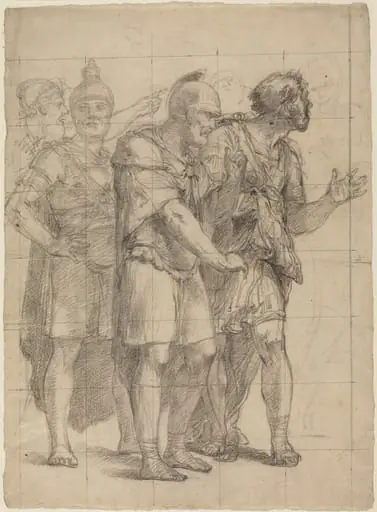 Four Standing Warriors
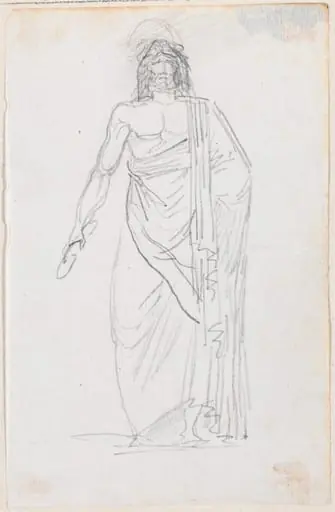 Statue of Zeus Holding a Thunderbolt
![Sheet of Studies, including Warrior with Child [recto and verso], by John Flaxman](https://artifactworldgallery.com/img/john-flaxman--sheet-of-studies-including-warrior-with-child-recto-and-vers--5c5dd1ec083169b5-w320.webp) Sheet of Studies, including Warrior with Child [recto and verso]
Sheet of Studies, including Warrior with Child [recto and verso]![Three Figures [verso], by Mather Brown](https://artifactworldgallery.com/img/mather-brown--three-figures-verso--d67cc3e7c0d36b3b-w320.webp) Three Figures [verso]
Three Figures [verso]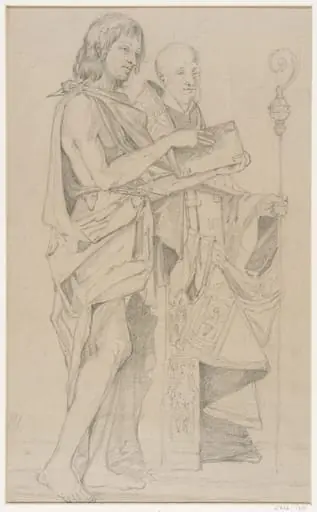 St. Nazzaro and St. Celso: study of part of an altarpiece by Bartolommeo Montagna
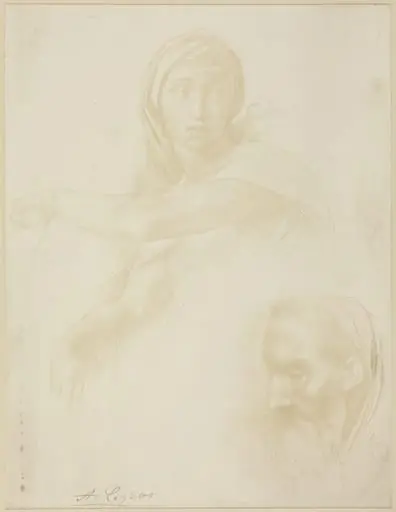 Study of Delphic Sibyl; Head of a Man
 The Novel: Girl Reading
 The Borghese Cybele
 A Muse and Two Female Figures