Artwork
Flowers in a Jug
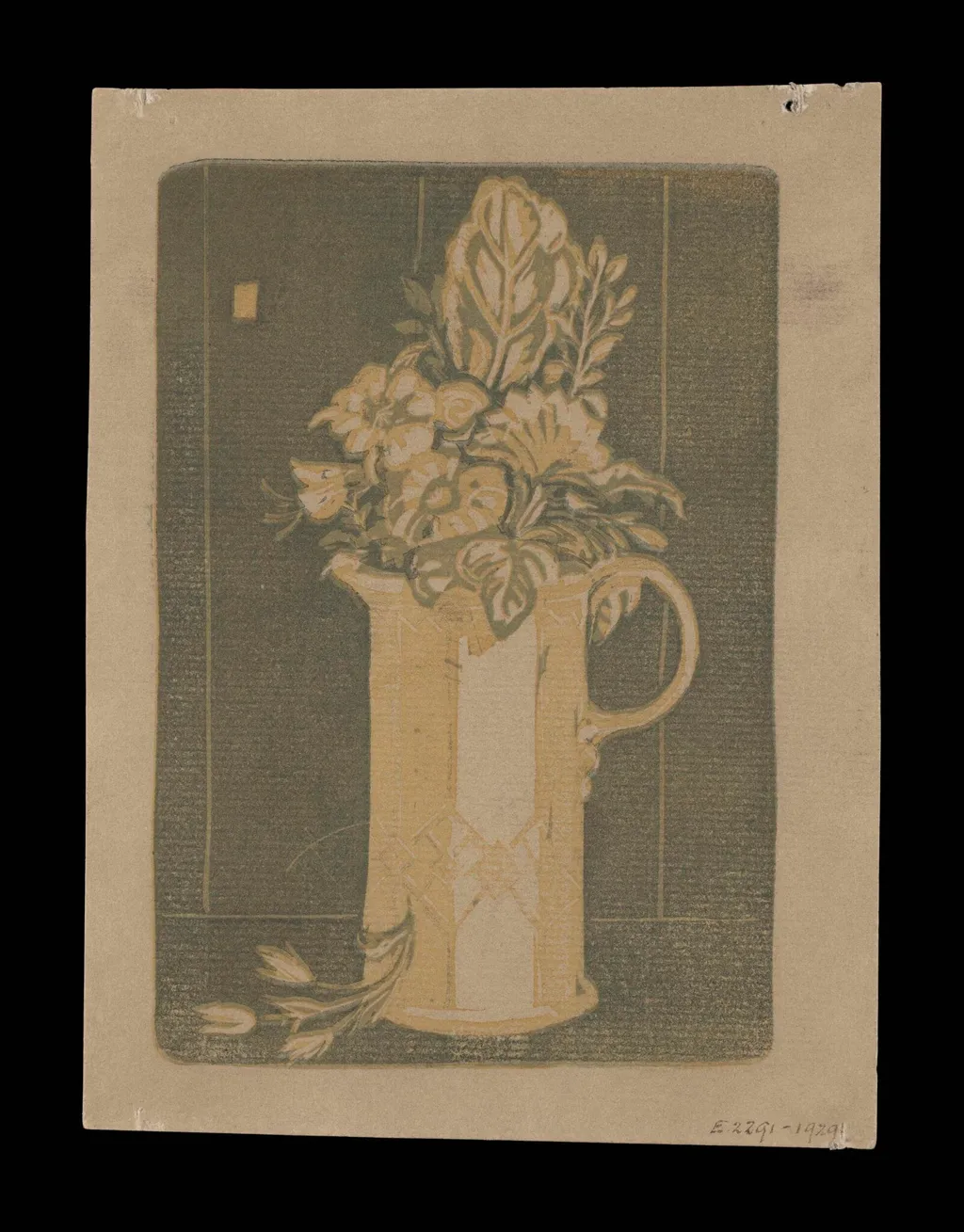
Flowers in a Jug is a print by James Guthrie. It dates from 1928 and is held in the collection of the Victoria and Albert Museum.
About this work
Overview
James Guthrie’s 1928 linocut, titled Flowers in a Jug, presents a solitary jug brimming with white blossoms and verdant foliage. The composition is set against a muted, shadowed backdrop, allowing the illuminated flowers and the curved handle of the jug to dominate the visual field.
Subject & Meaning
The work depicts a simple domestic scene in which a tall jug overflows with delicate blooms, some petals having fallen onto the dark tabletop. The arrangement suggests a fleeting moment of abundance and quiet contemplation, emphasizing the transitory beauty of cut flowers.
Technique & Style
Guthrie employed a three‑colour linocut process, carving a single block progressively for each hue. After each carving stage, the block was printed onto the same sheet, creating layered overprints. Variations in ink application and pressure at the press give each impression subtle differences, lending a hand‑crafted quality to the edition.
History & Provenance
Produced in 1928, the print belongs to the later period of Guthrie’s printmaking career, when he explored multi‑layered linocuts. The edition was printed in small numbers, and surviving impressions are held in several public and private collections, reflecting the artist’s modest output in this medium.
Context
During the late 1920s, linocut was gaining popularity among British artists seeking economical yet expressive print techniques. Guthrie’s use of chiaroscuro—contrasting light and dark tones—to model volume aligns with contemporary interests in modernist simplification while retaining a sense of depth.
Artist & collection

Artist
Sir James Guthrie (10 June 1859 – 6 September 1930) was a Scottish painter, associated with the Glasgow Boys. He is best known in his own lifetime for his portraiture, although today more generally regarded as a painter of Scottish Realism.

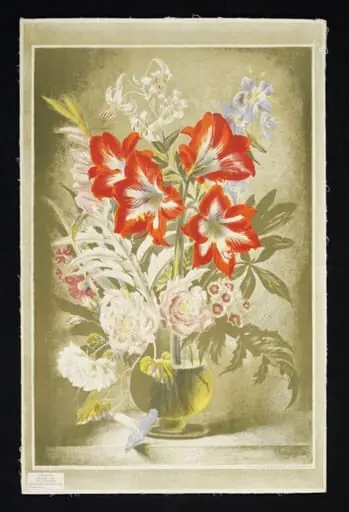 Striped Lily
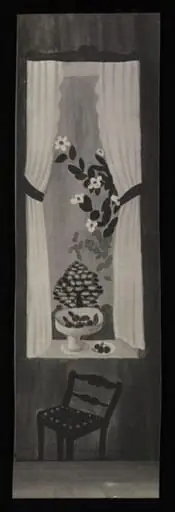 La Boutique Fantastique
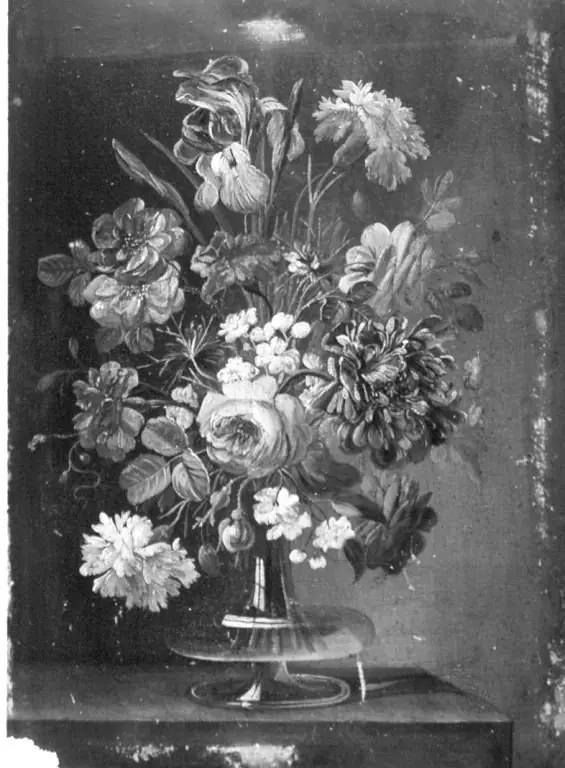 Blumenstück
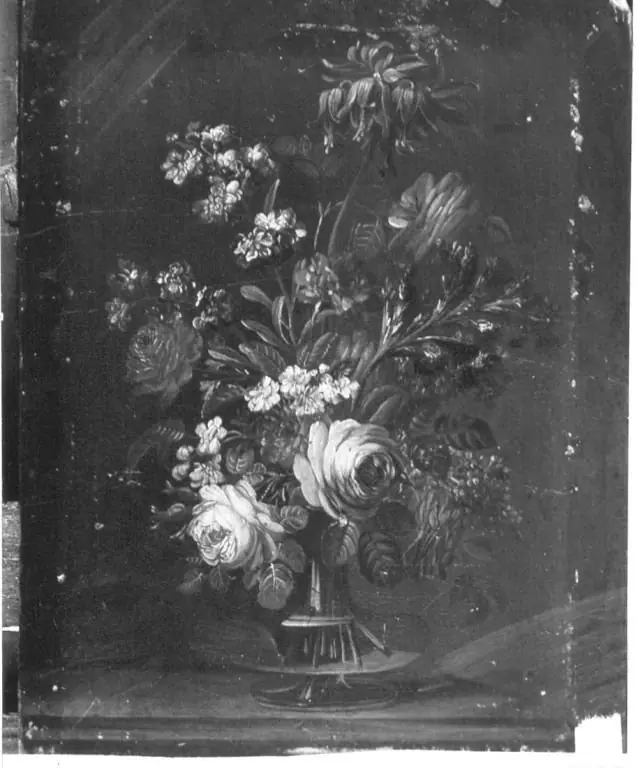 Blumenstück
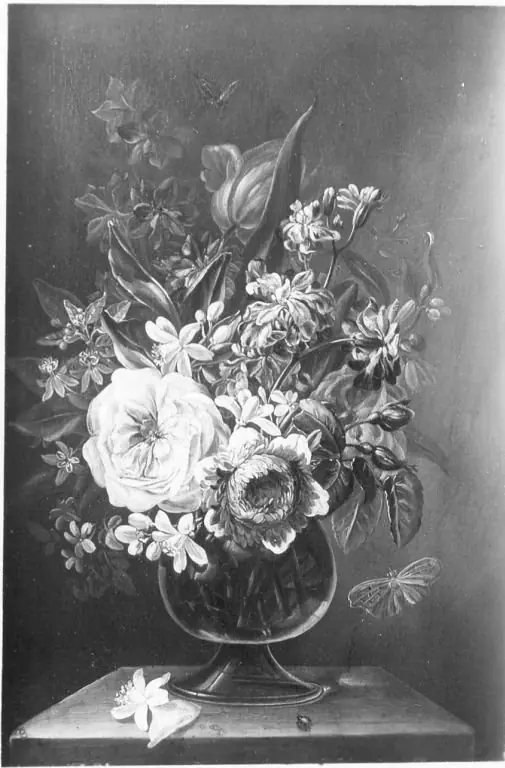 Blumenstück
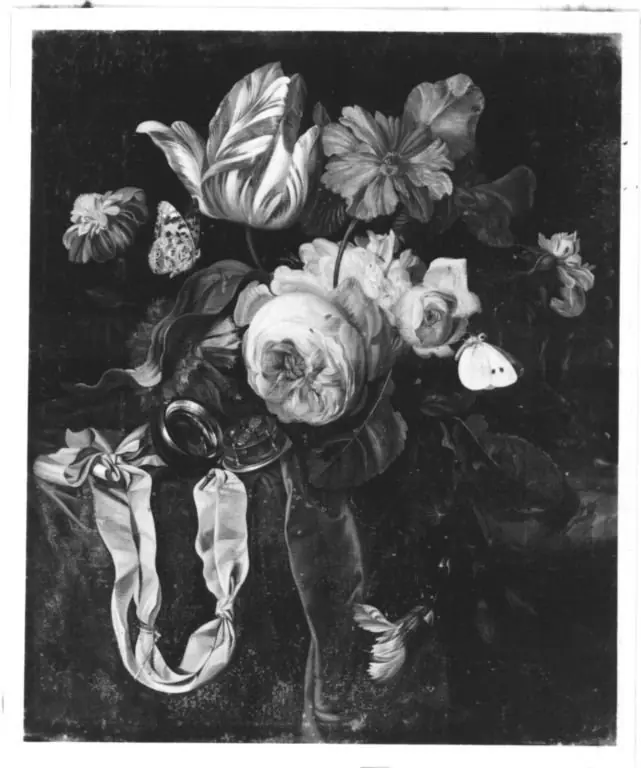 Flower still life with a watch on a partly draped marble ledge
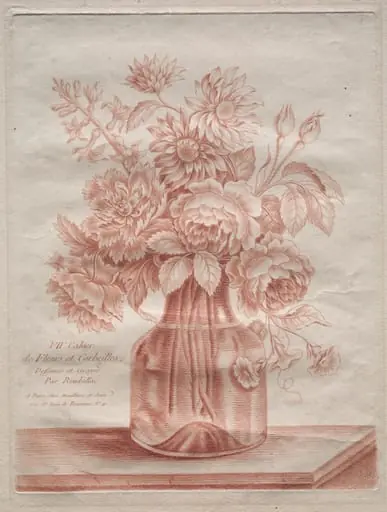 Bouquet in a Glass Bottle
 Exp. 670: Composite of oval portrait prints and engravings
 Untitled
 Blumenstück
 Still life study of a blue vase with pink and white pelargoniums and double wall sconce
 Bordure pour étoffe, projets de broderies de gilet, XVIIIème siècle