Artwork
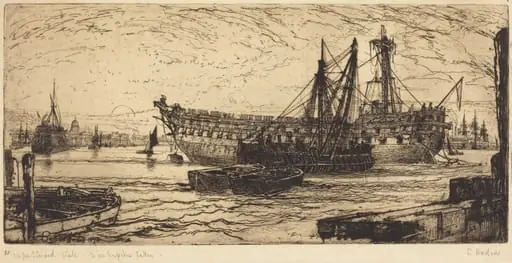
Breaking Up of the Agamemnon (The Second Plate)
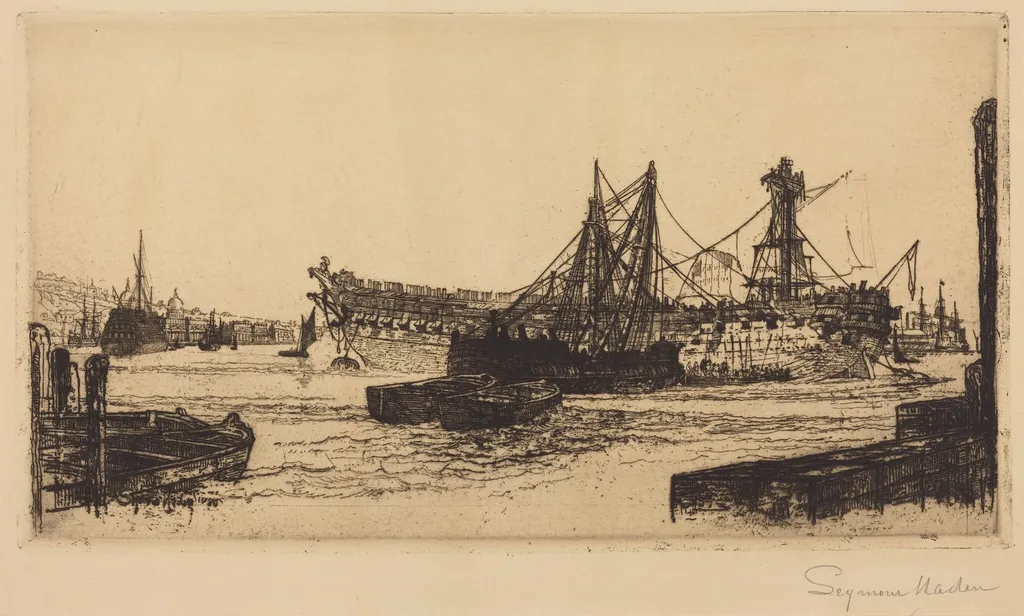
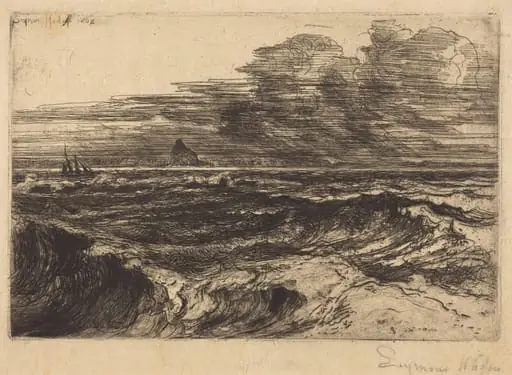
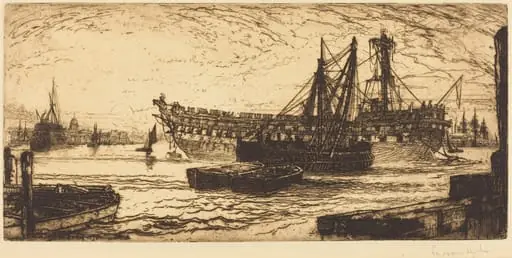
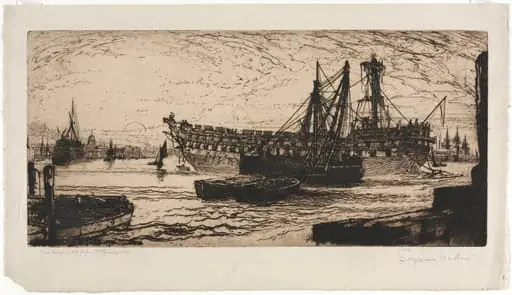
Breaking Up of the Agamemnon (The Second Plate) is an ink print by the Impressionist artist Francis Seymour Haden. It dates from 1886 and is held in the collection of the National Gallery of Art.
About this work
Overview
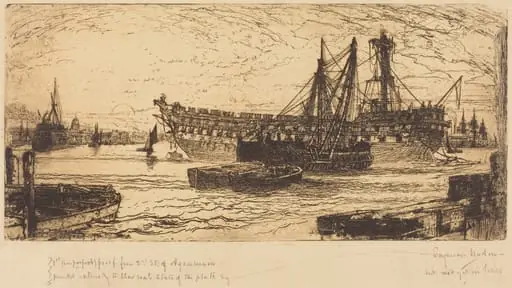
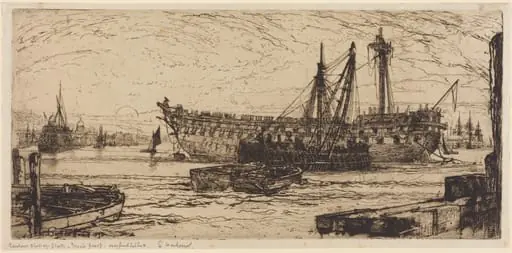
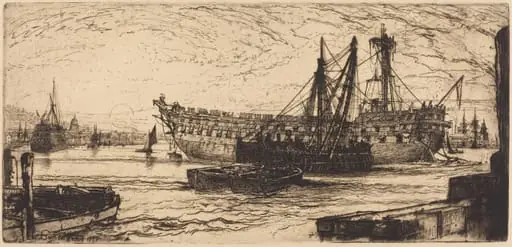
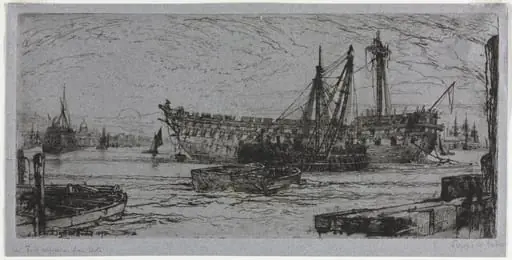
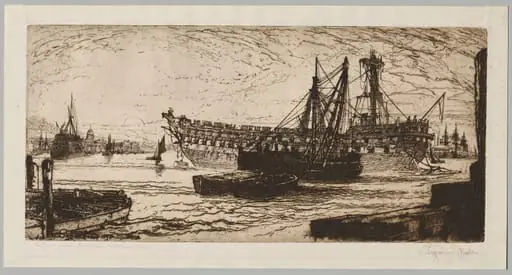
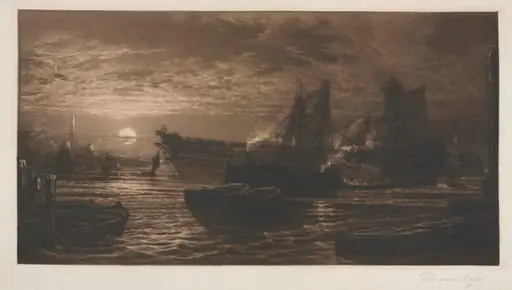
Francis Seymour Haden’s etching titled *Breaking Up of the Agamemnon (The Second Plate)* was produced in 1886. The work depicts a large wooden vessel being dismantled on a shore, surrounded by smaller craft and a restless sea. In the distance, additional ships and structures recede into a muted horizon, creating a sense of depth within the composition.
Subject & Meaning
The scene captures the deconstruction of a once‑imposing ship, suggesting themes of decay, transition, and the impermanence of human endeavors. By focusing on the tangled masts and rigging, Haden emphasizes the physical and symbolic unraveling of a vessel that once commanded the waters.
Technique & Style
Executed as an etching, the image is rendered on a metal plate, allowing Haden to incise fine, crisp lines that convey the rough texture of timber and the chaotic entanglement of ropes. The artist’s use of a scratchy, heavily worked surface creates a tactile quality that distinguishes the work from painted media.
History & Provenance
Created in the late nineteenth century, the print forms part of Haden’s broader interest in maritime subjects and his collaboration with the Royal Society of Painter‑Etchers. While specific ownership records are limited, the piece has been documented in catalogues of Haden’s oeuvre since its initial publication.
Context
Haden, a founding member of the British Etching Revival, often explored nautical themes, reflecting his personal fascination with ships and the sea. This work aligns with the period’s renewed appreciation for printmaking as an autonomous art form, emphasizing line and texture over color.
Legacy
*Breaking Up of the Agamemnon* illustrates the technical possibilities of etching in the 1880s and continues to be cited in studies of Victorian printmaking. Its detailed rendering of ship construction and dismantling offers insight into contemporary attitudes toward industrial progress and maritime heritage.
Own this work as a print
Artist & collection